The best LinkedIn insights do more than share news. A timely headline may earn attention, but attention fades quickly if the post doesn't explain what changed, why it matters, and what a specific professional audience should do next.
That's the difference between an update and an industry insight. The update reports a development. The insight translates it into a decision, a tension, a pattern, or a practical point of view. On a platform with more than 1.3 billion registered members worldwide, according to LinkedIn industry statistics for 2026, generic commentary has plenty of competition.
The eight industry insights examples below treat LinkedIn publishing as a set of reusable systems. Each pattern has a specific strategic job, including reach, authority, engagement, timeliness, trust, efficiency, consistency, or discovery. For every example, you'll see how the format works, what makes readers respond, where the trade-offs sit, and how to adapt the idea without copying someone else's voice.
RedactAI can help turn one researched idea into personalized LinkedIn variations while using your existing tone and expertise as a reference point. That makes it useful for testing formats without turning your publishing into generic AI content. For broader context on the marketing ecosystem, you can also explore social media marketing VCs in the United States.
1. Native LinkedIn Content for Reach
Native LinkedIn content earns reach by removing a decision from the reader's path. The argument, framework, chart, or short video appears in the feed, letting professionals grasp the point without opening another page.
External links still have a role. They should support the post rather than carry it. Share the source, interpret the finding, connect it to a business consequence, and give readers a reason to click.
Format performance supports that approach. Analysis of 1.3 million posts from 16,645 business pages, published between January 2024 and December 2025, found average organic engagement of 5.20% in 2026. Native document posts averaged 7.00%, text posts averaged 4.50%, and link posts averaged 3.25%, according to Socialinsider's LinkedIn benchmark analysis.
What the pattern looks like
A useful native insight gives reach a strategic job while preserving a clear point of view:
- Opening observation: State the development or tension plainly.
- Interpretation: Explain what the headline leaves out.
- Professional consequence: Connect it to a decision the audience must make.
- Actionable close: Offer a question, test, or next step.
A B2B marketer could turn a lengthy industry report into a document post, placing one finding on each page and ending with its effect on positioning. A sales leader could convert an external article into a text post about the outreach behavior it reveals.
Practical rule: Use the external source as evidence, not as the post itself.
The trade-off is preparation time. A native carousel or document requires more work than pasting a URL. RedactAI can generate several native drafts from one core idea, but the creator still needs to verify facts, select the strongest angle, and remove wording that does not sound authentic. The system succeeds when the post provides useful context before anyone leaves LinkedIn.

2. Niche Positioning for Authority
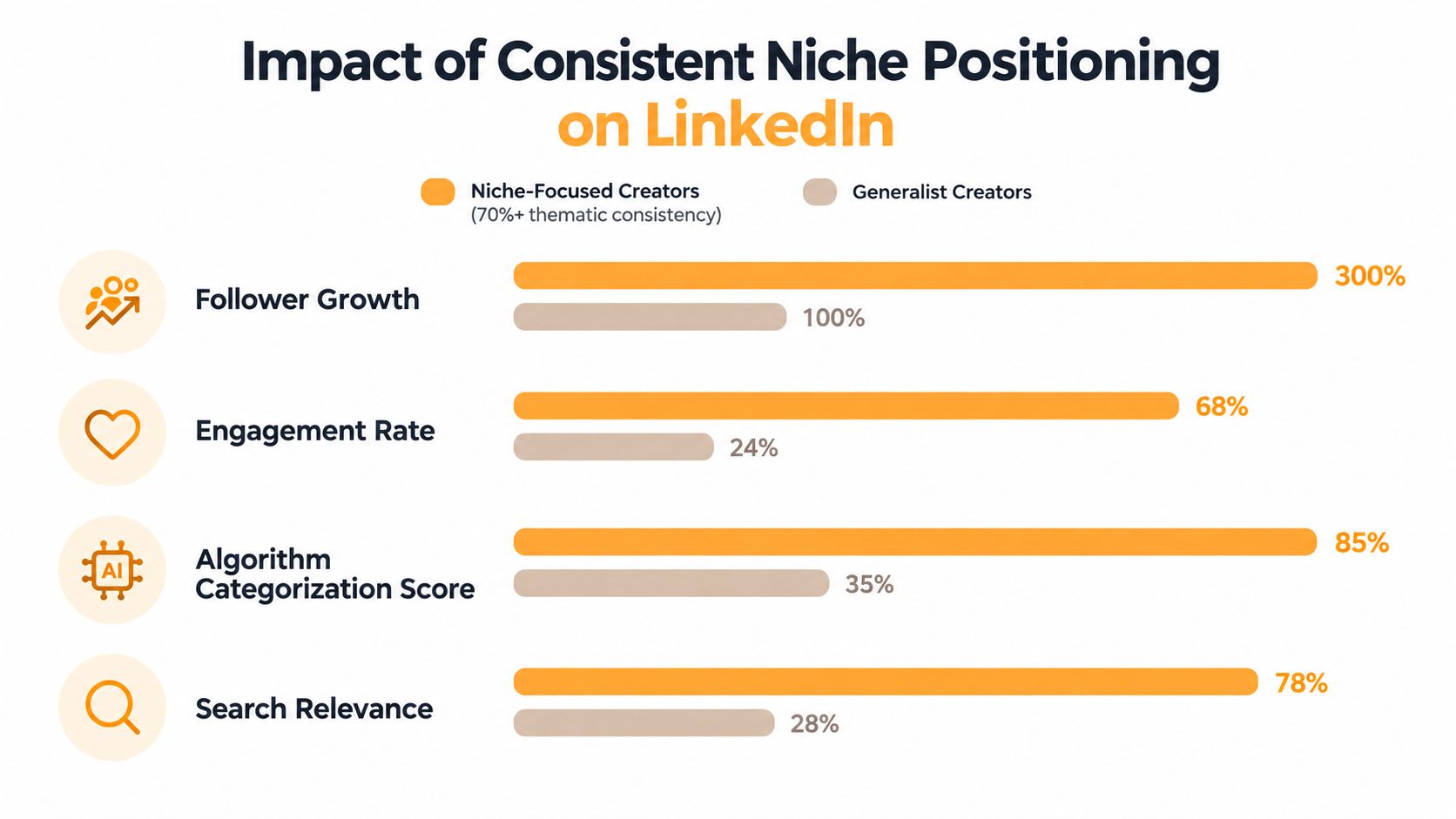
Broad expertise can attract attention, but a defined professional problem builds stronger recognition. A product manager who consistently examines onboarding, prioritization, and product discovery becomes easier to remember than a generalist moving between leadership, productivity, hiring, marketing, and personal finance.
That focus gives each post a strategic job: authority. Repeatedly explaining related problems helps readers understand what you know, who you help, and when to recommend your work. The trade-off is reach. A narrow topic may appeal to fewer people per post, yet it gives the right audience a clearer reason to follow.
LinkedIn is particularly useful for B2B positioning. In a 2025 industry report, 84% of B2B marketers said LinkedIn was the organic social platform delivering the most value, ahead of Facebook at 29%, YouTube at 22%, and Instagram at 21%, as reported in this B2B industry report.
Build the lane before filling the calendar. Choose a hero topic, such as enterprise onboarding, AI governance, technical recruiting, or revenue operations. Then define several supporting questions. An AI governance writer could examine implementation risk, executive adoption, data quality, and workforce readiness.
Those questions create variety without weakening the association:
- Contrarian analysis: Challenge a common assumption in the niche.
- Practical framework: Show how to handle a recurring problem.
- Field observation: Explain patterns emerging in real work.
- Industry translation: Connect a major announcement to the chosen topic.
A post about AI adoption that repeats market enthusiasm is broad commentary. A post explaining why implementation teams struggle with talent, process ownership, or change capacity gives a defined audience something more useful: a reason to trust the writer's judgment.
The pressure is repetition. Narrow positioning can feel monotonous to the creator before it feels familiar to readers. Change the question, evidence, or audience scenario while keeping the subject stable. RedactAI can analyze previous posts, surface recurring themes, and suggest variations within the same expertise area. Editorial judgment still decides which angles deserve publication.
3. Interactive Formats for Engagement
Engagement improves when the format asks for the right kind of response. A poll collects a quick opinion, a document post guides readers through an idea, and a short video adds delivery, tone, or personal presence that text may lose.
Choose the format by the strategic job. A document post suits a framework because readers can follow the reasoning one stage at a time. A poll suits a question with genuine uncertainty, especially when the results can support a follow-up analysis. Video works when the explanation depends on judgment, emotion, or a credible speaker.
One benchmark supports testing format rather than treating it as decoration. Socialinsider's analysis found that native document posts reached 7.00% average engagement, compared with 4.50% for text posts and 3.25% for link posts in its 2026 dataset. The figures do not guarantee that every document post will beat every text post. They show that publishing format can affect how people respond.
Build the interaction around the insight
A document post can present:
- A step-by-step method: Divide a complex process into readable stages.
- A comparison: Put two approaches side by side and explain when each fits.
- A diagnostic model: Help readers identify where their process is failing.
A poll should create a useful decision point. “Which part of implementation creates the most friction?” gives readers a clear choice and gives the creator material for a second post. A poll designed only to collect clicks may raise activity without producing meaningful discussion or stronger trust.
Video earns its place when the person explaining the insight adds value. A sales manager describing a failed qualification assumption may sound more credible on camera than in polished copy, provided the delivery remains clear and the lesson stays specific. Completion matters more than posting a video, so keep the explanation focused enough for viewers to reach the conclusion.
The trade-off is production effort. Carousels require design, videos require preparation, and polls require follow-up. Build one strong native version first. Test a second format only when it changes how the audience understands the idea or contributes a response.
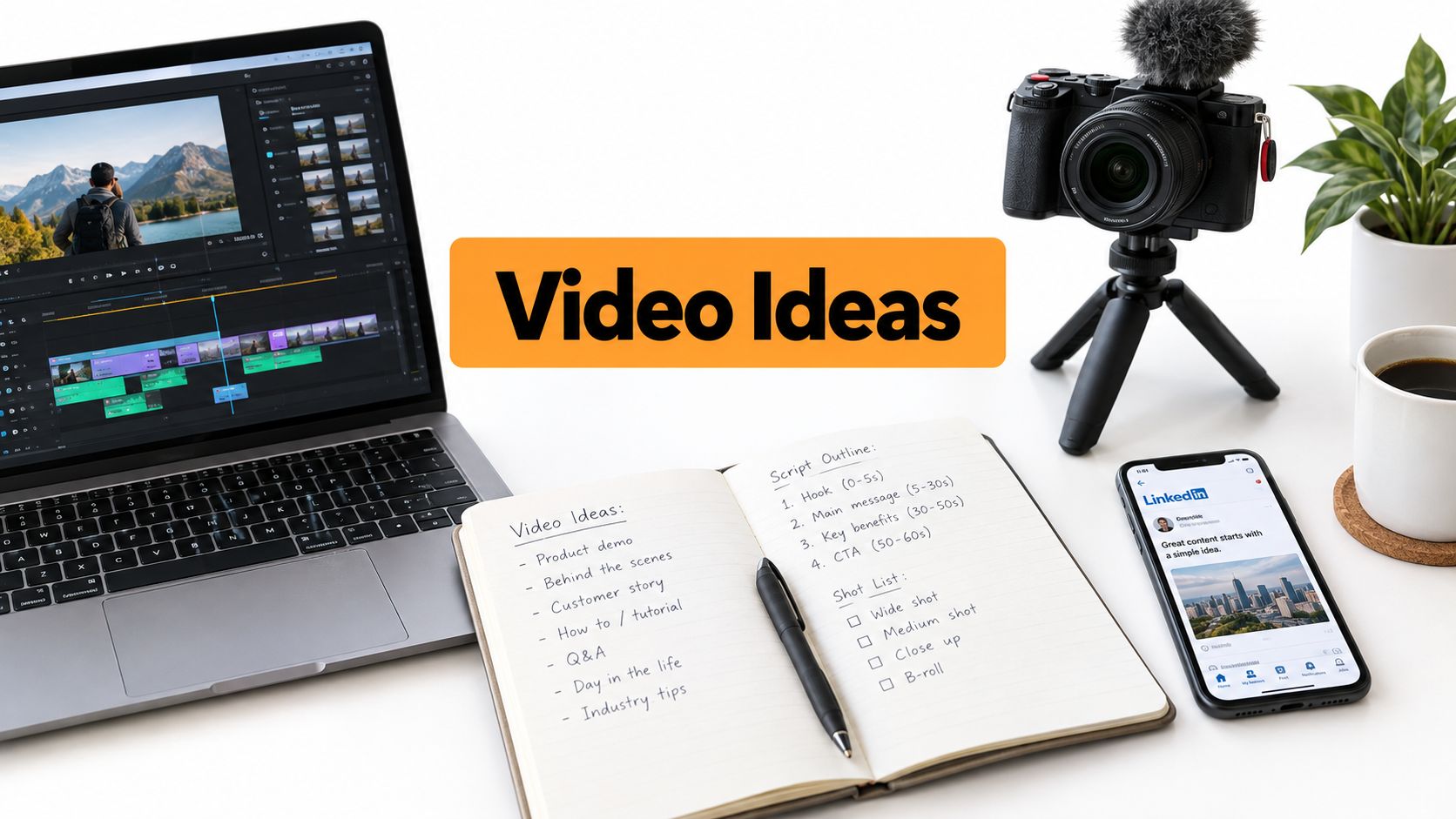
Short-form video can be useful when the creator's explanation is part of the value.
4. Trend Responses for Timeliness
A trend post succeeds through interpretation, not speed alone. Publish before the facts settle, and the post may rest on guesswork. Publish after the conversation peaks, and readers have already seen familiar versions of the same opinion.
Start with the operational consequence. When a technology company announces a product, one writer may repeat its features. Another may explain what changes for procurement, implementation, hiring, or competitive positioning. The second approach gives the audience a reason to pay attention because it connects the announcement to a decision.
A useful response answers three questions: what changed, who feels the effect, and what remains uncertain. Calling an announcement “significant” without explaining the mechanism creates visibility without authority.
Build the post around one decision
Before publishing, verify the original announcement or other reliable primary material. Then choose the audience, such as operators, buyers, investors, or recruiters, and select one consequence that matters to that group. A focused claim is easier to understand and defend than a list of possible implications.
Add tension. Explain who benefits, who faces friction, or which assumption the change challenges. That tension turns an update into an industry insight. It also creates a natural follow-up, such as a later analysis of adoption, implementation barriers, or competitive responses.
This pattern supports discovery and timeliness, though it can weaken trust when speed outruns comprehension. A short verification delay is often more valuable than being first with an inaccurate interpretation.
The emerging-signal approach lasts longer than headline chasing. McKinsey's retail AI analysis distinguishes between developments that are emerging, becoming established, or fading. Apply that lens on LinkedIn by comparing media coverage, survey sentiment, and operational evidence, then explaining where those signals agree or conflict.
RedactAI can help generate several angles from one trend, but source checking remains the creator's responsibility. The final strategic choice is whether the development deserves a post at all.
5. Personal Stories That Build Trust
Trust grows when a personal account helps readers make a better professional decision. The experience supplies context and stakes. The insight gives it value beyond the person who lived it.
A founder describing a failed launch can examine how the team misread demand, which signal it ignored, and what changed afterward. A manager discussing a difficult hiring decision can connect it to role design, feedback, or expectations. Those details make the lesson credible because readers can see the judgment involved, not because disclosure automatically persuades.
A useful story needs a clear operating lesson. Start with the situation, identify the assumption or decision that shaped the outcome, then state what readers can apply to their own work. “Failure is the path to success” offers little guidance. “We asked for strategic thinking in the job description, then assessed candidates almost entirely on execution speed” gives managers a concrete issue to examine.
The strongest posts often follow the experience's actual sequence: the project goes wrong, the team discovers the mistaken assumption, and a revised rule follows. This rhythm preserves emotional truth while keeping the post useful. It also gives the pattern a strategic job, trust, because readers can judge both the failure and the response.
Vulnerability requires editorial judgment. Leave out confidential client details, private employee information, and sensitive personal material that has no clear teaching value. Attention may reward oversharing briefly, while professional trust depends on showing that you can protect people and handle context responsibly.
Before publishing, test the lesson against three questions:
- What happened: Can readers understand the situation without unnecessary drama?
- What changed: Which decision, assumption, or behavior produced the result?
- What transfers: What should a reader try, question, or redesign in their own work?

RedactAI can help shape a rough experience into a narrative, a lesson-led post, or a short sequence of observations. Use it for structure, then restore the creator's natural language and emotional restraint. The aim is practical knowledge that the right audience can use, not a performance of vulnerability.
6. Content Recycling for Efficiency
A published insight is an asset, not a finished product. One idea can serve different audience needs when each version gives readers a new reason to engage.
Start with the strategic job: efficiency means extending useful thinking without filling the feed with duplicates. A post about a flawed onboarding process could become a document that explains the framework, a poll about the common failure, a video focused on the lesson, or a follow-up answering objections in the comments. Each format changes the entry point and surfaces a different part of the idea.
Build a variation map
Before drafting, separate the original into four working parts:
- Core claim: What do you believe?
- Evidence: Which experience, observation, or source supports it?
- Audience problem: Which decision does it help readers make?
- Format opportunity: What would become clearer as a carousel, poll, or video?
Then assign each version a distinct question. A marketing consultant might turn positioning analysis into a diagnostic carousel. A recruiter could convert interview-design advice into a poll, then use the responses to examine assessment quality. The second post earns its place because it develops the audience's answers rather than repeating the first post.
Recycling creates a trade-off between production speed and audience fatigue. Repeating the same hook, examples, and conclusion makes an account feel automated. Change the context, address a new objection, or update the evidence. Retire the idea if it no longer reflects the market or current experience.
RedactAI's recycling and variation features can generate alternative drafts from proven ideas. That reduces drafting work, but judgment remains with the creator. Review whether the argument is still relevant and whether the new version adds a useful angle.
Keep a simple record of the angle, format, audience question, and publishing result for each version. Over time, the record shows which transformations create reach or discussion, instead of treating every reuse as equally valuable. Reuse should give strong thinking more chances to reach the people who can apply it, while preserving room for new observations.
7. Cadence and Timing for Consistency
A reliable publishing cadence does more for LinkedIn growth than chasing a perfect posting hour. A strong idea released at a reasonable time can outperform a weak post published during a supposed peak.
Consistency gives the account a repeatable learning system. Each post tests a topic, format, opening, or audience question, while comparable publishing conditions make results easier to interpret. The Q1 2026 benchmark from Oktopost reported a median engagement rate of 5.10%, with the 75th percentile at 8.61% and the 90th percentile at 21.63% across a proprietary dataset covering nine industry sectors and seven company-size bands. The Oktopost LinkedIn benchmark report shows wide performance variation, so an individual creator's baseline is more useful than a universal timing rule.
Make cadence a learning system
Review recent posts before setting a schedule. Group them by topic, format, audience response, and timing. Look for subjects that attract informed comments, formats that generate saves, replies, or profile visits, and time zones associated with early engagement.
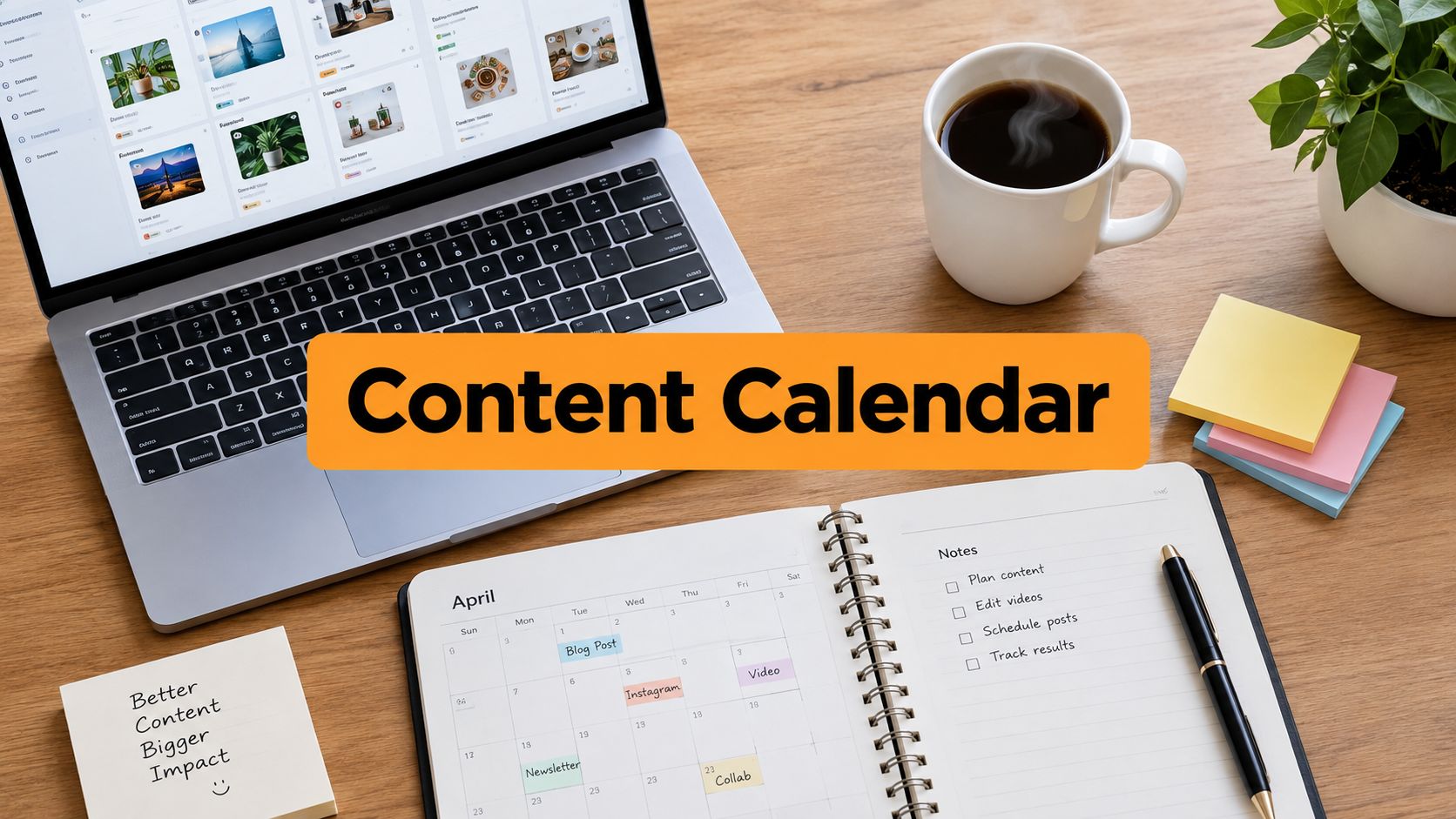
Then choose a rhythm the team can sustain without reducing quality. Scheduling ahead can ease production pressure, but leave room for timely responses to industry developments and relevant professional experiences.
Cadence should produce evidence, not superstition. A regular schedule cannot rescue recycled filler, unsupported claims, or posts written for everyone. It can reveal whether a stronger opening, a different format, or a clearer audience problem improves results over repeated tests.
RedactAI's scheduling and analytics tools can support this workflow by preparing variations, planning upcoming posts, and organizing performance signals. Use those signals for editorial decisions rather than handing judgment to the tool.
The trade-off is straightforward: a faster schedule creates more learning opportunities, while an unsustainable one lowers quality and weakens trust. Record each post's topic, format, timing, and result. That record turns consistency into a publishing system for improving reach, authority, engagement, timeliness, trust, efficiency, consistency, or discovery, depending on the strategic job of each post.
8. Hashtags for Professional Discovery
Hashtags serve discovery, not positioning. They classify a post and may place it before professionals following a related topic, but they cannot clarify a vague argument or repair a weak opening.
Choose tags from the post's actual subject. A B2B sales insight could combine a sales leadership term, a revenue operations term, and a specific buyer or process topic. An AI implementation post should reflect change management when that is the argument, rather than depending on a broad technology tag.
A quick editorial test helps:
- Does the tag describe the post accurately?
- Would the intended reader recognize its relevance?
- Does it aid discovery without crowding the post?
The LinkedIn hashtag guide from Up North Media provides practical guidance on relevant tags and the balance between broad and focused terms. Use those recommendations as starting points, then review whether particular tags accompany meaningful profile visits, comments, or professional conversations.
Hashtags can also support a recurring series. A personal tag for posts about hiring systems or product strategy gives related work a shared label, but only when the creator applies it consistently and maintains a recognizable point of view. Without a substantial body of work, a branded tag adds little.
The strategic job is professional discovery. Broad tags may expose a post to more people, while focused tags improve topical clarity. Too many create visual clutter and can make an insight look promotional. Put the argument first, then keep only the tags that help a relevant professional find and understand it. Review performance over several posts rather than judging a tag from one result.
8-Point Industry Insights Comparison
| Strategy | 🔄 Complexity | ⚡ Resource Requirements | 📊 Expected Outcomes | 💡 Ideal Use Cases | ⭐ Key Advantages |
|---|---|---|---|---|---|
| LinkedIn Algorithm Prioritization of Native Content | Medium, requires original content workflow and editing | Medium, time for writing/creative assets and scheduling tools | ~5x engagement vs external links; higher impressions and sustained visibility | Thought leadership, personal branding, posts prioritizing reach | Increased organic visibility, better engagement metrics, content stays on platform |
| Personal Brand Authority Through Consistent Niche Positioning | Medium, discipline to maintain 70%+ thematic consistency | Low–Medium, planning, content pillars, occasional research | ~3x follower growth and engagement vs generalists over time | Building industry authority, niche monetization, speaking/partnership pitches | Higher-quality followers, clearer positioning, easier ideation |
| Engagement-Driven Content Formats (Carousels, Polls, Videos) | High, design, video production, and format testing needed | High, design tools, video equipment/time, editing resources | Carousels ≈3x engagement; short video ≈5x impressions; more time-on-post | Explaining frameworks, driving interaction, increasing shares/time spent | Strong engagement boost, improved shareability, format diversity |
| Real-Time Trend Capitalization and FOMO-Driven Posting | High, constant monitoring and rapid turnaround (hours) | Medium–High, alerts, templates, quick content creation capability | Up to ~10x reach during 24–48h trend window; viral potential | Responding to launches, news, economic or cultural moments | First-mover advantage, rapid follower acquisition, high visibility spikes |
| Authentic Vulnerability and Personal Story Integration | Medium, requires editorial judgment and boundary setting | Low, personal time to craft narrative and edit for tone | ~2–4x engagement; deeper comments and meaningful conversations | Humanizing brand, trust-building, leadership and lessons posts | Strong emotional connection, lasting engagement, differentiation |
| Strategic Content Recycling and Evergreen Optimization | Medium, tracking top posts and creating fresh variations | Low–Medium, analytics, repurposing tools, scheduling | +30–50% additional engagement from recycled top-performing posts | Extending lifespan of best content, maintaining consistent cadence | Reduces creation burden, maximizes ROI, reaches missed audience segments |
| Data-Driven Posting Cadence and Timing Optimization | Medium, requires analytics, testing, and scheduling discipline | Medium, analytics tools, scheduling software, time for A/B tests | 40–60% higher cumulative reach; ~2x impressions at optimal times | Improving consistent reach, global audience scheduling, cadence planning | Predictable reach uplift, habit-forming schedule, data-backed timing |
| Strategic Hashtag Implementation and Discovery Optimization | Low, research and disciplined 3–5 hashtag use | Low, hashtag research tools and periodic audits | ~30% higher reach among hashtag followers; risk of suppression if over-tagged | Improving discoverability for niche topics and branded tracking | Better targeting without spam, improved discoverability, community building |
Turn These Patterns Into Your Publishing System
These eight industry insights examples work better as a system than as a collection of isolated post ideas. Start by choosing the professional problem you want to be known for. That decision gives your content a center of gravity and makes it easier to reject trends, formats, and topics that don't serve the audience you're trying to reach.
Next, match the insight to the publishing job. Use a native document when the idea needs structure and reach. Use a personal story when trust depends on lived experience. Use a poll when you want to learn how practitioners think. Use a trend response when a new development changes a decision your audience is already making. Recycle a proven idea when the thinking is strong but the original format limited its usefulness.
Then add the part that makes the post yours. That might be a client pattern, an operational observation, a disagreement with conventional advice, or a personal mistake that changed your process. Industry news becomes valuable when you explain the consequence for a defined group. A statistic becomes useful when you show what someone should do differently because of it.
Publish natively where possible, but don't turn that into a rigid rule. If an external report matters, summarize its relevance in the post and use the link as supporting evidence. Track the signals that match your objective, including meaningful comments for trust, saves for utility, profile visits for authority, and conversations for commercial relevance. Avoid judging every post by the same engagement measure.
A practical publishing loop looks like this:
- Choose a lane: Define the topic and audience before drafting.
- Select the format: Let the idea determine whether you need text, a document, video, or a poll.
- Add a point of view: Explain what the development means in practice.
- Publish with discipline: Use a cadence you can sustain and review timing against your own audience.
- Extend the idea: Rework strong insights into new formats instead of abandoning them after one post.
- Review with judgment: Keep useful signals, but don't let metrics replace professional taste.
RedactAI can fit into this workflow by analyzing existing posts, generating format-specific variations, supporting scheduling, and helping recycle ideas that still deserve attention. It can also help you turn research into a clearer publishing brief, much like the structured approach used in a financial AI analysis blog. The creator still owns the final decision about accuracy, tone, privacy, and whether the insight is worth publishing.
The aim isn't to imitate named creators or chase every moment of attention. It's to build a repeatable system that helps you notice meaningful developments, interpret them responsibly, and publish a perspective your audience can recognize as useful.
RedactAI helps professionals turn industry developments, personal experience, and existing LinkedIn ideas into personalized post drafts, format variations, scheduled updates, and recycled content that reflects their voice. Visit RedactAI to start building a more consistent LinkedIn insight system around the topics you know best.