LinkedIn post boosting starts at a $10 daily minimum, but a realistic starting point is $25 per day if you want enough delivery to learn anything useful. LinkedIn boost post cost ultimately depends on who you're targeting, what outcome you want, how competitive that audience is, and whether the post already deserves more reach.
You've probably been here already. A post is doing well by your usual standards. It's getting comments from the right people, a few profile views, maybe some inbound messages, and LinkedIn drops that tempting Boost button in front of you.
That's when the internal debate starts. Is this a smart way to get more mileage from a good post, or is it just LinkedIn charging you to undo weak organic distribution?
That concern isn't imaginary. Many users question whether boosting is a pay-to-play trap, and one cited concern is that LinkedIn can charge up to $29 per 1,000 impressions, while a $50 boost may only yield a few thousand impressions with no guaranteed conversions, as discussed in this LinkedIn post about post suppression and boosting economics. That's why the right question isn't “What does boosting cost?” It's “When does boosting deserve my budget?”
So You Have a Great Post Now What
A strong post usually gives you signals before you spend anything. The comments are relevant. The people engaging look like your buyers, peers, candidates, or partners. The post says something specific enough that it doesn't just attract passive likes.
That's the moment when boosting can make sense.
Not because boosting fixes bad performance. It doesn't. If a post is flat organically, a paid push usually just helps more people ignore it. The better use case is when the post already proved it can start a conversation, and you want to extend that conversation beyond your existing network.
Treat boosting like amplification, not rescue
The cleanest way to think about this is simple. Organic traction is your proof of relevance. Boosting is distribution.
If you skip the proof step, you're paying for guesswork. If you wait for a post to show signs of life, you're putting budget behind something with evidence behind it.
Practical rule: Never boost a post just because it looks polished. Boost it because the right people are already responding to it.
That's also why boosting belongs inside a larger content system. If your posting cadence, positioning, and audience focus are fuzzy, the spend decision gets fuzzy too. If you need to tighten the foundation first, this guide to a successful LinkedIn strategy is a useful reference because it frames paid distribution as one part of a broader B2B motion, not the whole strategy.
A simple operating rhythm looks like this:
- Publish organically first: Let the post gather natural engagement.
- Read the quality of response: Comments from target accounts matter more than generic reactions.
- Boost only the winners: Put spend behind posts that already show audience fit.
- Judge business impact later: Impressions alone don't make the boost worthwhile.
The cost question people usually ask too early
Inquiries about budget often come before assessing a post's worth for amplification. That's backwards.
A weak post at a low budget is still a weak investment. A strong post at a sensible budget can become one of the easier paid experiments you run on LinkedIn because the creative is already validated.
If you want the platform mechanics, audience setup, and campaign steps, this walkthrough on how to boost posts on LinkedIn covers the tactical setup. The bigger judgment call is still yours. Is this a post that earned more reach, or are you trying to buy confidence after the fact?
Boosted Posts vs Sponsored Content Ads
Boosting and Sponsored Content Ads get lumped together, but they solve different problems.
A boosted post is a megaphone for a conversation that's already happening. A Sponsored Content Ad is a billboard you build from scratch. One starts with existing content and adds paid reach. The other starts with campaign architecture, custom setup, and a broader paid media toolkit.

Where boosting wins
If your goal is to extend the life of a post that already worked, boosting is usually the cleaner option. It's faster to launch, easier to understand, and often more efficient for distribution.
Data cited by Willow shows boosted LinkedIn Page posts were more cost-effective than Sponsored Content Ads, with average savings of $11.26 per campaign and a 0.76% higher CTR than sponsored ads in their comparison of the two formats, which you can review in Willow's analysis of boosted LinkedIn Page posts vs Sponsored Content Ads.
That tracks with how people behave on the platform. Users often respond better to something that feels like content from a company page than something that feels built as an ad unit first.
Where Sponsored Content earns its keep
Sponsored Content Ads make more sense when you need tighter controls. You're building for a specific campaign. You want more customization. You need a more deliberate paid structure than “this post worked, let's push it further.”
A quick side-by-side helps:
| Format | Best use case | Trade-off |
|---|---|---|
| Boosted post | Amplifying proven organic content | Less depth and control |
| Sponsored Content Ad | Custom campaign execution | More setup and often higher cost |
If your decision process for organic versus paid social still feels muddy, ReachLabs.ai social media insights give a practical overview of where each approach tends to fit.
A boost works best when the creative is already validated. A sponsored campaign works best when the campaign itself needs custom design.
One mistake I see a lot is using Sponsored Content because it sounds more “serious,” even when the actual need is simple amplification. That's how teams end up paying more to recreate a post that was already doing the job.
For many B2B teams, boosted posts are the cheaper, quicker move when the content has already earned the right to scale. If the content hasn't earned that, neither format will save it.
You can get a broader platform view of paid distribution options in this guide to promoting on LinkedIn.
Decoding LinkedIn's Pricing Models
A deep media buying lecture isn't what's needed. The essential requirement is understanding the cost.
With LinkedIn boosting, the clearest cost model in the verified data is CPM, or cost per 1,000 impressions. That means you're paying for exposure. LinkedIn is charging for eyeballs on the post, not promising clicks, leads, or revenue.

Think in terms of outcome
If your post exists to build visibility, CPM logic makes sense. You're buying attention in front of a defined audience. That can be useful for founder visibility, employer brand content, event promotion, or thought leadership that supports sales conversations later.
If your real goal is traffic or direct response, you need to be honest about what a boost can and can't do. A boosted post may still generate clicks, but the setup starts from reach and delivery, not from a tightly engineered conversion campaign.
Here's a practical lens:
- Awareness goal: Paying for more people to see the post can be enough.
- Traffic goal: You need a post and destination that make clicking feel obvious.
- Lead goal: Boosting can assist, but it isn't a substitute for strong offer design and follow-through.
Why the pricing feels inconsistent
One reason marketers get frustrated with LinkedIn is that the same amount of spend can feel productive one week and disappointing the next. That's not random. The platform is working through audience value, auction pressure, and delivery opportunities.
That same pattern exists across social platforms. If you've managed Meta before, the mechanics will feel familiar even though the audience and cost profile are different. This 2026 guide to Facebook ad costs is useful as a comparison point because it highlights how platform economics change depending on who you're trying to reach and what behavior you're paying for.
Don't ask, “What does LinkedIn cost?” Ask, “What action am I paying LinkedIn to optimize for?”
That question keeps budgets grounded. If you're buying visibility, measure visibility in business context. If you're hoping for pipeline, don't pretend impressions are the finish line.
In practice, boosted posts are usually strongest when the desired result sits close to awareness and audience development. The further you move toward hard conversion, the more the surrounding system matters. Creative, targeting, landing page, offer, and follow-up all start carrying more weight than the boost itself.
The Four Key Factors That Drive Your Costs
The price of a boost doesn't move for one reason. It moves because several levers interact at once.
The verified data puts the midpoint at about $12 per 1,000 impressions, with actual cost varying from $7 to over $30+ depending on audience value and campaign goals, according to Joe Apfelbaum's write-up on LinkedIn organic post boosting costs and benchmarks. That spread is wide enough that two campaigns can feel like they're on different platforms.

Audience is the biggest pricing lever
If you target a high-value B2B audience, you should expect the auction to get more expensive. Senior decision-makers, niche functions, and tightly defined professional groups attract more competition because more advertisers want access to them.
Broad audiences usually give the system more room to deliver. Narrow audiences often increase the cost of reaching each block of impressions.
Goal shapes delivery
A boost tied to broad visibility behaves differently from one aimed at an audience that's harder to reach or more commercially valuable. Even when the post looks identical, the campaign goal changes how LinkedIn enters the auction and allocates inventory.
That's why marketers sometimes misread performance. They compare one boost to another without noticing that the targeting and business intent were completely different.
Here's the video version if you want another take on how these variables play out in practice.
Content quality still matters most
This is the part many people skip because it's less technical. The platform can only amplify what's there.
If the post earns comments, saves, clicks, or profile curiosity from the right audience, your spend usually has a better shot. If the post is vague, overpromotional, or written for everyone, targeting won't rescue it.
A practical way to think about the four cost drivers:
- Audience targeting: Narrow, expensive audiences tend to cost more to reach.
- Campaign objective: Different goals create different delivery patterns.
- Auction pressure: Some industries and audience segments attract heavier competition.
- Post quality and relevance: Better content usually gives the budget more room to work.
Field note: The factor you control most is the post itself. Not the auction. Not the platform. The post.
That's why the cheapest impressions aren't always the best outcome, and the most expensive ones aren't always bad. If the audience is highly relevant and the content is strong, paying more for the right reach can still be the smarter buy.
How to Set a Realistic Budget and Bid
Budgeting gets easier when you stop treating the minimum as the recommendation.
LinkedIn's hard floor for boosting is $10 per day, but LinkedIn best practices recommend at least $25 per day for better pacing and reach, as summarized in Hootsuite's breakdown of LinkedIn post boosting budgets and allocation behavior. If you start at the minimum, you can launch. That doesn't mean you'll learn much.
What different budget levels really mean
The $10 daily minimum is best viewed as a technical entry point. It lets you test the mechanics, confirm the audience setup, and get a feel for delivery.
The $25 daily level is a more practical starting point if your goal is to gather enough signal to judge whether the post merits more budget. It gives the system more room to find inventory and gives you a better shot at seeing patterns instead of noise.
A useful way to budget is by intent:
| Budget approach | Best use | Mindset |
|---|---|---|
| Minimum test | Confirm setup and basic delivery | Learning mode |
| Practical test | Evaluate whether a winner deserves scale | Decision mode |
| Scaled spend | Extend reach on proven posts | Efficiency mode |
Why daily spend doesn't look even
A lot of people think LinkedIn is overspending when one day looks quiet and the next day jumps. The platform doesn't pace every day equally.
According to the verified data, LinkedIn dynamically allocates budget across campaign days and can spend more on higher-opportunity days while staying within the lifetime cap. That's normal platform behavior, not necessarily a problem.
So don't panic if the spend pattern looks uneven. Uneven pacing can be part of how the system tries to find better delivery opportunities.
A practical budgeting routine looks like this:
Start with one proven post
Pick something with solid organic response from the right audience.Use a budget you can afford to accurately assess If the spend is too low to produce any signal, the test isn't useful.
Watch for business-adjacent outcomes
Profile visits, direct inquiries, follower quality, and website activity matter more than vanity reactions.Scale only after evidence
Don't raise spend because you're impatient. Raise it because the post is clearly pulling useful outcomes.
Small budgets are fine for testing. Small budgets are bad when you expect certainty from them.
A lot of wasted spend comes from forcing a verdict too early. Give the campaign enough room to show what it can do, but not so much room that you keep funding a mediocre post out of hope.
Measuring ROI and Optimizing Your Spend
A boost is only worth it if it moves something you actually care about.
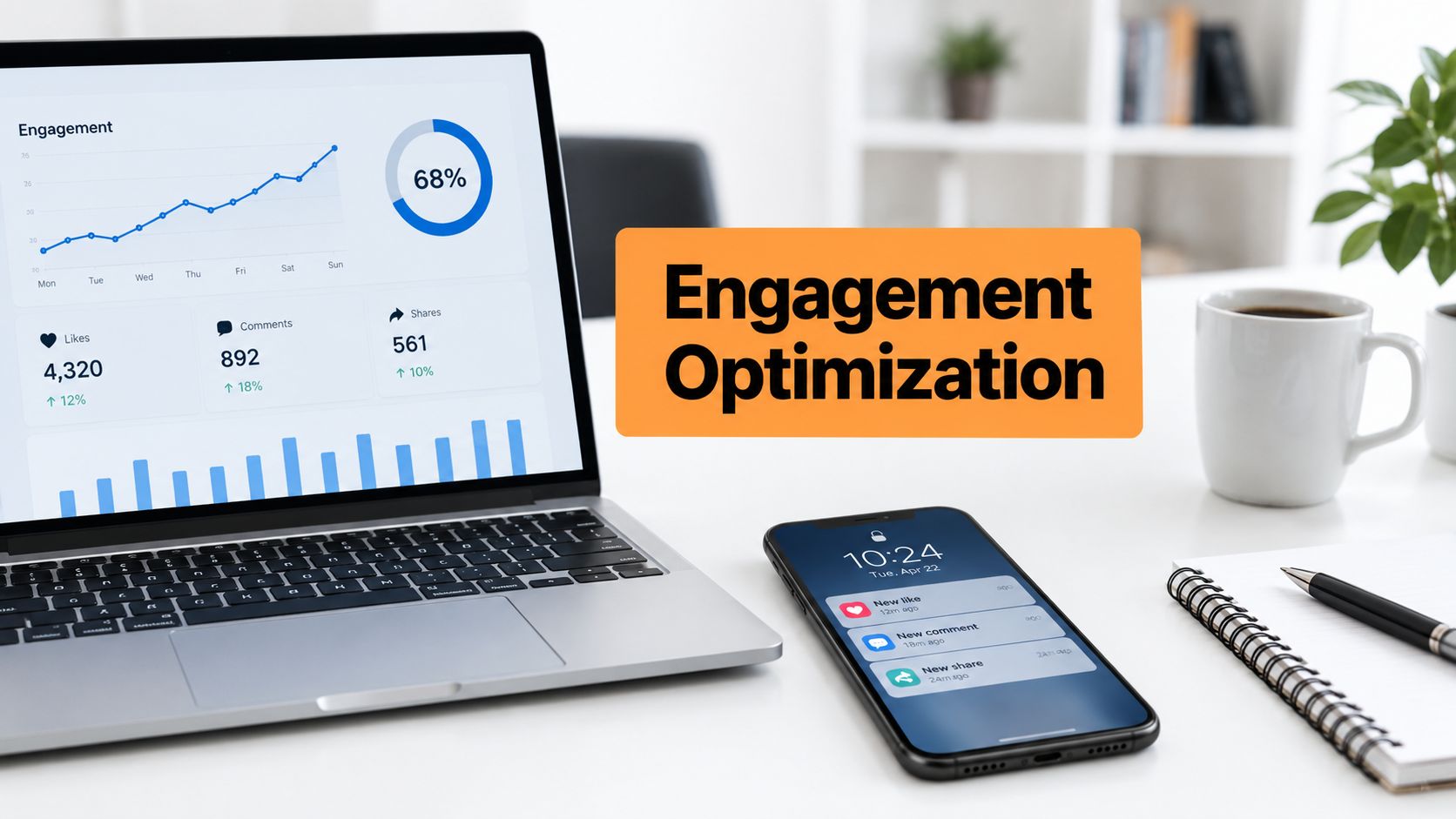
That might be profile visits from target accounts. It might be follower growth among the right audience. It might be website clicks, connection requests, replies, or conversations that sales can trace back to the post. The mistake is treating impressions as the end goal when they're only the first layer of evidence.

What to track after launch
Once the boost is live, look at the whole chain.
A post can get broad reach and still do nothing useful. Another can get more modest reach and effectively drive the exact people you wanted into your profile or site.
Use a short checklist:
- Check audience quality: Are the people engaging the people you hoped to reach?
- Review click intent: If there's a link, are people taking the next step?
- Watch profile behavior: Good boosts often create profile visits before they create direct inquiries.
- Look for downstream action: Messages, booked calls, and qualified conversations matter more than surface engagement.
When to keep spending and when to stop
The easiest optimization rule is this. If a post keeps attracting the right audience and creates useful second-order actions, it may deserve more budget. If it only inflates top-line visibility and nothing else moves, cut it.
You don't need a complicated model to make better decisions. You need discipline.
A clean review process usually includes:
- Keep running it when the post reaches the right people and triggers meaningful next steps.
- Tighten the audience if engagement is broad but irrelevant.
- Swap the post if the message isn't landing.
- Stop the boost if the spend produces attention with no business signal attached.
Good optimization isn't squeezing every last impression out of a post. It's protecting budget from posts that never had real commercial potential.
If you want a more structured framework for tying social activity back to outcomes, this guide to measuring social media ROI is worth reviewing.
The best way to lower your LinkedIn boost post cost is boring, but reliable. Publish better posts. Say something specific. Target a clear audience. Boost only the content that already proved it can earn attention. That's how boosting becomes an amplifier instead of a tax.
If you want more posts that are worth boosting, RedactAI helps you create LinkedIn content in your own voice, turn ideas into publishable drafts faster, and spot the kinds of posts that deserve paid amplification instead of wasted budget.