You probably already know the feeling. Monday starts with good intentions, someone says “we need to post more on LinkedIn,” a few ideas get dumped into Slack or Notion, and by Thursday the whole plan has drifted into last-minute improvisation.
That's usually when teams swing too far in one direction. They either build a rigid content machine that feels lifeless, or they stay so reactive that nothing gets published consistently. A useful LinkedIn editorial calendar sits in the middle. It gives you enough structure to stay visible and enough flexibility to sound relevant when the market shifts.
That balance matters more than most guides admit. A calendar that can't handle real-time commentary breaks fast, especially if you work in AI, recruiting, consulting, SaaS, or any category where news moves quickly and your audience expects a point of view.
First Things First Laying Your Strategic Foundation
Most LinkedIn calendars fail before the first post is drafted. The problem usually isn't the template. It's that the strategy underneath it is fuzzy.
If you manage LinkedIn for yourself or for clients, pick one primary objective first. Not three. One. You can support other outcomes later, but your calendar needs a clear operating priority.
Pick the job your content needs to do
A LinkedIn post can attract leads, strengthen a founder's reputation, support hiring, revive warm accounts, or keep a brand top of mind. It usually can't do all of those equally well at once.
A practical way to decide is to ask: if your content worked exactly as planned for the next quarter, what would you want to see happen?
- Lead generation: You want more qualified conversations in DMs, comments, and follow-up calls.
- Personal brand: You want people to associate a specific expertise with your name.
- Employer brand: You want candidates to understand how the company thinks and operates.
- Category authority: You want peers, buyers, or media to quote your perspective.
That choice shapes everything else. A lead-focused calendar usually leans into pain points, objections, and sharp opinions. A hiring-focused one needs more culture, process, and team visibility. A thought-leadership plan needs stronger interpretation, not just information.
Practical rule: If every post could fit under any business goal, your strategy is too broad.
Define a real audience, not a deck persona
Most audience profiles are too polished to be useful. “Marketing leaders at mid-sized B2B companies” isn't enough to guide day-to-day decisions.
Build a working profile around behavior and tension:
- What are they trying to achieve right now?
- What slows them down at work?
- What kind of post makes them stop scrolling?
- What language do they use when they explain the problem?
For example, “Heads of Marketing at SaaS companies who need to prove content is influencing pipeline” is more actionable than “B2B marketers.” It tells you what examples to use, what objections to answer, and what kinds of CTAs won't feel random.
Set your editorial filter
Before any topic goes on the calendar, test it against three questions:
- Does this help the target audience do something better?
- Does it support the primary goal you picked?
- Would you still be comfortable being known for this topic six months from now?
If a post idea fails one of those tests, it probably belongs somewhere else.
One more thing. Don't treat LinkedIn as a place for net-new ideas only. Good calendars often work better when they're tied to your broader content ecosystem. If you already publish webinars, blog posts, sales enablement material, or customer FAQs, repurposing that material can maximize content reach without making your calendar feel repetitive.
Defining Your Content Pillars and Posting Cadence
Once the strategy is clear, the calendar needs a backbone. That's where content pillars come in. They keep your LinkedIn presence recognizable instead of random.

Build pillars that are broad enough to sustain
For most brands and executives, 3 to 5 pillars is the sweet spot. Fewer than that gets repetitive. Too many and the calendar loses focus.
Common pillars that hold up well on LinkedIn:
| Pillar | What it includes | What usually goes wrong |
|---|---|---|
| Industry insights | Commentary on trends, shifts, and implications | Reposting news without a point of view |
| Career growth | Advice, mistakes, lessons, hiring signals | Generic inspiration with no practical use |
| Company culture | Team habits, operating principles, behind-the-scenes content | Empty “look at our people” posts |
| Customer pain points | Patterns you see in calls, objections, recurring bottlenecks | Turning every post into a sales pitch |
| Personal lessons | Strong takes shaped by firsthand experience | Making every post a diary entry |
The strongest pillars are tied to recurring expertise, not content formats. “Video posts” is not a pillar. “How enterprise buyers evaluate vendors” can be.
Choose a cadence you can actually maintain
A lot of people ask for the ideal posting frequency when they really mean, “What can I sustain without slipping after two weeks?”
A practical LinkedIn editorial calendar is often built around 3 to 5 posts per week, and one source citing LinkedIn data through Hootsuite notes that weekly posting can produce a 2x lift in engagement. The same guidance also advises avoiding two posts within the same 24-hour window because the later post may get less reach if the earlier one is still gaining traction, as noted in this LinkedIn editorial calendar guidance.
That's useful for two reasons. First, consistency matters. Second, over-posting in a rush can work against you.
A strong cadence is one you can keep during a busy month, not just during a planning sprint.
A simple way to map the week
If you're managing a founder account or a company page with limited production time, keep the weekly mix simple.
- One opinion post: A clear take on something happening in the industry.
- One practical post: A framework, checklist, lesson, or teardown.
- One credibility post: A customer insight, operator lesson, team process, or behind-the-scenes view.
- Optional fourth or fifth slot: Use these for experiments, repurposed winners, or timely reactions.
This mix usually beats a feed full of one-note thought leadership. It also makes idea generation easier because each planned slot has a job.
How to Build a Flexible Calendar Template
A LinkedIn editorial calendar should be easy to update in under a minute. If it takes more effort to maintain than to post, people stop using it.
That's why I still like a spreadsheet or a clean Notion database for many teams. Fancy software isn't the win. Clear fields and simple decisions are.
Use a lean template, not a complicated one
The minimum useful calendar tracks what's publishing, why it exists, and where it is in the workflow.
Here's a straightforward version.
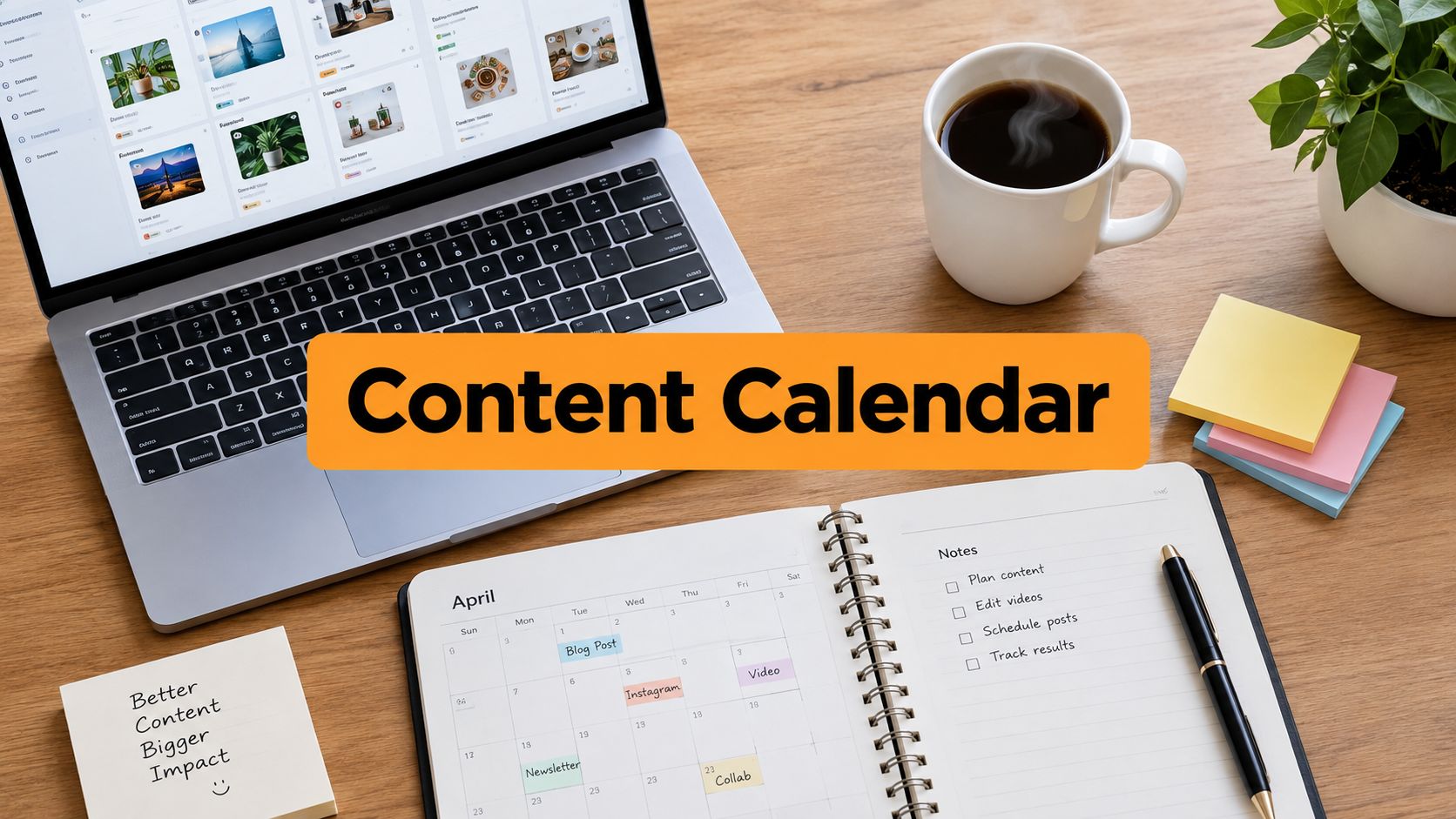
| Publish Date | Status | Content Pillar | Post Type | Core Message (Draft) | Link/Asset | CTA |
|---|---|---|---|---|---|---|
That's enough to manage most executive, founder, and agency workflows.
A few notes from actual use:
- Publish Date: Put the intended date in early, even if the draft is rough.
- Status: Keep it simple. Draft, reviewing, scheduled, published.
- Content Pillar: This prevents accidental overloading of one theme.
- Post Type: Text, document post, image, poll, video.
- Core Message: One or two sentences only. If this field becomes a mini essay, the idea isn't clear yet.
- Link/Asset: Attach the source doc, image, carousel, or reference material.
- CTA: Define what response you want. Comment, DM, click, save, or share an opinion.
If you need a broader social planning framework, this social media content calendar guide covers the mechanics well.
Leave room for the posts you can't plan yet
Most calendars become weak here. They're organized, but brittle.
A frequently underserved question is whether a LinkedIn editorial calendar should prioritize consistency or real-time responsiveness. The stronger calendars aren't purely static. They need a controlled reactive buffer for timely commentary, especially in fast-moving sectors, as discussed in this editorial calendar perspective from Passle.
In practice, that means you should not schedule every available slot far in advance.
If your calendar is full from wall to wall, you've built a publishing schedule, not an editorial system.
How the reactive buffer works
I usually separate calendar slots into two categories:
Planned slots
These carry your durable content. Core lessons, recurring themes, proven angles, launch support, team storytelling, and repurposed winners all belong here.
Planned content does the heavy lifting for consistency. It also reduces creative fatigue because you're not inventing everything in real time.
Open slots
These stay intentionally unscheduled until closer to publish time. Use them for things like:
- Industry movement: New product launches, hiring shifts, policy changes, platform changes.
- Hot takes with substance: Not trend-jumping for attention, but informed interpretation.
- Audience response content: Posts that answer comments, objections, or questions you're seeing repeatedly.
- Unexpected proof points: A fresh client conversation, sales call pattern, recruiting insight, or internal lesson.
The key is control. The reactive buffer shouldn't become a daily scramble. Keep a short list of standby ideas in the calendar so open slots still have a fallback if nothing timely deserves publication.
What doesn't work
Rigid calendars usually fail in predictable ways:
- The tone becomes stale because every post was planned too early.
- Timely opportunities get ignored because “the schedule is locked.”
- Teams force weak posts live just to fill a slot.
- Subject matter experts stop contributing because the system feels over-engineered.
The fix isn't less planning. It's smarter planning. Lock in the durable content first, then protect space for relevance.
Streamline Your Workflow with Scheduling and AI
A calendar only helps if your workflow makes publishing easy. Many organizations don't need more ideas. They need less friction between idea, draft, approval, and scheduling.
That's where batching helps. Draft several posts in one sitting, review them together, and schedule what's ready. Save the reactive slots for later review.

Use scheduling for the predictable work
Scheduling tools are most useful for planned content, not for everything. The predictable posts are the ones you already know belong on the calendar: educational posts, recurring series, event support, and repurposed content.
That gives you two advantages:
- Cleaner production blocks: You can write and queue content when your brain is fresh.
- Better review habits: Teams catch weak hooks or vague CTAs before the post is live.
The mistake is scheduling too far ahead without checking whether the post still feels timely. Scheduled content should still get a quick final pass before publishing.
Let AI handle draft velocity, not final judgment
AI is most useful at the blank-page stage. It helps you turn rough notes into usable starting points, generate alternate hooks, reframe the same topic for different audiences, and create backup ideas for open calendar slots.
One option in this category is LinkedIn post automation workflows. Tools like RedactAI are built for LinkedIn-specific drafting, scheduling, and recycling, which makes them practical for people managing multiple voices or multiple accounts.
What AI should not do is make strategic decisions for you. It can suggest phrasing. It can't tell whether a take is original, whether your audience is tired of the topic, or whether a post sounds like something your founder would say themselves.
Good AI use sounds more like assisted drafting than outsourced thinking.
A short walkthrough helps if you're tightening your process:
A practical production stack
A simple workflow that tends to hold up:
- Collect raw ideas from calls, meetings, sales objections, and market news.
- Draft in batches using a document, Notion board, or AI assistant.
- Review for voice so the writing still sounds human and specific.
- Schedule planned posts for the week ahead.
- Revisit open slots closer to publish time.
That system is less glamorous than a giant content ops setup, but it's easier to sustain.
Measure Performance and Repurpose Your Winners
The calendar isn't finished when the post goes live. It gets better when you review what landed.
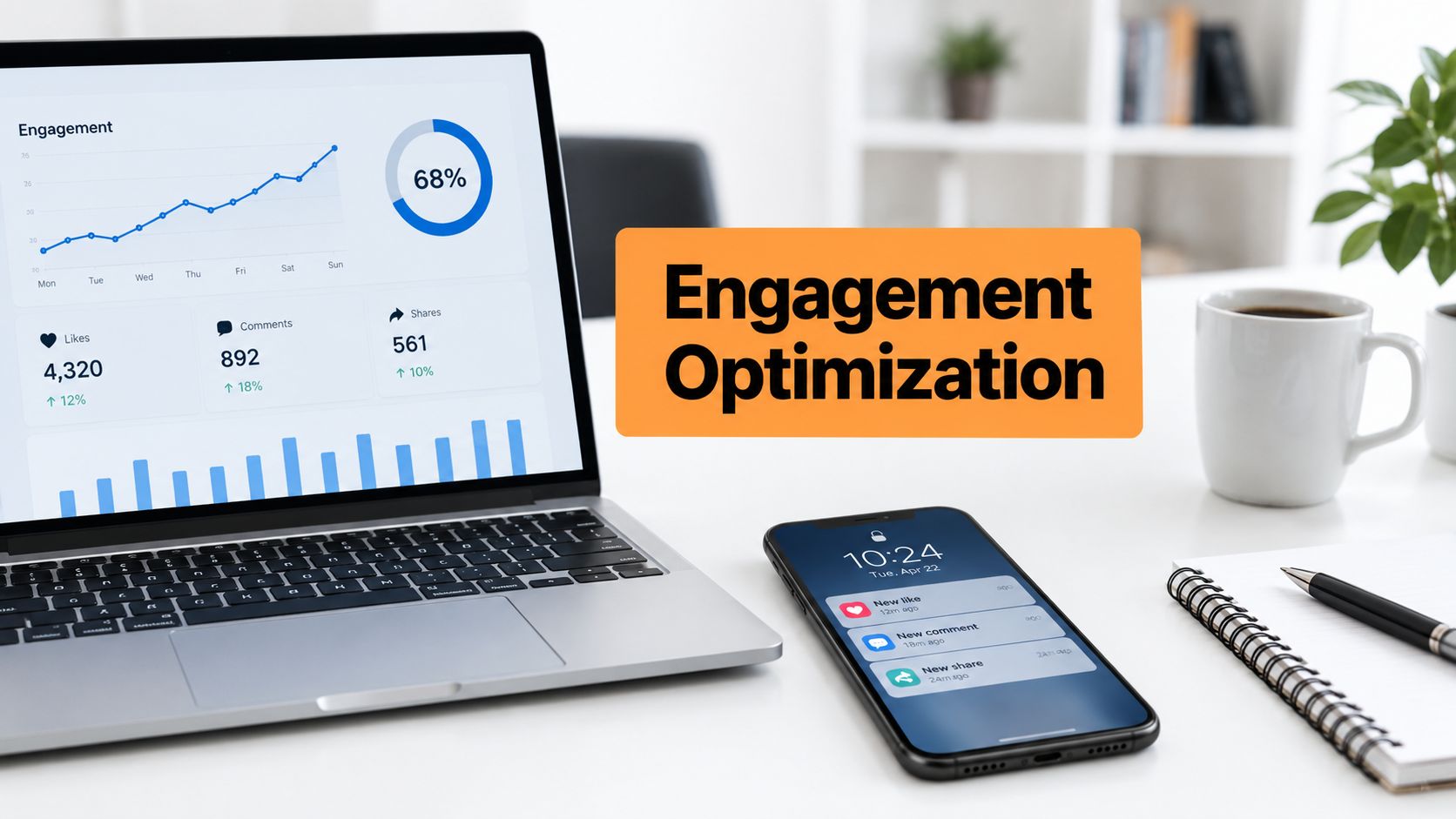
A lot of LinkedIn reporting gets stuck at surface level. Impressions and likes are useful context, but they don't tell you much on their own. You need to look at the signals that show whether the post changed behavior or sparked serious interest.

What to review each month
I'd focus on a short set of practical questions:
- Which posts generated strong comments? Comments usually reveal depth of resonance better than passive reactions.
- Which posts drove clicks or replies? If the goal is pipeline, attention alone isn't enough.
- Which topics kept recurring among your stronger posts? That points to pillar strength.
- Which formats underperformed repeatedly? Not every account needs polls, carousels, or video.
If you want a more structured review process, this content performance measurement guide is a useful reference.
Find winners by pattern, not by ego
The winner isn't always the flashiest post. Sometimes the best-performing content is the one that brought in thoughtful comments from the right people, started a sales conversation, or got shared internally by your audience.
Look for patterns such as:
| Signal | What it often means |
|---|---|
| High-quality comments | The topic struck a nerve or invited informed debate |
| Strong link clicks | Your hook and CTA matched the audience's intent |
| Saves or shares | The content felt useful enough to revisit or pass along |
| Repeat engagement on a pillar | You've found a theme worth developing further |
The post that flatters your ego and the post that supports your business are not always the same one.
Repurpose before you create from scratch
Once you identify a winner, don't just admire it. Rework it.
A solid text post can become a carousel outline, a short video script, a poll with sharper framing, or a deeper article angle. A system outperforms inspiration. When a topic has already proven itself, your next job is to extend its life.
That process also helps when writing energy is low. If you struggle to stay focused during production sessions, this guide to focused writing has some practical ideas for reducing context switching and getting drafts finished.
The strongest LinkedIn editorial calendars aren't packed with brand-new ideas every week. They're fed by recurring themes, proven angles, and better versions of posts that already earned attention.
If you want a faster way to turn ideas, rough notes, and past posts into a usable LinkedIn editorial calendar, RedactAI can help with drafting, scheduling, and recycling content while keeping the workflow manageable.