Monday morning, your draft is blank, your inbox is already moving, and you need a LinkedIn post that sounds useful before the week swallows the rest of your attention. That's the core problem behind most monday LinkedIn post ideas. You don't need more random prompts, you need repeatable formats that fit different moods, roles, and goals.
The best Monday posts usually do one of two things, they reset the week or they create momentum for the days ahead. That matches what LinkedIn timing research keeps showing, including the fact that Monday performance isn't one-size-fits-all and should be tested against your own audience and time zone, not copied from a universal schedule (LinkedIn timing guidance summarized by Buffer, Adobe Express survey on Monday posting habits). If you want a compliant profile setup while you're building a consistent posting habit, use the compliant LinkedIn profile for advisors as a reference point.
These eight templates give you a weekly publishing system, not just a brainstorm list. Pick the one that matches your energy, draft it fast, and repeat it until it becomes part of your Monday routine.
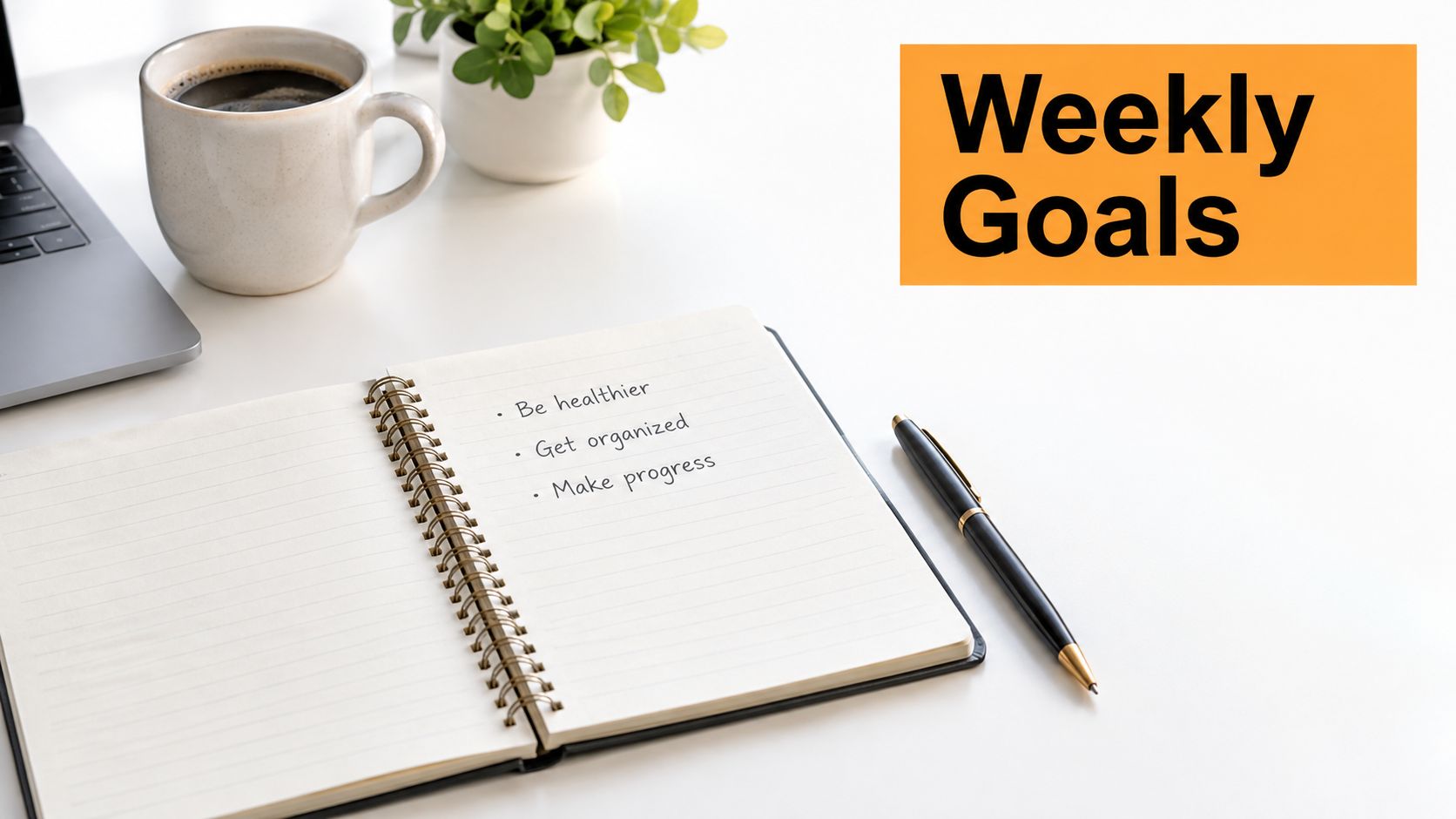
1. Weekly Goals Commitment Post
A Monday goals post works because it gives your network something concrete to follow. It's not vague motivation, it's public direction, and that makes it easier for people to reply, check back, or mentally file you under “focused.”
A clean version sounds like this, “This week I'm focused on three things, finalizing our Q3 pilot, interviewing two candidates for the ops role, and publishing two case studies.” That structure works for founders, consultants, and sales professionals because it shows priorities without oversharing. It also sets up a Friday recap post later, which is where the format gets even stronger.
Keep the goals easy to verify
Make each goal specific enough that you can report back on it without inventing a story later. “Work on onboarding” is too soft. “Finish onboarding checklist for three new hires” gives you something real to update.
A good Monday goals post usually follows a simple rhythm:
- State the week's focus clearly. Use 2 to 3 outcomes, not a laundry list.
- Add one line of context. Explain why the goal matters to clients, customers, or the team.
- Leave room for a Friday follow-up. If you can't report progress later, the post was too fuzzy.
Draft this on Friday or Sunday while your week is still visible. If you use a scheduling tool, keep the post anchored to the same early time each week so the habit feels like a system, not a scramble. For a deeper branding angle, the guidance in personal branding goals fits neatly with this format.
Practical rule: if a goal can't be explained in one sentence, it's probably too broad for a Monday post.
2. Last Week's Lessons Reflection
This is the easiest Monday format to keep sounding human. You're not forcing a polished win, you're pulling one useful lesson from actual work and showing how your thinking changed.
A strong version starts with a specific moment. “Last week I lost a $20K proposal. The reason wasn't price. I hadn't asked the buyer what success looked like.” That's better than a generic reflection because it gives readers a real scene, a real problem, and a real shift in approach. It also works for recruiters, who can turn a candidate rejection, a referral, or a follow-up mistake into something practical.
Keep the lesson narrow
One lesson is enough. If you try to squeeze in three takeaways, the post starts sounding like a blog summary instead of a real Monday reflection.
Use this structure:
- Open with the event. One sentence, no scene-setting fluff.
- Name the lesson. Make it plain and direct.
- End with a question. Ask readers what they learned last week, or what changed for them.
This format is especially strong when your week included ordinary work, not dramatic wins. A rejected candidate who later referred two strong hires is still a useful story because it shows the value of follow-up. A failed pitch that exposed a bad assumption is still worth posting because it makes your process visible.
Keep the voice consistent
If you want to use this weekly, save the raw notes somewhere before Monday hits. Then turn those notes into a repeatable reflective tone instead of rewriting from scratch every time. That's where a drafting tool helps, especially if you want the post to sound like you rather than like a generic “lesson learned” template.
The best version doesn't try to sound wise. It sounds honest, compact, and useful.
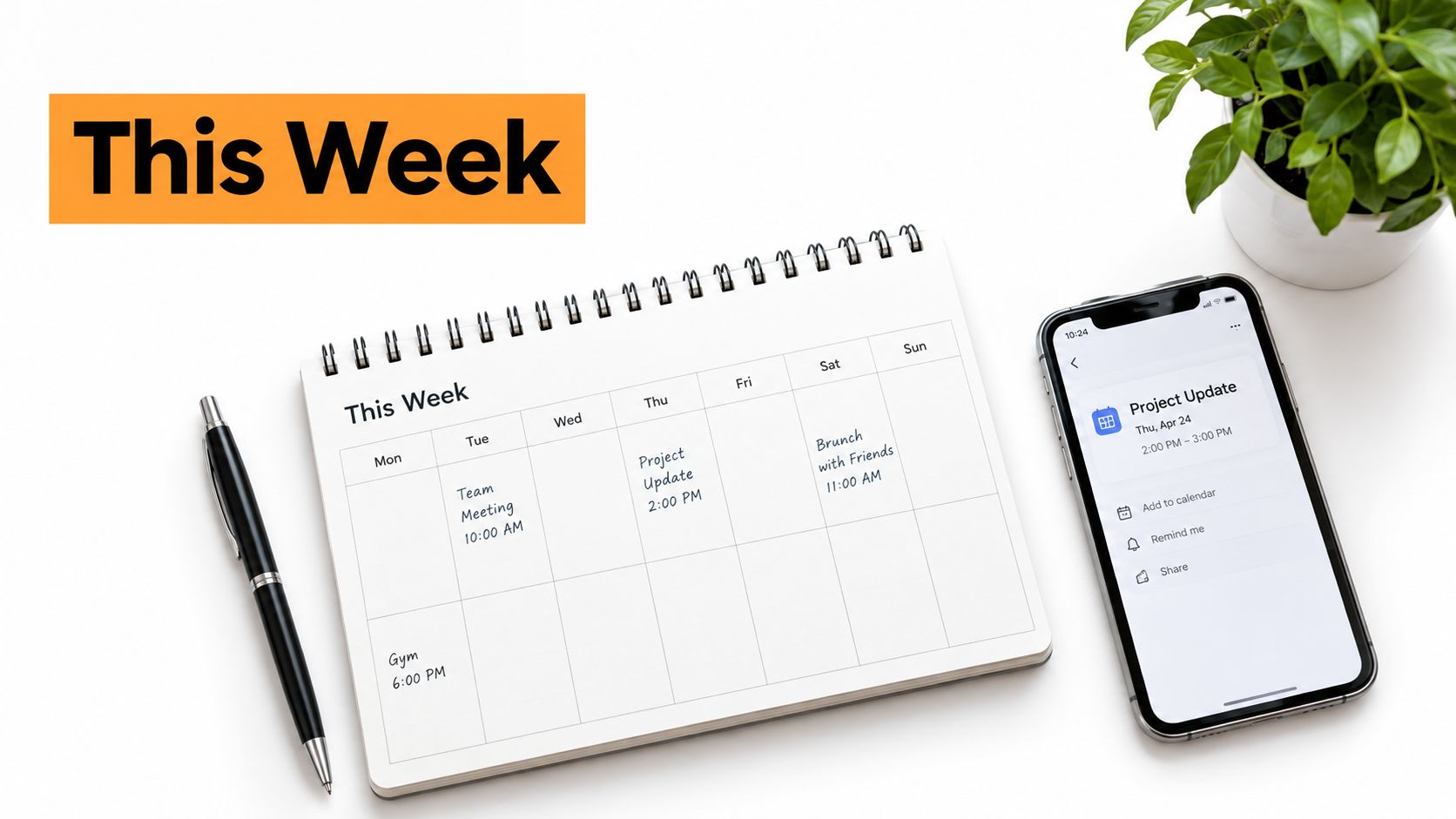
3. Week Ahead Preview
A Monday preview post is built for people who already have something on the calendar. It gives your audience a reason to pay attention later in the week, and it gives you an easy way to turn one event into two posts.
The key is to lead with the date and time, then give one clear reason to care. “This Thursday at 2 p.m. ET, I'm hosting a 30-minute session on pricing AI services. Here's what we'll cover.” That kind of post works because it's immediately actionable, and readers don't have to guess when or why to show up.
Make the preview useful before the event
Don't just announce the event. Share one teaser insight so the post feels valuable even if someone never registers. A short excerpt from a client case study, a key point from the session, or one common mistake you'll cover is usually enough.
You can use this structure:
- Lead with the schedule. Include the day, time, and time zone.
- Add one teaser takeaway. Give readers a reason to save or share the post.
- Close with a simple action. Register, reply, or set a reminder.
If you run webinars, launches, or client announcements, this format is one of the easiest ways to turn Monday into a lead-in day instead of a dead-end post. It also gives you a second piece of content midweek, which is useful when a single announcement needs more than one touchpoint.
The strongest preview posts feel calm and specific. They don't oversell the event, they make the event easy to understand.
4. Monday Industry Trend Take
Monday's industry news can become a useful decision post when you add judgment instead of repeating a headline. Choose one shift from the past week, state your view in the first line, and show how it changes a decision readers may face now.
For example:
Our take: buyers are researching longer before speaking with sales, so outbound messages need to answer early questions instead of pushing for a call immediately.
Follow with the signal behind that view, such as a report, article, or observed change in customer behavior. Keep the context short. Readers need enough evidence to understand your point, not a full news recap.
Then make the post practical:
- State the change. Explain what has shifted in the market or your field.
- Name the trade-off. Show what the change improves and what it makes harder.
- Give a Monday action. Suggest one adjustment readers can make this week.
- Invite a useful response. Ask how others are handling the same shift.
A recruiter could connect a labor-market signal to hiring priorities. A sales leader could explain how earlier buyer research changes outbound messaging. A content strategist could show why a new search behavior affects this week's editorial choices. Each example links the trend to work someone can change.
Keep a short list of possible sources in your notes or browser tabs over the weekend. On Monday, select the strongest angle and edit it into a clear point of view. Check any figures against the original source before publishing. If you cannot verify a number, leave it out.
Your follow-up can extend the idea later in the week: share a short example, ask for objections, or show what changed after you applied the recommendation. That turns one trend into a small publishing sequence.
A strong Monday trend post lets readers make a better decision after reading it. Agreement alone is not enough.
5. Monday Myth-Busting Contrarian Post
Monday is a useful time to challenge a habit your audience may repeat without examining. Choose one belief, explain where it fails, and replace it with a practical rule readers can test during the week.
Try this angle: “Stop asking prospects, ‘Does this sound good?’ It invites a no. Ask what would make this a clear yes instead.” The point challenges a familiar sales question while giving readers a usable alternative. In hiring, you could question vague “culture fit” interviews and show how clearer criteria produce better conversations.
Build the argument around a real trade-off
Open with the belief, then show the situation that exposes its weakness. A sales team might hear polite agreement but learn little about the buyer's concerns. A hiring manager might value cultural similarity yet overlook the skills the role requires.
Your replacement should be specific enough to use on Monday:
- State the myth. Quote the habit or assumption in plain language.
- Show the cost. Explain what it hides, delays, or makes harder.
- Offer a better move. Give readers a question, process, or rule to try.
- Invite a test. Ask what changed after they used it.
Acknowledge when the original approach can work. Asking whether something sounds good may suit an early, informal conversation, while a decision-stage discussion needs a question that surfaces objections. That trade-off makes the post more credible than a blanket rejection.
Write the post in a voice you would use with a colleague. A calm version may invite more thoughtful comments, while a sharper opening can stop the scroll. Follow up later in the week with a reader's example, a counterargument, or what happened after applying the replacement.
The strongest contrarian post leaves people with a better decision rule, not just a disagreement. Monday gives them time to test it before the week is over.
6. Monday Engagement Question or Poll
"What's the biggest blocker in your hiring process right now, time, budget, or candidate quality?" That question works on a Monday morning because someone living that problem can answer it in ten seconds. A lighter version, "Monday question, what's one tool you couldn't work without this week?", pulls in a wider crowd and still gives you usable replies.
Aim for a conversation that tells you what your network cares about right now. Random opinions won't help you plan anything.
The difference between a post that gets 40 vague comments and one that gets 12 useful ones comes down to how you frame the ask. "What are your thoughts on leadership?" invites everyone and informs no one. A question tied to a real decision, a tool choice, or a workflow snag attracts the people dealing with it, and their answers tell you what to write about later in the week.
A few practical rules keep polls and question posts sharp:
- Make the topic obvious. Readers should know instantly whether the post applies to them.
- Keep the answer choices tight. A poll with three focused options beats one with six overlapping ones.
- Reply early. The first few comments set the tone for everyone who scrolls past later.
This format pairs naturally with interactive content ideas because it invites participation directly, without pretending to teach something huge. It's also the cheapest post on this list to produce, which matters when Monday mornings are already crowded with meetings.
One follow-up habit worth building: on Wednesday or Thursday, post a short summary of what people said, or highlight one answer that surprised you. It closes the loop, and it gives the people who commented a reason to show up again next Monday.
7. Team or Client Win Shoutout
A shoutout post does quiet work on LinkedIn. It builds goodwill, shows the results your business delivers, and gives the featured person a reason to reshare it to their own network. That reshare is often where the reach comes from.
Here's a version that works: "Huge congrats to Priya on closing our largest onboarding project this quarter. Her client-first approach made the difference." Three things happen in those two sentences. Priya gets named, the result gets stated, and the reason it mattered gets explained. Compare that to a bare "congrats to the team!" line, which reads as filler and gives readers nothing to react to.

The gap between a milestone and a story is impact. "We hit our delivery deadline" is a milestone. "We hit the deadline despite a mid-project scope change, because the team rebuilt the plan in one afternoon" is a story people remember. When you write the post, keep asking what changed for the client or the business, and put that in the text.
For agencies, recruiters, and team leaders, this is one of the cleanest ways to show culture without drifting into empty praise. It also supports employer branding, since it proves people inside the business get things done together.
One rule I never skip: get written approval before naming a client or posting anyone's photo. It takes a minute and saves you from an awkward deletion later. If you want this as a recurring Monday slot, fix a caption style, something like "Monday Wins," so each post reads as part of a series rather than a one-off celebration.
The balance to aim for is simple. The subject looks good, and your business looks steady.
8. Monday Productivity System or Routine
A Monday routine post shares a simple workflow your readers can adapt, which makes it easy to save and reuse. If your audience prefers practical posts over opinion pieces, this is the one to lean on.
Here is a clean example: "My Monday planning routine in 20 minutes, 1) review last week's wins, 2) pick three priorities, 3) block focus time before any meetings." It works because it is specific, repeatable, and realistic. A freelance writer could use the same format to explain how they batch-draft posts on Sunday evening so Monday morning stays clear.
One warning before you write yours. A productivity post falls apart when it sounds like a fantasy routine nobody can maintain. Keep it to 3 to 5 steps, and make sure the steps reflect something you do. Readers who try your routine and fail will not trust the next one.
A structure I keep coming back to:
- Step 1, reset. Review what mattered last week.
- Step 2, decide. Choose the few things that need attention.
- Step 3, protect time. Block the work before meetings crowd it out.
If you want this as a recurring slot, label it something like "Monday Systems" and keep the tone practical. Readers recognize the format, and you skip the blank-page problem every week.
This is also where batching helps. The workflow behind content batching applies directly here: if you already know your Monday routine, you can batch draft the post ahead of time and keep your publishing cadence steady. The point is to show one thing that helps you start the week with less friction, and to keep showing it consistently.
8-Point Comparison of Monday LinkedIn Post Ideas
| Post Type | Implementation Complexity 🔄 | Resources & Speed ⚡ | Expected Outcomes ⭐ / Impact 📊 | Ideal Use Cases 💡 | Key Advantages ⭐ |
|---|---|---|---|---|---|
| Weekly Goals Commitment Post | 🔄 Low, repeatable template | ⚡ Low, 5–15 min, schedulable | ⭐ Builds accountability; 📊 moderate recurring engagement | 💡 Founders, consultants, sales leaders showing priorities | ⭐ Consistent visibility; invites follow-up |
| Last Week's Lessons Reflection | 🔄 Medium, needs honest reflection | ⚡ Low–Medium, source from real events | ⭐ High authenticity; 📊 strong trust and comments | 💡 Executives, coaches, storytelling personal brands | ⭐ Deepens credibility; encourages discussion |
| Week Ahead Preview | 🔄 Low, straightforward if event exists | ⚡ Medium, assets/links and reminders needed | ⭐ Drives actions; 📊 high registrations/attendance | 💡 Agencies, B2B companies, speakers promoting events | ⭐ Converts interest to attendance; creates momentum |
| Monday Industry Trend Take | 🔄 Medium, requires monitoring & verification | ⚡ Medium, research time for accuracy | ⭐ Positions as expert; 📊 timely debate and shares | 💡 Consultants, analysts, B2B thought leaders | ⭐ Establishes authority; timely relevance |
| Monday Myth-Busting Contrarian Post | 🔄 Medium, craft evidence-backed angle | ⚡ Low–Medium, needs examples/evidence | ⭐ High attention; 📊 potential for viral but polarized engagement | 💡 Sales, marketing, executives aiming to spark discussion | ⭐ Differentiates voice; provokes strong engagement |
| Monday Engagement Question or Poll | 🔄 Low, single focused prompt | ⚡ Low, quick to publish; native poll tools | ⭐ Moderate engagement; 📊 collects audience insights | 💡 Anyone seeking interaction and market feedback | ⭐ Boosts comments; provides audience data |
| Team or Client Win Shoutout | 🔄 Low, requires permission & specifics | ⚡ Low, photo/quote helpful | ⭐ Builds goodwill; 📊 extends reach via tags/reshares | 💡 Agencies, recruiters, leaders building culture | ⭐ Strengthens relationships; positive social proof |
| Monday Productivity System or Routine | 🔄 Medium, document clear steps | ⚡ Medium, may include checklist or infographic | ⭐ High saveability; 📊 sustained utility-driven engagement | 💡 Freelancers, solopreneurs, executives sharing habits | ⭐ Practical and actionable; positions author as helpful |
Pick One Idea and Schedule Your First Monday Post
Don't try to use all eight formats at once. Pick two that fit your role and your energy, then alternate them for a month so you're not inventing a new angle every Monday. A founder might rotate between a weekly goals post and a week-ahead preview. A recruiter might pair a lessons reflection with a question post. A consultant might lean on an industry trend take and a routine post.
Draft both posts on Friday while the week is still fresh. That makes Monday easier, and it also forces the post to be specific instead of whatever you feel like writing when you're half-distracted and already in your inbox. If you're testing timing, keep the topic and format constant while you move the publish time around. That's the only way to learn whether your audience responds better to early morning, mid-afternoon, or later Monday slots.
Track more than likes. Comments, replies, shares, and profile visits tell you more about whether the post started a useful conversation. If one format gets attention but no real response, it may be entertaining without being useful. If another gets fewer reactions but better replies, that's probably the one worth keeping.
A lot of Monday content fails because it tries to be universally inspiring. The better move is to be specific, repeatable, and slightly different each week. Once you have a system, Monday stops feeling like a blank page and starts feeling like a publishing checkpoint.
If you want help turning these Monday formats into drafts that sound like you, RedactAI can generate multiple LinkedIn post versions from your voice, past posts, and a few keywords. It's a practical way to keep your Monday cadence steady without starting from scratch every week. Visit RedactAI and build a Monday posting system you can maintain.