Most personal branding advice starts with the wrong question: How do I get more followers? That question can keep you busy while your profile, content, and network attract the wrong people. The better question is, Which professional opportunity should my LinkedIn presence make more likely?
A personal brand should help recruiters, clients, partners, and colleagues understand your expertise before they contact you. That means your personal branding goals need to connect visibility with trust, relevance, and measurable career or business outcomes. Likes can be useful signals, but they aren't the destination.
Why Vanity Metrics Ruin Personal Branding Goals
Follower growth feels objective because it's easy to see. A post gets attention, your audience count rises, and the dashboard appears to confirm that your strategy is working. But a large audience won't help much if it has no connection to the market, role, or opportunity you want.
A founder selling enterprise software doesn't need broad attention from people who will never buy, refer, or introduce the product. An executive seeking a board role needs credibility with the right decision-makers, not random engagement from an unrelated audience. A consultant needs relevant conversations, not just a post that travels far beyond their niche.
The foundational job of a professional online identity is discoverability with context. A 2017 CareerBuilder survey conducted among more than 2,300 hiring managers and human-resource professionals found that 70% of employers used social media to screen candidates, while 57% said they were less likely to interview someone they couldn't find online (CareerBuilder survey coverage). Your profile should make your experience, communication style, judgment, and professional character easier to evaluate.
Practical rule: Optimize for recognition by the people who can create your next opportunity, not attention from everyone who can press Like.
That changes what you publish. Instead of chasing every trending topic, show how you think about problems your desired audience already cares about. Instead of treating your headline as a job-title label, make your expertise and value clear. Instead of collecting connections passively, participate in discussions where future clients, hiring managers, and industry peers can see your judgment.
The strongest personal branding goals therefore begin with targeted trust. Ask whether a relevant person could quickly understand what you know, what you stand for, and when they should involve you. If the answer is unclear, more reach will only amplify the confusion.
The Three-Tier Hierarchy of Professional Objectives
Personal branding goals work best as a hierarchy. You first make yourself findable, then become useful to the right people, and finally create opportunities that connect directly to your professional aims.
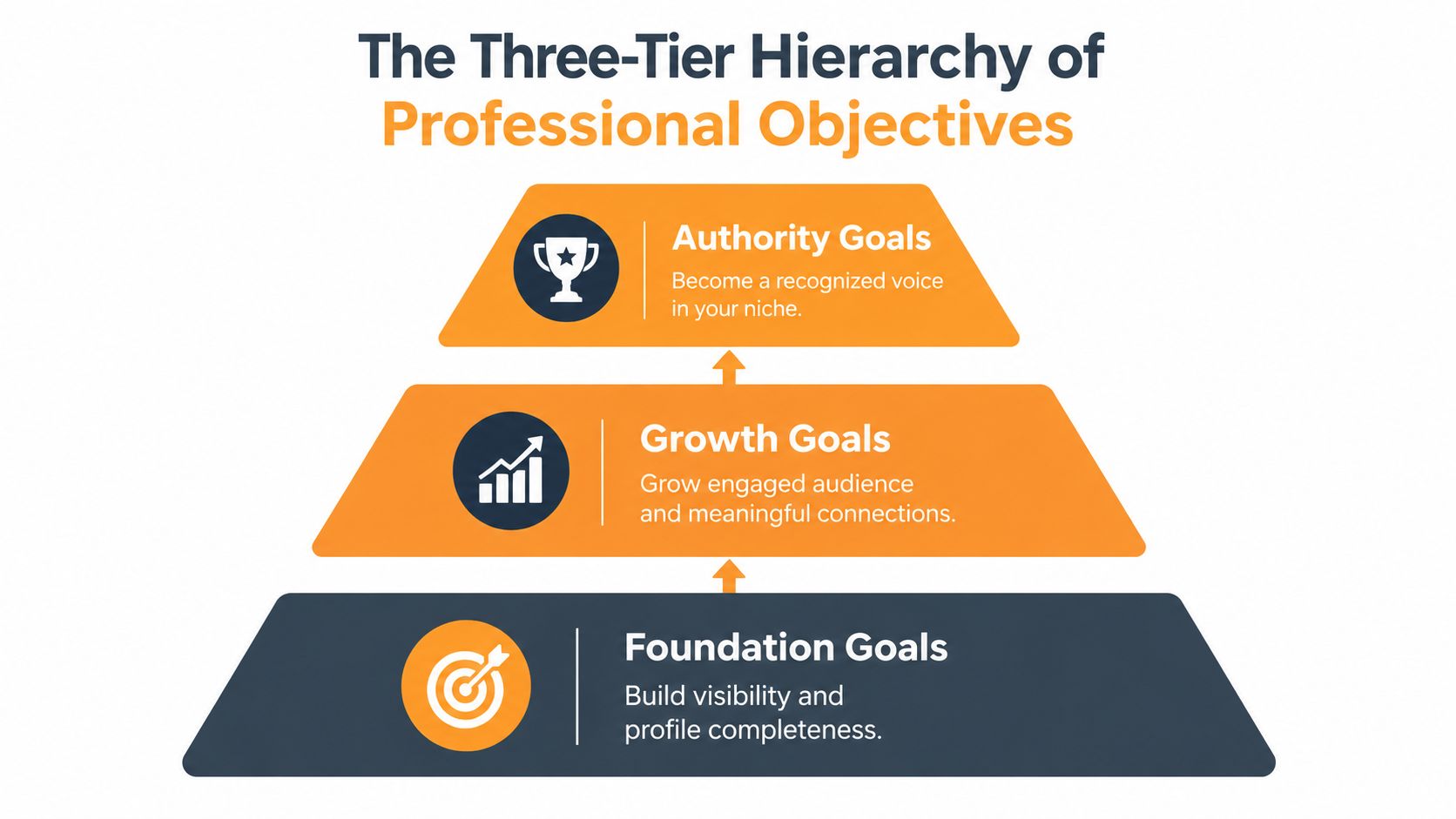
Foundation goals build visibility
At the foundation, track profile completeness, search appearances, relevant profile visits, and whether your headline communicates a clear professional position. These are awareness metrics. They tell you whether the right people can find and understand you, not whether they're ready to hire or buy.
A job seeker may need this tier after changing industries. A senior professional with a weak or outdated profile may need it too. Improve the basic evidence first: current experience, specific expertise, credible accomplishments, and a concise explanation of whom you help.
Growth goals create meaningful relationships
The middle tier focuses on conversations, thoughtful comments, direct messages, repeat interactions, and connections with people in your target market. These are relationship metrics. They show whether your ideas give relevant professionals a reason to respond.
A manager building authority in a specialist field might prioritize this tier. Their content should invite informed discussion, explain decisions, and respond carefully to opposing views. The aim isn't to manufacture engagement. It's to become associated with useful thinking among people whose respect matters.
Authority goals connect attention to opportunity
At the peak, measure invitations to speak, interview requests, referrals, consulting leads, sales conversations, internal influence, or executive credibility. These are outcome metrics. They matter most when your profile already communicates your position and your network recognizes your contribution.
A startup CEO launching a product may prioritize qualified sales conversations. A consultant might track discovery calls and referrals. An executive preparing for a new role could track recruiter outreach and introductions to relevant decision-makers.
A 2025 survey of 1,000 U.S. professionals found that 50% believed a strong personal brand mattered more than a strong résumé, rising to 61% among executives (Aurora University survey). That doesn't make the résumé irrelevant. It does show why professionals need a system for deciding which signal to strengthen first. If you need help choosing a goal system that fits, start with the outcome and work backward through the hierarchy.
Defining Your 90-Day LinkedIn Content Strategy
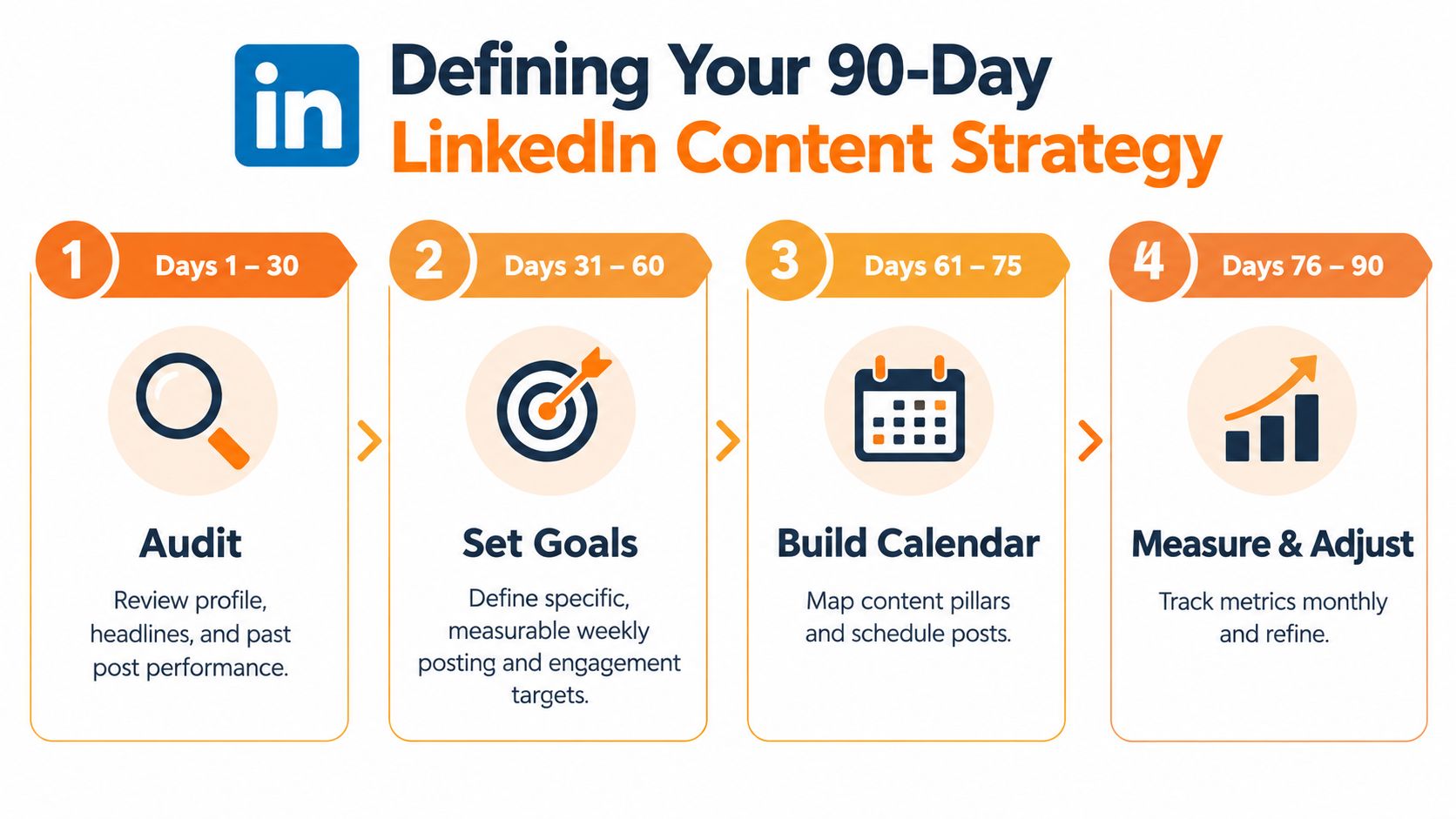
A useful 90-day strategy starts with an audit, not a content calendar. Review your headline, About section, experience descriptions, featured content, profile photo, and recent posts. Then ask a practical question: Would the person I want to reach know why my perspective matters?
Look for gaps between your claims and your evidence. If you describe yourself as a transformation leader, do your posts demonstrate how you make decisions during change? If you want consulting work, does your profile show the problems you solve and the people you solve them for? Keep your public positioning accurate, because consistency becomes harder to maintain when it depends on exaggeration.
Start with a narrow objective
Choose one primary outcome for the quarter. It might be qualified conversations, interview consideration, internal visibility, or authority in a defined niche. You can monitor awareness and relationship signals, but one primary outcome keeps the strategy from becoming a collection of disconnected activity.
Next, define two or three content pillars from your actual experience. One pillar might explain operating lessons, another might unpack industry changes, and a third might share leadership decisions or customer problems. The pillars should make it easier to demonstrate your point of view, not force you to comment on every news cycle.
Build evidence into the calendar
Assign each post a job. A practical lesson can establish expertise. A thoughtful response to a common mistake can create conversation. A personal story can explain your values, provided it supports the professional identity you're building.
Set a sustainable publishing and engagement rhythm you can maintain alongside your role. LinkedIn was already a mainstream recruiting channel by 2020, with 67% of recruiters using it to recruit candidates and another 67% reviewing LinkedIn profiles before making employment offers, according to an EBSCO research overview. Consistent evidence matters because one polished post can't compensate for a profile that looks abandoned or contradictory.
Use a strategy guide for content teams if you need a broader planning process, and adapt a LinkedIn content calendar template to map pillars, audiences, formats, and calls to conversation. At the end of the quarter, compare the people and opportunities your content attracted with the ones you intended to attract. Then keep, revise, or remove pillars based on that evidence.
Scaling Authenticity with AI Content Workflows
Consistency is difficult when every post starts with a blank document. AI can reduce the friction, but it shouldn't decide what you believe, what you've experienced, or what you're willing to defend publicly.

The practical model is controlled augmentation. Let software help with ideation, structure, clarity, repurposing, and scheduling. Keep human ownership of the raw experience, factual accuracy, cultural context, emotional judgment, and final approval.
A 2025 survey of 783 European creators found that 75% used AI in their workflow, while 68% ranked ethical alignment and authenticity as top priorities for brand partnerships (Epidemic Sound creator economy report coverage). The tension is clear. Professionals want efficiency, but they don't want a polished feed that sounds interchangeable.
Automate the repeatable parts
A sound workflow can begin with a voice bank containing phrases you naturally use, topics you understand, opinions you hold, and stories you can substantiate. Feed an idea into an AI tool, ask for several structures, and then replace generic language with your own examples and conclusions.
RedactAI is one option for this workflow. It analyzes a user's LinkedIn profile, posting history, and personal experiences to generate drafts aligned with an established tone and area of expertise. It can support ideation, copy refinement, post scheduling, and content recycling, while the professional remains responsible for the final post. Its role should be closer to an editorial assistant than a ghost author with unrestricted control. For a broader production process, see this guide to scaling content creation.
Protect the irreplaceable parts
Don't automate a story you haven't lived, a claim you can't verify, or a position you haven't considered. AI can smooth away regional language, culturally specific references, professional boundaries, and the small imperfections that make an executive's perspective recognizable.
Before publishing, check five things:
- Evidence: Does every factual claim reflect what you know to be true?
- Voice: Would a colleague recognize your phrasing and judgment?
- Specificity: Does the post contain a real observation rather than generic encouragement?
- Sensitivity: Could the wording erase relevant cultural or personal context?
- Accountability: Are you prepared to defend the post in a direct conversation?
Use AI to create more room for thinking, not as a substitute for thinking. The brand grows from the judgment behind the content.
Measuring Success Beyond the Like Button
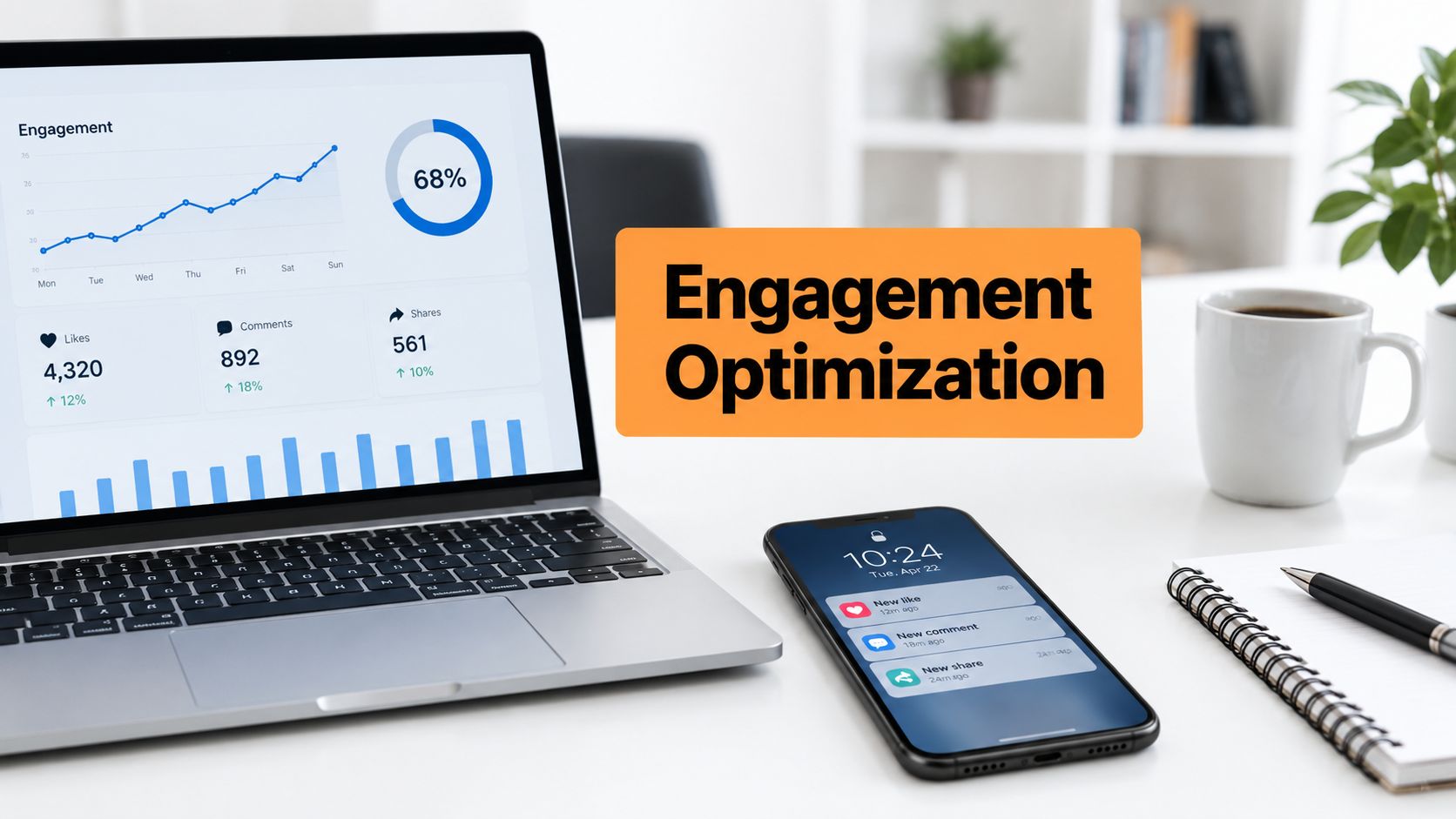
Likes and impressions answer an important but limited question: Did LinkedIn distribute this content and did people react? They don't tell you whether the right decision-maker noticed, whether a conversation developed, or whether the post influenced a later opportunity.
Use a simple measurement chain. Start with awareness, move to relationships, and finish with outcomes. Record the post topic, audience, format, notable interactions, profile visits from relevant people, direct messages, referrals, and any opportunity that can reasonably be connected to the content. Attribution won't always be perfect, especially when trust develops over time, but a lightweight record is more useful than guessing.
| Metric Type | Examples | What It Actually Tells You |
|---|---|---|
| Vanity metrics | Impressions, likes, follower growth | Whether content attracted attention |
| Awareness signals | Relevant profile visits, search appearances | Whether target people can find you |
| Relationship signals | Meaningful comments, direct messages, repeat interactions | Whether your ideas create professional interest |
| Outcome signals | Referrals, interviews, consulting leads, sales conversations | Whether attention is moving toward your objective |
The distinction matters because reach can hide poor positioning. A post may generate lively reactions from an audience that has no connection to your desired market. In that case, the engagement isn't worthless, but it shouldn't determine your next strategy.
Measure the distance between publication and opportunity, not just the activity at publication.
Build a review habit
Review performance by topic and audience, not only by individual post. If leadership stories attract relevant executive conversations while generic productivity advice attracts broad but unrelated engagement, the difference should shape your next calendar.
Use LinkedIn analytics alongside your own contact notes. An audit-ready social media analytics report can help organize reporting, while a practical framework for measuring social media ROI can help connect activity with business outcomes.
Also track negative evidence. If a post reaches people outside your intended audience, creates no meaningful follow-up, or repeatedly produces shallow reactions, don't keep publishing it just because the number looks impressive. Personal branding goals should make your professional path clearer, not fill a dashboard.
Executing and Adjusting Your Weekly Rhythm
A sustainable rhythm doesn't require you to become a full-time creator. It requires a repeatable operating system that connects each post to the objective you selected.
Use one weekly planning block to choose a real observation from your work, one problem your audience recognizes, and one useful conclusion. Draft several variations while the context is fresh. During the week, publish the strongest version, respond to thoughtful comments, and note which people or conversations deserve a personal follow-up.
A realistic 90-day sequence might look like this:
- First phase: Repair the profile, clarify the audience, and publish content that establishes your core expertise.
- Second phase: Double down on topics that attract relevant comments, messages, and repeat interactions.
- Final phase: Shape posts around the opportunity you want, such as a consulting conversation, leadership visibility, or a role in a specific market.
Don't confuse repetition with consistency. Reuse a strong insight by changing the example, audience, or format. A post about a hiring lesson can become a short decision framework, a story about a mistake, or a response to a common objection, but each version should add something new.
After the first review cycle, adjust without abandoning your identity. If the wrong audience responds, narrow the examples and language. If the right people engage but never start conversations, make the practical next step clearer. If nobody can explain what you do, fix the positioning before increasing your publishing volume.
The best personal branding goals evolve with your career. Keep the audience specific, the evidence real, and the measurement tied to the opportunities you want.
RedactAI helps professionals turn their LinkedIn profile, experience, and ideas into personalized drafts, refinements, scheduling workflows, and performance insights without handing over final voice and judgment. Visit RedactAI to build a more consistent LinkedIn presence around the opportunities that matter to you.