A winning LinkedIn marketing strategy isn't about treating the platform like just another social network. It's about seeing it for what it is: a crucial business asset for building real professional relationships and, most importantly, generating leads. This means getting past random posting and focusing on a strategic presence that ties directly to real-world business results. For anyone in the B2B world, this is non-negotiable.
Why LinkedIn Is Business-Critical in 2026
Let's be real: if you're in B2B and don't have a serious LinkedIn strategy, you're leaving money on the table. This is more than just having a profile—it's a complete mindset shift. You have to stop seeing LinkedIn as a place to post an occasional company update and start viewing it as the undisputed center of your professional world.
This platform has become the default arena for making professional connections and building influence. For B2B marketers, it’s not just one of many options; it's the main event. Your future clients, your next big partnership, and the best talent you could hire are all on LinkedIn, actively looking at content and making business decisions.
The Undisputed King of B2B Lead Generation
The numbers don't lie. LinkedIn's dominance in the B2B space is staggering, capturing an incredible 80% of all B2B leads that come from social media. It’s not just about volume, either. The platform has a visitor-to-lead conversion rate of 2.74%, which is nearly 277% more effective than Facebook.
It's no wonder that 96% of B2B marketers are on LinkedIn for their organic marketing efforts, and 40% go so far as to call it the single most effective channel for finding high-quality leads.
To put this in perspective, let's see how LinkedIn stacks up against other major platforms.
LinkedIn Vs. Other Platforms At A Glance
| Metric | |||
|---|---|---|---|
| Primary Audience | Professionals, B2B Decision-Makers | B2C, Friends, Family | News Junkies, B2C, General Public |
| Lead Quality | Very High | Low to Medium | Low |
| B2B Lead Gen Share | 80% | <20% (Combined with others) | <20% (Combined with others) |
| Conversion Rate | 2.74% | 0.77% | 0.69% |
The data paints a clear picture: your audience isn't just on LinkedIn; they're there with a business-first mindset, ready to engage with professional content. If you're ignoring this, you're essentially letting your competitors walk away with attention and opportunities that should be yours.
Key Takeaway: A smart LinkedIn strategy isn’t just about being present—it’s about strategically placing yourself right where your most valuable business relationships are being built. The platform's ridiculously high conversion rates make it a powerful engine for growth.
Moving from Random Acts to a Strategic Asset
Winning on LinkedIn means moving away from "random acts of marketing" and adopting a structured, goal-oriented plan. Think of it less like shouting into a social media void and more like building a valuable asset for your business. Every single piece of content and every interaction should have a clear purpose.
So, what does this actually look like day-to-day?
- Intentional Content: Instead of just posting whenever you feel like it, you build content around core themes that establish you as an authority and directly solve your audience’s biggest problems.
- Real Relationship Building: You stop collecting connections like trading cards and start focusing on nurturing genuine relationships through thoughtful comments, DMs, and engagement.
- Data-Driven Decisions: You pay attention to what's working and what's not. Use your analytics to double down on your wins and tweak your approach for maximum impact.
By making this shift, you turn your LinkedIn profile from a dusty old resume into an active, lead-generating machine. Our detailed guide on lead generation with LinkedIn offers even more tactics for turning those connections into actual customers. Ultimately, a solid LinkedIn marketing strategy is what connects your daily activity on the platform to measurable business success.
Building Your Foundation For LinkedIn Success
Before you even think about posting schedules or ad budgets, you've got to get your house in order. A powerful LinkedIn strategy isn't built on random posts; it’s built on a solid foundation. Forget the generic advice to just "complete your profile."
Think of your personal profile and Company Page as your digital storefronts. They are the high-intent landing pages where your ideal clients, partners, and future hires will end up. Nailing this first step makes everything that follows so much easier.

It all boils down to one thing: transforming your profile from a dusty old resume into a client-attraction machine. Every piece, from your banner to your headline, needs to work together to tell a story and nudge people toward taking the next step with you.
Turn Your Profile Into A Conversion Tool
Your LinkedIn profile is often the very first handshake with a potential lead. It has to instantly answer three questions: who you are, who you help, and what you do for them. In a sea of bland job titles and buzzword-filled summaries, you need to stand out.
Here’s how you can get your profile to start pulling its weight:
- Write a Headline for Your Client, Not Your Boss: This is one of the biggest mistakes I see. "B2B SaaS Content Writer" is fine, but it’s all about you. Flip it. "I Write B2B SaaS Content That Drives Demos" speaks directly to what your prospect actually wants. It’s a tiny change with a huge impact.
- Treat Your "About" Section Like a Sales Page: Seriously. Hook them immediately by calling out a pain point, then tell a quick story about how you solve it. This is your chance to show some personality and build a little trust before you’ve even sent a connection request.
- Sprinkle in Keywords Naturally: Put yourself in your ideal client's shoes. What words or phrases would they type into the LinkedIn search bar to find someone like you? Weave those terms through your headline, summary, and experience sections. This is how you get found.
Getting these fundamentals right is what turns passive profile browsers into active conversations. For a more detailed breakdown, we’ve got a whole guide on how to optimize your LinkedIn profile that goes even deeper.
Define Your Core Content Pillars
Alright, your profile is looking sharp and ready for visitors. Now, what do you actually talk about? The most successful people on LinkedIn operate from a simple framework of content pillars—three to five core topics they own. This is how you stop being a generalist and start becoming a go-to expert.
If you try to be everything to everyone, you end up being nothing to no one. Your pillars give your content focus, making it easier for you to create and way more memorable for your audience. They're the guardrails that keep all of your posts aligned with your brand and expertise.
A classic rookie error is making your pillars too broad. "Marketing" isn't a pillar; it's a universe. A much better, more specific pillar would be "Organic Lead Generation for B2B Coaches" or "AI-Powered Content Repurposing."
So, how do you find your pillars? Just ask yourself a few simple questions:
- What am I truly an expert in? Go beyond your job title. What skills and knowledge have you really built?
- What does my audience actually struggle with? What are their biggest headaches, questions, and aspirations?
- What could I talk about all day? What topics genuinely fire you up?
Your content pillars live at the intersection of your expertise, your audience's needs, and your own passion. For instance, a financial advisor’s pillars might look something like this:
- Retirement Planning for Entrepreneurs
- Tax-Efficient Investing Strategies
- Building Generational Wealth
With a framework like this, you have instant clarity. Each week, you can create content around these themes, building a library of valuable insights that proves your authority and brings the right people into your orbit. This is how you move from random posting to running a focused, effective marketing engine.
Crafting Content That Actually Connects And Converts
Let's be real for a second. Most of the content on LinkedIn is a total snooze-fest. It’s a blur of corporate buzzwords, barely disguised sales pitches, and posts so bland you forget them the instant you scroll past. If your LinkedIn marketing strategy is going to work, you have to break out of that mold and create content people actually want to read and talk about.
This isn't about trying to go viral or trick the algorithm. It's about being human, offering up real value, and starting conversations. Once you get that right, you stop being just another profile and start becoming a go-to voice in your field.

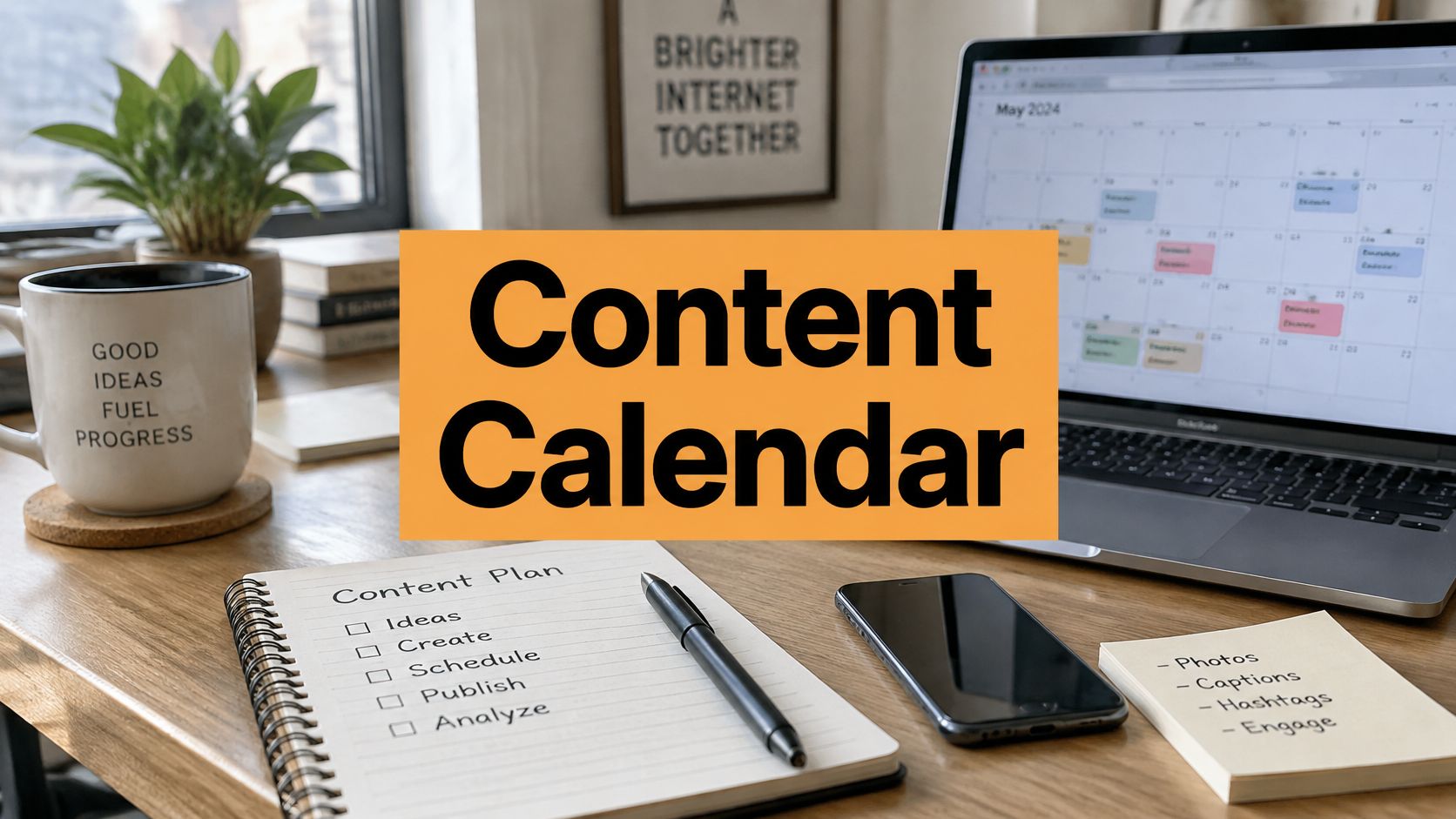
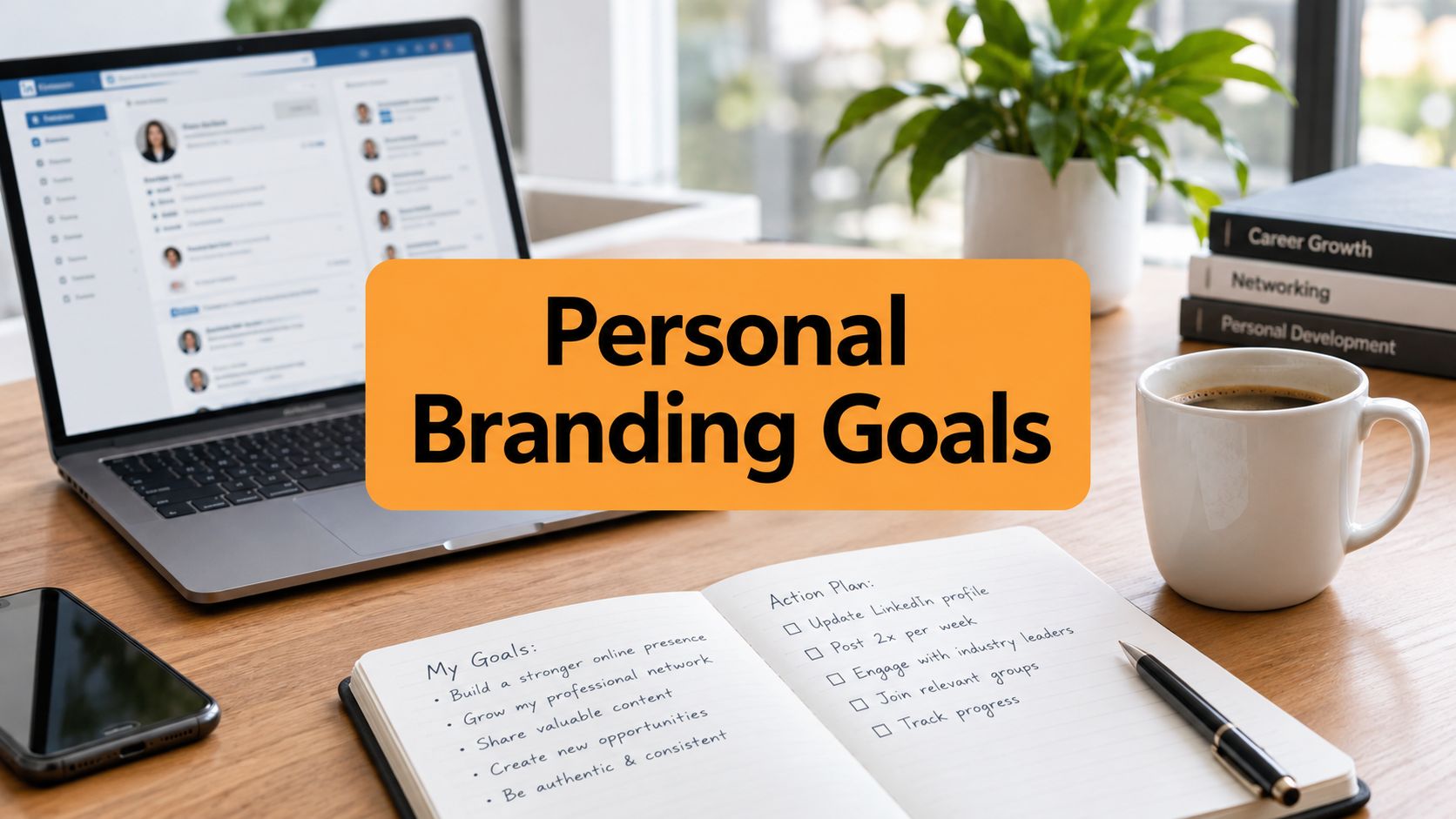
Think of your content creation process like the desk above—a blend of creative ideas, smart planning, and the right tools. Your job is to turn those scattered thoughts into posts that truly build your brand.
The Art of the Scroll-Stopping Hook
You’ve got about two seconds to grab someone's attention on their feed. That’s it. Your first line is everything. If it doesn't immediately hook them, they're gone.
A killer hook usually challenges a popular opinion, asks a tough question, or makes a bold statement that goes against the grain. Ditch the weak starts like "I'm excited to share..." or "Today, I want to talk about..." They're a death sentence for engagement.
Instead, give these a try:
- The Problem Hook: "Most B2B companies are wasting 90% of their content budget. Here's why."
- The Vulnerable Hook: "I have a sinking feeling of being left behind."
- The Story Hook: "The worst sales call I ever had taught me the most important lesson about marketing."
These openings create an "information gap" in the reader's mind, making them curious enough to stick around for the answer. This one change can make a massive difference in how many people read and engage with your posts.
Choose Your Content Format Wisely
Not all content types are created equal. The format you pick should fit the message you're trying to send. A smart content plan mixes things up to keep your audience engaged and interested.
Here are a few core formats to keep in your toolkit:
- Text-Only Posts: These are fantastic for telling a story, sharing a strong take, or asking a direct question. Their simplicity is their strength, and they often generate the best comment threads.
- Carousels (PDFs): Perfect for teaching a step-by-step process or breaking down a complex idea into easy-to-digest slides. Carousels have a high "dwell time," which is something the LinkedIn algorithm loves.
- Single Image or Video: Use these to add a human touch, share a behind-the-scenes moment, or deliver a quick, punchy message. A short video can build trust way faster than text alone.
And when you have more formal company news to share, you'll want to handle it differently. Learning how to post a press release on LinkedIn can ensure your big announcements get the visibility they deserve.
Supercharge Your Content Workflow With AI
Let’s face it: coming up with great content ideas day after day is tough. It’s where writer’s block sets in and consistency goes out the window. This is where an AI tool built specifically for LinkedIn, like RedactAI, can give you a serious edge.
Instead of staring at a blinking cursor, you can feed it a simple keyword or a half-baked idea and get multiple, on-brand drafts in a matter of seconds.
Imagine this: you want to write about "customer retention." You plug that into RedactAI. It doesn't spit out a generic, soulless post. It analyzes your past content, learns your unique voice, and then generates several distinct angles for you—a personal story, a tactical list, a contrarian opinion—all in your style.
The goal isn't to let AI replace your creativity; it's to supercharge it. Let the tool do the heavy lifting of ideation and drafting. That frees you up to focus on what really matters: refining the message and actually engaging with the people in your comments.
By bringing together authentic storytelling, smart formatting, and the right tools, you build a content machine that does more than just get views—it builds real relationships and drives your business forward.
Blending Your Organic And Paid LinkedIn Strategy
Too many people see LinkedIn marketing as an "either/or" choice: either you post organically, or you run paid ads. The truth is, a killer strategy doesn't choose—it weaves them together.
Think of it this way. Your organic content is the foundation of your house. It's what builds trust, establishes your authority, and makes people feel at home with your brand over time. Paid ads are the perfectly targeted open house invitations, getting the right people through the door at exactly the right time.
When you have a strong organic game, your ads just work better. People recognize you, so they're more likely to trust the ad. And when you put money behind your best organic posts, you introduce your great content to a whole new, perfectly targeted audience. Letting one side slip means your entire strategy is off-balance.
Mastering Your Organic Engagement Plan
An organic strategy is so much more than just publishing your own content. Honestly, that’s just table stakes. The real growth comes from what you do off your own page—proactively engaging in conversations happening all across the platform.
This is about building real relationships, not just broadcasting your message. It's a daily or weekly habit that puts you in front of the right people without ever feeling like a pushy salesperson.
- Become a master of the search bar: Use LinkedIn's search to hunt for keywords and hashtags tied to your core topics. Filter by "Posts" and sort by "Latest" to jump into fresh conversations where your expertise can shine.
- Leave comments that matter: Ditch the "Great post!" comments for good. Instead, ask a smart follow-up question, share a quick personal story that relates, or even offer a respectful counter-argument. A single, insightful comment can do more for your visibility than a post, putting you right in front of another person's loyal audience.
- Connect without the cringe: When you send a connection request, personalize it. A simple, "Hey [Name], I really enjoyed your post on [Topic] and wanted to connect," is a thousand times better than a generic, empty request. You're starting a conversation, not a sales pitch.
This consistent, value-first approach is how you turn a list of connections into a genuine community.
Demystifying LinkedIn Ads For Maximum Impact
While organic marketing is a slow burn, paid ads give you speed and surgical precision. People on LinkedIn are in a professional mindset, which makes them far more receptive to relevant ads. This is why we see conversion rates that are often twice as high as on other social channels.
The numbers don't lie. Brands that advertise on LinkedIn see a 33% increase in purchase intent, and audiences who see both brand content and acquisition ads are 6x more likely to convert. It's no surprise that 65% of B2B companies have landed new customers directly through LinkedIn Ads.
So, when should you open your wallet?
Key Insight: The most effective paid strategies feel like a natural extension of your organic content. You aren't interrupting their feed; you're amplifying value for the people who are most likely to benefit from it.
You really have two main options here: boosting an existing post or running a dedicated ad campaign.
Boosting a Post: This is the perfect way to pour gas on your top-performing organic content. Got a post that sparked a fantastic discussion? Boost it. You can get it in front of a whole new audience and grow your following. If you're new to this, we break it all down in our guide on how to boost posts on LinkedIn.
Running a Campaign: This is for your heavy-hitting goals—think generating leads for a webinar or driving sign-ups for a product demo. Using LinkedIn's Campaign Manager, you can get incredibly specific with your targeting, zeroing in on users by their job title, company size, industry, and much more.
When you pair the trust-building power of organic content with the targeted punch of paid ads, your LinkedIn strategy becomes a serious engine for growth.
Figuring Out What Works—And How to Do More of It
Putting out great content on LinkedIn is a huge part of the game, but it's really only half the story. If you're not paying attention to what happens after you post, you're just guessing. This is where you stop throwing spaghetti at the wall and start building a real feedback loop that tells you what actually moves the needle.
Growth happens when you understand the "what" and the "why." By looking at your performance, you start to see which posts get people talking, what topics they genuinely care about, and when they’re actually online to see your stuff. It's this process that turns your daily activity into a repeatable strategy.
Look Past the Vanity Metrics
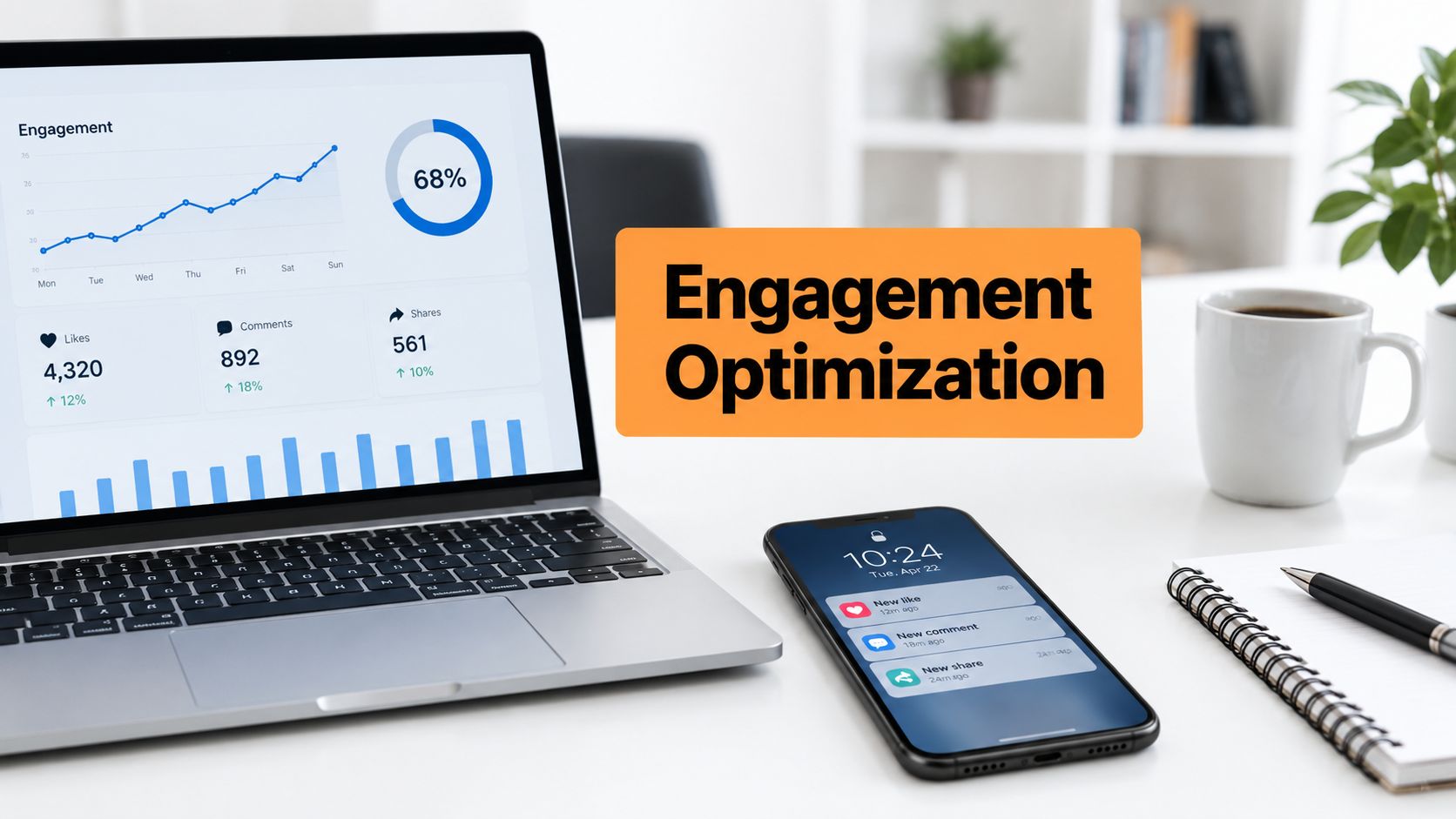
It's tempting to get excited about a post with 100,000 impressions. We've all been there. But a big impression number with only a handful of "great post!" comments doesn't really do much for your business. It’s a vanity metric, plain and simple.
Instead, you need to hunt for the numbers that signal a real connection is being made. These are the clues that you're building relationships, not just broadcasting to an empty room.
- Real Comments: Are people asking follow-up questions? Sharing their own stories? That’s gold. Anything beyond a one-word compliment is a win.
- Profile Views: A spike in profile views right after you post is a fantastic sign. It means your content was so compelling that people wanted to know more about you.
- Inbound Messages & Requests: When people start reaching out to you—either to connect or send a DM—you've officially hit a nerve. Your content is working.
The real goal isn't just to get likes; it's to start a conversation. One of the easiest ways I’ve found to do this is to simply end every post with a question. It gives people a clear and easy way to jump in.
Getting Your Hands Dirty in LinkedIn Analytics
Your first and best source of truth is LinkedIn's own analytics dashboard. Whether you're using a personal profile with creator mode on or a Company Page, there's a ton of data waiting for you. Make it a habit to pop in here once a week to see what's trending.
So, what are you looking for?
- Your Greatest Hits: Find your top-performing posts from the last 30 or 90 days. But don't just look at impressions—which ones got the most comments and shares? That’s where your audience is telling you what they love.
- Who's Listening?: Check out the audience demographics. Are the job titles, companies, and industries what you expected? If you're trying to reach VPs of Marketing but are only getting interns, it's time to adjust your content.
- The When and How Often: Use the data to test your posting times. General advice is a good starting point, but your specific audience might be night owls or early birds. Let the numbers guide you.
Don't forget the bigger picture, either. LinkedIn is on a tear right now. As of early 2026, the platform is pulling in 1.4 billion monthly visits. A massive 60.1% of its user base is in that core 25-34 age group, and desktop users are spending a solid 11 minutes and 19 seconds per visit. You have a seriously engaged audience if you give them something worth their time. You can dig into more of these stats and explore LinkedIn's powerful user engagement on Sproutsocial.com.
Scale Your Wins Without Burning Out
Once you’ve found a winning post, the next move isn't to frantically brainstorm another ten new ideas. It's to work smarter. How can you get more mileage out of what's already proven to work?
This is where you combine your organic wins with a little paid support to create a growth loop that feeds itself.

The secret is repurposing your best content. That one carousel that got a ton of engagement? It has so much more life in it. You can easily turn it into:
- A series of short text-only posts, with each one diving into a single slide.
- A quick video script where you talk through the main takeaways.
- A full-blown blog post that expands on the original idea with more detail.
This is exactly where a tool like RedactAI can be a game-changer. You can drop the text from your best-performing post into the platform and ask it to spin up new angles—like a list, a personal story, or even a counter-argument—all while keeping your tone of voice intact. It helps you keep up a strong posting schedule without the constant pressure of starting from a blank page. You're turning your own analytics into a sustainable content machine.
Common Questions About Your LinkedIn Strategy
Even the best-laid plans run into questions. When you're deep in the trenches of building a LinkedIn presence, it's easy to get sidetracked. Let's tackle some of the most common questions I hear from professionals and agencies trying to get their LinkedIn marketing right.How Often Should I Post On LinkedIn?
Everyone wants a magic number, but the honest answer is that consistency will always beat frequency. What matters is picking a schedule you can actually stick with for the long haul.
For most people, aiming to post 3-5 times per week is the sweet spot.
This keeps your name popping up in your network's feed without being spammy. But more importantly, pay attention to when you post and what you post. Dive into your analytics and find out when your people are actually online and scrolling.
It’s so much better to share three killer posts that get people talking than to push out five mediocre ones that just get lost in the noise. And remember, your activity isn't just about broadcasting—it's about engaging daily by commenting on and sharing other people's stuff, too.
What's A Good Engagement Rate On LinkedIn?
If you're looking for a number, a solid benchmark to shoot for is an engagement rate between 2% and 5%. To figure this out, just divide your total engagements (likes, comments, reposts) by your total followers and multiply by 100.
But please, don't get hung up on the rate itself. The quality of that engagement is what really moves the needle.
A single post with ten thoughtful comments from people who could actually become your clients is way more valuable than a post with 100 random likes.
Focus on creating content that makes people in your industry stop and think. If your posts are sparking real conversations, getting people to share their own stories, or asking follow-up questions, you're winning. That’s the real sign of success.
Can I Really Get Leads From LinkedIn Without Ads?
You absolutely can. In fact, organic lead generation is what makes LinkedIn so powerful. You just have to accept that it’s a long game, not a quick hack. This isn't about sliding into DMs with a cold pitch or dropping links to your sales page everywhere.
It's about consistently showing up and providing real value. It’s about building a reputation as the go-to expert in your field through your content and your conversations. When people see you as a genuinely helpful resource, they'll naturally reach out when they have a problem you can solve.
You have to shift your entire mindset from "selling" to "helping."
- Share hard-won insights from your own experience.
- Jump into comment sections to answer questions you see.
- Connect with people on a human level, not just as a prospect.
When you do this consistently, the leads start coming to you. It's the natural outcome of building trust and authority over time.
How Can An Agency Manage Multiple Client Accounts?
This is the million-dollar question for agencies, and it’s where a purpose-built tool becomes your best friend. An AI platform like RedactAI was designed to solve this exact scaling problem.
Instead of trying to keep track of a dozen different brand voice guides in Google Docs, you can create a unique language model for each client right inside the platform. RedactAI analyzes their existing content—like past posts, website copy, and articles—to learn their unique style, tone, and vocabulary.
This means your team can generate multiple on-brand post ideas for all your different clients in a single click, keeping everything consistent without the soul-crushing manual effort. The scheduling and analytics also let you manage everything from one central dashboard, which makes your workflow and client reporting a breeze. It turns a chaotic, time-sucking process into something totally manageable.
Ready to stop guessing and start creating LinkedIn content that actually performs, all in a fraction of the time? RedactAI learns your unique voice to generate on-brand posts that build authority and engage your audience. Start for free and see how it works at RedactAI.