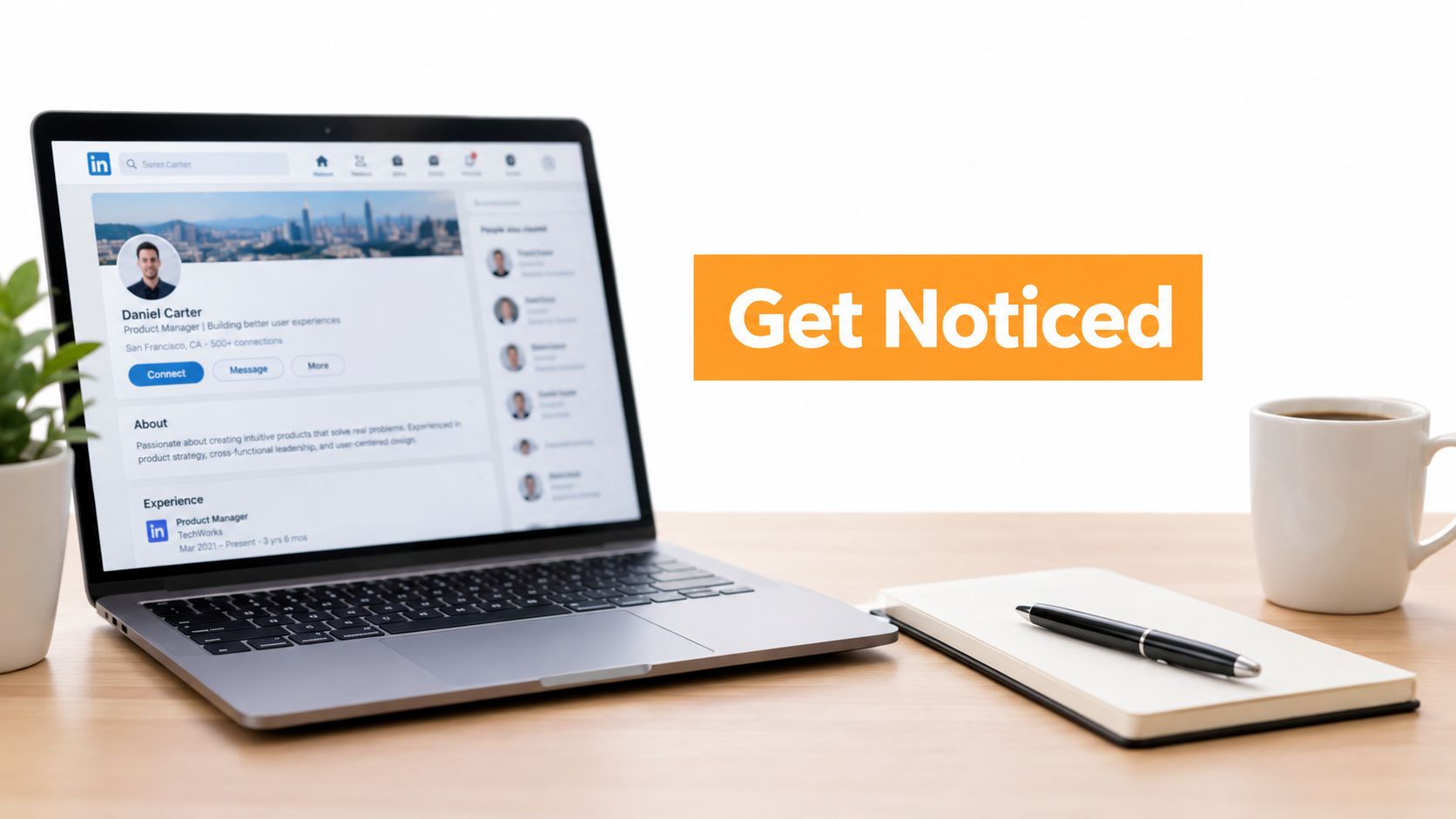
Alright, let's get your LinkedIn Company Page set up. It’s surprisingly quick—you can get the basic structure up in less than 15 minutes right from your personal profile. Just find the 'For Business' menu, hit 'Create a Company Page,' and follow the prompts. Boom, you've got a digital home base for your brand.
But let's be real, just having a page isn't the goal. We want it to actually work for you.
Laying the Groundwork for a Page That Gets Noticed
Before you even think about posting content or asking people to follow you, we need to build a solid foundation. This isn't just about ticking boxes on a setup form. It's about making smart, strategic choices from the get-go that will set you up for long-term growth. Think of it like building a house—if the foundation is shaky, everything you build on top of it will be, too.
First things first, LinkedIn needs to see you as a real, active professional before it lets you create a page for a company. This means your personal profile has to be at least seven days old and have a decent number of connections. It’s a simple security check, but it’s a hard requirement, so make sure your own profile is in good shape.
The First Critical Steps
Once your profile is ready to go, the fun begins. You'll kick things off by picking a page type (for most of us, that's just "Company") and plugging in the basics. You'll enter your official company name and, most importantly, claim your custom public URL.
Getting a clean URL like linkedin.com/company/your-brand-name is a small detail that makes a huge difference. It looks professional and makes you much easier to find.
This whole process is pretty straightforward, moving from your personal profile readiness straight into creating the page itself.

As you're getting set up, it's also a good time to brush up on general best practices for maximizing your visibility on LinkedIn. What works for a personal profile often translates well to a company page, just on a bigger scale.
Before you click that 'Create Page' button, a quick check of the essentials can save you a lot of backtracking.
Your LinkedIn Company Page Launch Checklist
Here's a quick rundown of the must-haves to ensure a smooth setup from the start.
| Requirement | Why It Matters for Growth |
|---|---|
| Active Personal Profile | LinkedIn requires your profile to be at least 7 days old with connections. This is non-negotiable. |
| High-Resolution Logo | Your logo is your digital handshake. A blurry or poorly sized image screams unprofessionalism. |
| Compelling Banner Image | This is your billboard. It should instantly communicate your brand's value or personality. |
| Custom URL Claimed | A clean linkedin.com/company/your-brand-name is crucial for branding and searchability. |
| Prepared 'About' Copy | Having your mission and keywords ready to go makes the setup process much faster and more effective. |
Nailing these basics upfront ensures you launch a page that looks credible and is ready to attract followers from day one.
Why Every Detail Matters
You’re not just creating a page; you're stepping into a massive arena with over 67 million other company pages. To stand out, you have to do more than the bare minimum.
I've seen it time and time again: pages that take the time to add a logo, a sharp banner, and a detailed 'About' section get 30% more weekly views right out of the gate. That's a huge advantage, especially when you consider that LinkedIn members interact with pages over 2 billion times a month. Your initial effort directly feeds into how many people see you and what they think when they find you.
The biggest mistake I see brands make is treating their LinkedIn page setup as a low-priority admin task. It's not. A complete, professional page is a powerful signal to both the LinkedIn algorithm and potential followers that your brand is credible, active, and worth their attention.
This groundwork is what makes everything else—from content strategy to lead generation—possible. It helps you zero in on how to identify your target audience and ensures that when they do find you, they see a polished, professional brand they want to follow.
Designing a Magnetic First Impression

Think of your LinkedIn page as your digital storefront. Before anyone reads a word of your content, they see your logo and banner image. This is your digital handshake, and it sets the tone for everything that follows. A blurry logo or a generic banner is like a weak handshake—it just doesn't inspire confidence.
A sharp, high-resolution logo is an absolute must. It’s the visual anchor of your brand, so make sure it's instantly recognizable and looks professional.
Telling a Story with Your Visuals
Your banner is where you can really start to tell your story. It’s prime real estate, so don't just waste it by putting your logo there again. Use that space to give people a feel for your company. Show your team in action, feature a powerful customer quote, or highlight what makes your product or service unique.
Keep these specs handy when you're creating your visuals:
- Company Logo: Go for at least 400 x 400 pixels to keep it looking crisp.
- Banner Image: The sweet spot is 1128 x 191 pixels. This ensures it looks good on both desktop and mobile.
Here's a pro tip I've learned from setting up dozens of pages: always remember that your logo will cover up the bottom-left portion of the banner on desktop. It's a classic rookie mistake to put important text or imagery there. Keep your key visuals centered or placed to the right, and you'll be golden. For a deeper dive, our guide on the right image size for a LinkedIn post has all the details you'll need.
Nailing Your 120-Character Pitch
Right after the visuals, the next thing people see is your tagline. You’ve got a mere 120 characters to hook them. This isn't the time for a vague, corporate slogan like "Innovating for a better tomorrow." Your tagline needs to be a super-condensed elevator pitch.
It should immediately answer a visitor’s core question: "Is this for me?"
Let’s say you run a software company. "Data analytics for e-commerce brands" is infinitely better than a generic slogan. It’s specific, it names the target audience, and it tells them exactly what you do. Simple, clear, effective.
Your tagline should be a magnet for your ideal follower and a filter for everyone else. If a visitor can’t understand what you do from your banner and tagline alone, you’ve already lost them.
Struggling to come up with one? Try this simple framework:
- What you do: (e.g., "Automated accounting software...")
- Who you do it for: (e.g., "...for small business owners...")
- The result they get: (e.g., "...to save them time and money.")
Put it all together, and you get something direct and benefit-driven. This powerful combination of sharp visuals and a clear tagline is the foundation for a LinkedIn page that doesn't just exist—it actually grabs attention and pulls the right people in.
Writing an About Section That Actually Works

Let's be honest—the "About" section is probably the most overlooked part of any LinkedIn Company Page. So many businesses just throw in their mission statement or a bland corporate summary and call it a day. That’s a massive missed opportunity.
This little box is your secret weapon for organic discovery. It's your best chance to tell your story, connect with the right people, and convince them to click that "Follow" button. It’s also where you feed the LinkedIn and Google search algorithms the exact terms they need to send you qualified traffic.
How to Structure Your About Section
Your summary has to pull double duty: it needs to grab a real person's attention while also signaling to the search algorithms what you're all about. People don't read on LinkedIn; they scan. A giant wall of text is a surefire way to get them to tune out.
Kick things off with a strong opening line that speaks directly to your audience's pain point or clearly states your unique value. Think of it as the headline for your entire brand story.
After that, break up the rest of your copy into bite-sized chunks. Use short paragraphs or even bullet points to cover what you do, who you help, and what makes you different. The goal is to make it incredibly easy for a visitor to "get" you in just a few seconds.
Weaving in Keywords the Right Way
A solid keyword strategy is the difference between a page that gets found and one that’s buried in search results. Before you write anything, take a few minutes to think like your ideal customer. What words and phrases are they actually typing into the search bar?
Go beyond your internal jargon. What real-world problems are they trying to solve?
- Product/Service Keywords: These are the obvious ones that describe your offerings (e.g., "social media management software," "executive coaching services").
- Problem-Based Keywords: Focus on the struggles your audience has (e.g., "improving team productivity," "reducing customer churn").
- Location Keywords: A no-brainer if you’re a local business. Be sure to include terms like "marketing agency in Austin."
Once you have a good list, pepper these terms throughout your summary. The key is to make it sound completely natural. You're writing for a human first, algorithm second. This is a critical part of learning how to build a LinkedIn company page that brings in organic traffic.
Your 'About' section should read like a conversation, not a search query. Weave in your keywords where they make sense, but always prioritize telling a clear and compelling story for the human on the other side of the screen.
Don't Forget About the Specialties Section
Right below your main summary, you’ll find the "Specialties" section. This is pure SEO gold, and too many people ignore it. LinkedIn gives you space to list up to 20 different areas of expertise. My advice? Use every single one if you can.
Think of this section as a list of tags for your business. You're explicitly telling LinkedIn’s algorithm what you specialize in, which helps you show up in searches for those specific terms. It's a simple, powerful way to give your visibility a serious boost.
Crafting Your Initial Content Strategy

A great-looking LinkedIn page with no posts is like a beautiful storefront with nothing on the shelves. It just feels empty. Your first few posts are absolutely crucial because they signal to visitors that your page is active, valuable, and worth following.
The goal here isn't just to throw something up, but to make a real impact right out of the gate. This is your first handshake, your chance to introduce your brand's personality, show off your company culture, and offer a piece of genuine insight that gets people to hit "Follow."
Planning Your First Five Posts
You don't need a massive, complex content plan to get started. Honestly, a simple plan for your launch week is more than enough to get the ball rolling and avoid that classic "what on earth do I post today?" panic. Think of these first few posts as the building blocks of your page's identity.
Here’s a quick-and-dirty content calendar I often recommend to clients. It’s designed to help you make the right impression from day one.
Your First 5 Posts Content Plan
A simple content calendar to guide your launch week and set the right tone from day one.
| Day | Post Topic Idea | Your Primary Goal |
|---|---|---|
| 1 | The Big "We're Here!" Post | Announce your shiny new page, share your mission, and tell people what kind of value they can expect. |
| 2 | A Peek Behind the Curtain | Share a candid team photo or a quick employee spotlight. Humanize your brand. |
| 3 | Your First Value-Bomb | Post a genuinely helpful tip, a surprising industry statistic, or a link to an insightful article (with your take on it!). |
| 4 | The Problem You Solve | Touch on a common pain point your target audience feels, and gently hint at how you're the solution. |
| 5 | Let's Talk: Ask a Question | Run a simple poll or ask an open-ended question to spark immediate conversation with your new followers. |
This little mix is powerful. It shows off different sides of your business—your purpose, your people, your expertise, and your desire to build a community. It’s a fantastic way to make a well-rounded first impression.
Let's Be Real About Company Page Reach
Okay, it's time for some real talk about how LinkedIn works these days. The algorithm has changed, and it's tougher than ever for company pages to get organic reach without a smart game plan.
According to recent data, by January 2026, the organic reach for company pages plummeted by a staggering 60-66% from 2024 levels, now showing up in just 1-2% of user feeds. Meanwhile, personal profiles are the stars of the show, making up 65% of what people actually see. What does this mean for you? Employee advocacy isn't just a nice-to-have; it's essential.
Shares from your own team members are 14 times more likely to be seen and drive 30% of your total engagement. If you're in sales, HR, or running a startup, your company page needs to be the central hub that empowers your team to amplify your message. You can read more about the declining reach of LinkedIn pages to see the data for yourself.
Think of your Company Page as the "mothership." It's the source of truth and the official brand voice. Your employees are the star pilots, taking that core message and amplifying it through their own credible, trusted networks.
Content Formats That Actually Work Right Now
To cut through all that noise, you need to play the game. That means using the content formats that LinkedIn’s algorithm is currently favoring. Mixing it up also keeps your feed from getting stale.
Here’s what’s working well:
- Carousels (as PDFs): These are absolute gold for breaking down complex topics into easy-to-digest, swipeable slides. They keep people on your post longer, which is a huge positive signal to the algorithm.
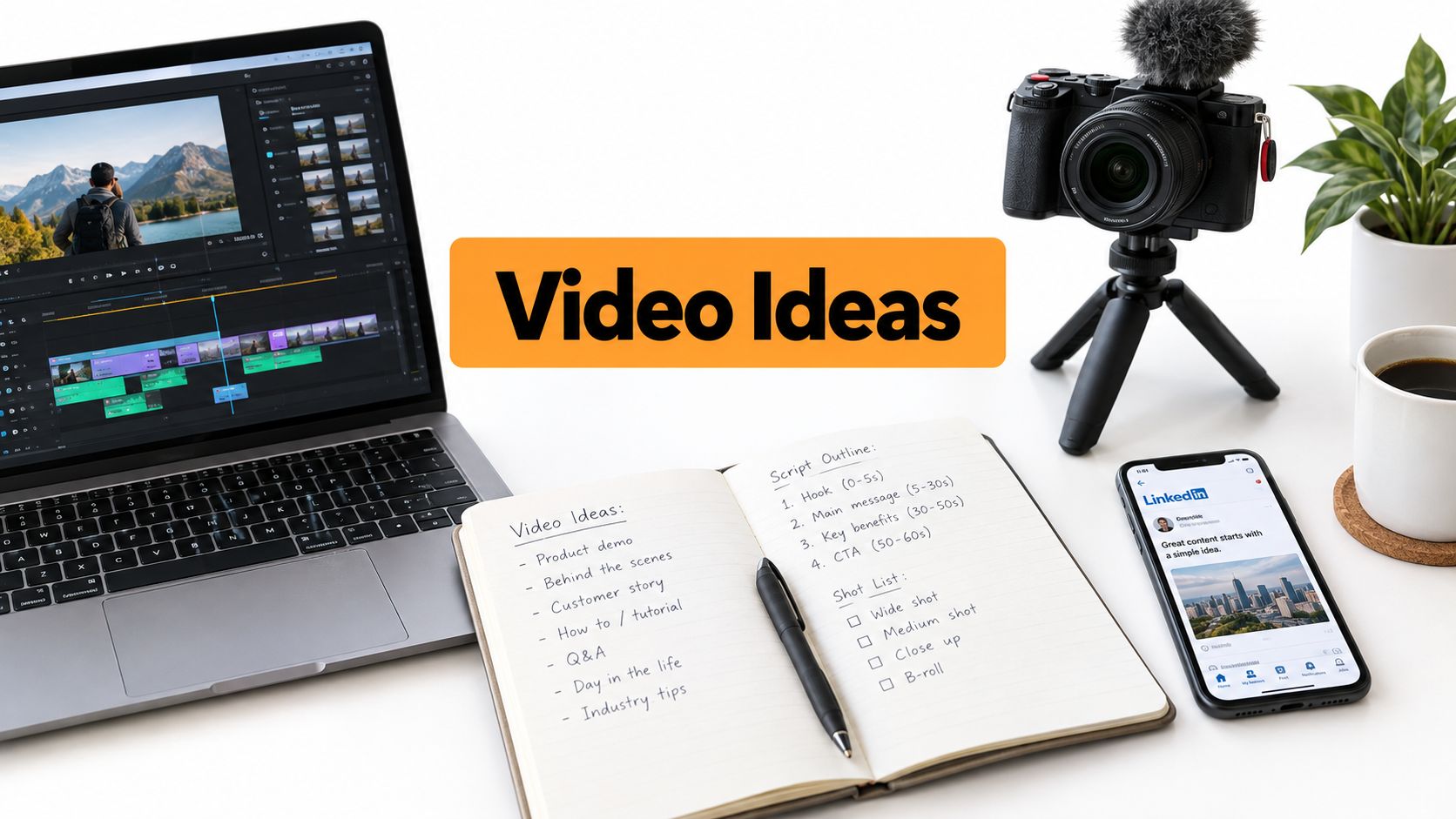
- Short-Form Video: Native video, especially clips under 90 seconds, gets a lot of love. Think quick tips from your CEO, behind-the-scenes clips, or a super-short product demo.
- Polls: This is probably the easiest way to get people to interact with your page. It’s a low-effort click for your audience and can give you some surprisingly useful insights into what they're thinking.
Building the page is step one, but creating a living, breathing content plan is what will make it a success. For a much deeper dive, check out our complete guide to crafting a winning LinkedIn content strategy.
Growing Your Followers and Sparking Engagement
Alright, your LinkedIn page is live. It looks sharp, you’ve got a few posts up, and now... the crickets. This is the moment where the real work begins. The next big challenge is turning that static page into a lively hub where your community actually wants to hang out.
Building an audience isn't about finding some secret growth hack. It’s all about being strategic, consistent, and genuinely human.
The most powerful (and often overlooked) growth engine you have is sitting right there in your office: your employees. The very first thing you should do is encourage everyone on your team to list your company as their current employer on their profiles. It's such a simple ask, but that one action links their personal network directly to your page, instantly amplifying your reach.
Mobilize Your Team as Brand Advocates
Think about it. Which are you more likely to trust? A standard corporate update or a post from a passionate employee who's excited about their work? It's no contest. In fact, research shows that a massive 30% of all engagement on company posts comes directly from the people who work there. This isn’t just a nice little bonus; it's a huge lever for growth.
Here’s how to get your team involved without it feeling like another task on their to-do list:
- Make it incredibly easy. When you publish a big announcement or a great piece of content, shoot out a quick Slack or email with the direct link. You can even suggest a starting point for their own commentary.
- Give them a shout-out! Publicly thank employees who share content and spark great conversations. A little recognition goes a surprisingly long way.
- Offer simple guidance. Show them how adding their own perspective ("I’m so proud of the work our team did on this project!") makes their share far more powerful than a simple re-post.
Of course, for this to work, you need to be creating content worth sharing in the first place. This is where a solid LinkedIn content strategy becomes your best friend.
Don’t just ask your team to share; empower them to be storytellers. When an employee adds their personal take, it connects on a human level that a brand account simply can't replicate.
Use Analytics to Guide Your Growth
Your LinkedIn Analytics dashboard is your secret weapon. It’s where you stop guessing what your audience wants and start knowing. Dive into the Follower demographics and Post analytics sections.
This data tells you exactly who is following you and what content is actually resonating. Did that behind-the-scenes video get double the engagement of your last article? That’s not a coincidence; it’s a signal. Use these insights to double down on what’s working and ditch what isn't.
Sparking Real Conversations
Getting followers is one thing, but getting them to actually talk to you is the real prize. The key is to shift your mindset from broadcasting to conversing.
Start by ending your posts with open-ended questions. Instead of just dropping a link, ask your audience what they think about the topic. When you see a thoughtful comment, don't just hit "like" and move on. Reply! Ask a follow-up question. This simple act shows you're listening and turns passive scrollers into active community members.
Hashtags are also critical, but you have to use them wisely. Don't just stuff your posts with a dozen generic tags. Instead, find 3-5 specific, niche hashtags where your ideal customers are already having conversations. Jumping into those discussions helps position your brand as a helpful expert, not just another company trying to make a sale.
Got Questions? Let's Clear Things Up
As you dive into creating your LinkedIn Company Page, a few questions tend to pop up again and again. Let's get them answered right now so you can keep moving forward.
How Long Does it Take to Get My Page Approved?
This is the best part: there’s no approval process.
The second you hit that "Create page" button, your page is live and visible to the world. It’s instant. This is exactly why I always stress having all your assets—your logo, banner, and "About" copy—ready to go before you start. You can go from a blank slate to a fully polished, professional-looking page in just a few minutes.
Can I Just Turn My Personal Profile into a Company Page?
Nope, you can't. LinkedIn keeps personal profiles and Company Pages completely separate, and for good reason. They serve totally different purposes.
Your personal profile is all about you as a professional. Your Company Page is the official voice of your organization. You'll create and manage the Company Page from your personal account, which automatically makes you the first administrator, but they remain two distinct entities.
What's the Difference Between a Company Page and a Showcase Page?
Great question. This one usually comes up once a business starts to grow and its offerings get more complex.
Think of it this way:
- A Company Page is your main headquarters. It's the official hub for your entire brand, where you talk about company-wide news, culture, and core values.
- A Showcase Page is like a specialized branch office. It's a "child page" that's attached to your main page but focuses on a specific product, brand, or initiative. For instance, Microsoft has its main Company Page, but it also has separate Showcase Pages for products like Microsoft Azure and Microsoft 365.
Quick heads-up: You can't create a Showcase Page without having a main Company Page first. They're a fantastic way to segment your audience and deliver super-targeted content, but they don't replace your central brand page.
Knowing these little details makes a huge difference. Understanding that your page goes live instantly pushes you to be prepared. And knowing the different page types helps you build a smarter, more effective presence from the get-go.
Ready to stop guessing what to post on your new page? RedactAI is an AI-powered tool that helps you create high-impact LinkedIn posts in minutes, tailored to your unique voice and expertise. Join over 21,000 professionals who are already building their brands faster at https://redactai.io.