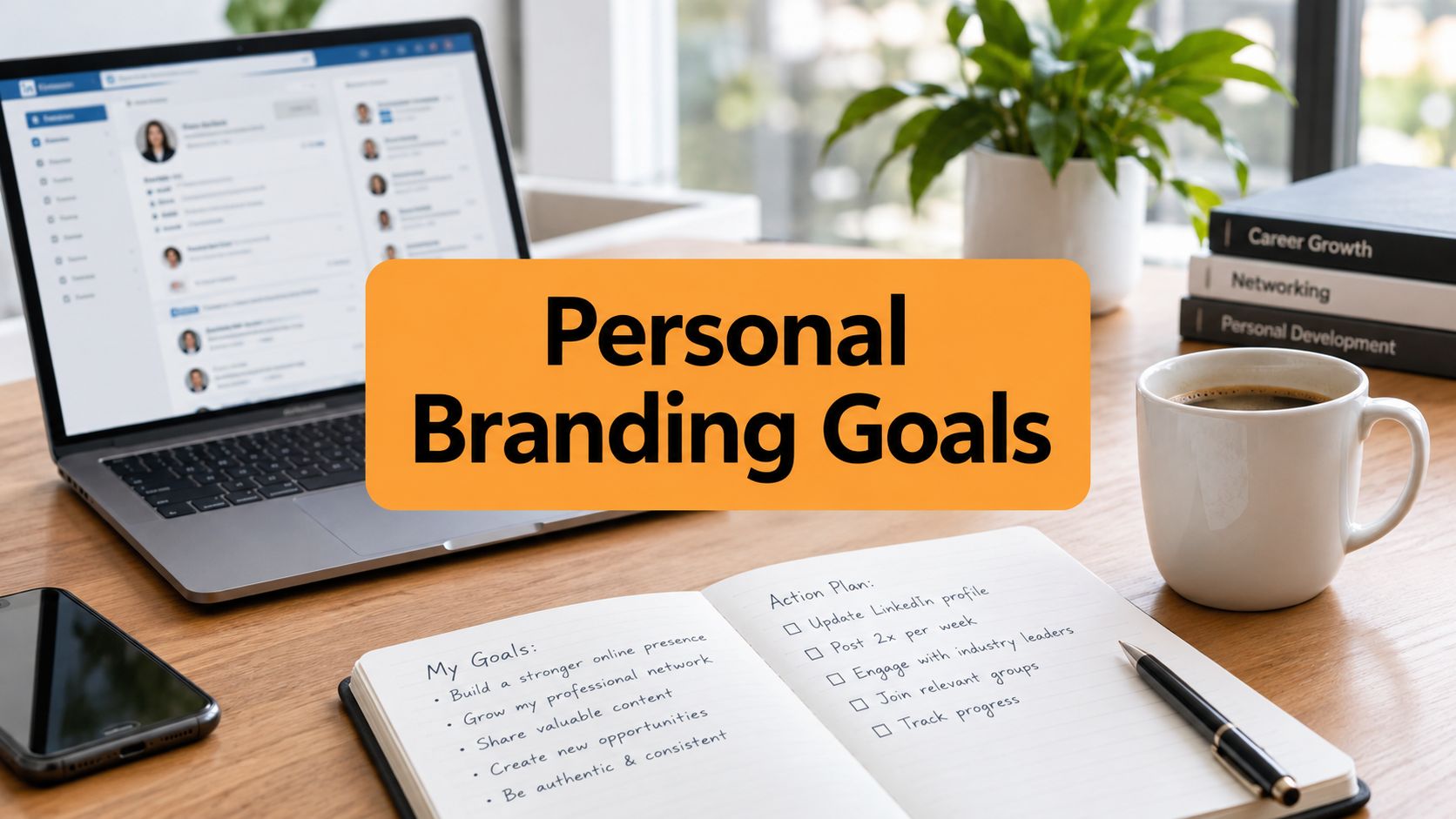
Your personal brand is what people say about you when you're not in the room. The goal is to intentionally shape that conversation.
It all comes down to defining your unique expertise, figuring out exactly who you serve, and then consistently showing up to provide value. This isn't about faking it; it's about shifting your reputation from accidental to intentional, making you the go-to person in your space.
Stop Guessing and Start Building Your Brand Foundation

Before you even think about writing a single LinkedIn post, you need a blueprint. A personal brand built on guesswork is like a house without a foundation—it might look okay for a minute, but it's not going to last. Your brand is more than a nice headshot and a clever bio; it's the professional promise you make and keep.
The key is to get laser-focused on your brand identity. This means getting brutally honest about who you are, who you help, and why you're the one to do it. Let’s skip the corporate jargon and do the real strategic work that makes everything else fall into place.
Pinpoint Your Target Audience
This is where most people go wrong. They try to appeal to everyone. But when you’re talking to everybody, you’re really talking to nobody. So, instead of targeting a vague group like "Marketing Managers," you need to dig way deeper.
Get inside their heads. What are their biggest headaches? What problems are keeping them up at night? What are they really trying to accomplish in their roles?
- Instead of: "Sales Professionals"
- Try: "SDRs at SaaS startups who are struggling to book demos because their cold outreach emails keep getting ignored."
See the difference? That level of specificity lets you create content that feels like you’re reading their mind. It’s how you build an instant connection and become the only resource they trust for that specific problem.
Define Your Unique Selling Proposition
Okay, you know who you’re talking to. Now, why should they listen to you? This is your Unique Selling Proposition (USP)—your secret sauce. It’s that one-of-a-kind blend of your skills, your story, and your perspective that nobody else can copy.
Don't overthink this. Your USP doesn't have to be some world-changing revelation. It's usually found right at the intersection of what you're great at and what you genuinely give a damn about.
Your personal brand isn’t a project; it’s a lifestyle. The two most common failure modes are never starting and quitting too soon. Consistency isn’t about being perfect; it’s about showing up for your audience and reinforcing your message over time.
To nail down your USP, ask yourself a few questions:
- What weird or unique experiences have shaped my career path?
- What's one skill I have that consistently gets amazing results for people?
- What’s my "unpopular opinion" or contrarian take on my industry?
For example, a project manager's USP isn't just "I'm organized." That's boring. It's, "I use my background in improv comedy to help rigid engineering teams communicate more creatively and actually solve problems faster." Now that's memorable.
Conduct a Quick Brand Audit
Before you start building, you need to see what you're working with. Your online presence is already sending a message, whether you like it or not.
Time for a reality check. Open an incognito browser window and Google yourself. Take 15 minutes and see what comes up. Check out your LinkedIn profile, your Twitter, and anything else that's public.
Ask yourself:
- Does this all look and sound like the same person?
- Can a total stranger figure out what I do and who I help in 5 seconds?
- Does this reflect the killer USP I just defined?
This isn't about judging yourself; it's just about collecting data. You're looking for the gap between the brand you want and the brand you currently have. That gap is your to-do list for the next section.
Turn Your LinkedIn Profile Into an Opportunity Magnet
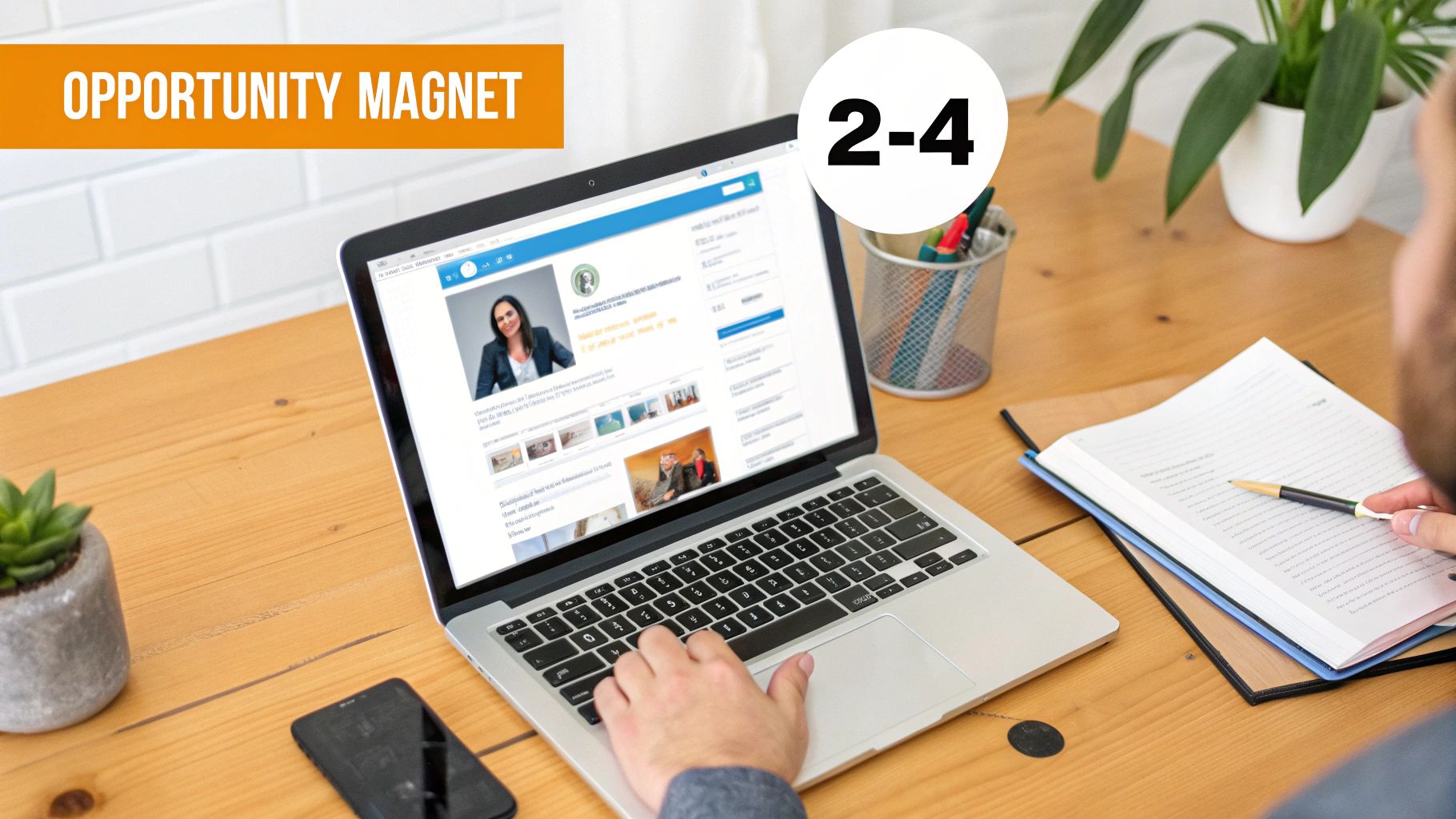
Let's be honest: your LinkedIn profile is your professional landing page. Is it actively working for you, drawing in the right people and opportunities? Or is it just a digital resume collecting dust?
It's the first place anyone—a potential client, a recruiter, a future collaborator—goes to figure out who you are and what you're all about.
We’re going to overhaul it. The goal is to transform it from a passive document into an active magnet for the exact kind of opportunities you want. This isn’t about just filling in the blanks; it's about strategically telling a story that makes people want to connect with you.
Write a Headline That Works Overtime
Your headline is the most valuable piece of real estate on your entire profile. It follows you everywhere—on comments, connection requests, and in search results. Think of it as your personal billboard.
Don't waste it with just your job title. That tells people what you do, not who you help or how you solve their problems. A killer headline combines your role with the value you bring to a specific audience.
Let's compare:
- The Standard: "Marketing Manager at Acme Corp"
- The Optimized: "Marketing Manager | Helping B2B SaaS Startups Drive Demand with Content Strategy | SEO & Lead Gen"
See the difference? The second one immediately tells a visitor your niche and the exact problems you solve. It’s packed with keywords that help the right people find you. To really get this right, you need to learn how to optimize your LinkedIn profile from top to bottom.
Craft an About Section That Actually Connects
This is your space to bring your career story to life. Please, ditch the dry, third-person summary that sounds like it was written by a corporate robot. Write in the first person and tell a story.
Here's a simple structure that works every time:
- The Hook: Kick things off with a powerful sentence about who you help and the core problem you solve for them.
- The Story: Give a quick rundown of your journey. What unique experiences shaped your perspective?
- The Proof: Drop a key achievement or two. Nothing builds credibility faster than real numbers and tangible results.
- The Call-to-Action: Tell people what to do next. Should they connect? Check out your portfolio? Send you a DM?
Don’t just list your skills—weave them into a narrative. People connect with why you do what you do. That’s the human element that turns a profile view into a real conversation.
For a deeper dive, our complete guide on how to optimize your LinkedIn profile is packed with more examples: https://redactai.io/blog/how-to-optimize-your-linkedin-profile. This is your chance to own your narrative.
Nail Your Visual First Impression
People are visual. Long before they read a single word of your carefully crafted "About" section, they’ll see your headshot and banner. These two elements need to scream "professional" and align with the brand you're building.
Your Headshot:
- Look like you, today. A recent photo where your face is front and center is non-negotiable.
- Be professional, not a robot. A genuine smile makes you look approachable and trustworthy.
- Keep the background simple. No one needs to see your messy office or a distracting vacation photo. Keep the focus on you.
Your Banner: That banner image is a free billboard—use it! It's the perfect spot to reinforce your brand message, showcase your company, or even include a call-to-action. You can whip up a professional-looking one in minutes using a tool like Canva. A custom banner makes your profile look intentional and polished, which is a massive win for your personal brand.
Your LinkedIn Profile Optimization Checklist
Getting all these pieces right can feel like a lot, so I put together this simple checklist. Work your way through it to make sure your profile is firing on all cylinders.
| Profile Element | Actionable Tip | The 'Why' Behind It |
|---|---|---|
| Profile Photo | Use a high-quality, professional headshot where your face takes up 60% of the frame. Smile! | It’s your first impression. A clear, friendly photo builds immediate trust and recognition. |
| Headline | Go beyond your job title. Include who you help, how you help, and relevant keywords. | This is your personal tagline and a major factor in LinkedIn’s search algorithm. |
| Banner Image | Create a custom banner that reinforces your brand, shows your work, or includes a call-to-action. | It provides immediate context about you and makes your profile look complete and professional. |
| About Section | Write a first-person story. Start with a hook, share your journey, add proof, and end with a CTA. | This is where you build an emotional connection and show your personality beyond the job titles. |
| Featured Section | Pin your best content, top projects, or links to your website/portfolio. | It’s a visual portfolio that proves your expertise and gives visitors a reason to stick around. |
| Experience | For each role, add 2-3 bullet points focused on achievements, not just responsibilities. Use numbers. | Achievements show impact. "Managed a team" is okay. "Grew team from 3 to 10 and increased output by 40%" is powerful. |
| Skills & Endorsements | Add at least 5 core skills relevant to your field and get them endorsed by connections. | This section helps with keyword optimization and provides social proof for your abilities. |
Use this checklist as your guide. A fully optimized profile isn't just a "nice-to-have"—it's a foundational piece of your personal brand that works for you 24/7.
Find Your Voice with a Smart Content Strategy
Let's be real: posting on a whim gets you random, inconsistent results. A powerful personal brand isn't built on occasional flashes of inspiration. It’s built on the steady, reliable foundation of a smart content strategy. Without a plan, you're just another voice shouting into the void.
But with a plan? You become a go-to resource. This is where we shift gears from simply having a nice-looking profile to actively building your authority. We're going to map out the core topics you'll own, making sure you’re always on-brand and never again have to stare at a blank screen wondering what to post.
Define Your Core Content Pillars
Your content pillars are the 3 to 5 foundational topics your entire brand rests on. Think of them as the main channels of your professional knowledge. Every single thing you post should tie back to one of these pillars. This keeps your message laser-focused and makes it dead simple for your audience to get what you're all about.
When you consistently talk about your pillars, you train your network to connect your name with that specific expertise. The goal is simple: when someone has a problem related to one of your pillars, your name should be the first one that pops into their head.
So, how do you find them? Look for the sweet spot where these three things overlap:
- Your Expertise: What could you talk about for hours without a script? What are you the go-to person for?
- Your Audience’s Pains: What are the biggest headaches, challenges, and burning questions your target audience has?
- Your Passion: What topics actually light you up? You can't fake genuine interest for long, and that authenticity is what really draws people in.
Let’s say you're a freelance copywriter. Your pillars might look something like this:
- Direct Response Copywriting Techniques
- Building a Sustainable Freelance Business
- Client Communication & Project Management
- The Psychology of Persuasion
See how they're specific enough to signal deep expertise, but broad enough that you'll never run out of things to say? That's the balance you're looking for.
Choose the Right Content Formats
LinkedIn is a playground of content formats, and the best personal brands mix it up to keep their audience hooked. You don't need to master them all on day one. Just start with one or two that feel natural to you and work well with your topics.
Here are a few of the most effective formats on the platform right now:
- Text-Only Posts: These are quick, scannable, and perfect for sharing a strong opinion, a personal story, or a tactical tip. Their raw simplicity often cuts through the noise and drives serious engagement.
- Carousels (PDFs): I love these for breaking down complex ideas into bite-sized, visual slides. Use them for mini-guides, checklists, or turning a longer blog post into something highly shareable.
- Image Posts: A single, powerful image or a simple graphic can be a massive scroll-stopper. Great for sharing quotes, highlighting a key stat, or giving a behind-the-scenes peek at your work.
- Polls: This is the easiest way to spark a conversation and get direct feedback from your audience. Just make sure the question is relevant to your pillars so the engagement is actually meaningful.
The goal isn't to be everywhere at once. It's to be effective where you are. If you're a great writer, lean hard into text posts and long-form articles. If you're a visual thinker, master the art of the carousel.
Play around with a few formats and see what your audience responds to. Your analytics page will quickly become your best friend, telling you exactly what's hitting the mark and what's falling flat.
Start Building Your Content Calendar
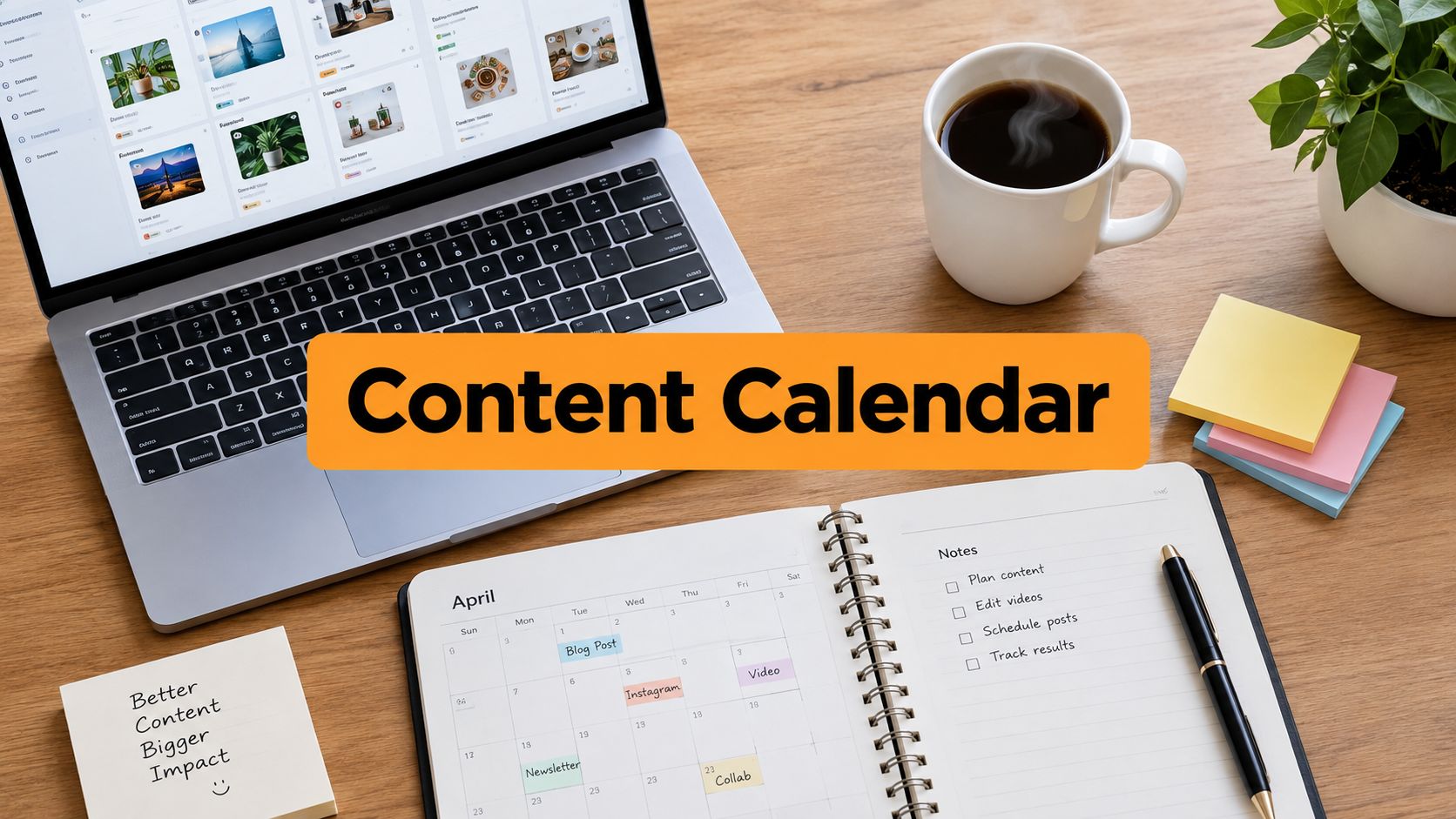
Ideas are great, but they're useless without execution. A simple content calendar is the bridge that turns your strategy into reality. It doesn't have to be some fancy, over-engineered system—a basic spreadsheet is all you need to get rolling.
A calendar forces you to be consistent, which is absolutely critical for building momentum on LinkedIn. It also lets you batch your content creation, saving you from that daily panic of "what do I post today?!" That consistency is a huge part of establishing a strong brand voice that people come to recognize, expect, and trust.
Here’s a bare-bones template you can steal to get started:
| Post Date | Content Pillar | Content Format | Core Idea / Hook | Call to Action | Status |
|---|---|---|---|---|---|
| Monday | Freelance Business | Text-Only | My biggest mistake when I first went freelance... | What's one thing you wish you knew? | Drafted |
| Wednesday | Copywriting | Carousel | 5 copywriting formulas that actually convert. | Which formula will you try first? | Scheduled |
| Friday | Client Comms | Poll | What's your #1 client communication challenge? | Vote below! | Posted |
Your first assignment: brainstorm 10-15 post ideas—a few for each of your pillars. Slot them into your calendar. Just like that, you've got a content plan for the next month. This simple act of planning is what separates the amateurs from the pros.
Create High-Impact Content Without Burning Out
Having a killer strategy is one thing. Actually executing it, week in and week out? That's where most people get stuck and give up.
The pressure to constantly churn out brilliant, original content is real. But the secret isn't to just work harder—it's to work smarter. This is all about building a system that lets you show up consistently without completely draining your battery.
Think of consistency as the engine driving your personal brand. A viral post here and there is nice, but it's the steady drumbeat of valuable content that truly builds trust and makes you the go-to expert. You don't have to post daily, but you absolutely need to be a regular presence.
Generate Authentic Post Drafts in Minutes
We've all been there, staring at a blinking cursor on a blank screen. That's the biggest enemy of consistency. Instead of waiting for a lightning bolt of inspiration, you can use simple tools to get the creative ball rolling with ideas that already fit your brand.
This is exactly what tools like RedactAI were built for. It gets to know you by looking at your profile and past content, learning your specific voice and areas of expertise. From there, you can toss it a simple prompt and get multiple post drafts back in seconds, instantly shattering any writer's block.
For instance, you could try a prompt like, "Write three LinkedIn post drafts about the biggest mistake new project managers make, based on my experience in agile methodologies." Just like that, you might get a text-only post, an outline for a carousel, and a poll idea.
Let's be clear: this isn't about letting a robot do the writing for you. It’s about having a creative partner to get your initial thoughts down on paper, fast. Your job is to then step in, add your personal stories, and tweak it until it sounds 100% like you.
Repurpose Your Best Content for Maximum Impact
Not every piece of content needs to be a brand-new idea. Honestly, one of the smartest things you can do is find your greatest hits and give them an encore. If a post got a ton of engagement, your audience is literally telling you what they want more of.
Don't just repost it, though. Breathe new life into it. Here’s how you can spin one successful idea into several fresh pieces of content:
- Carousel to Text Post: Did a carousel do really well? Pull out the most impactful slide and write a more detailed text-only post diving deeper into that single point.
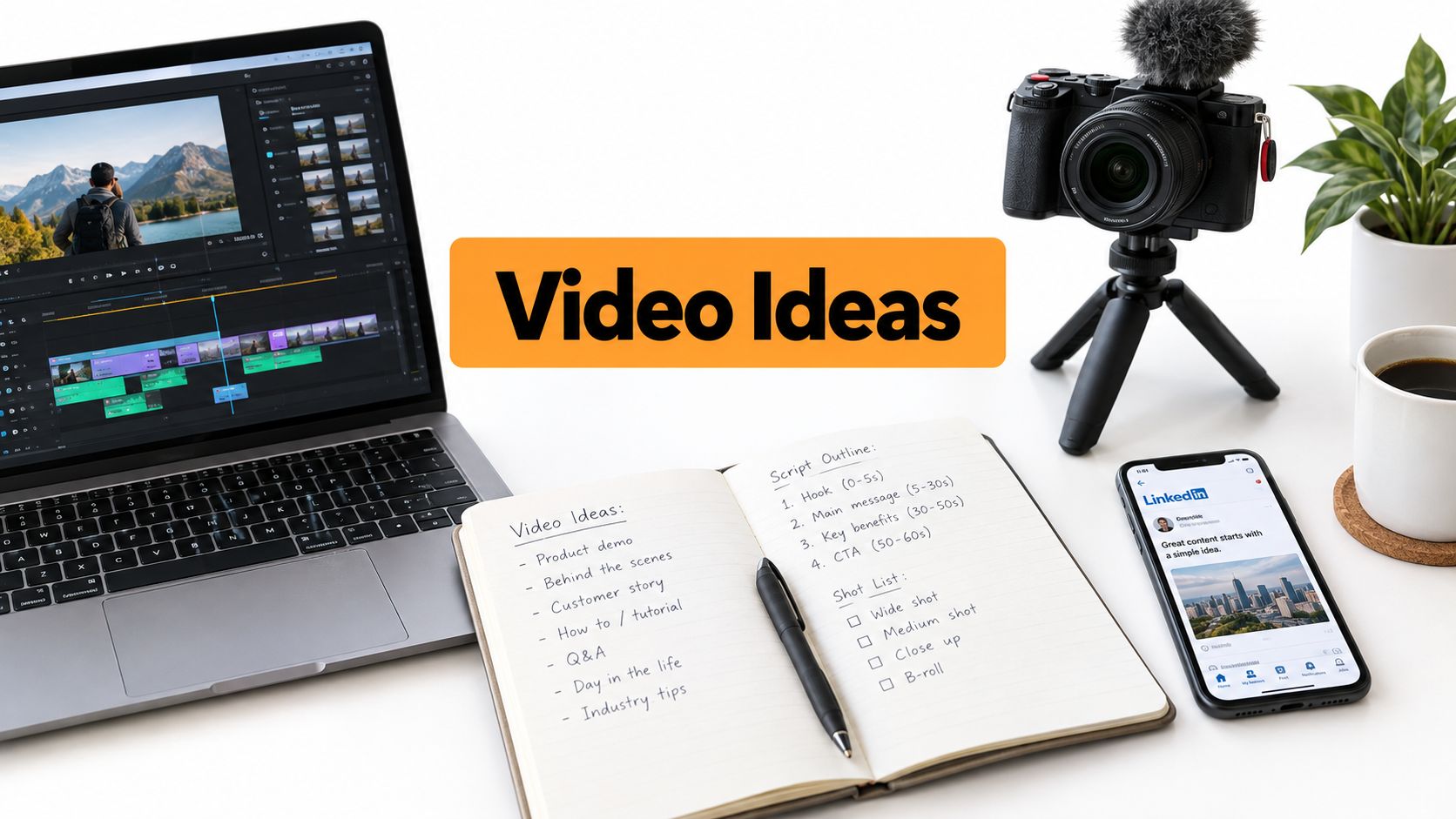
- Text Post to Video Script: If you shared a great story in a text post, use that as a script for a quick, 60-second video. Looking into the camera and sharing that same message adds a whole new dimension.
- Poll to Insightful Article: Take the results of a poll and write a full-blown LinkedIn article exploring the "why" behind the numbers, weaving in your own analysis and perspective.
This approach ensures you’re always putting out proven, high-value content without constantly being on the hook to reinvent the wheel. It's a cornerstone of any efficient content creation workflow.
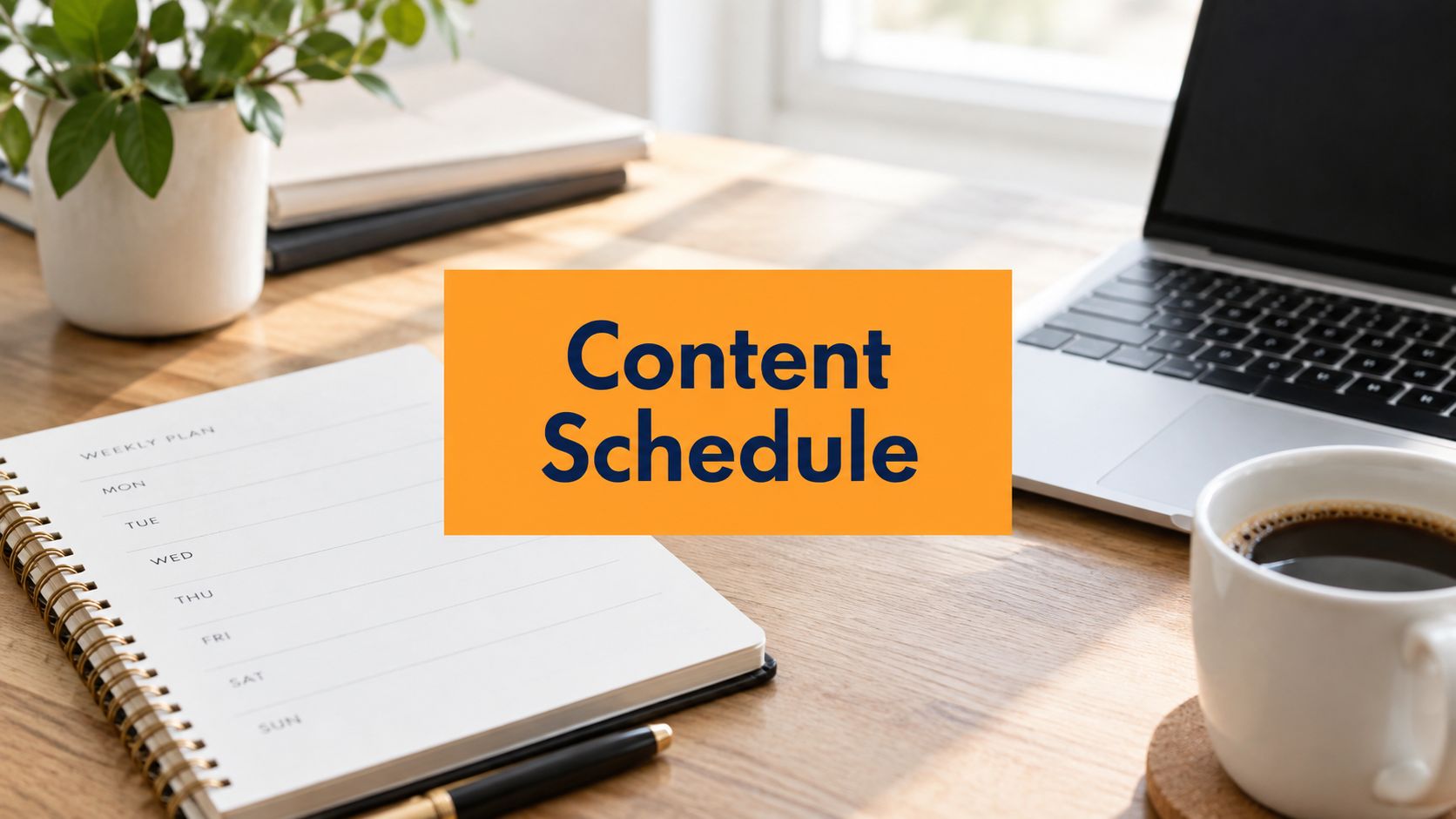
This whole process—from big-picture topics to specific formats and scheduling—can be visualized pretty simply.
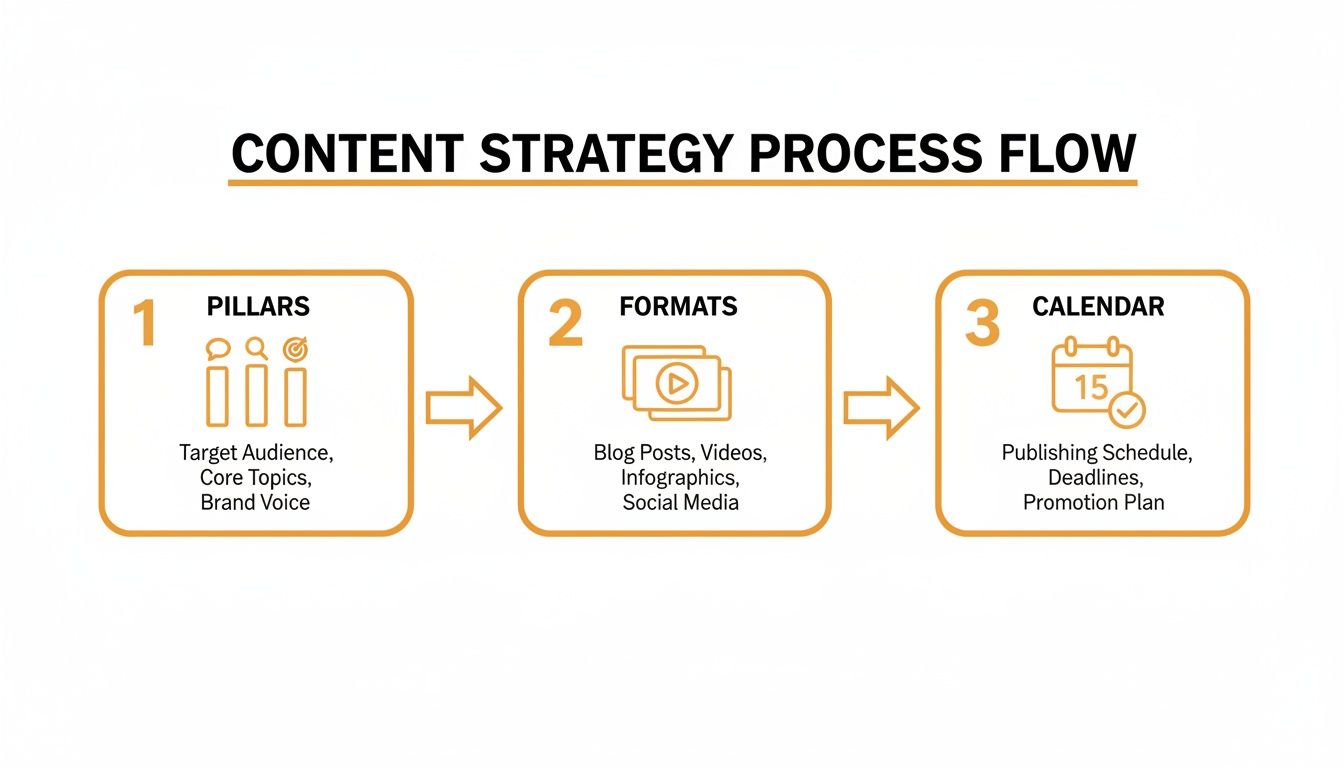
As you can see, a solid strategy flows from your core topics (pillars) into different ways of delivering them (formats), all organized by a schedule (calendar). It’s a simple, repeatable system.
Build a Real Community, Not Just a Follower Count

Let me give you a hard truth about personal branding: a massive follower count is a vanity metric. It means absolutely nothing if no one is actually listening. You can pump out the most amazing content on the planet, but if you’re just shouting into the void, you aren’t building a brand—you're just making noise.
A real personal brand is forged in conversations, not impressions. It’s about making a mental shift from being a "content creator" to a community builder. This is how you turn passive scrollers into an active network of people who know, like, and genuinely trust what you have to say.
Spark Conversations That Actually Matter
First things first: stop writing posts that are a dead end. Every piece of content you share should be an open invitation for a discussion. This means going beyond just dropping information and actively asking for engagement with a smart hook and a solid call-to-action (CTA).
A great hook makes someone stop their scroll in the first line. A great CTA gives them a super easy way to jump into the conversation.
- Weak CTA: "What do you think?"
- Strong CTA: "What's the #1 challenge you're facing with X right now?"
See the difference? The second one is specific, targeted, and makes it way easier for someone to give you a real answer.
Master the Art of the Reply
When someone takes the time to comment on your post, they've given you a gift. Your response is everything. A quick "thanks!" is a wasted opportunity. A thoughtful reply that builds on their comment and asks a follow-up question can turn a single comment into a thriving thread.
The real magic of community building happens in the comment section—both on your posts and on others'. It’s where you prove you’re not just a broadcaster but a genuine participant in the industry conversation.
This is your chance to prove you're listening. When you make people feel heard and valued in the comments, they’re way more likely to engage with your stuff again. It’s a powerful feedback loop that most people completely ignore.
Go Beyond Your Own Posts with Proactive Engagement
Building a community isn't just about what happens on your own profile. You have to be an active citizen of the entire LinkedIn ecosystem. This means intentionally engaging with other people's content. Honestly, it’s one of the fastest ways to get on the radar of influential people in your niche and introduce your expertise to entirely new audiences.
I’m a big fan of a simple but super effective framework for this: the 5-3-2 Rule. For every 10 pieces of content you interact with, try to hit this ratio:
- Comment on 5 posts from others: Leave thoughtful, insightful comments that add to the conversation. Don't just say "great post!" Add a perspective or a question.
- Share 3 pieces of relevant content: Find valuable posts from others, hit the share button, and add your own commentary. This shows you're a curator of good ideas, not just a creator.
- Post 2 of your own original pieces: This is your core content, based on your pillars and strategy.
This rule forces you to shift from a "me, me, me" mindset to one focused on providing value across the entire platform. When you consistently show up in other people's comment sections with smart insights, you're not just engaging—you're demonstrating your expertise in real-time. This simple habit will dramatically expand your visibility and cement your personal brand in the minds of a much wider audience.
Still Have Questions? Let's Get Them Answered
Alright, you've got the playbook. You know how to define your audience, tune up your profile, and map out your content. But I get it—diving into personal branding can bring up a lot of "what ifs." It's completely normal.
Let's tackle some of the most common questions that pop up right before you hit "post" for the first time. Getting these sorted will give you the confidence to not just start, but to keep going when it really counts.
"Okay, But How Long Until I See Results?"
This is the big one, isn't it? The honest-to-goodness answer is: it’s a marathon, not a sprint. There's no magic switch to flip.
However, with real consistency, you can start seeing tangible traction in about 3 to 6 months. I'm talking about more profile views, connection requests that are actually relevant, and people starting conversations in your comments.
The secret isn’t posting like a maniac for one week and then vanishing. It’s about showing up 3-4 times a week, week after week. That steady drumbeat is what builds momentum and, eventually, a brand.
Building your personal brand isn’t a one-off project; it’s a habit. The two quickest ways to fail are never starting and quitting too soon. Consistency isn’t about perfection. It’s about being there for your audience and reinforcing who you are over and over again.
"What if I Don't Feel Like an 'Expert'?"
Welcome to the club! Seriously, almost everyone starts out feeling this way. It’s called imposter syndrome, and it's a good sign—it means you care.
Here’s the thing: you don't need to be the world's top guru to have a powerful brand. In fact, that "know-it-all" persona often comes across as unrelatable and, frankly, a bit boring.
So, let's flip the script. Don't be an expert; be a documenter. Share your journey as it happens.
- What are you learning right now?
- What problem did you just solve?
- What mistake did you make that others can learn from?
People connect with progress, not perfection. This "learn out loud" approach is incredibly authentic and builds trust way faster than pretending you have all the answers. Your journey is your credibility.
"How Do I Actually Know if This is Working?"
Great question. Measuring your brand’s impact is a mix of hard numbers and human signals. You need to pay attention to both.
The Numbers (The Hard Data): Your LinkedIn analytics are your dashboard. Don't get lost in them, but keep an eye on these key metrics:
- Profile Views: Are more people looking you up week over week?
- Impressions & Engagement: Is your content reaching more people and starting conversations?
- Follower Growth: Are you attracting the right kind of followers?
The Vibe (The Human Signals): This is where it gets really exciting. These are the signs that your brand is truly landing:
- You start getting connection requests from people you actually want to know.
- Peers mention your ideas in their own posts or DMs.
- Out-of-the-blue opportunities—podcast invites, speaking gigs, coffee chats—start showing up in your inbox.
These are the moments you realize people aren’t just seeing your content; they’re seeing you.
"Should I Get Personal? Or Keep it Strictly Business?"
Yes, you should get personal! But with intention.
Your brand should be professional, but it shouldn't be robotic. In a feed full of corporate jargon and buzzwords, a genuine story is what makes people stop scrolling and feel a connection.
The trick is to always tie it back to a professional lesson or a core value that serves your audience. Before you post a personal story, ask yourself: Does this reinforce the message I want my brand to be known for?
If a story about running your first 5k connects to a lesson about discipline and achieving goals in your career, that's a brilliant post. It's posts like these that build real trust and make you memorable.
Feeling the pressure to keep up? RedactAI can be your creative co-pilot for LinkedIn. It learns your voice to help you spin up authentic drafts in minutes, brainstorm fresh ideas for your content pillars, and squeeze more value out of your top posts. Stop staring at a blank page and start building your brand with confidence. Give it a try for free.