Managing LinkedIn effectively is about so much more than just throwing a post up every now and then. It’s a deliberate, strategic effort to build real authority and spark professional growth. To truly succeed, you need a consistent plan for creating content that actually helps people, engaging with the right audience, and constantly looking at what works (and what doesn't) to get better.
Why Your LinkedIn Game Needs a Real Strategy

Let’s be real for a second. Just posting on LinkedIn whenever the mood strikes isn't going to get you anywhere. The platform has grown up. It's no longer just a place to park your resume online; it's the undisputed hub for B2B connections, serious thought leadership, and building a powerful professional brand.
Having a profile is table stakes. To stand out, you need a genuine game plan.
A structured approach to your LinkedIn presence takes it from a static, dusty page to a dynamic engine for opportunity. You stop just listing past jobs and start actively building your reputation, attracting valuable connections, and even generating leads while you sleep.
The Power of a Purpose-Driven Presence
Think about it like this: every post you share, every comment you leave, and every connection you make is a building block for your professional brand. Without a strategy, those blocks are scattered randomly. With a strategy, you're building something with purpose. That intentionality is what separates the people who just use LinkedIn from the people who lead on LinkedIn.
When you manage your presence with a clear goal, you can:
- Establish Authority: Consistently sharing useful insights makes you the go-to person in your field.
- Build a Relevant Network: You start connecting with the right people—clients, partners, mentors—not just random strangers.
- Generate Opportunities: A strong, active profile becomes a magnet for inbound leads and interesting career offers.
- Stay Top of Mind: Your consistent, quality content keeps you visible and relevant to your network.
The real magic of social media management on LinkedIn is turning your professional experience into a living, breathing asset that works for you 24/7. It's about moving from being a passive participant to an active architect of your career narrative.
A quick look at who’s on the platform makes it clear why this matters.
LinkedIn Audience at a Glance
| Statistic | Figure | Why It Matters for Your Strategy |
|---|---|---|
| User Base Projection | 1.15 billion by 2025 | The audience is massive and growing, offering a vast pool of potential connections. |
| Millennial Users | 60% of total users | The platform is dominated by the generation that now holds significant decision-making power. |
| Decision-Makers | 4 out of 5 members drive business decisions | You're not just shouting into the void; you're reaching people who can actually say "yes." |
| High-Income Earners | 44% of users earn over $75k/year | The audience has significant purchasing power, making it ideal for B2B and high-value B2C. |
These numbers aren't just trivia; they're proof that the right people are on LinkedIn, actively looking for valuable connections and information.
Why Now Is the Critical Time
The platform's growth is staggering. It’s projected to jump from 644 million users in 2019 to over 1.15 billion by 2025. That’s a 78% increase in just six years! This explosion cements its role as the center of the professional universe.
With millions of key decision-makers scrolling their feeds every single day, a "winging it" approach means you're leaving incredible opportunities on the table.
For a deeper dive into crafting your own plan, this guide to a winning LinkedIn strategy for business growth is a great place to start. And as you put the pieces together, don't miss our detailed breakdown of how to build a killer https://redactai.io/blog/linkedin-content-strategy.
Who Are You Talking To, Anyway? Nailing Your Audience & Content Pillars
Before you even think about writing a post, we need to get two things crystal clear: Who are you talking to, and what do you want to be known for? If you don't have solid answers here, your content will feel scattered and just won't land with the right people. A focused foundation is everything when it comes to managing your LinkedIn presence effectively.
Forget generic labels like "marketing managers" or "software developers." That's way too broad. Real people have specific problems, goals, and daily frustrations that a simple job title can't capture. Your job is to dig into those details and create content that actually feels like you're speaking directly to them.
What keeps your ideal connection up at night? What are the career goals they're chasing, and what roadblocks are they hitting? Think about the questions they’re probably typing into Google when nobody's looking. This is the stuff that turns your content from background noise into a must-read resource. If you want to go deeper on this, we've got a whole guide on how to identify your target audience.
Turning Audience Insights into Content Pillars
Once you have a sharp picture of your ideal person, it's time to define your content pillars. These are the 3-5 core topics you’ll build your entire LinkedIn strategy around. Think of them as your signature themes—the subjects you want people in your network to immediately associate with you.
Sticking to these pillars keeps your content consistent and laser-focused, building your authority in a specific niche. Instead of jumping randomly between a dozen different topics, you'll be creating a cohesive library of content that reinforces your expertise again and again.
Content pillars are basically your promise to your audience. They tell people what to expect from you and build trust by showing exactly what kind of value you bring to the table. It’s how your profile becomes a go-to spot for specific insights.
Content Pillar Examples from the Real World
Let's get practical. Your pillars should live at the intersection of what your audience is hungry for and what you genuinely know best.
Here’s how a few different pros might set theirs up:
A Startup Founder might focus on:
- Bootstrapping vs. Fundraising
- How to Build a Killer Team Culture
- The Future of the SaaS Industry
A Freelance Graphic Designer could own:
- Branding Psychology for Small Shops
- My Favorite Productivity Tools for Creatives
- Client Communication That Actually Works
- The Nitty-Gritty of Running a Freelance Business
An HR Consultant's pillars could be:
- Employee Retention in the Modern Workplace
- What Real Leadership Looks Like Today
- Making Hybrid Work Models Thrive
See how specific those are? They're not just broad subjects; they carve out a distinct point of view. This kind of focus is what makes your social media management on LinkedIn feel strategic, not just a bunch of random posts. From here on out, every single thing you create should tie back to one of these pillars. That's how you build a powerful, memorable brand.
Alright, you've figured out who you're talking to and what you want to be known for. Now comes the fun part: actually creating content that people want to read.
Let's be honest, managing a LinkedIn presence is about way more than just firing off company news. It's about sparking real conversations. The goal is to create posts that stop people mid-scroll and make them think, "Huh, that's interesting."
The secret? Ditch the stiff, corporate jargon. People connect with other people, not with faceless brands. This means you need to get comfortable weaving in your own stories, your unique point of view, and the genuine lessons you've learned along the way. Your aim is to become a go-to resource, not just another voice shouting into the digital ether.
The Anatomy of a Scroll-Stopping Post
Ever notice how the best LinkedIn posts all feel… similar? Even when the topics are wildly different, they tend to follow a simple but powerful flow. It’s all about grabbing attention and then delivering the goods.
First, you need a killer hook. Those first one or two lines are everything. They have to be intriguing, relatable, or maybe even a little controversial to earn that coveted "...see more" click.
Next comes the body, where you deliver the value. This is your chance to tell a story, share a hard-won lesson, drop a surprising statistic, or walk someone through a useful process. Give them something they can actually use.
Finally, you need a clear call-to-action. Don't just let the post hang there. End with a simple question or an invitation for people to share their own experiences. The goal here isn't always a sale; it's about starting a conversation.
I've found the best content often comes from a simple formula: identify a problem your audience has, share how you solved it or what you think about it, and then ask them what they think. It’s that simple.
Choosing the Right Content Format
You wouldn't use a hammer to saw a board, right? The same goes for your content. Different ideas work best in different formats. Mixing things up not only keeps your feed from getting stale but also plays to how different people like to learn and engage.
- Text-Only Posts: These are my go-to for telling a quick story or sharing a sharp insight. Their raw, unfiltered feel often gets incredible engagement because they feel so personal and are dead simple to read.
- Carousels (PDFs): Got a complex idea? Break it down into a visually appealing carousel. They're perfect for mini-guides, recapping data, or showing off a step-by-step process. Think of them as bite-sized presentations.
- Polls: This is the easiest win on LinkedIn, period. Polls are a fantastic way to get instant feedback and kickstart engagement. Use them to test an idea, ask about common frustrations, or even just start a lighthearted debate.
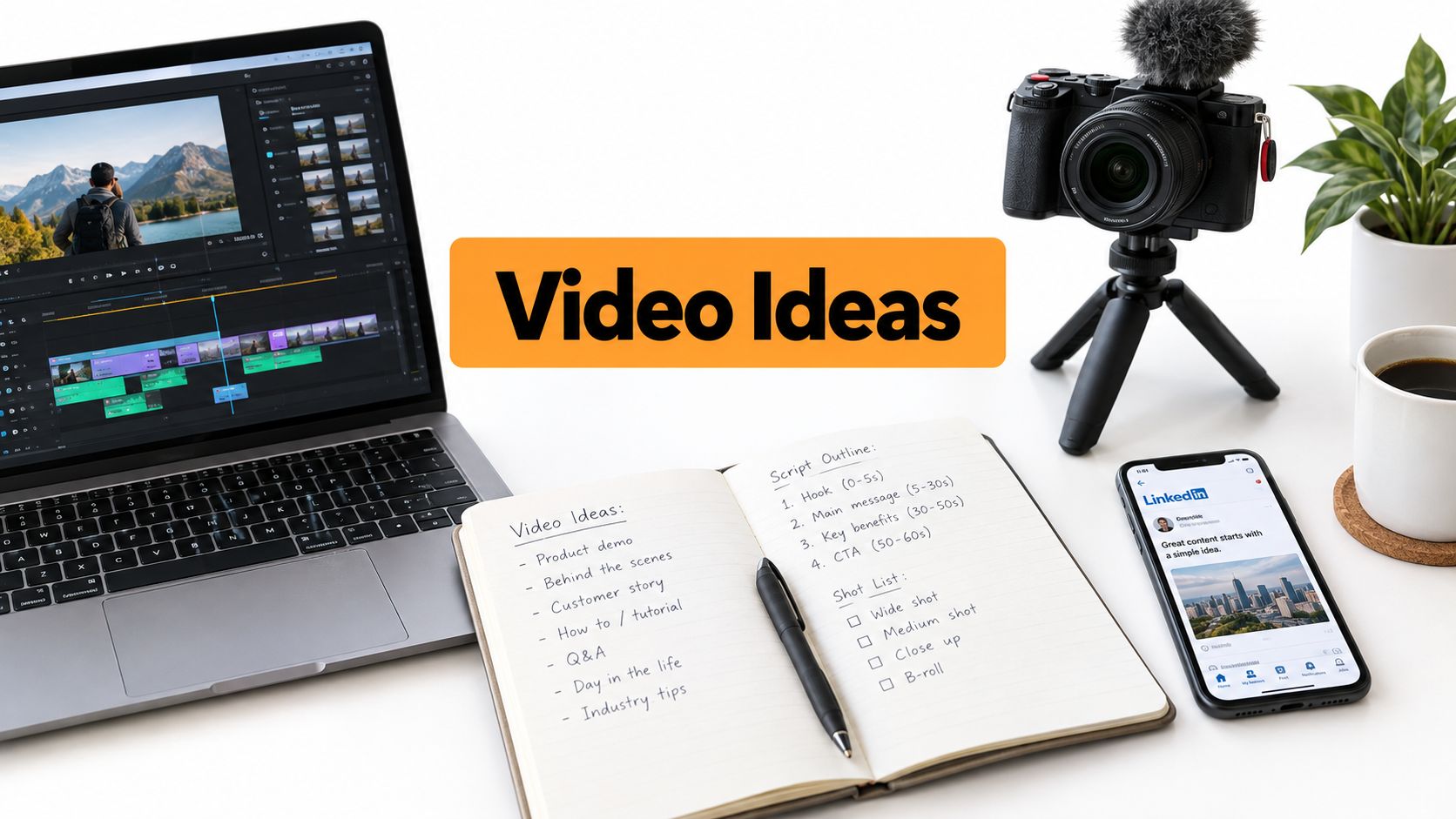
- Image & Video Posts: A great photo or a quick video can add a much-needed human element. A behind-the-scenes shot, a 60-second video tip, or a simple infographic will almost always outperform a wall of text.
Getting this right matters. A mind-boggling 300 million users engage with brand content on LinkedIn every single day. For anyone in the B2B space, it's a goldmine, especially when you consider that nearly 70% of users are in decision-making roles. You can dig into more stats on how professionals use LinkedIn from Sprout Social. This is why picking the right format isn’t just a creative choice—it’s a strategic one.
Building a Sustainable Engagement System
Look, a killer LinkedIn strategy is useless if it's not sustainable. And let's be real—who actually has time to come up with brilliant new posts and engage with their network every single day? The answer isn't to work harder; it's to work smarter with your social media management on LinkedIn.
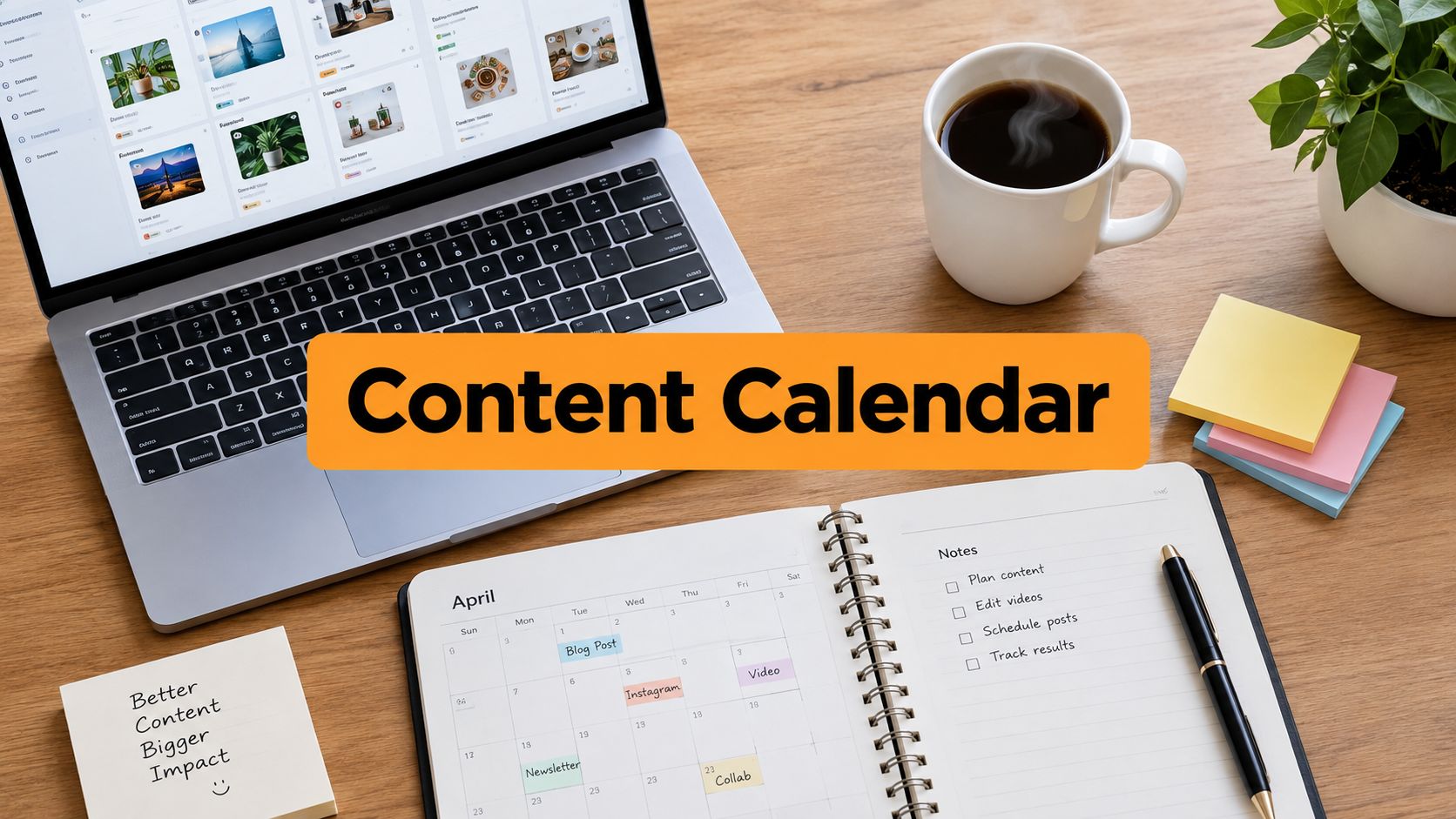
This is where content batching will absolutely save you. Instead of that daily "what do I post?" panic, you block off a couple of hours once a week—say, Friday afternoon—to get it all done. Plan, write, and design everything for the week ahead. This one little change takes you from being reactive to being strategic.
Batching and Scheduling: Your New Best Friends
Batching content isn't just a time-saver; it’s a quality booster. When you dedicate a block of time just to creation, you get into a flow state. Your ideas become more connected, more creative, and just… better. Once the posts are ready, you can load them into a scheduling tool to go live at the perfect times.
This simple system keeps your profile buzzing with activity, even when you’re slammed with other work. It's the engine that runs a consistent, stress-free LinkedIn presence.
The real magic happens when you separate creating from distributing. Batch your content creation, and you'll free up so much mental energy during the week for the stuff that actually moves the needle: genuine, in-the-moment engagement.
Finding Your Rhythm: How Often to Post?
Everyone asks, "How often should I post?" There's no one-size-fits-all answer, but a solid starting point is 3-5 times per week. The most important thing is finding a cadence you can actually stick to without burning out. Consistency will always beat frequency.
Here’s a simple way to figure it out:
- Start small with 3 posts a week. This is a totally achievable goal for most busy people.
- Check your analytics after a month. See what’s working. Are Tuesdays a hit? Do your audience love polls?
- Adjust your plan. If you’re full of ideas and have the bandwidth, ramp it up to 5 posts. If not, stick with what’s manageable and effective.
When you're batch-creating, it helps to have a simple formula. This little breakdown is perfect for that.
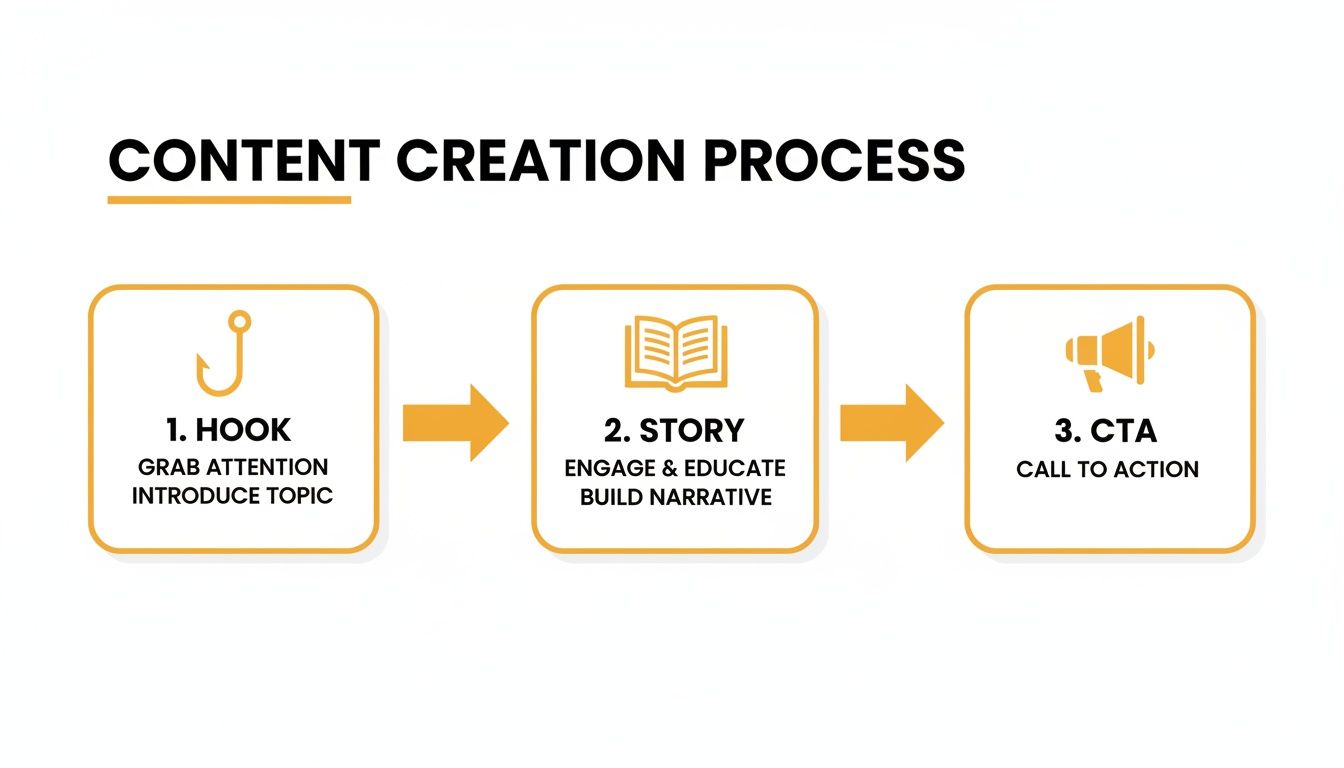
Having this simple Hook -> Story -> CTA framework in your back pocket makes creating high-impact content so much faster.
Putting It All Together: A Sample Workflow
To make this super practical, here’s what a managed week could look like depending on your role. An executive has different needs than a freelancer, who has different needs than an agency managing multiple clients.
Sample Weekly LinkedIn Management Workflow
| Day | Activity for an Executive | Activity for an Agency | Activity for a Freelancer |
|---|---|---|---|
| Monday | Review weekly content schedule. Spend 15 mins engaging with key industry contacts. | Post approved content for Client A. Monitor initial engagement. Engage with Client B’s audience. | Post a value-driven piece. Spend 20 mins engaging in relevant industry groups. |
| Tuesday | Share a company milestone or team win (pre-scheduled). Respond to all comments. | Post for Client C. Review analytics from Client A's Monday post and report key metrics. | Share a case study or client testimonial. Engage with 5 potential leads' content. |
| Wednesday | Post a personal insight or leadership lesson. Spend 15 mins on connection requests. | Post for Client A. Host a LinkedIn Poll for Client B to boost engagement. | Post a quick tip or "behind-the-scenes" look at a project. Respond to DMs. |
| Thursday | Reshare a valuable article with personal commentary. Engage with your team’s posts. | Post for Client C. Curate and share relevant industry news for all clients. | Participate in a popular industry hashtag conversation. Send 3 personalized connection requests. |
| Friday | 2-hour block: Batch-create and schedule next week’s content. Final engagement sweep. | 4-hour block: Create all content for all clients. Send for approval. Compile weekly reports. | 2-hour block: Outline and draft next week’s content. Source new ideas. |
This kind of structured approach is what separates the pros from the amateurs. It turns a chaotic task into a manageable and predictable part of your workweek.
It’s Not Just Posting—It’s Community Management
Great LinkedIn management is more than just throwing content out there; it's about building real relationships. You absolutely must set aside 15-20 minutes every day for community management.
This isn’t mindless scrolling. It's focused time to reply thoughtfully to comments on your own posts and, just as importantly, to engage with content from key people in your network.
This daily habit is how you turn a list of followers into a genuine community. When you consistently show up in conversations and add value to what others are saying, you expand your reach and make your profile a true hub for your industry.
Measuring What Matters to Optimize Your Strategy
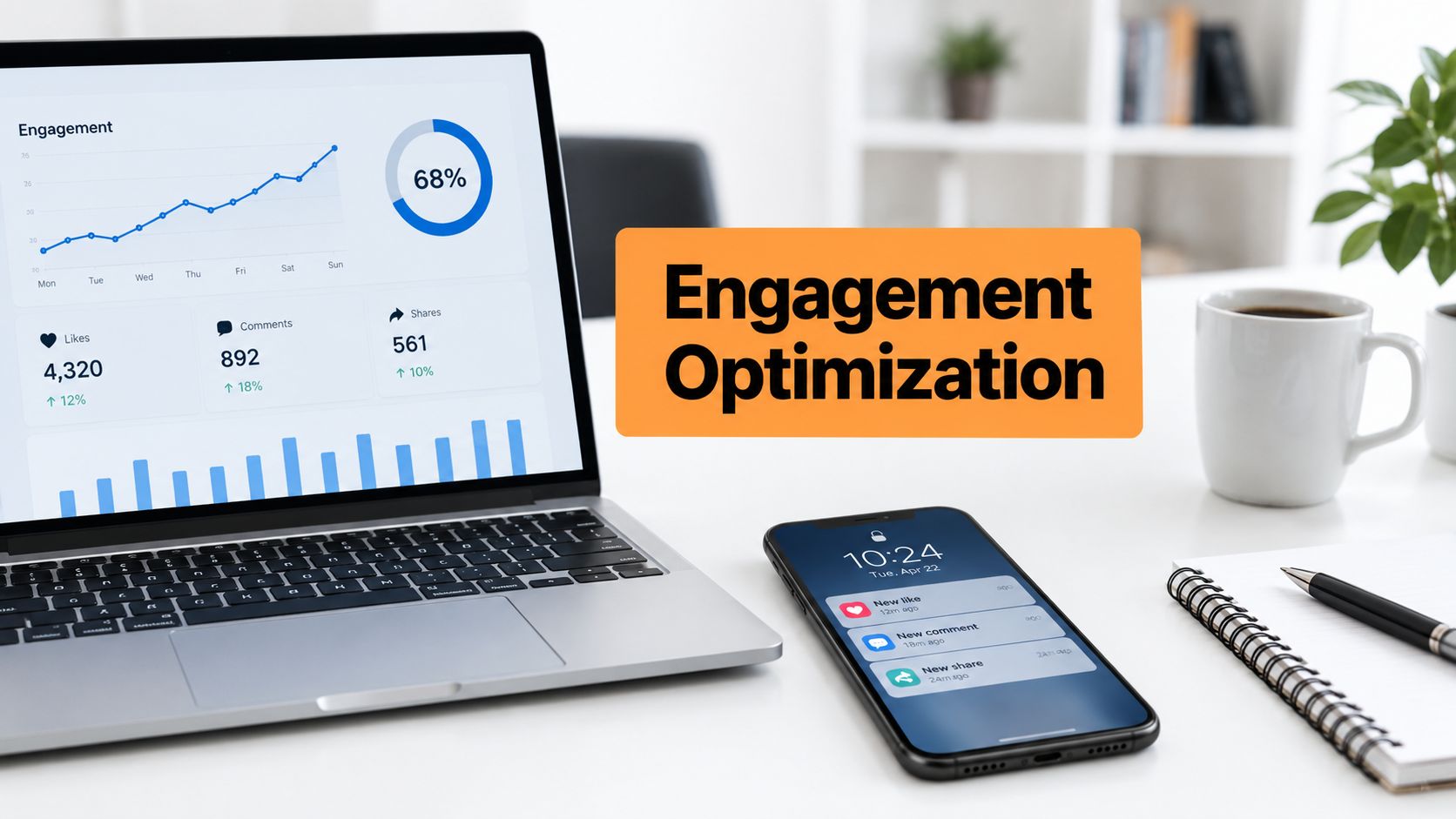
So, how do you know if any of this is actually working? Great LinkedIn management isn't about chasing vanity metrics like likes and views. The real win is in the data that shows you’re building genuine connections and making a business impact.
You have to shift your focus to the numbers that actually move the needle. These are the signs that tell you if you're hitting home with the right people.
Moving Beyond Vanity Metrics
It's easy to get a quick dopamine hit from a post that racks up hundreds of likes, but those numbers often mean very little for your actual goals. Instead, you need to zero in on the metrics that prove your content is truly resonating.
Here’s what I pay attention to:
- Profile Views: Are more people from your target companies or industries checking you out? This is a huge sign your content is hitting the mark.
- Inbound Connection Requests: When high-quality prospects or peers reach out to you, it’s a clear signal that your authority is growing.
- Comment Quality: A single, thoughtful comment from a key decision-maker is worth a hundred generic "great post!" replies. Look for substance, not just volume.
- Direct Messages (DMs): Are people sliding into your DMs to ask questions or start business conversations? This is where the real opportunities begin.
The goal isn't to be popular; it's to be influential with the right people. I’d take one meaningful conversation that leads to a new client over a viral post that generates zero business any day of the week.
This data-first approach is especially potent on LinkedIn, where you’re talking to an affluent, professional crowd. As of late 2025, 33.4% of users—that’s nearly 400 million people—are in the high-impact 25-34 age bracket, a demographic that really shapes how content performs. You can dig deeper into LinkedIn's powerful user demographics on Hootsuite's blog.
Creating Your Data Feedback Loop
Think of your analytics dashboard as your secret weapon. You can use it to build a simple but powerful feedback loop that constantly refines your strategy. It’s a straightforward three-part process: analyze, hypothesize, and test.
Let’s walk through a real-world example. Say you're reviewing last month's data.
Analyze the Data: You notice that your text-only posts sharing a personal story got twice the number of high-quality comments as your posts that just linked out to industry articles.
Form a Hypothesis: Your takeaway might be: "My audience seems to connect more with personal vulnerability and storytelling than they do with curated news."
Test and Refine: Okay, so for the next two weeks, you double down on storytelling. You test different angles—a career failure, a surprising success, a lesson learned from a mentor. Then, you measure again. If the data backs up your hypothesis, you’ve just uncovered a core piece of your winning strategy.
This cycle turns your LinkedIn activity from a guessing game into a predictable system for growth. For a much deeper dive into this, check out our guide on measuring social media ROI. When you consistently measure what matters, you make sure every bit of effort you put in delivers the biggest possible impact.
Got Questions About Managing LinkedIn? You're Not Alone.
Once you decide to get serious about LinkedIn, the questions start piling up. It's easy to have a plan on paper, but putting it into practice day-in and day-out is a different story. Let's dig into some of the most common hurdles people face.
Think of this as a quick-and-dirty guide to navigating the tricky parts of LinkedIn management so your hard work actually gets results.
What's the "Right" Posting Frequency?
Ah, the million-dollar question. Here’s the real talk: consistency is so much more important than frequency.
If you post five times this week and then go radio silent for two weeks, you're doing more harm than good. The algorithm—and your audience—rewards reliability. For most people, 3-5 thoughtful posts per week is the magic number. It keeps you on your network's radar without you having to churn out content 24/7.
My advice? Start with three posts a week. See how that feels. If you're overflowing with ideas and have a good system for creating content in batches, then by all means, ramp it up.
Is LinkedIn Premium Worth the Money?
It really depends on what you're using LinkedIn for. If you're in sales, recruiting, or actively prospecting, a premium subscription like Sales Navigator is practically a superpower. The advanced search filters let you zero in on exactly who you need to talk to, which can save you a ton of time.
But if your main goal is building a personal brand or establishing yourself as a thought leader? You can get incredibly far with the free version.
Here's my personal rule of thumb: if you find yourself constantly frustrated by the limits of the free search or you need to know exactly who's looking at your profile for lead gen, it's time to pull out your wallet. Otherwise, save your money and focus on creating killer content. That’s always free.
How Do I Deal with Negative Comments?
First off, don't panic. A critical comment isn't a catastrophe; sometimes, it's even an opportunity to show your professionalism. The golden rule is to always respond publicly, professionally, and without getting defensive.
Here’s a simple way to approach it:
- Acknowledge their view. Start with something disarming like, "Appreciate you sharing a different take on this," or "That's a fair point." This immediately takes the heat out of the situation.
- Clarify, don't argue. Briefly and calmly explain your position or add a bit of context. The goal isn't to win a debate, it's to provide clarity.
- Move it to the DMs. If the person is just looking for a fight, offer to take it private. A simple, "Happy to chat more about this in DMs if you'd like," shows you're open to discussion but protects your comment section from becoming a battlefield.
Remember, the way you handle criticism says a lot about your brand. A cool-headed, respectful reply can often impress your audience more than your original post ever could. The only time you should ever hit that delete button is for outright spam or truly offensive stuff.
Tired of the content hamster wheel? If you're feeling the pressure to constantly come up with fresh ideas, RedactAI was designed for you. It's like having an AI partner that helps you draft compelling LinkedIn posts that sound just like you, but in a fraction of the time. Stop the blank-page-stare and start building your brand with confidence. See how you can simplify your LinkedIn management at https://redactai.io.