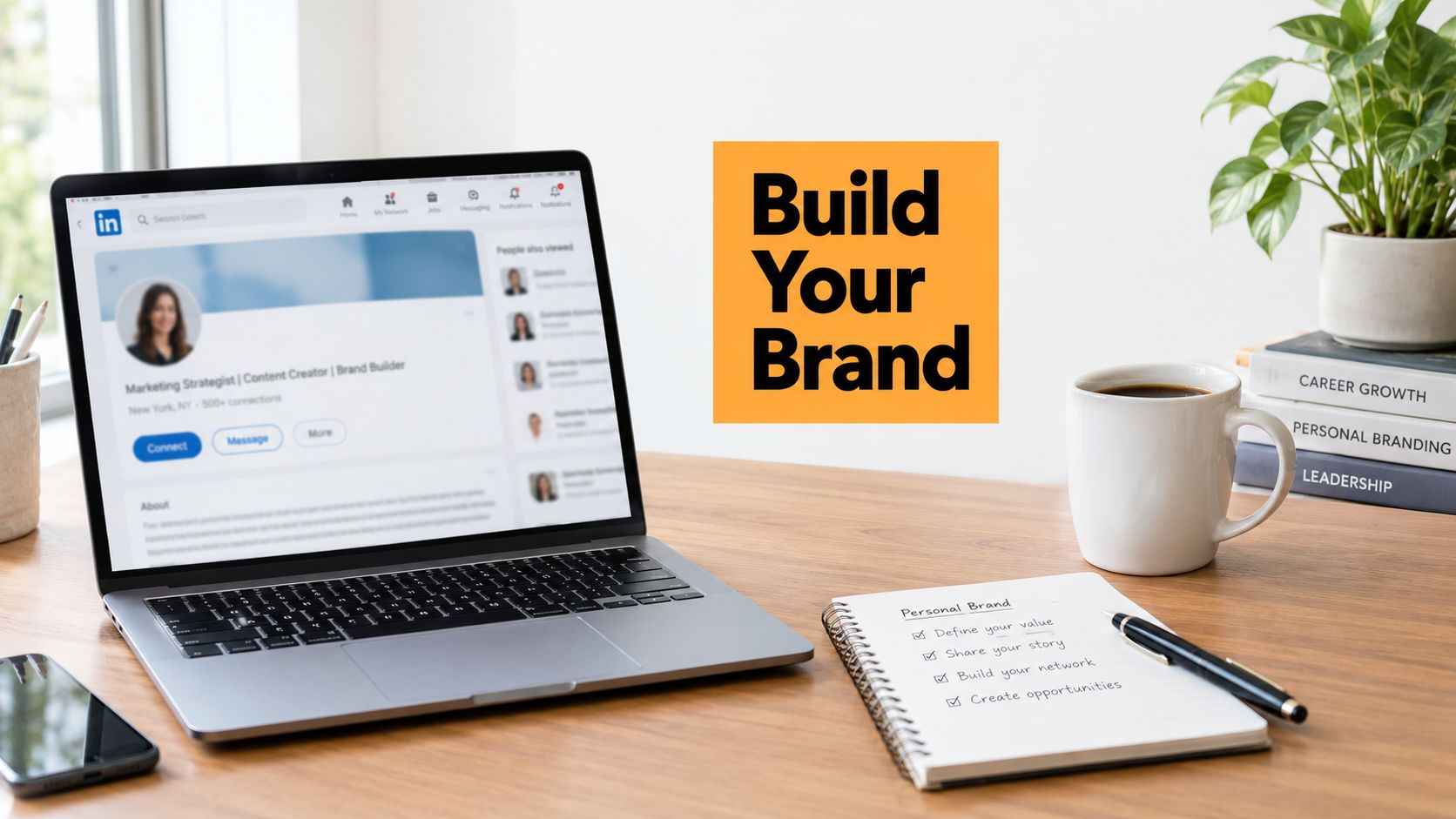
Let's be honest, before anyone hits that "Follow" button, they're going to check out your profile. It's the first—and often, the only—impression you get to make. Think of it less like a stuffy, digital resume and more like a personal landing page. Its one job? To convince visitors you’re worth listening to.
If a potential follower lands on your page and can't figure out who you are and what you're about in five seconds, they're gone. Your goal is to make every piece of your profile work together to tell a story, making that "Follow" button an irresistible click.
Craft a Headline That Communicates Value
Your headline is the most important real estate on your entire profile. Seriously. It shows up everywhere—when you comment, when you post, and in every search result. Wasting it on just your job title is a huge missed opportunity.
Instead, use it to immediately signal who you help and how you do it. A simple formula that works wonders is: [Your Role] | Helping [Your Target Audience] Achieve [Their Goal].
Here’s the difference it makes:
- Before: "Marketing Manager at ABC Corp"
- After: "B2B Marketing Manager | Helping SaaS Startups Drive Qualified Leads with Content Strategy"
See? The "after" version instantly attracts the right people and repels the wrong ones. It makes you a magnet for your ideal followers.
Write an About Section That Actually Connects
This is your space to be human. Please, ditch the formal, third-person narrative that sounds like it was written by a corporate robot. Write in the first person and tell your story.
Kick it off with a hook that speaks directly to a problem your target audience has. From there, weave in how you solve it, add a little about your personal journey, and wrap it up with a clear call-to-action. You could invite them to follow you for more insights on a specific topic or to connect. This is where you build genuine trust and relatability. For a deeper dive, check out our guide on https://redactai.io/blog/how-to-optimize-your-linkedin-profile.
Your profile isn’t just a record of your past; it's a promise of the future value you'll provide to your followers. Make that promise clear, compelling, and consistent across every section.
Showcase Your Best Work
The "Featured" section is your personal highlight reel. It’s the perfect spot to pin your best stuff—articles you're proud of, presentations you’ve given, or links to your personal website or newsletter.
This gives visitors instant proof that you know your stuff and gives them a compelling reason to follow you for more. It's also a fantastic way to visually reinforce your expertise. Don’t forget to load up your skills section, either. It’s a small detail with a huge impact. LinkedIn's own data shows that members with five or more skills listed get up to 17 times more profile views.
These principles aren't just for LinkedIn. Creating a magnetic profile is key on any professional platform. For example, similar ideas are crucial for effective Upwork profile optimization techniques, where a strong first impression directly translates to landing clients.
To make this super easy, I've put together a quick checklist to run through.
LinkedIn Profile Optimization Checklist
Use this table to quickly audit your own profile and spot any areas for improvement. A few small tweaks can make a massive difference in attracting the right followers.
| Profile Element | Optimization Tactic | Why It Works |
|---|---|---|
| Profile Picture | Use a high-quality, professional headshot where you look approachable. | Builds instant trust and makes you recognizable. |
| Banner Image | Create a custom banner that communicates your value proposition or brand. | Makes your profile visually distinct and reinforces your expertise. |
| Headline | Go beyond your job title. State who you help and what you help them achieve. | It's your personal elevator pitch that follows you all over LinkedIn. |
| About Section | Write in the first person, tell a story, and end with a call-to-action. | Creates a human connection and encourages engagement. |
| Featured Section | Pin your best articles, videos, projects, or links. | Provides immediate social proof of your skills and value. |
| Experience | Focus on achievements and results, not just responsibilities. Use bullet points. | Shows what you can do, not just what you've done. |
| Skills & Endorsements | Add at least 5 relevant skills and seek endorsements from colleagues. | Boosts your visibility in search and validates your expertise. |
Running through this checklist ensures every part of your profile is working hard to turn casual visitors into dedicated followers.
Create Content That Builds Real Connections
Alright, your profile is polished and ready to go. Now for the fun part—the part that actually gets people to follow you. Gaining followers on LinkedIn isn't about chasing one viral hit. It’s about consistently creating content that makes people stop scrolling and think, "Hey, this is actually useful."
Think of it this way: your profile is the handshake, but your content is the conversation that follows. It's how you build trust, show you know your stuff, and give people a reason to stick around for the long haul.
Find Your Unique Content Pillars
Posting random thoughts about your industry is a surefire way to get lost in the noise. You need a strategy. The best way to do this is by establishing a few core "content pillars"—the main themes you’ll talk about over and over again. This tells your audience exactly what they can expect from you and cements your reputation in a few key areas.
You don't need to reinvent the wheel with every post. The goal is to find a blend of content that feels authentic to you and genuinely helps your audience.
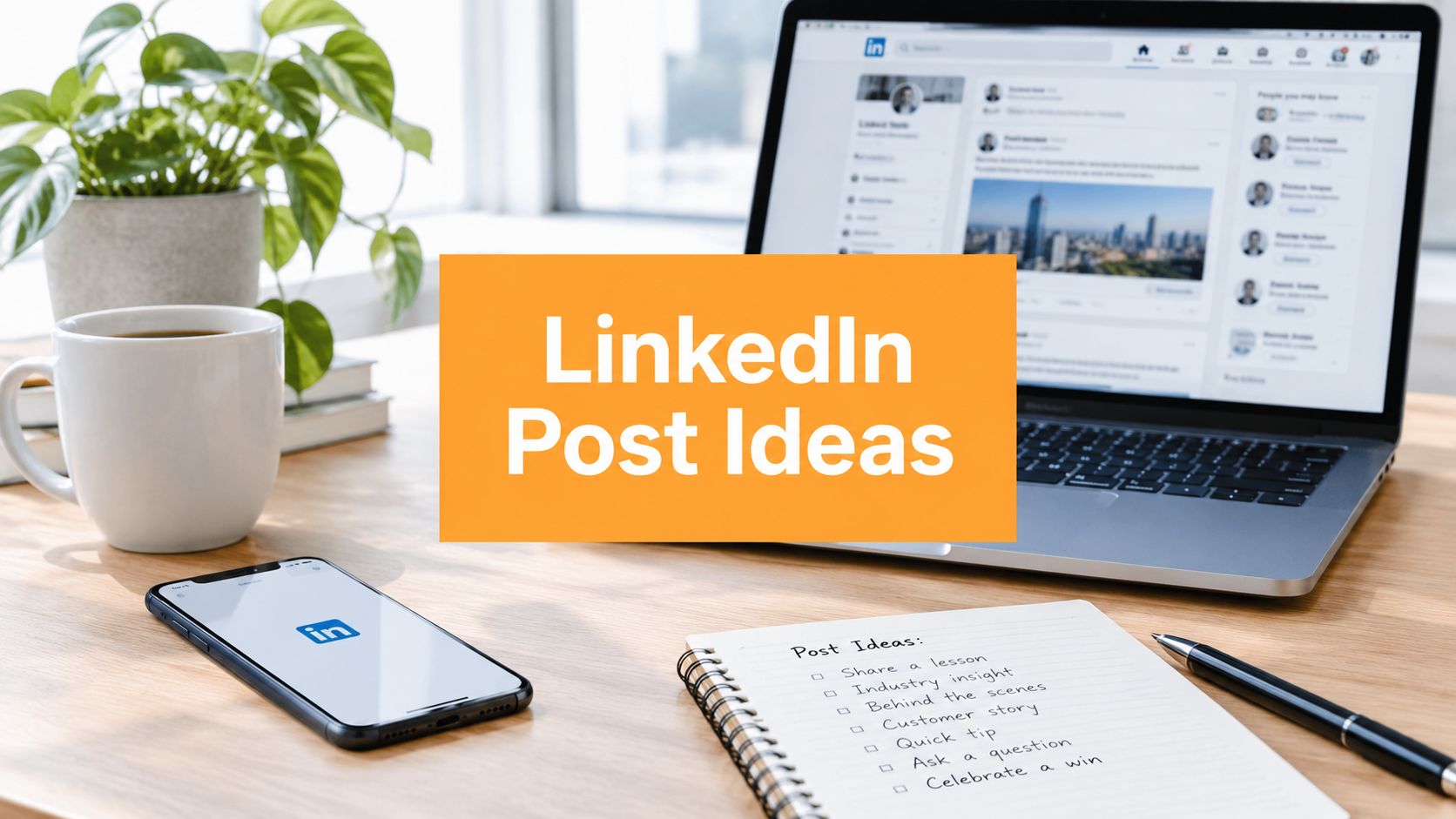
Here are a few pillar ideas to get you started:
- Unique Industry Insights: Don't just report the news. Share your take on it. What does that latest trend really mean for people in your field? What’s the angle no one else is discussing?
- Personal Stories & Lessons: People connect with people. Talk about a time you messed up and what you learned. Share a story about a tough challenge or an unexpected win. That kind of vulnerability is how you build real trust.
- Educational Carousels: Take a complicated subject and break it down into a simple, step-by-step carousel. These are super shareable and instantly position you as an expert who makes things easy to understand.
- Quick-Win Tips: Give your audience a small, actionable piece of advice they can use right now. This delivers immediate value and makes your content feel incredibly practical.
Play around with these. See what gets a reaction. Soon enough, you'll find a rhythm that works for you and keeps your audience coming back for more.
Your voice is your most powerful asset. Don't try to sound like everyone else in your industry. Share your genuine opinions, tell your own stories, and let your personality shine through. That’s what makes people follow you instead of your competitors.
Structure Your Posts for Maximum Readability
On LinkedIn, how you write is just as important as what you write. The feed moves fast, and you’re fighting for every second of attention. If someone sees a giant wall of text, they’re just going to keep scrolling. I know I do.
The trick is to make your content ridiculously easy to scan. Use short paragraphs—seriously, one or two sentences max. This creates a ton of white space and makes your post feel approachable instead of intimidating.
I’ve found this simple structure works wonders:
- The Hook: A killer first line that grabs attention, asks a provocative question, or hits on a common pain point.
- The Body: Build on your idea with short, punchy paragraphs. Use bullet points or even a few relevant emojis to keep things visually interesting.
- The Takeaway: Wrap it up with a clear, concise summary of your main point. What’s the one thing you want them to remember?
- The Call to Action (CTA): End with a question. Ask people to share their own stories or opinions. Get the conversation started in the comments!
This isn't just about formatting; it's about guiding your reader from the first word to the last and making it easy for them to jump in. If you're drawing a blank on ideas, our guide on what to post on LinkedIn is packed with inspiration.
A Real-World Post Example
Let's put this into practice. Say you're a project manager who wants to share a recent lesson.
Instead of this dense paragraph:
"This week our team faced a major setback on the XYZ project when a key vendor pulled out at the last minute, causing a significant delay. It was a stressful situation, but it taught us the importance of having contingency plans and diversifying our supplier relationships to mitigate risk in the future. We've now implemented a new vetting process for all third-party partners."
Try this scannable, conversational version:
(Hook)
Ever had a project completely derailed by something you couldn't control?
(Body)
Happened to us last week. A key vendor pulled out. Panic ensued.
For about an hour, it felt like we were dead in the water.
But it forced us to learn a tough lesson fast: our risk plan wasn't good enough.
We were too reliant on one partner.
(Takeaway)
The biggest takeaway? Your Plan B needs its own Plan B.
(CTA)
What’s the biggest lesson a project setback has taught you?
Use Video and Visuals to Stop the Scroll
Let’s be honest: if your LinkedIn strategy is just a wall of text, you’re missing out. Big time. The feed is a fast-moving river of updates, and the only reliable way to make someone pause is with a striking visual. Think of great visuals as your secret weapon to stop the scroll.
This doesn't mean you need a Hollywood-level production crew. In fact, overly polished, slick content can feel completely out of place and even a bit try-hard on LinkedIn. People want authenticity. Simple, valuable visuals that teach something, share an insight, or tell a good story are what really connect and help you get more LinkedIn followers.
Why Native Video Is King
Here's a crucial insight into how LinkedIn works: the algorithm's main goal is to keep people on LinkedIn. That’s why uploading your video directly to the platform—what we call native video—gets so much more love than just dropping a YouTube or Vimeo link. It autoplays silently in the feed, instantly grabbing attention.
The data backs this up, too. Video is a massive driver for follower growth. We've seen the average engagement rate for video posts jump to 5.60%, a big leap from 4.00% not too long ago. This trend points to one thing: people prefer genuine, short, and valuable video clips over slick corporate ads. You can dig into more of this data in the latest LinkedIn benchmarks and trends on Socialinsider.io.
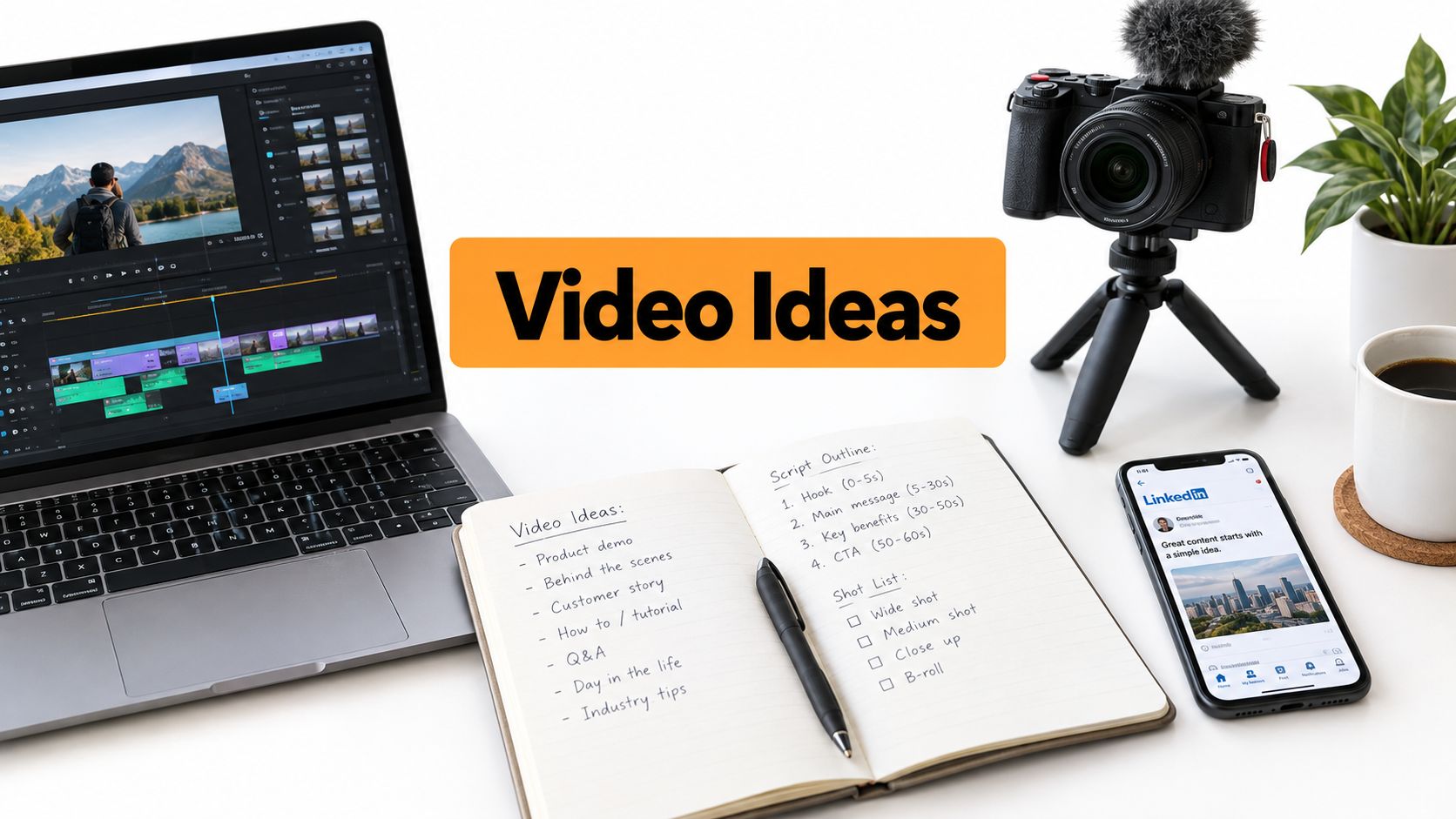
So, what kind of videos actually work? You don’t need anything fancy. Your smartphone is more than enough to get started.
- Quick Tip Videos: Just hit record on a 60-90 second "talking head" video where you share one powerful tip. Look right at the camera and talk like you're having a one-on-one conversation.
- Screen Recordings: Use a simple tool like Loom to walk someone through a process or explain a concept on your screen. These are pure gold for educational content.
- Behind-the-Scenes Glimpses: Show your real workspace, a project you're knee-deep in, or your team working together. This stuff humanizes your brand and builds a genuine connection.
Crucial Tip: Always, always add captions. The vast majority of people watch LinkedIn videos with the sound off. If you skip the captions, your message is completely lost on most of your audience. Tools like CapCut or Descript make this ridiculously easy.
Create Eye-Catching Carousel Posts
Carousels, which LinkedIn calls "document posts," are another absolute powerhouse. They’re basically multi-page PDFs that users can swipe through, making them perfect for breaking down a complex idea into bite-sized, easy-to-digest slides.
The magic of carousels is that they drive interaction. Every single swipe is a tiny signal to the algorithm that your content is engaging, which helps push it out to a wider audience. This is how you get your profile in front of potential followers who are genuinely interested in what you have to say.
Best Practices for Carousels
- Nail the First Slide: Your title slide needs a bold, can't-ignore headline. It should promise a solution or pique curiosity immediately.
- One Idea Per Slide: Keep your text minimal. Use large, readable fonts. Think of each slide as a mini-billboard, not a page from a textbook.
- Keep it Visually Clean: Stick to your brand colors and use simple icons or high-quality images. Canva is your best friend for creating these.
- End with a Call-to-Action (CTA): The last slide is your moment. Ask a question, prompt them to follow you for more, or point them to a link in the comments.
For instance, a marketing consultant could create a carousel titled "5 Google Ads Mistakes Costing You Money." Each slide would break down one mistake and offer a quick fix. It's incredibly valuable, easy to skim, and practically designed to be saved and shared.
The Underestimated Power of Multi-Image Posts
Never sleep on the simple but effective multi-image post. When you upload more than one picture, LinkedIn arranges them in a collage-style grid. This format simply takes up more screen real estate and is far more visually interesting than a single, lonely image.
It’s a fantastic way to tell a mini-story. You could share a few photos from a conference you attended, show before-and-after results, or create a series of quote graphics. The key is making sure the images work together to tell a cohesive story.
By weaving these different visual formats into your content plan, you create a much more dynamic and interesting feed. This variety doesn't just keep your current audience hooked—it dramatically boosts your visibility, which is the first and most important step to attracting a steady stream of new followers.
Master the Art of Strategic Engagement
Look, creating great content is only half the battle. If you just hit "post" and then wander off, you’re leaving a massive amount of potential growth on the table. Growing your LinkedIn following is an active sport, not a passive one. You have to get in there and become a visible, valuable member of your professional community.
This means you need to shift your mindset. Stop thinking of yourself as just a publisher and start acting like an active participant. Your engagement strategy is how you get discovered by people who don’t even know you exist yet. It's all about joining conversations, adding real value, and building a presence that makes people genuinely want to see more from you.

The Power of Insightful Commenting
This is, hands down, the single most effective way to get on the radar of new followers. Don't just drop a "Great post!" or "I agree." That’s basically invisible. The real goal is to leave thoughtful, insightful comments on posts from influential people in your industry.
Think about it this way: when you leave a fantastic comment on a post from someone with 50,000 followers, you're not just talking to them. You're putting your expertise—and your profile—directly in front of their entire engaged audience. A single, well-crafted comment can get dozens of likes and replies, and every single one is a notification introducing you to a potential new follower.
So, how do you make your comments stand out?
- Add a new perspective: "This is a great point, and it also makes me think about how it impacts [related field]..."
- Ask a smart, clarifying question: "I love this framework. How have you seen it work for smaller teams with limited resources?"
- Share a relevant personal story: "This reminds me of a time I faced a similar challenge. Here's the one thing I learned that really helped..."
Making this a simple daily habit for just 15-20 minutes can dramatically boost your profile views and follower count.
Use LinkedIn Groups for Real Conversations
I know, I know. LinkedIn Groups have a bad reputation for being spammy link-dumps, but that’s only because most people use them completely wrong. The secret is to find a handful of active, well-moderated groups in your niche and treat them like a real-life community.
Forget about dropping links to your own content. Instead, focus on answering questions, sharing advice, and actually participating in discussions. This positions you as a helpful expert and a go-to resource. People in those groups will start recognizing your name, checking out your profile, and ultimately hitting "Follow" because you've already proven your value.
Don't just show up to promote. Show up to help. Genuine helpfulness is the most powerful magnet for attracting a loyal and engaged following on any platform.
Connect with Purpose and Personalization
Your network is the foundation of your following, so growing it strategically is a must. But sending out a blast of generic connection requests is the fastest way to get ignored. Every single connection request should be personalized.
Before you even think about hitting that "Connect" button, take 30 seconds to look at their profile. Find something specific that caught your eye and mention it.
A weak, generic request:
"I'd like to connect with you on LinkedIn."
A strong, personalized request:
"Hi Sarah, I really enjoyed your recent article on project management software. Your point about agile integration was spot-on. Would love to connect and follow your work."
This tiny bit of effort shows you’ve done your homework and aren't just some bot collecting contacts. A quality connection is far more likely to engage with your content, share it with their network, and become a genuine follower. These targeted interactions are a cornerstone of many successful growth plans. For a wider look at this, you can explore some effective B2B social media marketing strategies.
By weaving these three pillars together—smart commenting, genuine group participation, and personalized connections—you build a powerful engagement engine that works around the clock to bring the right followers right to your doorstep.
Use Analytics to Fuel Your Growth Engine
Posting content on LinkedIn without ever checking your analytics is like driving blind. You're moving, sure, but you have no clue if you're actually heading in the right direction. If you're serious about getting more followers, you have to let the data be your guide. It tells you what’s a hit, what’s a miss, and where your best opportunities are hiding.
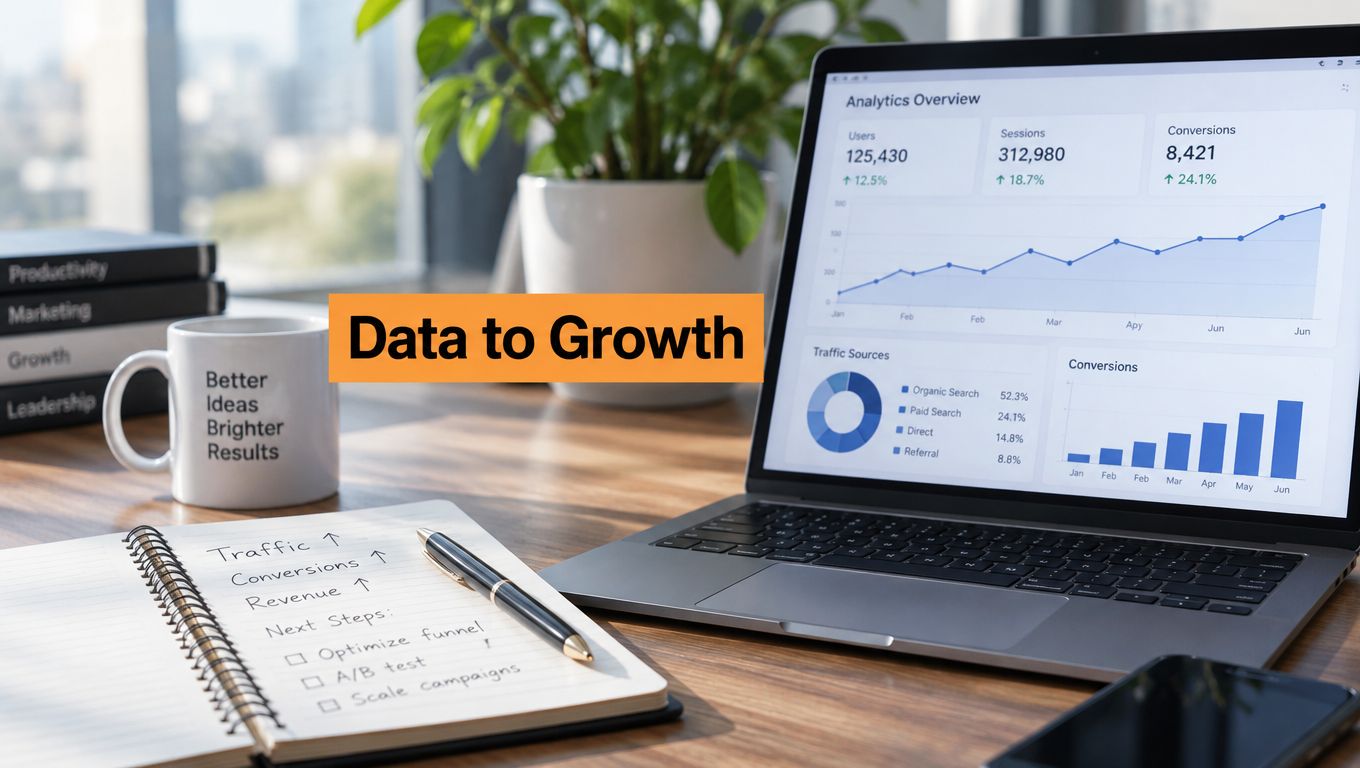
LinkedIn's built-in analytics are surprisingly good, giving you a clear window into how your content is doing. Don't get spooked by the charts and numbers—getting comfortable with them is how you stop guessing and start making smart decisions that build real momentum.
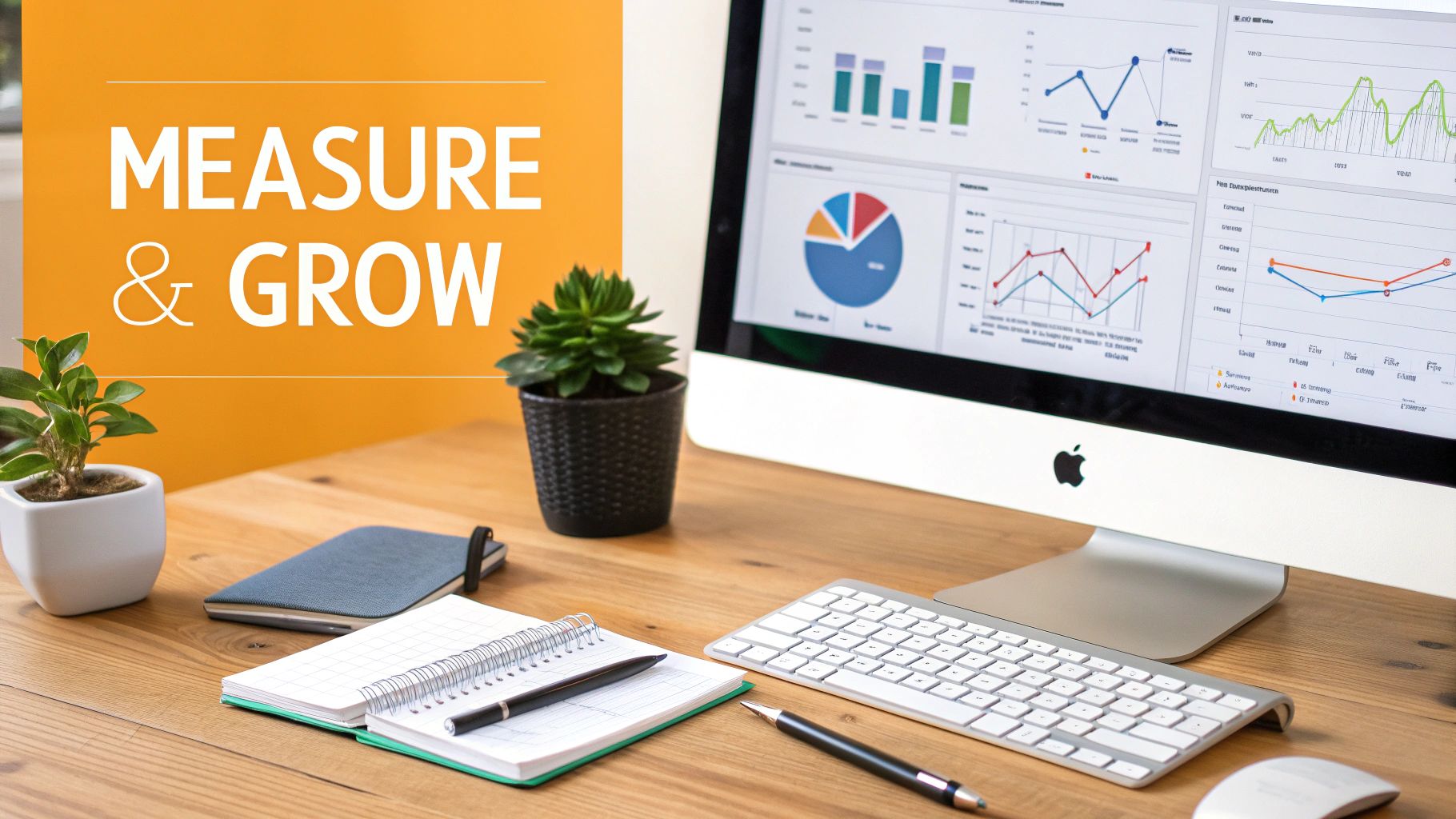
Key Metrics That Actually Matter
When you first peek at your analytics, it’s easy to feel a little lost. To cut through the noise, just focus on the numbers that directly tie back to engagement and follower growth.
Here’s what I always keep a close eye on:
- Impressions: This is just the number of times your post was seen. Think of it as your reach. A high impression count means the algorithm is putting your content in front of more people, which is the first step toward gaining a new follower.
- Engagement Rate: This is your total engagements (likes, comments, reshares) divided by your impressions. A solid engagement rate is a huge signal to the algorithm that your content is valuable, which gets it shown to an even wider audience.
- Follower Demographics: Who are your new followers? Pay attention to their job titles, industries, and locations. This is your reality check. If you’re a marketing consultant trying to attract founders but all your new followers are software engineers, it’s a sign you need to tweak your content strategy.
By checking these numbers regularly, you’ll start to see patterns. Maybe your audience goes wild for carousels but snoozes on text-only posts. Or perhaps your personal stories get way more traction than industry news. These insights are pure gold. For a deeper dive, check out our guide on how to measure content performance.
Stop chasing vanity metrics. The goal isn't just to see big numbers; it's to understand the story those numbers are telling you about what your audience actually wants.
The Unspoken Power of Consistency
One of the biggest things the LinkedIn algorithm looks for is consistency. When you post regularly, you're signaling that you’re an active, reliable voice worth promoting. It's like any relationship—the more you show up, the stronger it gets.
This doesn't mean you need to burn yourself out by posting three times a day. Find a rhythm you can actually stick to, whether that’s a few times a week or every weekday. The goal is to build a sustainable habit.
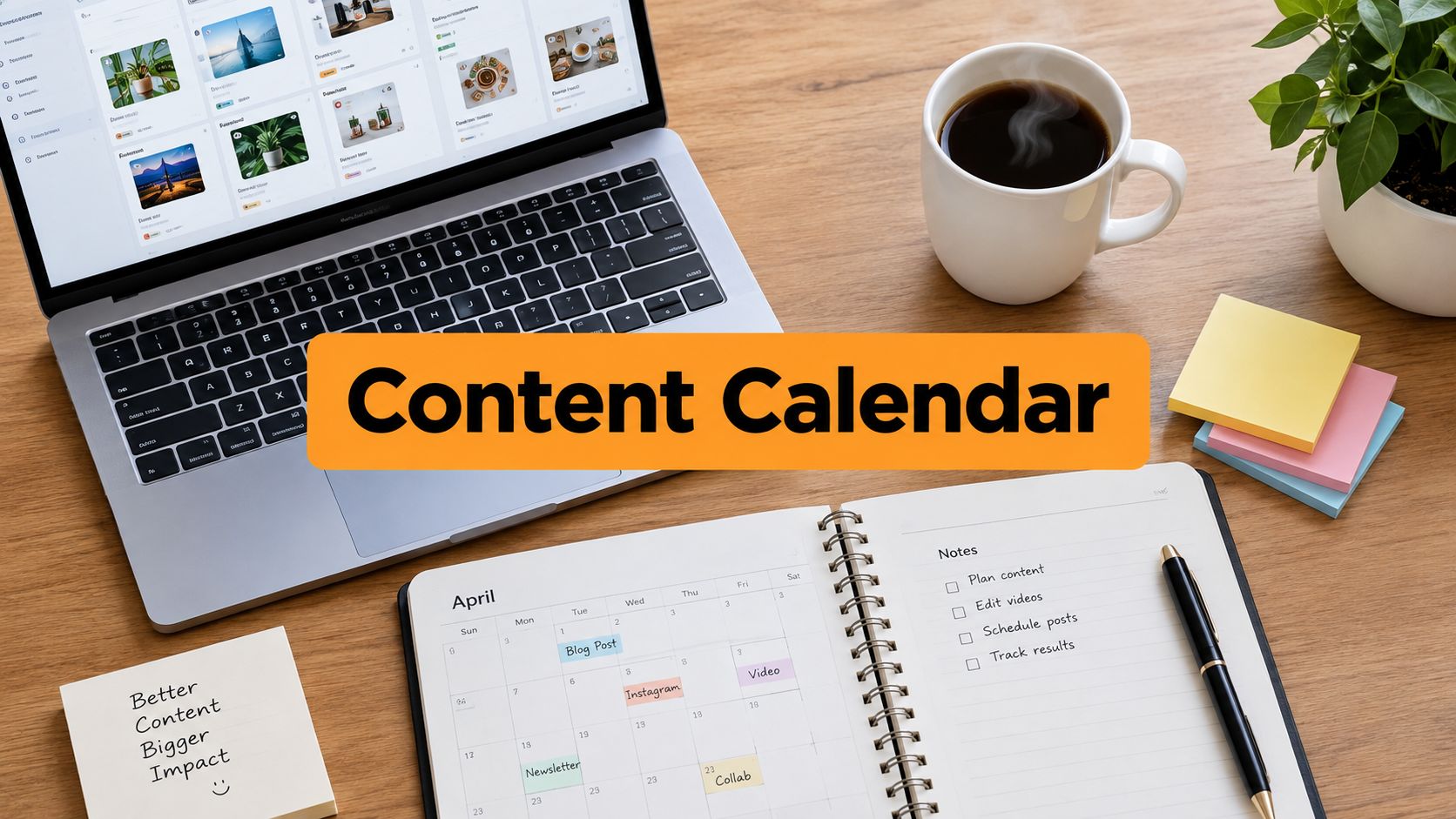
A simple content calendar is a total game-changer here. It helps you plan ahead so you're never scrambling for ideas at the last minute. It doesn't need to be some complex tool; a basic spreadsheet works perfectly.
| Day | Content Pillar | Post Idea | Status |
|---|---|---|---|
| Monday | Personal Story | A lesson from my first failed startup | Drafted |
| Wednesday | Educational Tip | 3 ways to improve your email subject lines | Scheduled |
| Friday | Industry Insight | My take on the latest AI marketing trend | To Write |
This kind of structure takes the pressure off and keeps you on track. And as you grow, remember the sheer scale of the platform you're on. In 2025, LinkedIn surpassed 1 billion users, making it the largest professional network on the planet. With 2-3 new members joining every second, a consistent presence ensures you're always tapping into that massive, ever-expanding pool of potential followers.
Ultimately, looking at your analytics isn't just about reviewing what you've already done. It’s about creating a feedback loop that makes your future content even better, helping you create more of what works and steadily attract new followers who genuinely value what you have to say.
Got Questions About Growing on LinkedIn? We've Got Answers
So, you're trying to grow your LinkedIn following. It can feel like you're doing all the right things, but the needle just isn't moving. That's a super common feeling. Let's walk through some of the questions that pop up all the time and get you some clear, actionable answers.
"Seriously, How Often Should I Be Posting?"
This is the big one, isn't it? But here’s the truth: it’s not about hitting some magic number of posts per day. The real key is consistency, not just frequency.
Burning yourself out trying to post three times a day is a recipe for disaster. The quality will inevitably suffer, and your audience will notice. A much better approach is to aim for 3-5 solid posts per week.
That’s the sweet spot. It's frequent enough to keep you on people's radar and signal to the algorithm that you're an active creator, but it's also realistic for most busy professionals. Someone who shows up with three great posts every single week will always win against someone who posts ten times one week and then ghosts their audience for the next two. Find a rhythm you can actually maintain.
"Okay, So When Is the Best Time to Post?"
While there's no universal "perfect" time that works for everyone, the data definitely shows some clear patterns. LinkedIn is a professional playground, so unsurprisingly, people are most active during the typical workday.
Think of these time slots as your starting grid:
- Mornings (8-10 AM): People are settling in with their coffee, scrolling through their feeds before the meeting marathon begins.
- Mid-day (12-1 PM): The lunch break scroll is real. This is a prime time for engagement.
- Late Afternoon (4-5 PM): As the day winds down, people do one last check-in before signing off.
But here's the kicker: the best time for you is when your audience is online. Dive into your LinkedIn Analytics. See when your own posts are getting the most eyeballs and comments. That data is your goldmine. Let it guide your scheduling.
Your own analytics will always tell you a truer story than any generic advice. Start with these common time slots, but be ready to pivot based on what your data shows you.
"Connections or Followers? What's the Difference and Which Matters More?"
This one trips a lot of people up. A connection is a two-way street; you both have to agree to it. A follower is a one-way deal—they see your stuff, but you aren't necessarily connected.
Early on, it’s smart to build strategic connections with peers and leaders in your field. That's how you build your foundational network. But for genuine, long-term growth and influence, the number you really want to watch is your follower count.
Why? Followers are a pure measure of your content's appeal. Anyone can follow you, which means your potential reach is unlimited. Connections, on the other hand, are capped at 30,000. To really lean into growth, switch your profile to "Creator Mode." This makes "Follow" the main button on your profile, making it a frictionless choice for people who discover your content.
"What's the Deal with Hashtags? Should I Use Them?"
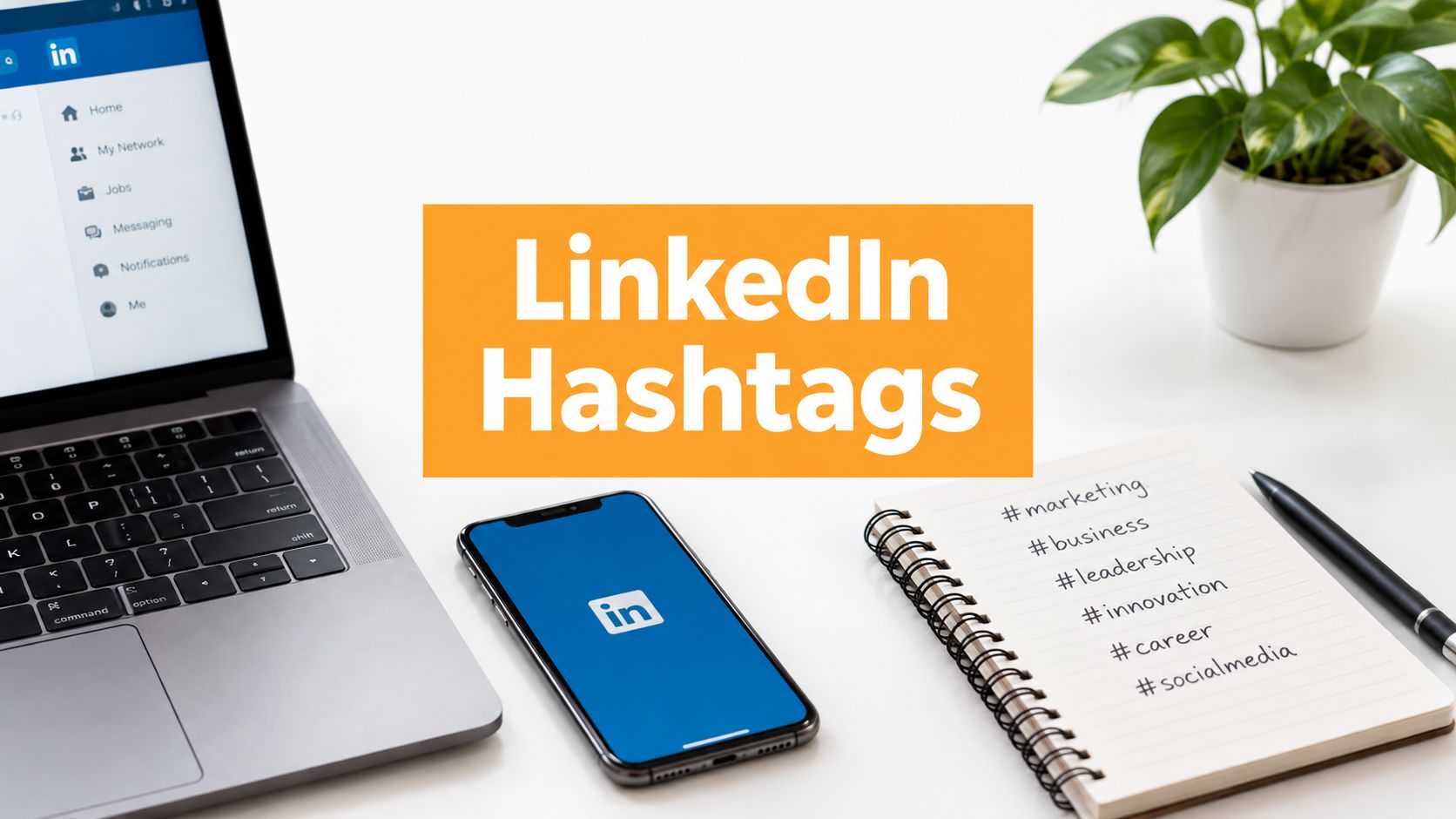
Yes. A thousand times, yes. Hashtags are your best friend for discoverability. They're how people who don't know you yet can stumble upon your brilliant posts. Think of them as sorting labels for your content.
But don't go crazy. The sweet spot is around 3 to 5 highly relevant hashtags.
A good mix looks something like this:
- 1-2 Broad Tags: Think industry-level stuff, like
#marketingor#projectmanagement. - 2-3 Niche Tags: Get specific to your post's topic, like
#b2bcontentor#agilemethodology.
Piling on a dozen hashtags just looks spammy and can actually confuse the algorithm, hurting your reach. Keep it clean, focused, and relevant.
Feeling like it's a full-time job just to keep up? RedactAI was built to help you put all of this on autopilot. It helps you brainstorm ideas, writes copy that sounds like you, and schedules it all out. You get to focus on the human part—building relationships—while your content strategy runs like clockwork. See how it works and start growing your following by visiting https://redactai.io.