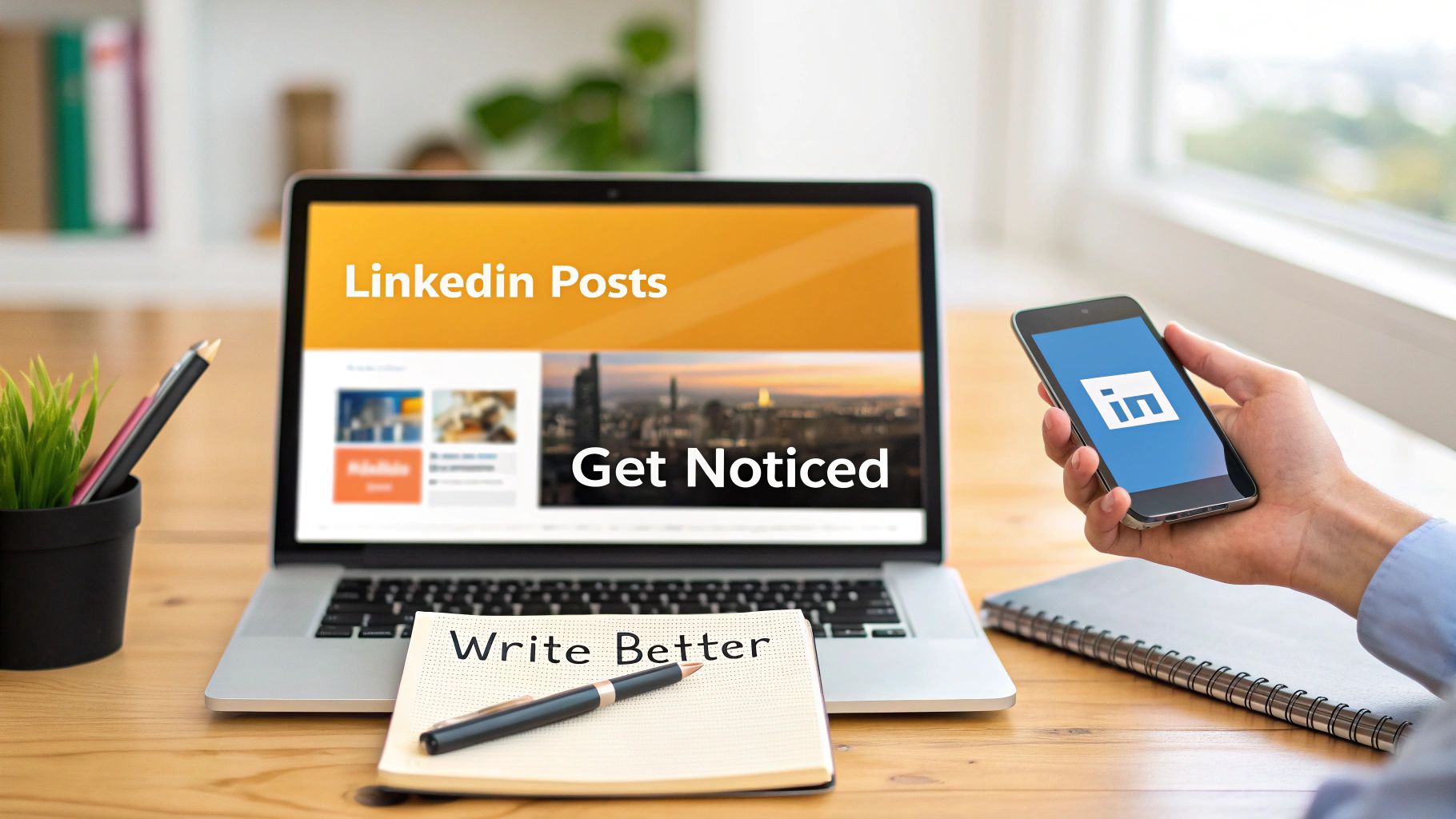
Before you even dream of hitting that "Connect" button, let's talk about your home base: your LinkedIn profile. Think of it as your digital handshake. It’s what does the heavy lifting for you, making people genuinely want to accept your request. Honestly, it’s the single biggest thing that separates successful outreach from a complete waste of time.
Build a Profile People Actually Want to Connect With
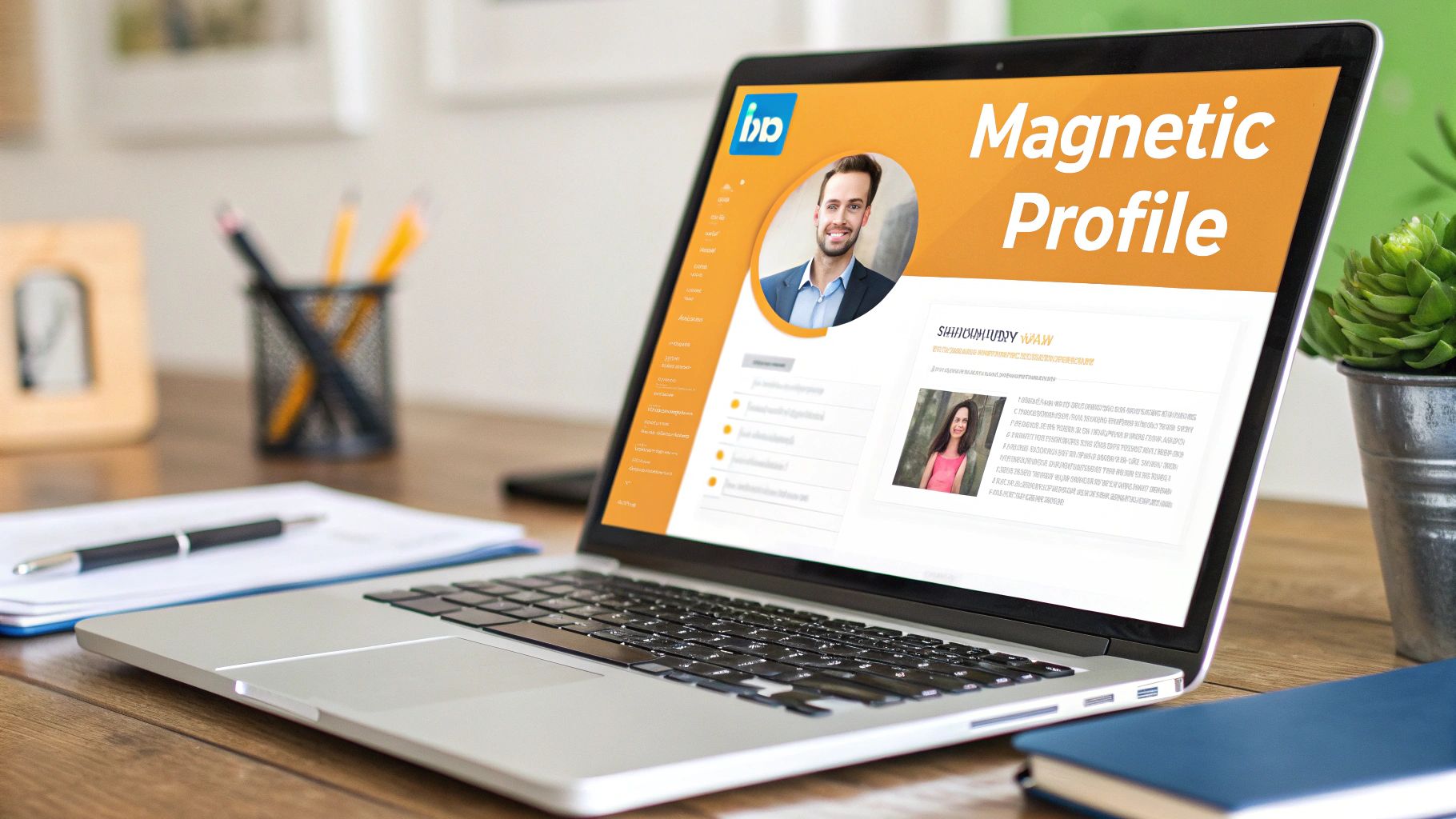
Your LinkedIn profile isn't just a static, online resume—it's your professional storefront. If it’s sloppy or incomplete, it quietly tells people you don’t care about the details. But a polished, thoughtfully put-together profile? That builds instant trust and makes you look like someone worth knowing. This is ground zero for getting more LinkedIn connections.
Craft a Compelling First Impression
When someone lands on your profile, their eyes immediately go to your headshot, headline, and summary. These three elements have to work together to tell a quick, powerful story about who you are.
- Your Headshot: This is non-negotiable. Get a clear, high-quality photo where you look friendly and professional. It’s a game-changer for how many people will even bother to read the rest of your profile.
- A Value-Driven Headline: Ditch the boring job title. Instead of just "Content Manager," try something that explains the value you bring, like "Content Strategist Helping SaaS Brands Drive Organic Growth." See the difference?
- A Conversational Summary: Use the "About" section to talk to your ideal connection, not at them. Share what you're passionate about, drop a few key wins, and wrap it up with a clear call to action, like inviting them to connect over a shared interest.
Your profile is the anchor for all your networking. Without a strong one, your connection requests, comments, and posts will just fall flat.
Fill Out the Essentials for Maximum Visibility
Beyond the big three, other sections are critical for getting found in searches and proving you know your stuff. A fully fleshed-out profile tells both the LinkedIn algorithm and real people that you’re an active and serious professional.
One of the easiest wins? Adding relevant skills. It's a small thing with a massive impact. Profiles with 5 or more skills listed get up to 17x more views. That’s a huge boost in visibility.
Don't forget the little things, either. Customize your public profile URL to something clean and professional, like /in/yourname. It just looks better and is easier to share.
Your LinkedIn Profile Optimization Checklist
Use this quick reference to ensure your profile is polished and ready to attract high-quality connections. Each element plays a role in making a great first impression.
| Profile Element | Action Item | Why It Matters |
|---|---|---|
| Profile Photo | Use a clear, professional, and friendly headshot. No vacation pics! | Builds immediate trust and makes you seem approachable. |
| Headline | Go beyond your job title. Describe the value you provide or who you help. | Grabs attention and quickly explains what you're all about. |
| About Section | Write a compelling, first-person summary of your skills and mission. | This is your chance to tell your story and connect on a personal level. |
| Experience | Detail your accomplishments with bullet points, not just your duties. | Shows proof of your skills and the impact you've made. |
| Skills & Endorsements | Add at least 5 relevant skills and seek endorsements from colleagues. | Boosts your visibility in searches and provides social proof. |
| Custom URL | Personalize your LinkedIn URL to be clean and professional (e.g., /in/yourname). | Makes your profile easier to find and share. |
For a deeper dive, our complete guide on how to optimize your LinkedIn profile walks you through every step. By taking the time to build a magnetic profile now, you're setting yourself up for a much higher success rate with every connection request you send.
Make Your Connection Requests Impossible to Ignore
Let's be real: sending the default "I'd like to add you to my professional network on LinkedIn" is lazy. It’s the networking equivalent of a limp handshake and shows zero effort. If you want to build a network that actually means something, you have to do better. A little bit of personalization goes a long, long way.
The point isn't just to get another number added to your connection count. You're trying to start a genuine professional conversation. A quick, thoughtful message signals that you respect their time and gives them a reason to actually click "Accept."
The No-Fail Formula for a Great Request
You don't need to write an essay. The best connection requests are short, sincere, and get right to the point. They instantly answer the other person's silent question: "Why me?"
Here’s a simple flow that just works:
- Start with a friendly, professional greeting.
- Mention how you found them or what you have in common. This is the hook.
- Clearly state why you’d like to connect.
- Wrap it up with a simple "Thanks" or "Looking forward to connecting."
Think of it like applying good professional email etiquette — a little bit of courtesy makes all the difference.
Heads Up: I always try to send connection requests from a desktop computer. The mobile app can be tricky and sometimes sends the generic request before you even get a chance to add a personal note.
Real-Life Examples You Can Steal
Theory is one thing, but let's get practical. How you frame your request should change based on who you're reaching out to. Here are a couple of examples that are specific and give the person a clear reason to connect.
Connecting with a Speaker After a Webinar:
"Hi [Name], I really enjoyed your talk on AI-driven content strategy during the [Webinar Name] today. Your point about personalizing at scale really stuck with me. I'd love to connect and follow your work."
Reaching Out to Someone in Your Industry:
"Hi [Name], your profile popped up as I was looking for other leaders in the SaaS marketing space. I’m really impressed with your work at [Company Name] and saw we both share a passion for SEO. It would be great to connect."
Don't forget, LinkedIn has a weekly limit on how many requests you can send out. To make sure you're not hitting that wall unexpectedly, check out our deep dive on the LinkedIn connection request limit for tips on managing your outreach.
Find That Common Ground
The secret sauce to a successful request is a genuine point of connection. Before you even click that "Connect" button, just take 30 seconds to scan their profile. Seriously, that's all it takes.
Look for easy wins like:
- Shared Connections: "I see we both know John Smith."
- Mutual Groups: "I noticed we're both members of the B2B Marketers group."
- Recent Activity: "I saw your comment on that post about lead generation and..."
- Alma Mater: "Hey, I see we both went to State University! Go Tigers!"
This tiny bit of homework transforms a cold, random request into a warm introduction. It proves you're not just another spammer trying to boost your numbers—you're being intentional about building your network.
Use Engagement to Attract Connections to You
Outreach is great, but what if high-quality connections started coming to you? That’s the magic of a smart engagement strategy. Instead of just scrolling through your feed, you become an active, visible member of the LinkedIn community. Your activity essentially becomes a magnet for inbound connection requests.
This whole approach flips the script. You stop chasing connections and start attracting them simply by adding value to other people's conversations.
When you're consistently active, your feed becomes a showcase of your expertise. It creates countless opportunities for people to discover you, see what you're about, and decide they want to connect.
Become a Valued Voice in Your Industry
The easiest way to get started is by leaving thoughtful comments on posts from industry leaders, potential clients, or companies you admire. But please, don't just write "Great article!" It adds zero value and just gets lost in the noise.
Instead, add your own two cents. Ask a smart question or share a quick story from your own experience. A well-written comment doesn't just get you noticed by the original poster; it puts you in front of their entire network of followers, too.
A single insightful comment on a popular post can give you more visibility than ten of your own posts. It’s all about strategically placing yourself in the right conversations where your ideal connections are already hanging out.
To do this right, find 10-15 key people in your niche and make it a daily habit to engage with their content. This focused effort is what gets you seen by the right audience.
Create Content That Sparks Conversation
Posting your own content is what truly positions you as an expert and gives people a compelling reason to follow you and connect. You don't need to write a viral masterpiece every single day. Honestly, consistency is way more important than perfection here.
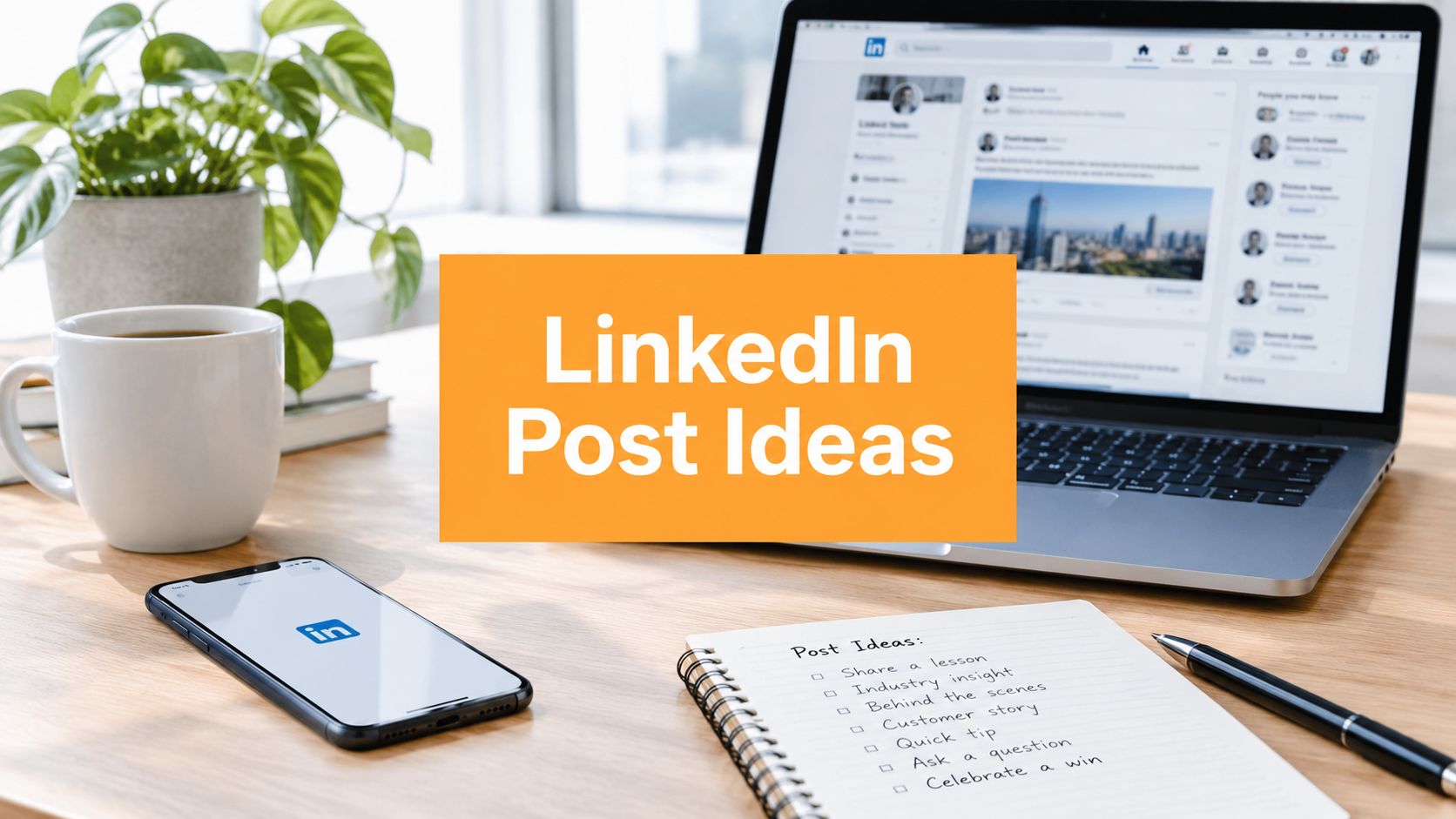
Stuck for ideas? Here are a few simple ones that always work:
- Share a quick take on a recent industry news article. What's your opinion?
- Post a celebratory update about a team win or a project milestone you're proud of.
- Ask a thought-provoking question to your network to get a discussion started.
The goal is to just show up regularly with something relevant. This builds familiarity and trust, making people much more likely to accept your request or even send one to you. A solid content game can seriously boost your visibility and your overall LinkedIn engagement rate.
Embrace the Power of Video
If you really want to stand out from the crowd, it's time to start using video. LinkedIn’s own data shows that video content is a whopping 20 times more shareable than other formats on the platform.
This doesn't mean you need a professional camera crew. A simple, authentic video shot on your phone often performs even better because it feels more personal and relatable. If you want a dynamic way to attract connections, you should definitely look into leveraging LinkedIn short-form video.
By consistently showing up, sharing your insights, and jumping into meaningful conversations, you transform your profile from a static resume into a dynamic hub for your professional community. This is how you stop chasing connections and start attracting them.
Find Your People in LinkedIn Groups and Events
Your personal feed is great, but the real networking gold is often found in the smaller, more focused communities on LinkedIn. I'm talking about Groups and Events. These are the places where you can skip the cold outreach and jump right into conversations with people who are already passionate about the same things you are. It’s where you find your professional tribe.

Think of these groups as ongoing digital conferences for your industry. When you join a few, you get a direct line to hundreds, sometimes thousands, of potential connections. But here’s the key: you have to find active groups. A lot of them are complete ghost towns, so do a little digging. Look for ones with recent posts and actual conversations happening in the comments.
Be Helpful, Not Salesy
Once you're in, your mission is to become a known, helpful voice in that community. This is absolutely not the place to spam links to your website or pitch your services. Instead, you build real credibility by being genuinely useful.
Here’s how I’ve seen this work best:
- Answer questions with real insight. When someone posts a problem, jump in and share what you know. Don’t hold back and don't ask for anything in return.
- Kick off interesting discussions. Ask a thought-provoking question that gets people talking.
- Share great stuff. Found a game-changing article or a cool new tool (that isn't yours)? Share it with the group.
When you consistently show up and add value, people start to recognize your name. They'll associate you with helpful advice, which makes them way more likely to accept when you finally send that connection request. It’s the classic "give before you get" approach, and it works wonders on LinkedIn.
I've found that spending just 10 minutes a day in two or three relevant, active groups can lead to more high-quality connections than hours spent sending cold requests. It’s all about precision, not just raw numbers.
Use Events to Break the Ice
LinkedIn Events, whether they’re virtual or in-person, are another fantastic way to get connections. Why? The attendee list is basically a pre-vetted list of professionals who share a very specific, timely interest with you. It’s a goldmine.
The real trick is to engage before and after the event. I always recommend scanning the attendee list beforehand and reaching out to a few people who seem interesting. This gives you a super natural, low-pressure reason to connect.
For instance, your request could be as simple as:
"Hi [Name], I saw we're both signed up for the [Event Name] webinar next week. Really looking forward to the session on [Topic]. Would be great to connect."
See what that does? It immediately turns a cold message into a warm one. You've established common ground—a shared experience—which is the perfect starting point for a real professional relationship. Then, after the event, you have an easy excuse to follow up, discuss what you learned, and keep the conversation going.
Create a Sustainable Networking Routine
Growing your LinkedIn network shouldn't feel like a second job. If it’s draining you, you’re doing it wrong. The real secret isn't some crazy, all-out blitz of activity. It's about building a simple, consistent habit you can actually stick with for the long haul.
Think of it like working out. You'll get way better results from hitting the gym for short, regular sessions than you will from one painful, marathon workout once a month. The same logic applies here. The idea is to build a practice that feels easy and becomes just another part of your professional week.
Design Your Weekly Networking Cadence
The trick is to break down your networking into small, bite-sized daily actions. Instead of blocking out a whole afternoon for LinkedIn, just weave these quick, focused tasks into your existing schedule. This keeps you visible to your network and helps it grow steadily without ever feeling like a grind.
Here’s a simple weekly blueprint you can steal:
- Daily Engagement (15 Minutes): This is your time to scroll your feed with intention. Your goal? Drop thoughtful comments on 3-5 posts from people in your industry or potential connections. This is how you stay on people's radar.
- Personalized Outreach (3 Times a Week): Pick a few days to send 3-5 highly personalized connection requests. This isn't a numbers game. Keeping it small ensures your outreach stays targeted and high-quality.
- Relationship Nurturing (Weekly): Make a point to follow up with anyone new who connects with you. A quick "thanks for connecting" message is a great start and can open the door to a real conversation.
This kind of routine is all about quality interactions. It changes the entire dynamic of how to get LinkedIn connections from a frantic scramble for numbers to genuine relationship building.
Quality Over Quantity Always Wins
It’s so easy to get caught up in chasing a huge connection count. But honestly, a massive network full of people you don't know is pretty much useless. A smaller, engaged group of relevant professionals will do more for your career than you can imagine. Every connection should have a clear purpose.
Remember, the goal isn't just to get LinkedIn connections; it's to build a supportive, professional community. A network of 500 people who know, like, and trust you is more powerful than 5,000 who don’t even recognize your name.
When you focus on a sustainable routine, you stop thinking about "collecting" contacts and start thinking about building relationships. You’re planting seeds for future collaborations, job opportunities, and even friendships. That’s how you build a network that will actually have your back for years to come.
Got Questions About Growing Your LinkedIn Network?
As you start putting these strategies into play, some questions are bound to bubble up. Let's be real—growing a network isn't always cut-and-dry, and figuring out the unwritten rules of LinkedIn can feel like a guessing game.
Let's clear up a few of the most common things people get stuck on. This is your go-to guide for networking with a bit more confidence and a lot less confusion.
How Many Connection Requests Should I Send Per Week?
Okay, let's talk numbers. LinkedIn officially caps you at around 100 invitations a week to keep spam under control. But here's the thing: you should never, ever try to hit that limit. When it comes to LinkedIn, quality beats quantity every single time.
A much better approach? Aim for 10-20 highly personalized requests each week. Here’s why that works so much better:
- You stay well under LinkedIn's radar, so you don't risk getting your account flagged.
- It makes you more thoughtful about who you're reaching out to, focusing on people who are actually relevant to your goals.
- Your acceptance rate will go through the roof because people can tell you actually took the time to look at their profile.
This keeps your networking focused and helps you build real relationships, not just a list of random names.
Should I Accept Every Connection Request I Receive?
Hard no. I know it's tempting to hit "accept" on everything to watch that connection count climb, but it’s a classic rookie mistake. A bloated, random network just clutters your feed with noise and ensures your own content gets shown to people who couldn't care less.
Think of your network as a carefully curated gallery of your professional world, not a public bulletin board. Before you accept, take a quick 5-second scan of their profile.
Ask yourself: Are they in my industry or a related one? Do we have mutual connections I know and respect? Does their profile look like a real, active human being? If you're getting a "no" on these, don't hesitate to hit "ignore." A smaller, super-relevant network is infinitely more powerful.
What’s the Best Way to Follow Up After Connecting?
That first message after someone accepts your request is pure gold. It’s your chance to make a real impression. The absolute worst thing you can do is jump straight into a sales pitch or ask for a job. That's a one-way ticket to being ignored or, even worse, removed.
Your only goal here is to be a normal, genuine human and open the door for a conversation down the road. A simple, friendly follow-up is all it takes.
Something like this works perfectly:
"Hey [Name], thanks for connecting! I was just checking out your profile and am really impressed with the work you're doing in [their industry]. Great to be connected."
That’s it. You've acknowledged them, shown you're paying attention, and made the connection feel personal. You’re no longer just another number in their network.
Ready to stop guessing what to post on LinkedIn and start attracting connections with high-impact content? RedactAI uses AI to analyze your unique professional voice and generate post ideas and drafts in minutes, so you can build your personal brand without the writer's block. Start creating with RedactAI for free today.