Ever wonder how to actually get more engagement on your LinkedIn posts? The secret isn't some complicated hack. It's about shifting your mindset from broadcasting announcements to starting real conversations. Focus on giving value, making people curious, and interacting like a human, not just posting into the void and hoping for the best.
Why Your LinkedIn Posts Aren't Getting Traction

It’s a feeling we all know. You spend time putting together what feels like a killer post, you hit "Publish," and then... crickets. It's frustrating, but the problem usually isn't one big mistake. It's often a mix of small things that make your content easy to scroll past.
Before you can fix the problem, you've got to figure out what's really going on. A lot of people treat LinkedIn like a digital resume or a billboard for company news. They're talking at their audience, not with them. That one-way street just doesn't work on a platform built for dialogue.
The Self-Centered Content Trap
Let's be honest, one of the biggest reasons posts fail is that they're all about "me, me, me." Think about your own feed for a second. Are you excited to engage with posts that are just glorified sales pitches or a list of someone's accomplishments? Probably not.
Your audience feels the exact same way. They're scrolling to find solutions to their own problems, discover insights that make them smarter, or read stories that connect with them. When your content only pushes your agenda, you give them zero reason to stop scrolling, let alone leave a comment.
The key to getting more LinkedIn engagement is to be authentic. Share information about your genuine interests, values, and professional experiences. Authenticity builds trust, making your audience more likely to engage with you.
Misunderstanding How LinkedIn Works
Another major hurdle is simply not playing by the rules of the LinkedIn algorithm. The platform is designed to reward posts that spark meaningful conversations, especially in the first hour after you post. This is what people call the "golden hour."
If your post gets a flurry of early likes and—more importantly—comments, LinkedIn takes that as a signal that you've shared something valuable. It then starts showing your post to more people. If the engagement keeps up, your reach expands even further. Posts that miss that initial spark get buried pretty quickly.
To understand this better, it helps to know what LinkedIn impressions mean and how the platform measures who sees your content.
Here are a few common ways people accidentally trip up the algorithm:
- Posting and Ghosting: You publish a post and immediately close the app. Big mistake. You're killing any chance to fan the flames of an early conversation by replying to comments.
- Ignoring Formatting: A giant wall of text is a hard pass, especially on a phone. People won't even start reading without a strong hook, short sentences, and some breathing room.
- Only Using External Links: While sharing a great article is fine, posts that immediately try to send people away from LinkedIn often get less reach. The platform wants to keep users on its site, after all.
Once you start spotting these engagement killers in your own strategy, you can make the switch from someone who just broadcasts to someone who truly connects. The rest of this guide will walk you through exactly how to do that.
Turn Your Profile into an Engagement Hub
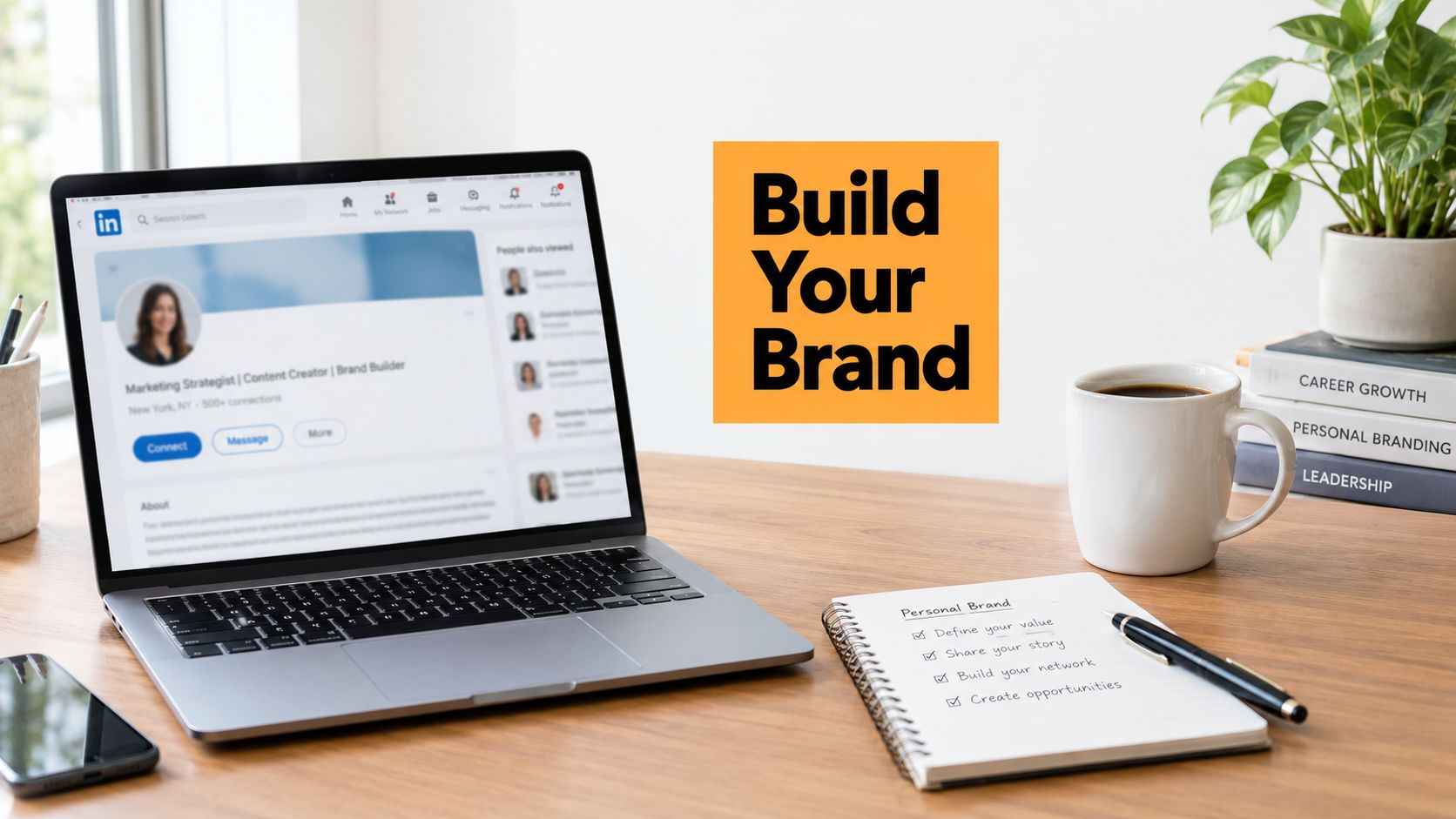
Think about it: someone sees a post of yours they like. What's their next move? Almost always, it's a click-through to your profile. The real question is, what do they find when they land there? A static, dusty resume? Or a dynamic hub that practically begs them to connect and follow?
A killer post might get you a like, but a killer profile gets you a follower. This is your chance to turn a fleeting moment of interest into a genuine connection. You want your profile to be so compelling that a visitor instantly gets who you are and what you're about, making them eager to see what you post next.
Craft a Headline That Sells Your Value
Your headline is the most valuable real estate on your LinkedIn profile. It follows you everywhere—in comments, post feeds, and connection requests. Wasting this prime spot with just your job title, like "Marketing Manager at Company X," is a massive missed opportunity.
Instead, your headline needs to instantly tell people what you do, who you help, and the results you bring to the table. It's your 10-second elevator pitch, packed into a single line.
Let's see this in action.
- Before: "Sales Director"
- After: "Sales Director Driving 200%+ YoY Growth for SaaS Startups | Helping B2B Tech Companies Scale Their Revenue Engines"
See the difference? The "after" version tells a compelling story. It screams expertise, clearly defines an audience, and dangles a tangible result right in front of them. This simple tweak reframes you from just an employee to a problem-solver, which is infinitely more interesting.
Your profile summary isn't just a list of job duties; it's your professional story. Write in the first person ("I," "my") to make it personal and direct. Let people know your "why"—what drives you, what problems you're obsessed with solving, and what they can expect from you.
Transform Your Summary into a Conversation Starter
Once your headline has done its job and grabbed their attention, your "About" section needs to hold it. So many people write this in the third person, which creates a cold, corporate distance. Ditch that approach. Write it like you’re talking to someone one-on-one.
Break up the text. Use short, scannable paragraphs. Kick it off with a strong hook, then walk them through what makes you unique. And don't forget to wrap it up with a clear call to action—invite them to connect, follow you for more insights, or send you a message. To really turn your LinkedIn presence into an engagement magnet, checking out a B2B LinkedIn Marketing Success Guide can give you some fantastic, expert-level tips on profile optimization.
If you want to go even deeper on this stuff, we've laid out all the steps in our complete guide on how to optimize your LinkedIn profile.
Spotlight Your Best Work with the Featured Section
The Featured section is your personal portfolio, and honestly, it’s one of the most underused tools for sparking engagement. This is where you get to visually prove you’re the real deal, right at the top of your profile. It's pure social proof that backs up all the great things you said in your headline and summary.
Please, don't just link to your company's homepage. Get strategic with it.
Here are a few ideas for high-impact items to feature:
- Your Biggest Hit Posts: Pin a post that got a ton of conversation going. It immediately shows new visitors that you create content worth following.
- Client Love & Case Studies: Got a short video testimonial or a PDF of a client raving about your work? Feature it! There’s nothing more powerful than third-party validation.
- Your Best Resources: If you’ve written an article people loved, created an awesome infographic, or were a guest on a podcast, pop it in here. It positions you as an expert who gives back.
By curating this section thoughtfully, you’re giving people immediate, tangible proof of your skills. It takes your profile beyond just telling people what you can do and actually shows them, making the decision to follow you for more a total no-brainer.
Crafting Content That People Actually Want to Read
Alright, so your profile is looking sharp. Now for the main event: your content. Let's be honest, creating posts that consistently stop the scroll feels like a mix of art and science. It’s all about figuring out what your audience actually cares about and then packaging your insights in a way they can't ignore.
If you really want to learn how to get more engagement on LinkedIn, you need to stop thinking like a corporation and start thinking like a creator. Forget the stiff company updates and dry industry reports. It's time to find your unique content pillars—that sweet spot where your expertise smashes right into your audience's biggest problems.
Pinpoint Your Core Content Pillars
Your content pillars are the 2-4 core topics you’ll talk about over and over again. These are the foundation of your personal brand, signaling to everyone what you’re all about. When you stick to these pillars, you build real authority and start attracting followers who are genuinely into your niche.
Think of it this way: What are the problems that keep your clients up at night? What are the dumb, common myths in your industry that you can’t wait to bust?
A marketing consultant, for example, might build their brand on pillars like:
- SEO for Startups: Real-world, actionable tips for new companies trying to get noticed.
- Personal Branding: Sharing stories and strategies to help other pros build their own online reputation.
- Content Repurposing: Smart, practical ways to squeeze more life out of every piece of content.
These pillars are specific enough to prove you know your stuff but broad enough that you'll never run out of ideas. This focus stops you from being all over the place and helps you build a community that actually listens.
Master the Art of the Scroll-Stopping Hook
You've got about two seconds. That’s it. The first line of your post—the hook—is everything. If it’s weak, the rest of your brilliant post might as well not exist.
A great hook makes people curious, drops a bold claim, or taps into a pain point everyone feels. It’s the one thing that separates a post that gets crickets from one that gets thousands of views.
Here are a few hook formulas I’ve seen work wonders:
- The Surprising Statistic: "Did you know 95% of buyers choose a vendor who provided them with content at each stage of the buying process?"
- The Contrarian Take: "Everyone says you need to post daily on LinkedIn. They're wrong. Here's why."
- The Relatable Problem: "That feeling when you spend hours on a post and get two likes? I’ve been there."
Play around with different hooks and see what lands. The goal is simple: make someone stop their frantic scrolling and think, "Okay, I need to read this."
Embrace Winning Content Formats
Sure, text-only posts can work, but if that’s all you do, your feed will get stale fast. The truth is, some formats are just plain better at getting certain kinds of engagement.
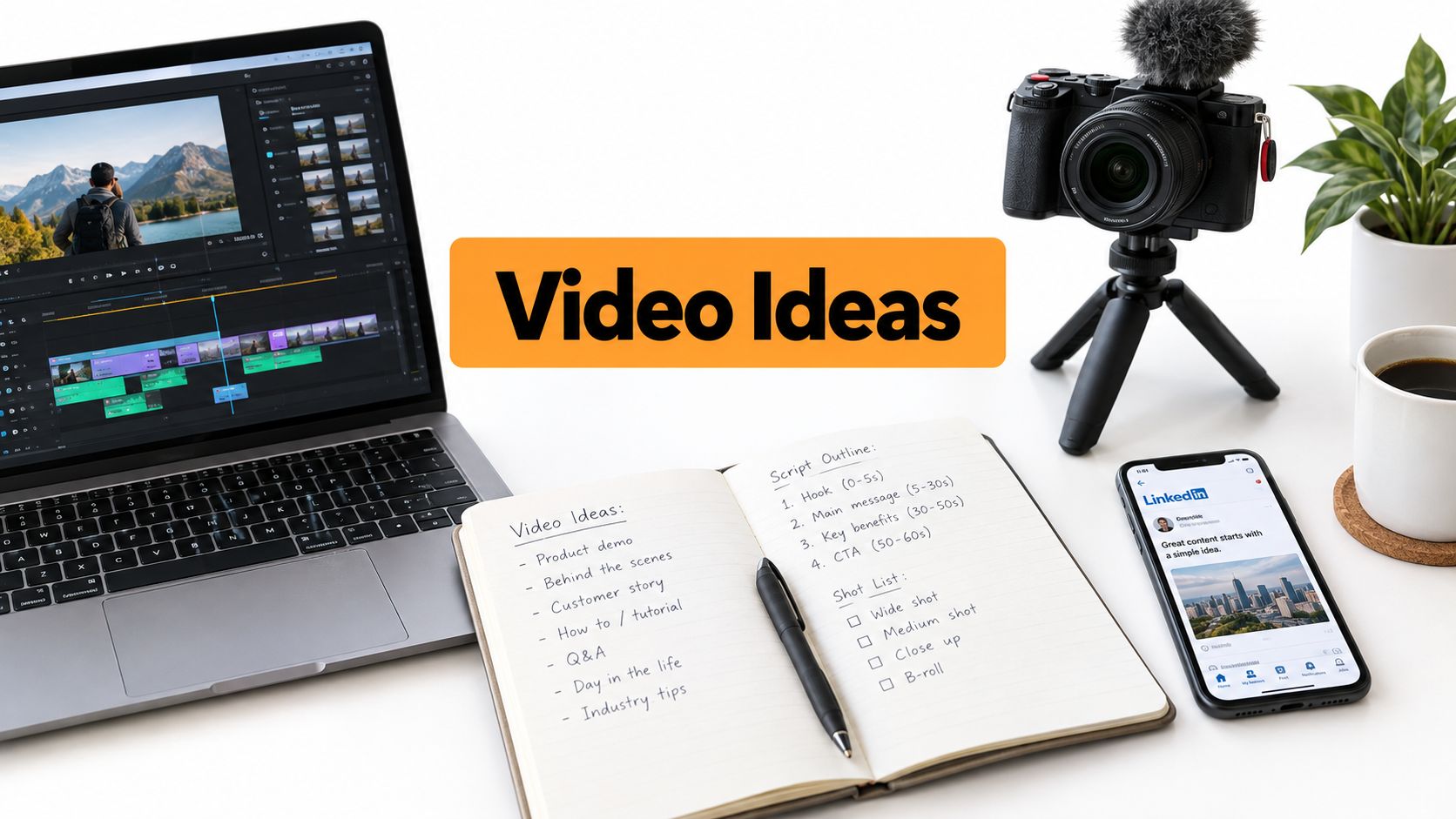
Let's start with the big one: video. It’s no secret that video is crushing it on LinkedIn. A whopping 70% of video marketers say it's their top channel, and for good reason. It drives an average engagement rate of up to 3.8%, a figure that's jumped 44% year-over-year. With the platform pulling in over 1.73 billion monthly visits, a short, authentic clip almost always beats a static post. If you're a data nerd, you can dig into more detailed LinkedIn statistics to see the trends for yourself.
But it’s not just about video. Here are a few other formats that are absolute goldmines for engagement:
- Carousels (as PDFs): These are fantastic for breaking down big ideas into simple, swipeable steps. They get people to spend more time on your post, which is a huge signal to the algorithm.
- Personal Stories: People connect with people, not logos. Sharing a real failure, a tough lesson learned, or a personal win creates a connection that a corporate update never could.
- Polls: This is the easiest win on LinkedIn. Polls are a super low-effort way for your audience to engage. Use them to get opinions, test an idea, or just start a fun conversation.
High-Impact LinkedIn Post Formats Compared
Deciding which format to use can be tough. It's not just about what looks good; it's about what gets the job done. This table breaks down the heavy hitters so you can pick the right tool for the right goal.
| Post Format | Average Engagement Uplift | Best For | Pro Tip |
|---|---|---|---|
| Video (Native) | Up to 5x | Building trust, showing personality, tutorials | Keep it short (under 90 seconds) and always include captions. Most people watch with the sound off. |
| Carousels (PDF) | 3x - 4x | Explaining complex topics, step-by-step guides | End with a clear call-to-action on the final slide to drive comments or shares. |
| Polls | 2x - 3x | Quick feedback, starting conversations | Ask a genuinely interesting question. Avoid boring, self-serving polls that offer no value. |
| Personal Story | Varies (High Impact) | Creating connection, building authenticity | Focus on the lesson or takeaway. It's not just about the story; it's about what others can learn. |
| Text + Image | 1.5x - 2x | Sharing insights, announcements, quick tips | Use a high-quality, relevant image. A real photo of you or your team beats a stock photo every time. |
At the end of the day, a smart content strategy uses a mix of these. Don't just stick to one—keep your audience on their toes.
My two cents: The best content isn't about being perfect; it's about being real. Authenticity is your superpower on this platform. Share your actual thoughts, your struggles, and your wins. That’s how you build a community, not just an audience.
This infographic shows just how important that first impression is. The engagement on your profile itself sets the stage for everything else you post.

The data doesn't lie. A killer headline, a clear summary, and a strong featured section are often the first things that convince someone to stick around and see what you have to say.
Structure Your Posts for Skimmers
Even the most brilliant idea will die a lonely death if it’s trapped in a giant wall of text. Formatting is non-negotiable, especially since most people are scrolling on their phones.
Here are a few dead-simple tricks to make your posts easy on the eyes:
- Short Paragraphs: Seriously, just one or two sentences. White space is your best friend.
- Strategic Emojis: Use them to add a pop of personality and break up the text. A well-placed emoji can even work as a visual bullet point.
- Bullet Points & Lists: If you're sharing tips or key takeaways, use bullets. It makes your post instantly scannable and helps the good stuff stand out.
Think of formatting as the wrapper for your ideas. It makes your content feel inviting and ensures your message actually gets through. Combine this with strong pillars and a killer hook, and you’re on your way to creating content people actually want to read and share.
How to Post and Interact to Actually Get Seen

Look, hitting "post" isn't the finish line—it's the starting gun. I’ve seen so many brilliant posts vanish without a trace simply because the creator didn’t give them a strategic push right out of the gate.
This is where you can learn to make the LinkedIn algorithm your best friend. It’s not about gaming the system, but understanding what it rewards: immediate, meaningful conversation. Get this part right, and you'll see your reach explode.
The "Golden Hour" Is Real
The first 60 minutes after you publish a post are absolutely critical. Think of it as the "golden hour." During this window, the LinkedIn algorithm is watching closely to see if your content is sparking a conversation.
Early likes are good, but meaningful comments are pure gold. They signal to the platform that you’ve shared something worth talking about.
Once your post gets that first burst of interaction, LinkedIn starts showing it to more people in your network. If the comments keep rolling in, its reach expands even further. This is precisely why the "post and ghost" approach—where you publish something and immediately close the app—is the fastest way to kill your post's potential.
Your job for that first hour is to be present. Stick around and be ready to reply to every single comment.
Timing Is (Almost) Everything
Posting when your audience is asleep is like telling a great joke in an empty room. It just won't land. While every network is a little different, the data consistently shows that most professionals are scrolling during the workday.
Your safest bet is to post between 9 a.m. and 12 p.m. on weekdays. I've personally found that Tuesdays and Wednesdays are often peak days, probably because people are settled into the workweek and looking for industry insights.
Recent analysis of over a million posts backs this up. One comprehensive LinkedIn benchmarks study found that engagement rates climbed from 4.48% in early 2024 to a high of 5.76% by March 2025. The opportunity to get seen is growing.
Use these timeframes as your starting point, but always, always check your own analytics to see when your specific followers are online and engaging.
Pro Tip: Don't just "like" comments on your post—reply with a thoughtful question. If someone writes, "Great post!" ask them, "Thanks! Which part resonated with you the most?" This simple tweak turns a passive nod into an active conversation, which the algorithm absolutely loves.
If you really want to dial in your schedule, we've got a whole guide on the best times to post on LinkedIn that goes much deeper.
Be a Giver, Not Just a Taker
Engagement on LinkedIn is a two-way street. If you only show up to promote your own stuff, you're missing the point. You have to be an active, generous member of the community. That means getting out there and engaging with other people's content.
Doing this accomplishes a few key things:
- You build real relationships. Leaving thoughtful comments on posts from others in your industry is how you make genuine connections that can lead to real opportunities.
- You get seen by new people. A smart, insightful comment can attract just as much attention as a great post. It puts your name and headline in front of a whole new, relevant audience.
- People will return the favor. When you consistently support others, they’ll be far more likely to jump on your posts and give you a boost when you need it.
Just 15-20 minutes a day is all it takes. But don't just drop a lazy "Great post!" and run. Add something to the conversation. Ask a follow-up question. Share a related experience. This is how you build a reputation as someone who adds real value, drawing the right people back to your profile.
Using Analytics to Guide Your Growth
Putting content out there without ever checking your analytics is like driving blind. Sure, you're moving, but who knows if you're even on the right road? It's time to stop guessing and start knowing what actually works.
LinkedIn’s own analytics are your best friend for boosting engagement. They give you a clear look at what your audience loves and what they scroll right past. Just a few minutes a week digging into this data can create a powerful feedback loop, making your content smarter with every post.
What Metrics Actually Matter
When you click "Show analytics" under one of your posts, you'll see a bunch of numbers. It’s easy to feel a little overwhelmed, but for engagement, you really only need to watch a few key metrics. Don't get hung up on a massive impression count; what you really want is data that shows you're making a real connection.
These are the numbers that tell the true story:
- Comments: This is the undisputed king of engagement. A comment takes real effort and shows your post actually made someone think or feel something. It’s the start of a conversation.
- Reactions: While they aren't as weighty as comments, reactions (like, celebrate, love) are a fantastic, quick pulse check on initial interest. A post with tons of reactions but crickets in the comments might have a catchy hook but no real substance for a discussion.
- Shares (Reposts): When someone shares your post, they're putting their own name and reputation behind your content. That's a massive vote of confidence and a huge sign of value.
Look at the relationship between these numbers. A post with 10,000 impressions but only 5 comments isn’t nearly as successful as one with 2,000 impressions and 50 thoughtful comments. The second one started a real dialogue, and that’s the whole point.
Creating Your Content Feedback Loop
Think of your analytics as direct messages from your audience. Your only job is to listen and respond. This simple process creates a cycle of constant improvement that will pay off big time.
Start by pulling up your best-performing posts from the last month or so. Do you see any patterns?
- What topics were they about?
- What format did you use—a carousel, a personal story, a poll?
- How did you hook the reader in the first line?
Now, do the exact same thing for your worst-performing posts. The duds are often just as educational as the hits. You’ll probably notice they were a bit too salesy, used a generic format, or touched on a topic your audience just doesn't care about.
The goal isn't just to repeat what worked. It's to figure out why it worked. Did that personal story resonate because it showed vulnerability? Did that carousel do well because it made a complex topic easy to digest?
This approach takes the emotion and guesswork out of your content plan. It’s a straightforward, logical path to getting more engagement because you’re simply giving people more of what they've already told you they want.
The timing couldn't be better. Global LinkedIn engagement shot up 44% year-over-year, with the average post now getting 11.32 engagements. You can discover more about these LinkedIn engagement benchmarks and see how certain formats, like carousels and polls, are crushing it. Use that knowledge to double down on what’s working for you, and watch your engagement climb.
Got Questions About LinkedIn Engagement? Let's Unpack Them.
Even with the best game plan, you're going to hit a few roadblocks. LinkedIn has its own rhythm and unspoken rules, and sometimes you just need a straight answer. Let's clear the air on some of the most common questions I hear so you can get back to posting with confidence.
Think of this as your personal cheat sheet for those "am I doing this right?" moments. These are the nitty-gritty questions that can make a huge difference.
How Often Should I Actually Be Posting on LinkedIn?
This is the big one, isn't it? But the answer is probably simpler than you'd expect: consistency always beats frequency.
It’s way more powerful to share three genuinely insightful posts a week than it is to churn out five half-baked ones just to hit a quota. From what I’ve seen, shooting for that 3 to 5 post-per-week range is the real sweet spot for most people. It keeps you on your network's radar (and on the algorithm's good side) without leading to total burnout.
If you're posting less than twice a week, it's tough to build any real momentum. On the flip side, posting every single day can often cause your quality to dip unless you have a whole content team behind you. Nail down what valuable content looks like for you first, then build a sustainable schedule around that.
Are Hashtags Still a Thing for Engagement?
Absolutely, but the game has changed. We're long past the days of stuffing 20 random tags at the end of a post and hoping for the best. Today, it’s all about being strategic. Think of hashtags as LinkedIn’s filing system—they help your content get discovered by people who are actively looking for your topics.
A good rule of thumb is to stick to 3 to 5 super-relevant hashtags. A smart mix usually looks something like this:
- One broad industry tag: Something like
#DigitalMarketingor#ProjectManagementcasts a wide, relevant net. - A specific, niche tag: Get focused with something like
#SEOStrategyor#AgileMethodologyto attract the real experts. - A branded or community tag: If you have one, using
#YourCompanyNameor#YourPersonalBrandhelps organize your content and build a following around it.
The goal isn't just to get more eyeballs; it's to get the right eyeballs. Using irrelevant tags just to chase views can actually make you look out of touch.
What's the Best Way to Handle Comments?
Responding to comments, especially in that first hour after you post, is one of the most powerful things you can do. The algorithm loves seeing a conversation unfold. But how you reply is everything.
Don't just hit "like" or drop a generic "Thanks!" That’s a conversation killer. Your mission is to keep the dialogue going.
Instead of just thanking someone, ask them a question. If someone comments, "Great insight!" try replying with, "Glad you thought so! Which point resonated with you the most?" That simple tweak turns a dead end into an open door for more conversation.
This approach doesn't just make the original commenter feel valued; it signals to everyone else that you're here to chat. Every single reply adds fuel to the fire, telling LinkedIn your post is worth showing to more people.
Should I Be Tagging People in My Posts?
Tagging can be an incredible engagement booster when you do it right, but it can also come off as spammy and desperate if you don't. The golden rule is simple: only tag people who are genuinely part of the story.
Please, don't be that person who tags a laundry list of influencers just to get on their radar. It's bad form, and most will just ignore it or remove the tag, which can actually signal to LinkedIn that your post isn't valuable.
So, when does it make sense to tag someone?
- When you’re directly quoting them or referencing their work.
- When they were part of the project or content you’re sharing.
- When the post is a direct continuation of a conversation you had with them.
- When you have a specific question you know they are the perfect person to answer.
Before you type that "@" symbol, just ask yourself: "Does this tag add value for the person I'm tagging and for my audience?" If it feels like a stretch, it probably is.
Feeling like all this is a lot to juggle? RedactAI was built to take the guesswork out of creating great LinkedIn content. It can help you spark new post ideas, write compelling copy that sounds just like you, and schedule it all to go live at the perfect time. Stop stressing and start connecting—check out how RedactAI works and see for yourself.