Ever looked at your LinkedIn analytics and wondered, "what do LinkedIn impressions mean anyway?" You're not alone. It's a question that trips up even seasoned pros.
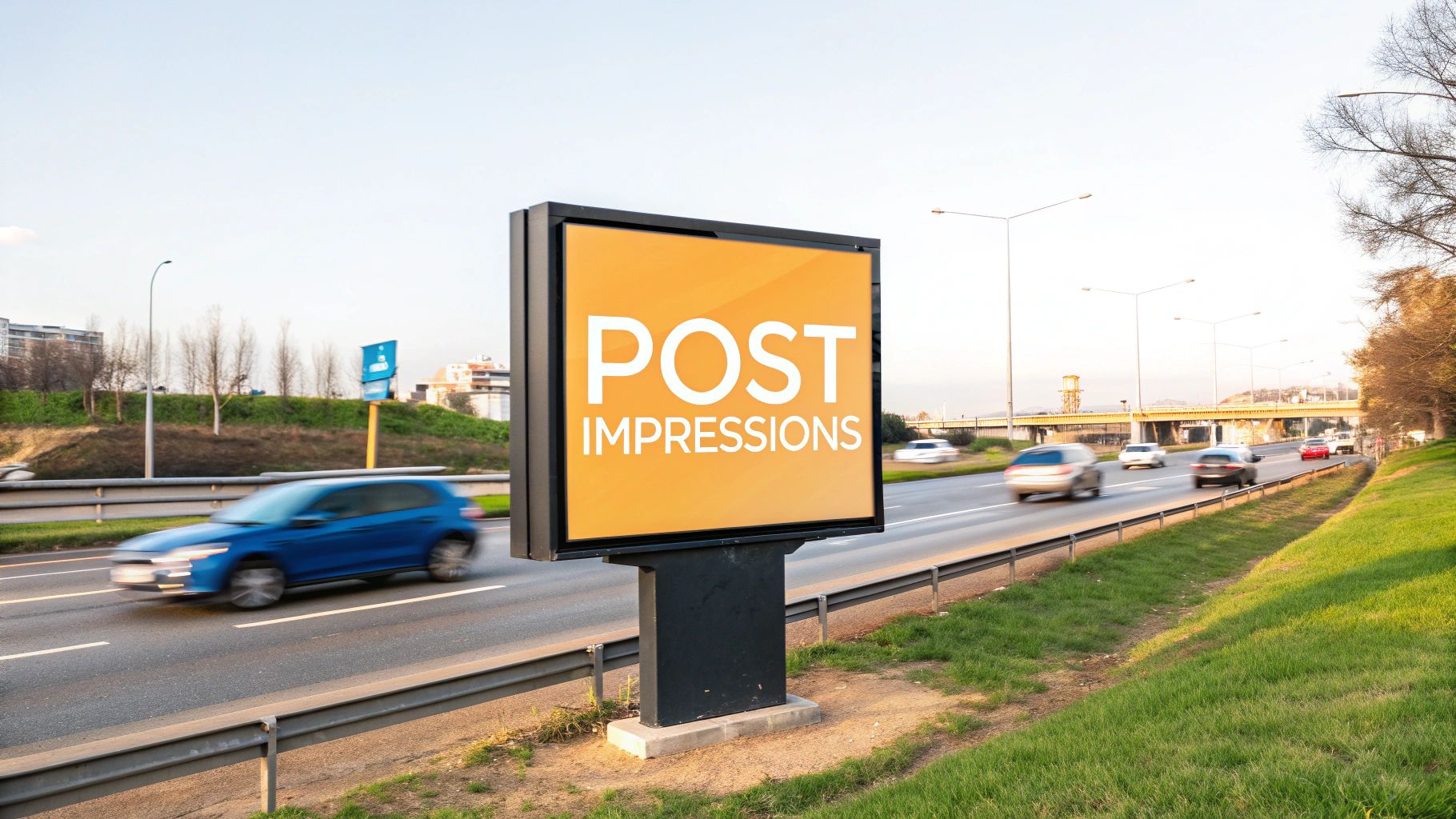
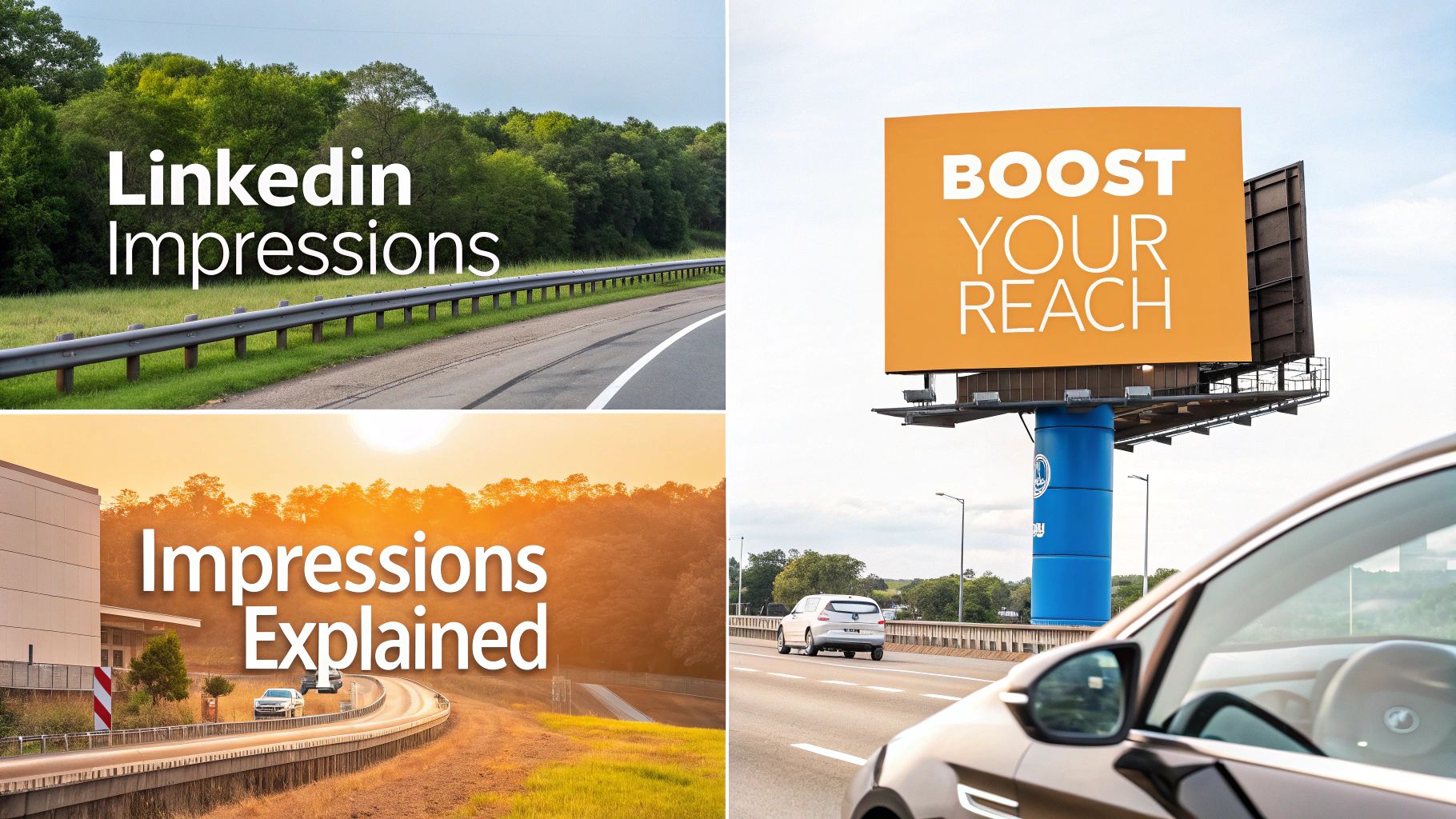
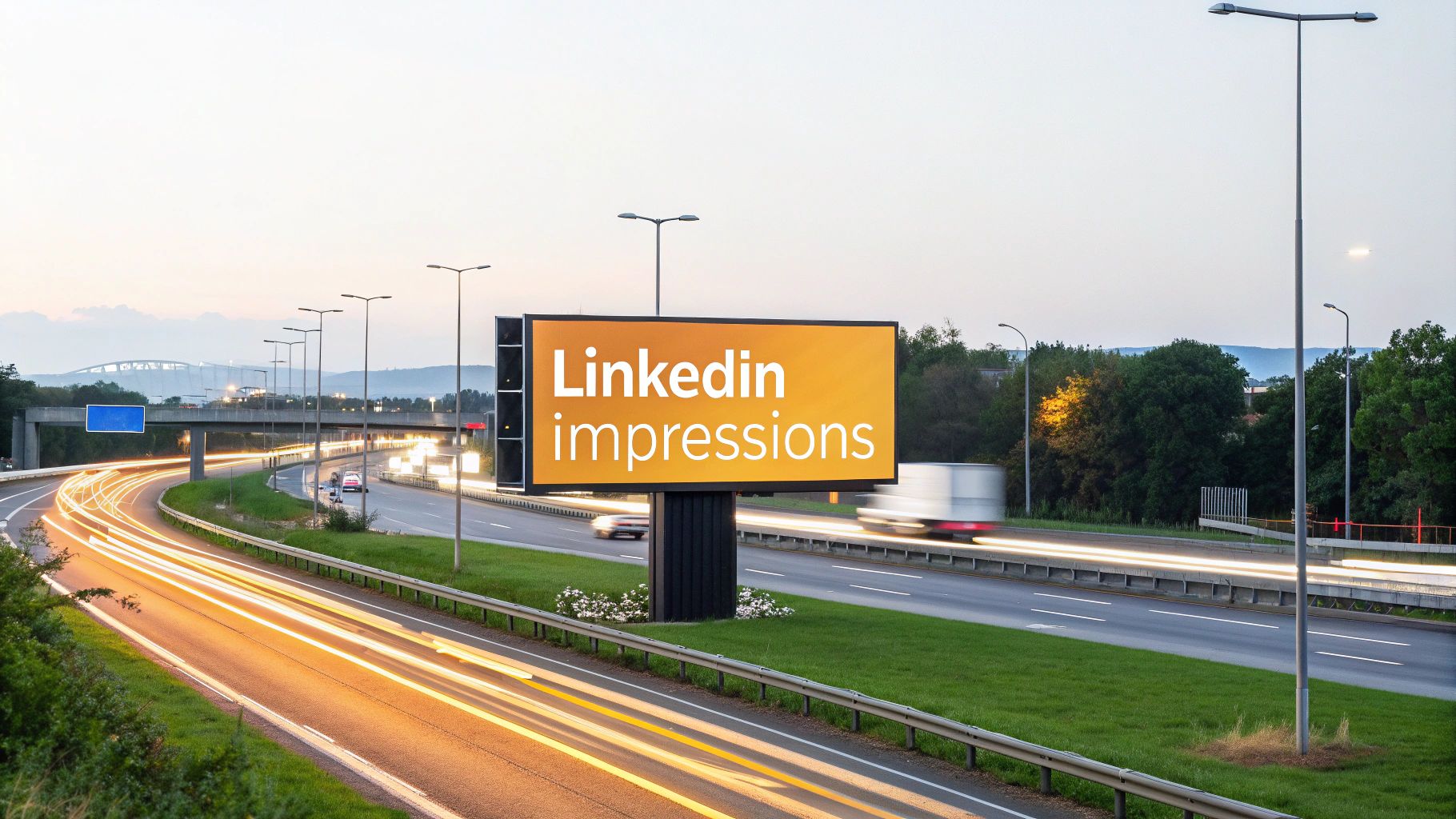
Think of it this way: an impression is counted every single time your content pops up on someone's screen. It’s like a digital billboard on the side of a busy highway. Every time a car passes and that billboard is in view, that's one impression.
A Simple Guide to LinkedIn Impressions
Impressions are the bedrock of your LinkedIn visibility. They're the first, most basic sign that your content is even out there, getting into the professional conversation. After all, if no one sees your post, they can't like it, comment on it, or share it.
This metric simply tracks how many times your post was displayed—whether in the main feed, on someone's profile, or through a repost. The moment it's visible, LinkedIn's algorithm logs it as an impression. If you want to dig deeper into how visibility works on the platform, TryOrdinal.com offers some great insights.
Impressions vs Other Metrics
It's super easy to mix up impressions with other metrics like reach or views, but each one tells a very different story about your post's journey. Getting the distinction right is crucial for understanding what's actually working.
Impressions are all about quantity and frequency. They measure how many opportunities you had for engagement, while other metrics tell you about your audience size and how they actually interacted.
To clear up any confusion, let's break down the most common metrics you'll see.
LinkedIn Metrics at a Glance
This quick comparison table should help you instantly tell these metrics apart and understand their specific roles in your analytics.
| Metric | What It Measures | Analogy |
|---|---|---|
| Impressions | The total number of times your content was shown. One person seeing it 5 times equals 5 impressions. | The total number of times a billboard was seen by passing cars. |
| Reach | The number of unique people who saw your content. The same person seeing it 5 times equals 1 in reach. | The number of unique cars that drove past the billboard. |
| Views | A count when someone watches a video for a minimum duration, typically 3 seconds. | Someone slowing down to actually watch the billboard's message. |
So, while impressions tell you how much exposure you got, reach tells you how many individuals you connected with, and views tell you who stuck around for a moment. They all work together to give you the full picture.
Impressions vs. Reach vs. Views: What's the Real Difference?
It’s way too easy to get lost in the sea of social media jargon. You see "impressions" on your LinkedIn analytics and think, "Great, people saw my post!" But that number alone doesn't give you the full picture. To really get what’s going on, you have to look at it alongside two other key players: reach and views.
Let's break it down with a simple analogy. Imagine you set up a small coffee cart in a busy town square.
- Impressions are the total number of times people walk past your cart and see your sign. If one person walks by three times in a day, that’s 3 impressions. It’s all about the total number of appearances.
- Reach, on the other hand, is the number of unique people who saw your sign. That same person who walked by three times? They only count as 1 in your reach.
This distinction is crucial. Your impression count will always be the same as or higher than your reach because it tracks every single time your content shows up, while reach just counts the unique eyeballs.
So, Where Do Views Fit In?
Now, let's toss views into the mix. This one is a little different and usually comes up when you're talking about video or specific article formats. On LinkedIn, a view is typically counted only when someone watches your video for at least 3 seconds.
A view signals that someone actually stopped to pay attention, even for a moment. It’s the difference between someone just walking past your coffee cart versus them pausing to actually read your menu.
This diagram does a great job of laying out how these concepts relate to each other.

As you can see, impressions are the foundation—the basic count of how many times your content appeared on a screen.
Having a high number of impressions compared to your reach can actually be a fantastic sign. It often means the LinkedIn algorithm thinks your content is a winner and is pushing it back into people's feeds multiple times to make sure your message sticks. If you want to dive even deeper, check out our guide on impressions vs. views.
So, What’s a “Good” Number of Impressions, Anyway?
You’re looking at your post analytics, and you see the impressions number. But what does it actually tell you? Let's get one thing straight: a "good" number of impressions is completely relative. The real magic is learning to read what that number is telling you about your content in your specific situation.
Think of it this way. If you have 200 connections and your post hits 500 impressions, that’s a huge win. It means your content is punching above its weight and reaching people outside your immediate circle. But for an industry leader with tens of thousands of followers, 5,000 impressions might just be another Tuesday. It's all about perspective.
Forget Magic Numbers, Find Your Baseline
Instead of chasing some universal "good" number, you need to look at your own data. The whole game is about comparing your performance to your past performance and the size of your network. This is how you set goals that make sense and figure out if your strategy is actually working.
A super simple way to start is to just find your average. If your posts usually land around 400 impressions, your next mission could be to consistently break 600. It’s all about steady, step-by-step improvement, not trying to go viral overnight.
Your goal isn't to match someone else's highlight reel. It's to understand what healthy growth looks like for your account, turning impressions from a vanity metric into a real indicator of progress and resonance.
What Different Impression Levels Usually Mean
While it’s all relative, we can still paint a general picture of what different impression counts might signal. Think of these as performance tiers that give you a rough idea of where your content stands right now.
For a lot of professionals, hitting 1,000 impressions is a solid sign that a post is doing pretty well. On the flip side, getting between 100 and 500 impressions is common for people with smaller networks or posts that don't quite get the engagement ball rolling. You can always discover more insights about LinkedIn performance on TryOrdinal.com to dig deeper.
Here’s a quick breakdown of what these numbers often suggest:
- Under 500 Impressions: Your content is probably only being seen by your direct connections. This is a totally normal starting point.
- 500 - 2,000 Impressions: Now we're talking! This suggests your content is starting to catch on. A little bit of engagement is helping push it into the feeds of your connections' connections (your 2nd-degree network).
- Over 5,000 Impressions: This is where things get exciting. A number like this signals strong performance. Your post is getting enough engagement that the LinkedIn algorithm is showing it to a much wider audience.
At the end of the day, a "good" number is one that’s heading up and to the right over time. That's the real win.
How to Turn Impressions into Meaningful Engagement
Getting a mountain of impressions is a great start, but what do those numbers really mean if no one is interacting with your content? It’s like standing in a packed room where everyone can see you, but nobody is talking to you. The real magic happens when you convert those passive eyeballs into active, meaningful engagement—the comments, shares, and real conversations that build your brand.

This is where your content strategy really pays off—turning visibility into value. It's about getting your audience to move from just seeing your post to actually joining a discussion with you. Once you’ve captured their attention with impressions, understanding what engagement truly means is the critical next step.
Sparking a Real Conversation
Let's be honest, getting people to stop scrolling and actually type out a comment takes effort. You have to be more human and less like a corporate broadcaster. Your first sentence is your hook; it needs to be interesting enough to stop that thumb in its tracks.
The trick is to directly invite people into the conversation. One of the easiest and most powerful ways to do this is by asking smart, open-ended questions. Instead of just dropping a statement and walking away, frame your insight as a question for your network.
Impressions get you in the game, but engagement is how you win on LinkedIn. Your goal should be to create posts that feel like the start of a conversation, not the end of a speech.
Ready to put this into action? Try these simple but effective techniques:
- Ask for stories, not just "yes" or "no" answers. Instead of asking, "Do you agree?" try something like, "When have you seen this play out in your own career?" This invites much richer, more personal replies.
- Tag people who can add real value. A thoughtful tag can pull an expert into the discussion, but use it wisely. Make sure their perspective is genuinely relevant. For instance, "This reminds me of the great point @JaneDoe made on this last week."
- End with a clear call-to-conversation. Don’t leave people guessing what you want them to do. A direct invitation like, "What’s your take on this?" or "Would love to hear your thoughts below" works wonders.
Analyzing What Works
Turning impressions into engagement isn't a one-and-done task; it's a constant process of tweaking and learning. You need to look beyond just what you post and start measuring its real impact.
If you’re serious about getting results, you need to dive into your LinkedIn engagement rate to see what's actually connecting with people. That data tells you which conversation starters are landing, so you can double down on what works and build a profile that becomes a true hub for your industry.
Ready to get more eyes on your content? Growing your LinkedIn impressions isn't about some secret hack; it's about building a smart, consistent strategy. These tips are all about making small tweaks that send a big signal to the LinkedIn algorithm: "Hey, this is good stuff—show it to more people!"

The single biggest factor for visibility is showing up consistently. When you post regularly, even just a few times a week, you're essentially training the algorithm to expect fresh content from you. This rhythm doesn't just build momentum; it keeps you top-of-mind with your audience.
Think of it as building a relationship with the platform itself. The more you contribute, the more it rewards you with visibility.
Fine-Tune Your Posting Strategy
Beyond consistency, how and what you post can make a world of difference. A few simple optimizations can seriously expand your reach without forcing you to completely overhaul your content.
Let's start with a few proven tactics:
- Find Your Prime Time: Post when your network is actually online and scrolling. While mornings from Tuesday to Thursday are a popular bet, your audience is unique. Test out different time slots, check your analytics, and pinpoint the hours that give your posts the best initial launch.
- Make It Visual: Let’s be real—text-only posts get lost in the feed. Posts with images or videos are natural scroll-stoppers. In fact, research shows that posts with images get twice the engagement, which is the fuel that powers more impressions.
- Be Smart with Hashtags: Stick to a strategic mix of 3-5 relevant hashtags. You'll want a blend of broad industry tags (like #Marketing) to get discovered and niche tags (like #B2BContentStrategy) to connect with the right, highly-engaged audience.
The goal isn't just to be seen, but to be seen by the right people. A smart hashtag strategy ensures your content lands in front of professionals who will find it genuinely valuable, sparking the engagement that drives viral impressions.
Turn Engagement into Rocket Fuel for Your Reach
The LinkedIn algorithm is designed to spot a good conversation. When your post starts getting comments and shares, especially in that first hour, the platform takes notice and pushes it out to a wider audience. This means your job isn't done the moment you hit "publish."
Jump into the comments and reply quickly to keep the conversation flowing. Ask open-ended questions in your posts to encourage people to share their own thoughts. Understanding broader content marketing best practices is key to building this kind of scalable growth.
When you focus on creating real value and building a community, you create a powerful cycle: engagement drives impressions, which in turn leads to even more engagement.
Using Your Analytics to Sharpen Your Content Strategy
Knowing what LinkedIn impressions are is one thing, but that’s just the first step. The real magic happens when you use that data to make smarter decisions about what you post next. It’s how you turn analytics from a simple report card into a roadmap for growth.
Think of yourself as a content detective. Your analytics dashboard is the scene of the crime, and your job is to find the clues that tell you what your audience actually cares about. This isn’t about getting buried in spreadsheets; it’s about spotting patterns you can act on.
From Data Points to Strategic Decisions
Start by digging into your individual post analytics. LinkedIn makes this super easy—just click that little graph icon right below any of your posts. It’ll pop up all the performance data, including your total impressions.
But don’t just stare at the numbers. You have to ask the right questions to connect your actions to the results.
- Which topics consistently get the most impressions? This is a dead giveaway for what your audience wants more of.
- Do videos get more eyeballs than plain text posts? This tells you where to point your creative efforts.
- Which posts got people talking in the comments? High engagement is often a ticket to much wider reach.
Your analytics tell a story. A post with 10,000 impressions but only five likes has a different lesson to teach than one with 2,000 impressions and 150 comments. The first had reach; the second had resonance.
Answering these questions helps you double down on what’s working and, just as importantly, stop wasting time on content that falls flat. This creates a powerful feedback loop. Every single post teaches you something that makes the next one better, refining your strategy over time. If you want to get really good at this, learning how to measure content performance is a game-changer.
This whole approach takes the guesswork out of your content calendar. You'll start to intuitively know which formats land, what topics get people fired up, and how to build a real engine for growth—all by simply listening to what your impressions are telling you.
Got Questions About LinkedIn Impressions? We've Got Answers.
Diving into LinkedIn analytics can feel like trying to read a foreign language at first. Let's clear up some of the most common questions people have about impressions so you can start making sense of your data.
Do My Own Views Count As Impressions?
Funnily enough, yes. When you see your own post on your screen, LinkedIn counts it.
But don't sweat it. Your own views make up a minuscule part of your total impression count and won't really throw off your numbers. The real goal of the metric is to see how many other people are seeing your content out in the wild.
Why Did My Impressions Suddenly Tank?
Seeing your impressions take a nosedive can be a bit jarring, but there's usually a simple reason behind it. It's rarely just one thing, but often a mix of these culprits:
- The Algorithm Shift: LinkedIn is always tinkering with its algorithm. A change you didn't even know about could suddenly favor a different type of content over what you've been posting.
- A Content Misfire: Maybe you experimented with a new topic or a different format that just didn't click with your audience this time around. It happens.
- Bad Timing: Posting when your network is snoozing or stuck in meetings can kill your post's initial momentum.
- Engagement Slump: If a post gets fewer early likes and comments, the algorithm takes that as a sign not to push it out to a wider audience.
Think of a sudden drop in impressions as a friendly tap on the shoulder. It's a signal to look at what you changed—your topic, format, or timing—and use that feedback to get back to creating content your audience genuinely values.
Are Impressions the Only Metric That Matters?
Not at all. Impressions are a great starting point, but they're not the be-all and end-all. Think of them as the top of your funnel—they just tell you how many people had a chance to see your post.
The "most important" metric really depends on what you're trying to achieve. If you want to build a tight-knit community, then comments and conversations (engagement) are your North Star. If your goal is to get people to your website, then link clicks are what you should be obsessing over.
Impressions tell you that you're in the game. Engagement tells you that you're winning.
Ready to stop guessing and start creating content that gets noticed? RedactAI helps you craft powerful LinkedIn posts in your own authentic voice, in just a few minutes. Start creating for free and see the difference.