Are you posting on social media and hearing... crickets? If it feels like you're just shouting into the void, you're not alone. The secret to boosting engagement isn't just about posting more; it's about shifting your entire mindset from a monologue to a genuine conversation.
Beyond Likes: A Practical Strategy for Real Engagement
So many brands get stuck chasing the wrong things. They're obsessed with follower counts and a flurry of likes, which we often call vanity metrics. Sure, they look great on a report, but they don't actually tell you if you're building a real connection or driving business results.
True engagement is what happens after the post goes live. It’s the thoughtful comment that sparks a conversation. It's the DM from someone genuinely interested in your service. It's the share from a follower who thinks their network needs to see what you shared. These are the signs of a healthy, thriving online community.
Setting Goals That Actually Drive Results
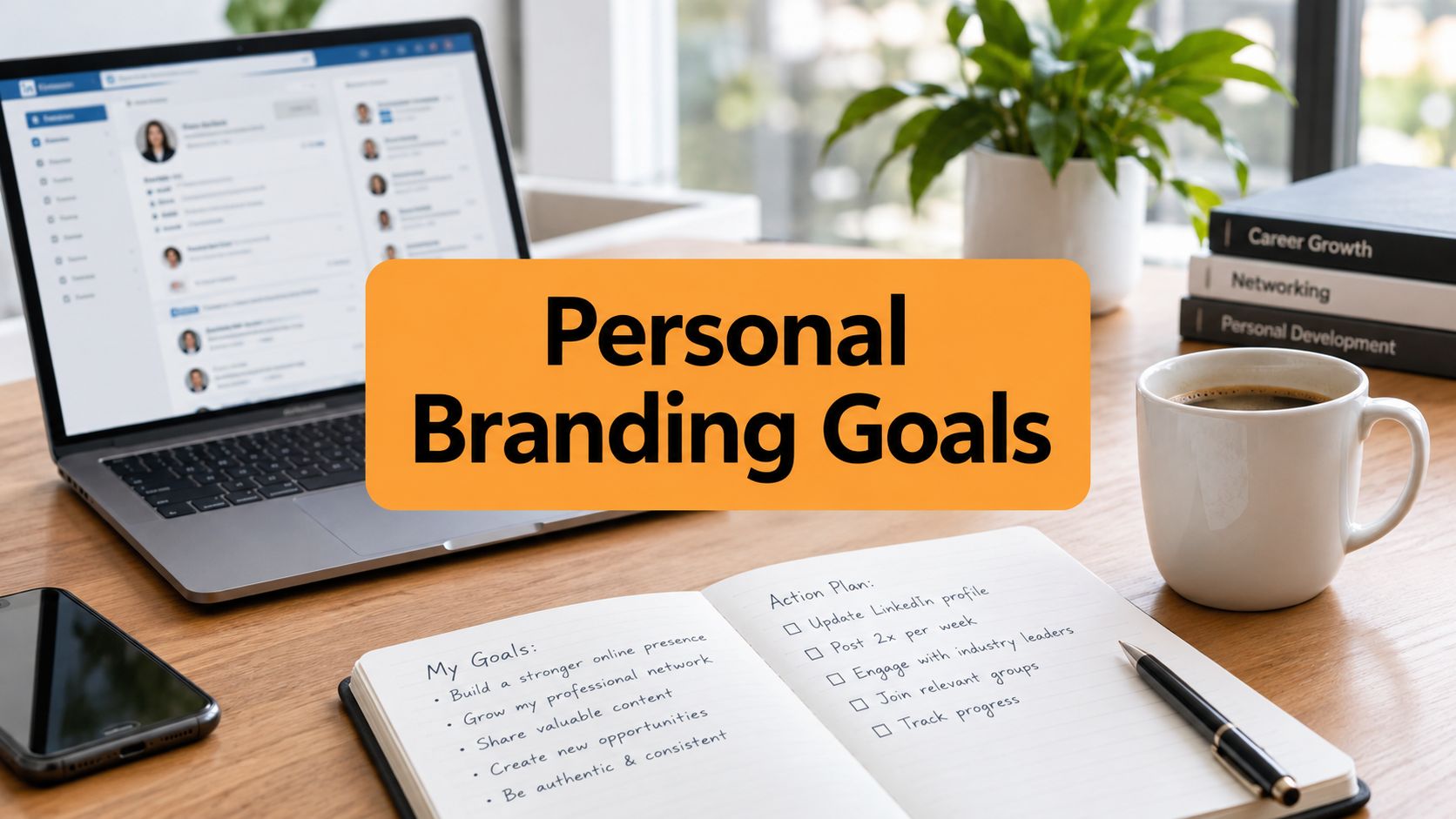
Before you even think about what to post, you have to answer one critical question: what does "engagement" truly mean for your business? Without a clear destination, you're just driving in circles. Your goals are the North Star for your entire social media strategy.
What are you really trying to accomplish here? Maybe you want to:
- Build Brand Awareness: Simply getting your name in front of the right people.
- Generate High-Quality Leads: Attracting potential customers who are a perfect fit.
- Drive Website Traffic: Getting people off the social platform and onto your turf.
- Foster Customer Loyalty: Turning happy customers into die-hard brand fans.
A goal like "I want more engagement" is useless. A real goal sounds like this: "I want to increase comments on my LinkedIn posts by 20% this quarter to spark more industry conversations and identify potential leads." See the difference? It's specific and measurable.
Understanding Your Key Performance Indicators
Once you have a goal, you need Key Performance Indicators (KPIs) to know if you're getting closer to it. KPIs are the specific numbers you track that tell you whether your strategy is working or just wasting time.
If your goal is lead generation, you're not just counting likes. You’re watching your click-through rate on links to your landing page or the number of DMs you get asking about your services. Those are the numbers that matter.
To get a handle on which metrics to prioritize, it helps to understand what each one really signifies.
Core Engagement Metrics and What They Really Mean
| Metric | What It Measures | Why It Matters | Example Goal |
|---|---|---|---|
| Reach/Impressions | How many unique people saw your post. | Measures top-of-funnel brand awareness. | Increase average post reach by 15% month-over-month. |
| Likes/Reactions | A passive acknowledgment of your content. | Quick, low-effort feedback; indicates general interest. | Achieve an average of 100+ reactions per post. |
| Comments | The number of direct replies to your post. | Shows active engagement and conversation starters. | Spark at least 10 meaningful comments per educational post. |
| Shares/Retweets | Users broadcasting your content to their own network. | A strong signal of value and audience advocacy. | Get 5+ shares on our weekly case study posts. |
| Saves | Users bookmarking your content for later. | Indicates high-value, "evergreen" content. | Increase post saves by 25% by creating more checklists. |
| Clicks (CTR) | The percentage of viewers who clicked a link. | Measures how well you drive traffic off-platform. | Maintain a 2% or higher CTR on all blog post links. |
| DMs/Messages | Private inquiries initiated by a user. | A high-intent signal for leads and customer service. | Generate 5 qualified lead inquiries via DM per week. |
Picking the right KPIs is about aligning your daily activities with your big-picture business objectives.
This foundational step—setting clear goals and picking the right KPIs—is non-negotiable. It’s what turns a social media feed into a powerful business-building machine. For more ideas, you can find a ton of actionable tactics for social media engagement to build upon this foundation. Now, let’s get into the system for making it happen.
Know Your Audience and Craft Content They Crave

Let's be real: you can't create engaging content if you don't have a clue who you're trying to engage. It’s a simple truth that trips up so many brands. They just cast a wide net, hoping to catch everyone, but end up connecting with no one.
So, the first real step to boosting your social media engagement is to get laser-focused on your ideal follower.
This isn't just about surface-level demographics like age and location. Sure, that's a start, but the real magic happens when you understand their mindset. What keeps them up at night? What are their biggest career goals? What makes them stop that endless scroll and think, "Finally, someone gets it"?
Think of yourself as a content detective. Go dig through the comments on your posts and your competitors'. Listen to the actual language your audience uses and the questions they're asking. That’s a gold mine of insight right there.
Uncovering What Really Makes Them Tick
To truly get inside your audience's head, you've got to map out exactly who they are. This process, called creating buyer personas, is absolutely essential for making content that feels personal and hits home. If you're new to this, we've got a great guide on how to create buyer personas that'll walk you through it.
Your goal is to nail down the answers to these questions:
- Pain Points: What's the biggest professional headache they're dealing with? Are they wrestling with lead gen, time management, or just trying to navigate office politics?
- Motivations: What are they pushing for? A promotion? Building a killer personal brand? Maybe just a better work-life balance?
- Content Diet: Where do they already hang out online? Which newsletters do they actually read? Who do they follow? This tells you exactly what style and tone already clicks with them.
Once you have this deep understanding, every single piece of content you create has a clear purpose and a specific person in mind. You're no longer just shouting into the void; you're having a direct conversation with someone who needs to hear what you have to say.
The Four Pillars of Content That Actually Engages
With a crystal-clear picture of your audience, you can start building a content strategy that consistently delivers value. A fantastic way to organize your thinking is with the four pillars of content: Educate, Entertain, Inspire, and Convert. This simple framework ensures you have a healthy mix of content that builds a real relationship before you ever ask for a sale.
Your social feed shouldn't feel like a non-stop sales pitch. A good rule of thumb is the 80/20 rule: 80% of your content should be pure value (educating, entertaining, inspiring), and only 20% should be directly promotional.
Let’s break down what each of these pillars looks like in the wild.
Creating Stuff People Genuinely Want to See
Each pillar plays a different role in your follower's journey. When you balance them, you create a well-rounded and magnetic social media presence that keeps people coming back.
- Educate: This is your chance to solve their problems and show you know your stuff. Share your expertise freely. For instance, a marketing consultant could share a quick text-post story on LinkedIn about fixing a common client issue, complete with actionable steps.
- Entertain: Content that makes people smile or laugh creates a human connection. A software company might share a behind-the-scenes video of a fun team event or post a super-relatable meme about the struggles of working from home.
- Inspire: Share success stories, powerful quotes, or your own personal journey. On LinkedIn, a startup founder could get vulnerable about overcoming a huge business challenge, inspiring other entrepreneurs who are in the trenches.
- Convert: Okay, now you can guide interested followers to take the next step. This could be a post announcing a new service, an invitation to a webinar, or a compelling case study that proves your product's value.
Mixing these up keeps your feed fresh and gives people multiple reasons to stick around. Someone might show up for your educational tips but stay for the inspiring stories and funny memes.
When it comes to formats, some are clear winners. On LinkedIn, for example, document posts (those PDF carousels) are absolutely crushing it right now. Research shows they pull an average engagement rate of 6.60%—that's 303% more than a single image! Why? Because as users swipe through, their "dwell time" increases, signaling to the algorithm that your content is valuable and should be shown to more people. This is a perfect example of how picking the right format for the right platform can make a massive difference.
Find Your Posting Rhythm for Maximum Impact

Alright, you've got a killer library of content that speaks directly to your audience. What now? Well, when you hit "publish" matters just as much as what you're publishing.
Posting whenever you feel like it is like running a coffee shop with no set hours. Your regulars will never know when to show up. A consistent posting rhythm is what turns casual scrollers into a community that actually looks forward to your stuff. It's not about spamming their feed; it's about creating a reliable presence that teaches both the algorithm and your followers when to expect you.
Forget the "Universal Best Time to Post" Myth
You've seen them. Those infographics screaming that Tuesday at 10 AM is the magic hour to post for everyone. Let’s just get this out of the way: that's a total myth.
The ideal time for a B2B tech company trying to reach CTOs on the West Coast is going to be wildly different from a fashion brand trying to connect with college students on the East Coast. Instead of blindly following generic advice, you have to become a data detective for your audience.
The real trick isn't just posting when most people are online. It's about posting right before your specific audience becomes most active. This gives your content a little runway to pick up some early traction, signaling to the algorithm that it's good stuff worth showing to more people as they log on.
Your platform’s built-in analytics are your new best friend. Dive into the insights or analytics tab on Instagram, Facebook, or LinkedIn. These tools literally show you the days and hours your followers are most active. That's your starting line. Test those windows and keep a close eye on your metrics.
Quality Always, Always Beats Quantity
It's a classic trap: "If I just post more, I'll get more engagement." Wrong.
Pushing out flimsy, low-effort content just to fill a slot is one of the fastest ways to get people to tune you out. Every single thing you post should have a purpose and offer some kind of value.
If you’re stretched thin trying to come up with five top-tier posts a week, then don't. Three fantastic, well-thought-out posts will always do better than five mediocre ones. Consistency beats frequency. A reliable schedule of three great posts a week builds way more trust than a chaotic seven-post blitz followed by a week of radio silence.
Need a baseline to start from? Here are some general guidelines for most platforms:
- LinkedIn & Facebook: Shoot for 3-5 times per week. The idea is to stay top-of-mind without clogging up a professional feed.
- Instagram: A healthy mix of 3-5 feed posts per week plus daily or near-daily Stories is a great way to keep your audience engaged on multiple levels.
- X (formerly Twitter): This platform is a firehose. If your audience is active here, 1-3 times per day can be super effective.
Remember, these are just starting blocks. The right number for you comes down to what you can realistically produce at a high quality and what your audience actually wants.
How to Build a Simple (and Sustainable) Content Calendar
A content calendar is your secret weapon against the "what do I post today?!" panic. It doesn't have to be some beastly, color-coded spreadsheet. It just needs to give you structure and a little bit of foresight. To make this feel less like homework, you can learn how to create an editorial calendar that you'll actually stick with.
A simple weekly plan could be as straightforward as this:
| Day | Content Pillar | Post Idea Example (for a Marketing Consultant) |
|---|---|---|
| Monday | Educate | A LinkedIn carousel on the "3 Common SEO Mistakes I See Every Day." |
| Tuesday | Inspire | An Instagram Story sharing a quick screenshot of a client's recent win. |
| Wednesday | Engage | A text-only post on LinkedIn asking, "What's your biggest marketing headache this quarter?" |
| Thursday | Educate | A 60-second video tip on Facebook explaining a key metric in your analytics. |
| Friday | Convert | A post announcing you have 2 slots open for a free 30-minute strategy call next week. |
This simple framework, tied back to your content pillars, takes content creation from a daily scramble to a planned, strategic part of your week. It ensures you're hitting all the right notes to keep your audience hooked and nudging them closer to your business goals. Your rhythm becomes your reliability.
Turn Your Feed Into a Thriving Community
Look, posting great content is just the start. If you really want to build a loyal following—people who are genuine fans, not just passive scrollers—the real work begins after you hit publish. This is where you stop broadcasting and start building a community.
Think of your comments section as your digital town square. Every single comment, tag, and share is a handshake, an opening for a real conversation. When someone takes a moment out of their day to engage with your post, they're raising their hand. Acknowledging that is how you start to build something special.
Master the Art of the Reply
Just "liking" a comment? That's a huge missed opportunity. A thoughtful reply can turn a simple interaction into a memorable conversation, and it often encourages other people to chime in. The goal here isn't just to check a box by responding; it's to keep the ball rolling.
Ditch the generic "Thanks!" or "Great point!" replies. They're conversational dead ends. Instead, try one of these moves:
- Answer and Ask: If someone asks a question, give them a great answer, then toss a follow-up question back to them or the wider audience. Say someone comments, "I love this tip about content calendars!" You could reply, "So glad it was helpful! What's the biggest headache you run into when planning your content?"
- Add More Value: Build on what they said. Offer up a related tip, a link to a helpful article, or a quick resource. It shows you're generous with your knowledge, not just scrambling for engagement points.
- Tag and Acknowledge: When a comment is especially smart or insightful, give that person a shoutout. A simple, "This is a brilliant take, @username!" makes them feel seen and appreciated.
This kind of active listening shows there’s a real, breathing human behind the account, and that builds a massive amount of trust. In fact, 71% of consumers who have a good experience with a brand on social media are likely to recommend it to their circle.
Spark Conversations with Compelling Questions
Want people to talk? Ask them something. It sounds simple, but there's a trick to it. Closed-ended questions that get a simple "yes" or "no" are conversation killers.
You have to ask open-ended questions that invite people to share stories, opinions, or a bit of their own experience.
Don't just ask, "Do you like working from home?"
Ask, "What's the one thing about working from home that has surprised you the most?"
See the difference? The second one prompts a story, not a one-word answer. It creates a space for your followers to share a piece of their world, which makes the whole interaction feel more personal and interesting for everyone reading along.
Turn Followers Into Brand Advocates with UGC
One of the most powerful things you can do is let your audience do the talking for you. I'm talking about user-generated content (UGC). That's any content—photos, videos, reviews, testimonials—created by your followers that features your brand.
Why is this stuff gold? Because people trust other people way more than they trust a polished ad. A recommendation from a peer just feels more authentic. When you encourage UGC, you're turning passive followers into active participants and, ultimately, your best marketers.
Here are a few ways to get the ball rolling:
- Run a contest: Ask followers to share a photo of them using your product with a unique hashtag for a chance to win something cool.
- Create a branded hashtag: Come up with a fun, community-focused hashtag. A local coffee shop, for instance, could start using #MyMorningMugshot.
- Just ask! Sometimes it’s that easy. Post a prompt like, "Show us how you're using [our product] to tackle your biggest challenge this week!"
And a crucial tip: always credit the original creator when you reshare their stuff. It’s not just about giving them a well-deserved nod; it also shows everyone else that you value their contributions, which encourages more people to share in the future.
Handle Negative Feedback with Grace
Sooner or later, it’s going to happen. You're going to get a negative comment. Your first instinct might be to get defensive or, even worse, hit that delete button. Don't. This is a golden opportunity to show what your brand is really made of.
Responding to criticism publicly and professionally shows you're transparent and actually care about your customers. It proves you're listening to all the feedback, not just the glowing five-star reviews.
Here’s a simple, battle-tested framework for your response:
- Acknowledge their frustration right away.
- Apologize sincerely for their bad experience.
- Move the conversation to a private channel (like DMs or email) to sort out the specifics.
This approach validates their feelings in public while you handle the nitty-gritty details in private. Believe it or not, turning a bad experience into a good one can create an even more loyal customer. It shows you care enough to make things right.
You can create the most amazing content and be a rockstar at community management, but if you're not digging into your data, you're just guessing. Think of your analytics as a compass—it shows you what’s hitting the mark, what’s completely missing it, and where the real opportunities are hiding.
Let’s be clear: diving into social media analytics isn't about getting lost in a sea of spreadsheets. It's about turning those numbers into smart, actionable decisions. This is the final, crucial step that takes your social media from a "post and pray" approach to a predictable, results-driven machine. It’s how you learn, adapt, and get better over the long haul.
Finding the Story in Your Numbers
Every platform, from LinkedIn to Instagram, has its own built-in analytics dashboard. I know, it can feel overwhelming at first. The trick is to tune out the vanity metrics and zero in on the numbers that actually tie back to the goals you set earlier.
For instance, if your goal is to build brand awareness, Reach is your north star. Are more unique eyeballs seeing your posts this month than last? Simple. But if you’re all about generating leads, then your obsession should be Click-Through Rate (CTR). Of all the people who saw your post, how many actually clicked that link?
Pro Tip: Don’t get tunnel vision looking at a single post's performance. You have to zoom out to spot the trends. Is your video content consistently getting more saves than your static images? That’s not a coincidence; it's a clear signal from your audience about what they want more of.
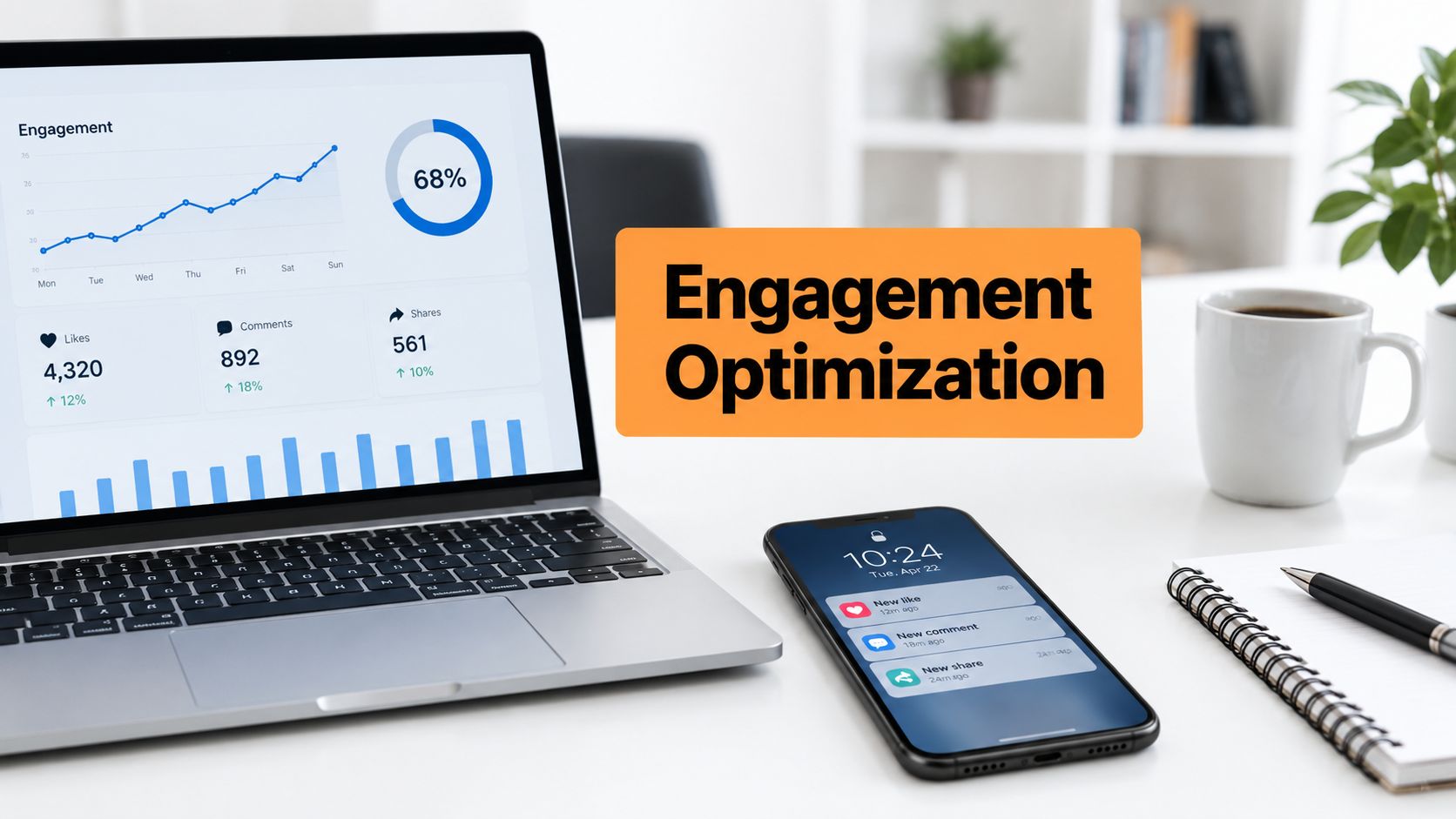
This chart breaks down some key engagement actions to watch, giving you a quick visual on where your community is most active.
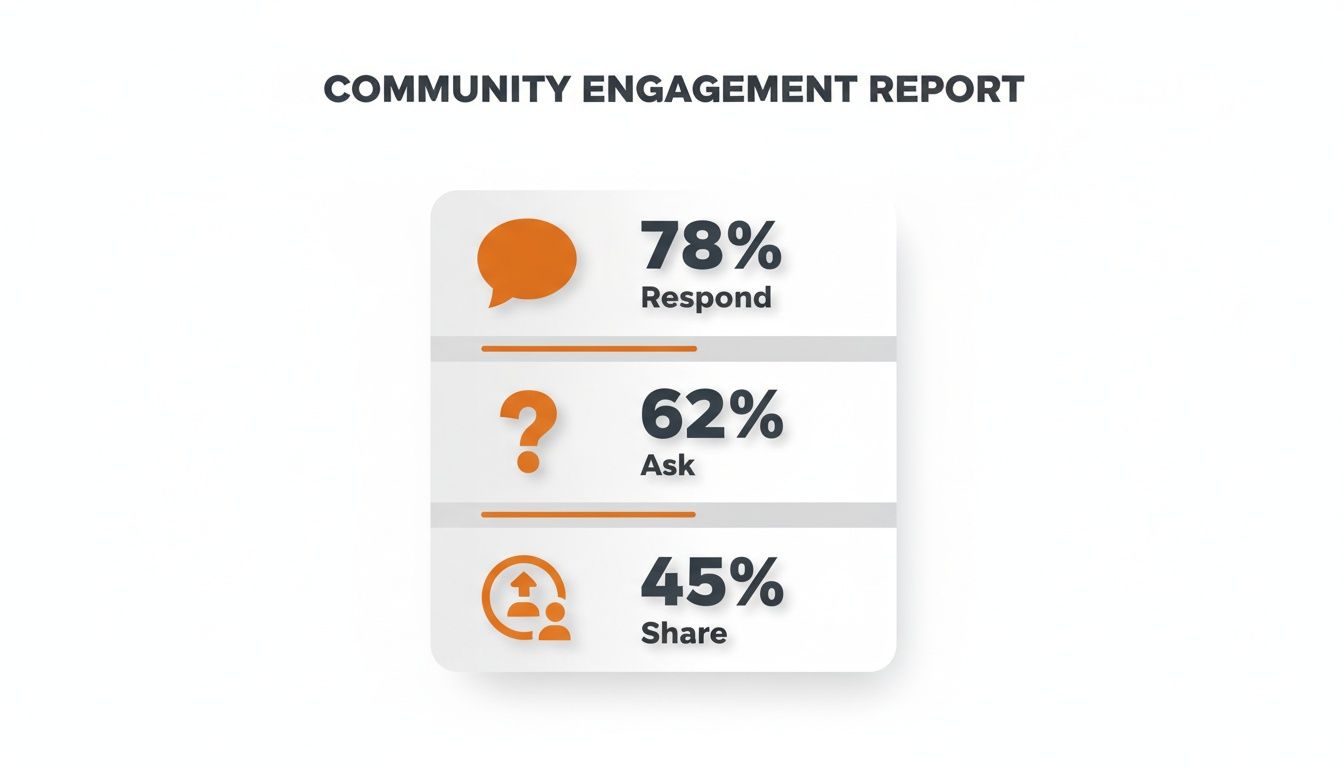
What this tells us is that the community is healthy. The strong response rate means you’re sparking conversations, and the solid share rate shows your content is good enough for followers to vouch for you.
Setting Realistic Benchmarks
So, how do you know if your numbers are any good? A 2% engagement rate might sound awesome... or awful. Without context, it's meaningless. This is where benchmarking comes in. You need to measure your performance against two things: your own past results and what’s happening in your industry.
Your most important competitor is always your past self. Aim for steady, consistent growth. If you reached 1,000 people last month, shooting for 1,150 this month is a smart, sustainable goal.
It’s also crucial to keep an eye on industry trends, especially on a platform like LinkedIn where the algorithm is always shifting. For example, the average LinkedIn engagement rate recently jumped to 3.85%, a massive 44% increase year-over-year. This tells us that while overall views might be down, the platform is heavily rewarding high-quality, strategic content. Knowing a good post can convert 2-5% of people who engage into actual leads helps you set much more tangible goals.
The Power of Simple A/B Testing
You don’t need a fancy, expensive tool to start optimizing your content. A/B testing can be as simple as trying two different things and seeing which one wins. This constant cycle of testing, learning, and tweaking is the real secret sauce to unlocking higher engagement.
Here’s how you can get started right away:
- Test Your Headlines: Got a new blog post to share? Write two different captions. Post one on Monday and the other on Wednesday (at the same time of day) and see which one gets more clicks.
- Experiment with Visuals: Have a killer customer testimonial? Share it once as a clean graphic with text. A week later, post it as a short video clip. Which one gets more comments?
- Vary Your Calls-to-Action (CTAs): See what happens when you swap a direct CTA like "Download our guide" for a softer, question-based one like "What's your biggest takeaway from the guide?"
Keep track of the results in a simple spreadsheet. I guarantee that within a few weeks, you'll start to see clear patterns emerge, giving you a custom-built playbook for what your specific audience loves.
Using Data to Fine-Tune Your Strategy
Your analytics dashboard isn't just for pulling monthly reports to show your boss. It's a live feedback loop. You have to let the data guide your day-to-day decisions.
- Top-Performing Posts: Look at your best content from the past 30 days. What do those posts have in common? Was it the topic? The format (video, carousel, text-only)? The time you posted? Find the formula and do more of that.
- Audience Demographics: Are you actually reaching the people you think you are? If your analytics show a completely different demographic is tuning in, you might need to adjust your tone or the topics you cover.
- Optimal Posting Times: Your platform's insights will tell you when your audience is most active online. Try posting just before those peak times to catch the wave as it builds.
Ultimately, using analytics is just a form of listening. Your audience is telling you exactly what they want through their clicks, comments, and shares. All you have to do is pay attention. For a rundown of tools that can make this process even easier, check out our guide on the best social media analytics tools to find the right one for you.
Your Go-To Social Media Engagement Checklist
Let’s be real: consistency is what separates social media that works from social media that’s just… there. To keep your engagement engine running smoothly, you need a process. This isn’t just a recap of the article; it's a practical checklist you can actually use every single day.
Bookmark this page. Print it out and stick it on your monitor. Whatever you do, make it a habit. This is how you build a real community, not just a follower count.
The Pre-Publish Gut Check
Before you even think about hitting that "Publish" button, run through this quick pre-flight check. It’s the five-second sanity check that can make or break a post's performance.
- Is it actually for them? Seriously, does this solve a problem, answer a burning question, or give your audience something they can genuinely use?
- Is the format right? Would this tutorial work better as a carousel? Could this story be more powerful as a quick video? Don't default to what's easy.
- Does the hook hook? Read the first sentence. Does it make you want to stop scrolling and read the rest? If not, rewrite it.
- Did you ask for a response? Give people a reason to comment. A clear, open-ended question is your best friend here.
- Is it visually appealing? Is the graphic sharp? Is the video clear? In a sea of content, your visuals have to be top-notch.
The "Golden Hour" Game Plan
Your job isn't over once the post is live. Far from it. That first hour is make-or-break for getting the algorithm on your side.
- Stick around for comments. Are you ready to jump on the first few comments within minutes? This sparks the conversation and shows you're present.
- Give to get. Block out 10-15 minutes to go engage with other people's content. Like, comment, and share. It’s the fastest way to get your own profile noticed.
Pro Tip: Replying instantly to early comments is a huge signal to the platform's algorithm. It shows your post is creating a buzz, which can kickstart its reach and push it to a wider audience. Don't underestimate this!
Your 30-Minute Weekly Tune-Up
Set a recurring calendar reminder for this. Every week, take 30 minutes to step back and look at what actually happened.
- Find the winner. Which post got the best kind of engagement—not just likes, but actual conversations, shares, and saves?
- Dig into the data. What are the numbers telling you? Look at reach, click-throughs, and when your audience was most active.
- Make one change for next week. Based on what you just learned, what's one experiment you can run? A new content format? A different posting time? Always be testing.
Got Questions? We've Got Answers
Whenever you're kicking off a new social media plan, a bunch of questions are bound to pop up. Let's tackle some of the most common ones we hear from people trying to get their engagement right.
The Million-Dollar Question: How Long Does This Actually Take?
Ah, the big one. The honest, no-sugar-coating answer? It depends. You’re not going to see your engagement numbers triple in a week. Building a genuine community just doesn't work that way; it's a long game that requires patience.
You’ll probably start to notice the small wins—a few more meaningful comments or an uptick in shares—within the first 30 to 60 days, if you stick with it.
But for the kind of significant, needle-moving results that really affect your bottom line? You're typically looking at 3 to 6 months of consistent, focused effort. That means putting the strategies we've talked about into practice every single day: understanding your audience, delivering real value, and showing up to engage.
Which Social Media Platform Is Actually Best for Engagement?
The best platform isn't about what's trendy; it's about where your people are hanging out online. Don't burn yourself out trying to be a star on every single channel. Pick one or two platforms where your ideal customers are already active and go all-in there.
- LinkedIn: This is the non-negotiable playground for B2B. If you're a consultant, expert, or building a professional brand, this is your spot. Engagement here is all about sharing professional insights and sparking industry-specific conversations.
- Instagram: A visual paradise. It’s perfect for brands in e-commerce, wellness, food, or travel. Great engagement hinges on stunning visuals, behind-the-scenes Stories, and personality-driven Reels.
- Facebook: Still a giant, especially for building local communities and reaching a wide range of demographics. It works wonders for direct customer interaction and sharing a versatile mix of content.
- X (formerly Twitter): The home of real-time chatter. It’s built for quick-witted commentary, jumping on trending topics, and direct, snappy interactions. If your brand has a strong, timely voice, this is the place to be.
So, Should I Just Buy Followers to Get a Head Start?
Let me be crystal clear: absolutely not. It’s a shortcut that leads straight off a cliff. Buying followers might give you a temporary ego boost, but it’s one of the most damaging things you can do to your account. Why? Because those fake accounts will never, ever engage with your content or buy your products.
Think about it: when you have 10,000 followers but your posts only get 20 likes, the platform's algorithm sees that less than 1% of your audience is interested. It then throttles your reach, hiding your content from everyone—even your real followers.
An army of 500 real, engaged fans who genuinely care about what you have to say is infinitely more powerful than 50,000 silent bots. Earn your audience by being valuable. It takes more time, but it's the only path to building a social media presence that actually works. You just can't buy real engagement.
Tired of staring at a blank screen trying to come up with your next LinkedIn post? RedactAI helps you generate high-impact posts that sound just like you, in minutes. Start creating content that builds your brand and sparks real conversations at https://redactai.io.