If you’re serious about improving your professional communication, you need to focus on three things: clarity, conciseness, and confidence. It all starts with getting real about where you stand right now, and then intentionally practicing new habits in every single interaction.
Build Your Foundation on Core Communication Principles
Let's be honest, great communication isn't just a "soft skill" anymore—it's a non-negotiable for getting ahead in your career. Before we jump into specific exercises, we need to lay down a solid foundation. That means taking an honest look at your current communication habits and understanding the real-world impact they have.

The stakes are much higher than you might think. Poor communication is bleeding an incredible $1.2 trillion from U.S. businesses every year. Think about that. Teams waste nearly a full workday—about 7.47 hours—each week just cleaning up the mess from miscommunications.
Pinpoint Your Communication Style
First things first: you need to know your starting point. Under pressure, we all fall back on a default communication style. Figuring out yours is the key to making any real change. So, are you naturally passive, aggressive, or somewhere in between?
To get a clearer picture, it helps to see these styles laid out. This table breaks down the common behaviors of each style and what you can aim for instead.
| Communication Style | Common Behaviors | Typical Impact | Improvement Goal |
|---|---|---|---|
| Passive | Avoids conflict; says "yes" to keep the peace; struggles to voice opinions or needs. | Can lead to resentment, missed opportunities, and being overlooked. | Voice one opinion or need clearly in your next team meeting. |
| Aggressive | Aims to "win"; dominates conversations; interrupts; can be seen as intimidating. | Shuts down collaboration; damages team morale and trust. | Actively listen without interrupting and ask a clarifying question. |
| Passive-Aggressive | Expresses frustration indirectly with sarcasm, stubbornness, or sullen behavior. | Creates a confusing and toxic environment; erodes trust over time. | State your disagreement or concern directly but respectfully. |
| Assertive | Expresses thoughts and feelings clearly and respectfully; values others' perspectives. | Fosters trust, mutual respect, and effective problem-solving. | Continue to practice and model this balanced approach. |
Recognizing your default style isn’t about judging yourself. It’s about gaining the self-awareness you need to grow. If you're looking for a more structured path, dedicated executive communication skills training can give you a solid framework for building that assertive muscle.
Master the Three Pillars of Impactful Communication
Once you have a handle on your style, you can zoom in on the three pillars that will completely change how you’re perceived. Nail these, and every email, meeting, and conversation will have more impact. We cover these and other business communication best practices in more detail if you want to dive deeper.
1. Clarity
Clarity is all about making sure your message lands exactly as you intended. It means cutting through the jargon and fuzzy language so there’s zero room for misinterpretation.
Before you speak or write, just ask yourself: What is the one thing I absolutely need them to know or do?
Here's a little trick I love: the "ELI5" (Explain It Like I'm 5) test. If you can't explain a concept simply, you probably don't understand it as well as you think you do. Try breaking down your next project update into language a five-year-old could grasp.
2. Conciseness
In the professional world, respecting people's time is a superpower. Being concise means delivering your message with maximum punch in the fewest words possible. It’s about getting straight to the point without losing the essential details.
Think of it like this: your emails should have the main request or takeaway right in the first sentence. In meetings, make your point, and then stop. Let the silence hang for a second. This not only shows respect but also projects a ton of confidence.
3. Confidence
Confidence is the energy that makes people listen to your words. You can feel it in someone's tone, see it in their body language, and hear it in their conviction. It’s not about being the loudest person in the room—it’s about truly believing in the value of what you have to say.
The best way to build confidence? Preparation. Before a tough conversation, jot down your main points. Before giving a presentation, practice your opening until it feels completely natural. Confidence isn't magic; it’s the direct result of doing the work ahead of time.
Master Your Written Communication in the Digital Age
Let's be real—every email, Slack message, and LinkedIn post you write is a billboard for your professional brand. It's not just about spelling and grammar anymore. In today's work environment, it's about getting your point across with the right tone and clarity so you can actually get things done. This is the difference between an email that gets an immediate reply and one that gets lost in the digital void.

The cost of fuzzy, ineffective communication is honestly shocking. U.S. companies lose an average of $12,506 per employee each year because of it. Think about that. A staggering 68% of employees spend precious time untangling project issues that started with a poorly worded message, and 53% admit they miss important information altogether. If you're curious about the data, you can explore the full report on communication strategy.
This isn't just about dodging bullets; it's about creating opportunities with every word you type.
Craft Emails That Actually Get Things Done
Your inbox is a constant battle for attention. If you want to win, your emails have to be sharp, scannable, and impossible to misunderstand. Ditch the long, winding novels and get straight to the point.
A killer email boils down to three things:
- A Subject Line That Can't Be Ignored: "Project Update" is a one-way ticket to the archive folder. Try "Project Phoenix: Action Needed on Q3 Budget by EOD" instead. See the difference?
- The Main Point Goes First: Don't bury the lead. Your request or key takeaway should be in the very first sentence. Make their life easy.
- Lists Are Your Best Friend: If you have multiple action items, use bullets or a numbered list. It breaks up the wall of text and makes your message a breeze to read.
What most people write: "Hi team, I wanted to follow up on our meeting this morning about the new marketing campaign. There are a few things we need to get done. I need the updated ad copy, and we also need to finalize the landing page design. Let me know what you think."
What you should write: "Team, following our meeting, here are the two action items for the Q3 campaign launch:
- Sarah: Please provide the final ad copy by 3 PM today.
- Mike: Please send the final landing page design for review by EOD tomorrow. Let me know if you have any questions."
The second one is direct, assigns clear ownership, and sets deadlines. It’s an email that drives action, not confusion. Having a consistent business writing style guide is a great way to get your entire team on the same page with this stuff.
Elevate Your LinkedIn Presence
Your LinkedIn profile and the content you share are a huge part of your professional story. This is your stage to show what you know and connect with people in your field. Vague updates and generic posts just create noise.
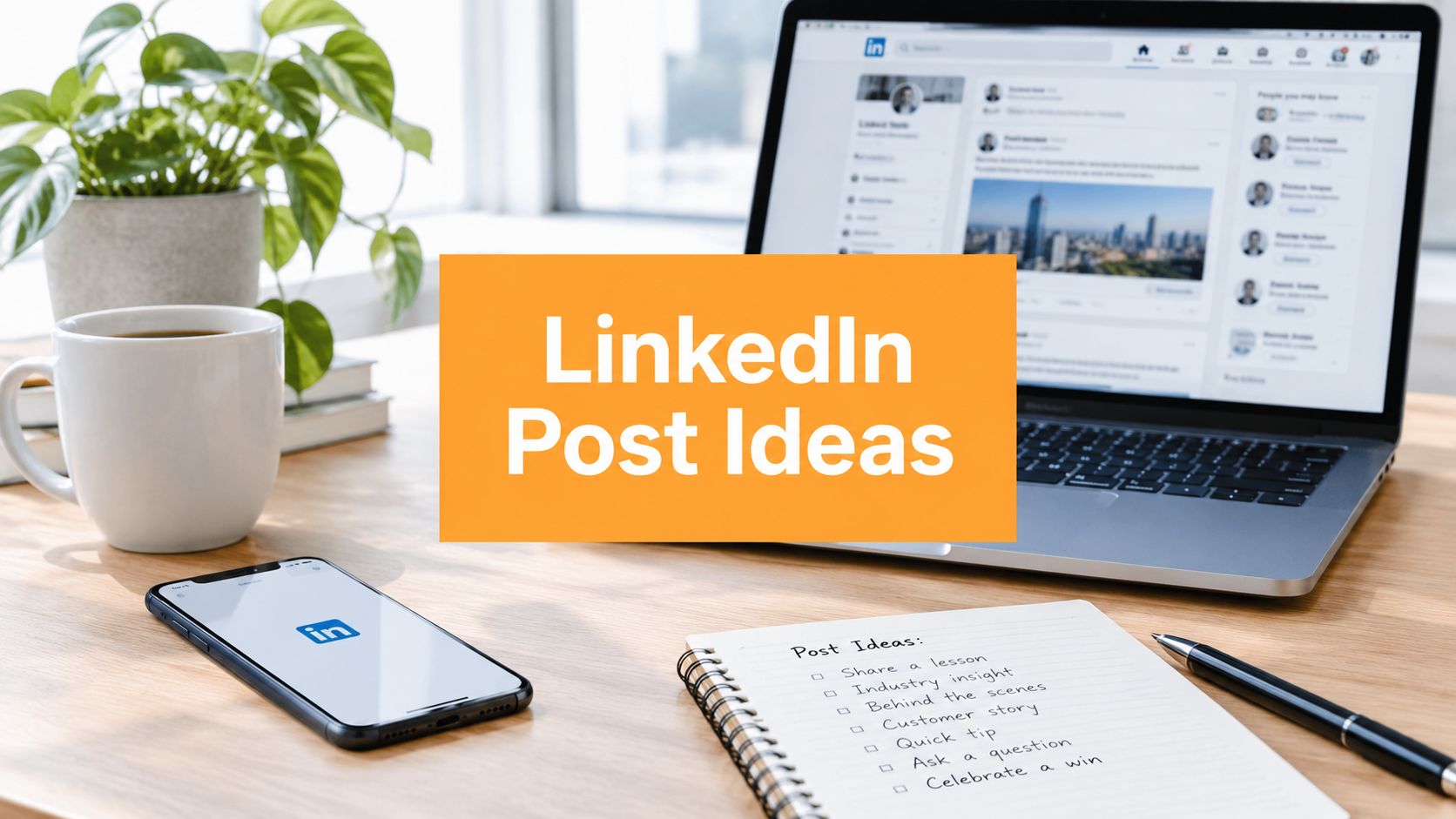
The secret to LinkedIn is to stop talking about yourself and start providing value to others. Share a personal story about a lesson you learned the hard way. Offer a unique take on a new industry trend. Walk people through a helpful tutorial.
This is where you can use AI for writing without losing your authentic voice and really stand out. You don't have to sound like a robot. A tool like RedactAI, for example, actually learns your unique writing style from your past content, so any AI assistance you get still sounds like you.
It's been a secret weapon for over 21,000 users who have created more than 300,000 posts. It's perfect for those moments when you're staring at a blank screen, helping you turn a simple idea into an engaging post that starts conversations and opens doors.
It’s Time to Master Active Listening and Nonverbal Cues
We spend a ton of energy worrying about what we’re going to say next. But honestly, the most powerful tool in any conversation is something we often forget: listening. It's the other, more important half of communication. If you really want to get better at this stuff, you have to shift your focus from just talking to truly hearing.

This isn’t just a "nice-to-have" skill. It’s what separates the good from the great. Communication consistently tops the list of skills employers are desperate for. It makes sense when you see that a shocking 67% of employees feel disengaged, often because of poor internal communication.
On the flip side, teams that nail communication see a 25% jump in productivity and have lower turnover. And yet, a recent report found 61% of companies don't even have a real strategy for it, which is a huge risk to building trust. You can see the full picture with these communication statistics for yourself.
Become an Active Listener (Not Just a Patient Waiter)
Active listening isn't just about staying quiet while someone else talks. That's just waiting for your turn. It’s an engaged process where you understand, interpret, and respond in a way that makes the speaker feel genuinely heard. It’s the fastest way I know to build trust and cut through misunderstandings.
Think about the last time you had to give tough feedback. Instead of just launching into it, an active listener would first ask a few open-ended questions to get the other person’s side of the story.
Try these moves in your next meeting:
- Paraphrase to Confirm. After someone explains a big idea, repeat it back in your own words. Something like, "Okay, so if I'm following, you're saying we should shift the Q3 marketing budget from paid ads over to content creation?" This proves you were listening and gives them a chance to correct you.
- Ask Better Questions. Go deeper than "Does that make sense?" Instead, try, "What are some of the roadblocks you see with this approach?" This pushes them to think more critically and often uncovers issues you wouldn't have seen otherwise.
- Hold Your Judgment. When someone is talking, your only job is to understand. Fight that urge to immediately agree, disagree, or offer your own solution. Just let them get their full thought out. It’s harder than it sounds.
I was in a brainstorming session once where the loudest guy in the room dominated the first 20 minutes. But it was the quietest person who finally spoke up and said, "I've been listening to everyone, and it seems like the common thread here is a concern about timelines. What if we tackled that piece first?" That single comment, born from pure listening, completely refocused the meeting and led to a real breakthrough.
Decode the Unspoken Language
What people don't say is often more important than what they do. Nonverbal cues—body language, facial expressions, tone of voice—carry a huge amount of weight in how your message lands. In our hybrid world, being able to read these signals both in-person and on a screen is a massive advantage.
Reading the Room (Whether Physical or Virtual)
In a real-life meeting, it's pretty easy to see who's engaged. Are people leaning in? Or are their arms crossed while they stare at the ceiling? Pay attention to those subtle shifts.
On a video call, it's a bit trickier, but just as crucial.
- Watch Their Eyes. Are they looking at the camera (or at least your face on their screen), or are their eyes darting to another monitor? That’s a dead giveaway for distraction.
- Look for Micro-Expressions. A quick frown, a slightly raised eyebrow, a small nod—these tiny flashes tell you exactly how your message is landing in real time.
- Listen to the Tone, Not Just the Words. Is their voice energetic and into it, or is it flat and monotone? A sudden change in vocal tone can signal their emotional state is shifting.
By tuning into these nonverbal signals, you can adjust your own style on the fly. If you see confused faces, you can pause and ask if everything is clear. If you sense everyone is on board, you can move ahead with confidence. It’s all about being fully present for the entire conversation, not just the words.
Give and Receive Feedback That Actually Drives Growth
Let’s be honest—the word “feedback” makes most of us break out in a cold sweat. Whether you’re the one giving it or the one getting it, the whole experience often feels awkward and personal. But it doesn't have to be that way.
Handled the right way, feedback is the fastest way to get better at your job. The goal is to build an environment of psychological safety, where people can have real, honest conversations without feeling like they’re walking on eggshells. When your team feels safe, they stop getting defensive and start listening. That shift is everything if you’re serious about how to improve professional communication skills.
A Framework for Giving Better Feedback
We’ve all received useless feedback. Comments like, "You need to be more proactive" or "That presentation was a bit weak" are frustrating because they don’t tell you what to do differently.
To give feedback that actually helps someone, you have to get specific. Focus on the behavior you observed, not your interpretation of their personality. A simple but incredibly powerful way to do this is with the Situation-Behavior-Impact (SBI) model.
- Situation: Start by setting the scene. Pinpoint the specific time and place so it’s grounded in reality, not just a vague feeling.
- Behavior: Next, describe exactly what you saw or heard. Stick to the facts and avoid making assumptions about their intentions.
- Impact: Finally, explain the effect their action had. This connects their behavior to a real-world outcome, whether on you, the team, or the project.
Here’s what that looks like in action:
Instead of saying: "You seemed really disengaged in the client meeting."
Try this using SBI: "In the client call this morning (Situation), I noticed you were looking at your other monitor and didn't contribute to the brainstorming part of the discussion (Behavior). The impact was that we missed hearing your perspective on the new proposal, and it might have signaled to the client that we weren't fully focused."
See the difference? The SBI version isn't an attack; it's an observation tied to a result. It opens the door for a real conversation instead of just putting someone on the defensive.
How to Receive Feedback Without Getting Defensive
Being on the receiving end is just as much of a skill. Our first instinct is usually to protect our ego, but the best communicators have learned to fight that urge. They see every piece of feedback—even when it's delivered poorly—as a gift.
Your main job here is to listen to understand, not just to cook up a response.
First, just breathe. Take a deep breath and let the person finish what they're saying without interrupting.
Next, try to separate the what from the how. The delivery might be clumsy, but there's probably a nugget of truth in there somewhere. Ask yourself: what’s the one thing I can learn from this?
Show you’re listening by asking clarifying questions. Something like, "Thanks for sharing that with me. Could you give me a specific example of when you noticed that?" This proves you're taking it seriously.
Finally, just say "thank you." Seriously. Acknowledging the courage it takes to give feedback instantly diffuses any tension and shows you’re open to getting better.
Mastering the art of feedback is a huge part of developing truly professional skills. For leaders who want to build this muscle across their entire organization, dedicated executive communication skills training can provide the structured guidance needed to build a team where feedback fuels growth.
Your 30-60-90 Day Communication Improvement Plan
Knowing the theory is one thing, but putting it all into practice is where the real change happens. Lasting improvement isn’t about some huge breakthrough moment. It’s about the small, consistent efforts you make every single day that stack up over time.
Think of this 30-60-90 day plan as your personal roadmap. It's designed to help you turn these ideas into actual habits you don’t even have to think about. We'll tackle this in phases so you don't get overwhelmed, building a solid foundation first.
Days 1-30: Lay the Groundwork with a Single Focus
Your first 30 days are all about building momentum. The biggest mistake people make is trying to fix everything at once—it's a surefire way to burn out. Instead, we're going to pick one high-impact skill and really drill down on it. For most folks, the best place to start is active listening.
So, for this month, your mission is simple: try to be the best listener in every room you walk into. This isn't just about staying quiet; it’s about being truly present.
Here are your goals for the first month:
- Paraphrase to Confirm: In at least one meeting per day, repeat back what someone said in your own words. Try using phrases like, "Okay, so what I'm hearing is..." or "Just to make sure I've got it, you're suggesting we..."
- Ask Deeper Questions: Push past simple "yes" or "no" questions. In every important conversation, aim to ask at least one open-ended question starting with "What," "How," or "Why" to really get the other person talking.
- Embrace the Pause: This one is a game-changer. Before you jump in with your two cents, take a deliberate two-second pause after someone finishes speaking. It feels a little weird at first, but it stops you from interrupting and shows you're actually considering their point.
The goal this month isn't perfection; it's consistency. You're retraining your brain to shift from "what am I going to say next?" to "what are they really trying to tell me?" It's the most powerful first step you can take.
Days 31-60: Sharpen Your Written Communication
Now that you've got a handle on listening, it's time to shift focus to how you come across in writing. This phase is all about making your emails, Slack messages, and even your LinkedIn posts clearer and more impactful. We'll also start building a feedback loop to help you improve faster.
Here’s your plan of attack for the second month:
- Fix Your Subject Lines: Before hitting 'send,' spend an extra 30 seconds making your email subject line way more specific. Instead of "Meeting Follow-Up," try "Action Items from Our 10 AM Project Call." It makes a huge difference.
- Practice the SBI Model: Remember the Situation-Behavior-Impact framework? Try using it once a week to give feedback. Find a low-stakes moment to practice with a trusted colleague. It feels structured, but it's incredibly effective.
- Actively Ask for Feedback: This takes guts, but it's worth it. Pick one thing you've written each week—a project update, an important email—and ask a manager or a peer you respect for their take. Just say, "Hey, could you glance at this? I'm trying to be more concise."
This simple timeline gives you a great visual for the journey, with key milestones at each 30-day mark.

Notice how it progresses from listening to speaking and finally to presenting. Each skill builds on the last, creating a strategic path to growth that actually sticks.
Days 61-90: Consolidate Your Skills and Start Leading
Alright, the final 30 days are about bringing it all together. You'll go from just practicing these skills to using them in more complex, higher-stakes situations. This is where you'll really start to see the payoff from all your hard work. Your focus now is on leading conversations and measuring what's working.
- Volunteer to Lead a Meeting: Step up and offer to run a team meeting or a project check-in. It's the perfect arena to practice everything at once—setting a clear agenda, guiding the discussion using active listening, and wrapping up with a concise summary of who's doing what next.
- Present a Tough Idea: Look for a chance to explain a complex topic to your team. Your goal is to simplify the message and use your nonverbal cues to keep everyone locked in. Pro tip: record yourself practicing on your phone to spot filler words like "um" and "like" or any awkward posture.
- Dig into Your Digital Impact: If you're using a tool that provides analytics, now's the time to look at the data. Notice which LinkedIn posts got the most comments. Was it one where you told a story? Asked a question? Use that data to figure out what resonates with your audience and do more of it.
This whole 90-day plan is a guide, not a strict rulebook. Feel free to adjust it based on what you need. The real point is to build a habit of always learning and improving. By taking these small, measurable actions, you're well on your way to becoming the clear, confident communicator you want to be.
To make this even easier, here's a table you can use to track your progress and stay focused.
Actionable 30/60/90-Day Communication Plan
| Timeframe | Key Focus | Actionable Goals | How to Measure Success |
|---|---|---|---|
| Days 1-30 | Foundation & Active Listening | - Paraphrase in 1 meeting daily. - Ask 1 open-ended question per conversation. - Use a 2-second pause before replying. |
- Daily self-check. - Fewer misunderstandings in conversations. - Feedback from peers that you're a better listener. |
| Days 31-60 | Written Clarity & Feedback Loops | - Rewrite every email subject line. - Use the SBI model once a week. - Request specific feedback weekly. |
- Higher email open/response rates. - More confident giving feedback. - Applying the feedback you receive. |
| Days 61-90 | Leadership & Impact | - Lead 1-2 team meetings. - Present a complex topic. - Analyze communication metrics (e.g., post engagement). |
- Positive feedback on meeting facilitation. - Audience understanding and engagement during your presentation. |
This structure takes the guesswork out of improvement. By focusing on specific goals and knowing how to measure them, you create a clear path forward and build momentum that lasts well beyond these 90 days.
Your Questions, Answered
Let's tackle some of the real-world questions I get asked all the time about becoming a more confident and effective communicator. Chances are, if you're wondering about it, so is someone else.
How Can I Quickly Improve My Skills for a Presentation?
You've got a big presentation looming and not a lot of time. The key is to focus on your structure and delivery, not memorizing a script—that's a surefire way to sound stiff.
Instead of writing out every word, lean on the classic "Tell 'Em" framework. It's simple and it just works:
- Tell them what you're going to tell them. Kick things off with a quick, clear agenda.
- Tell them. This is the main event where you deliver your core points.
- Tell them what you told them. Wrap up with a short summary to lock in the key takeaways.
The best way to practice is to actually say your main points out loud. Pull out your phone and record yourself. It’s cringey, I know, but it’s the fastest way to catch filler words like "um" or "like" and see if your body language is open and engaging. When you're live, remember to make eye contact with different people around the room. Your goal is to connect and provide value, not to be perfect.
What Is the Best Way to Handle a Difficult Conversation?
Ugh, difficult conversations. Nobody enjoys them, but they’re a necessary part of professional life. Success here is all about preparation and empathy. Before you even think about starting the talk, get crystal clear on your goal. What’s the one outcome you need from this? Knowing that will be your anchor.
When the conversation starts, the biggest game-changer is using "I" statements. This lets you express how you feel without immediately putting the other person on the defensive.
For example, instead of, "You missed the deadline again," you could say, "I was concerned when the deadline was missed because it puts our team's next steps at risk."
See the difference? It shifts the tone from accusation to collaboration. Always have these conversations in a private, neutral spot. Then, really listen to what they have to say before you jump in. The goal is to solve the problem together, not to win an argument.
As an Introvert, Can I Still Become a Great Communicator?
Let me clear this up once and for all: 100% yes. This is one of the biggest myths out there. Great communication has nothing to do with being the loudest person in the room—it’s about being the most effective. In fact, introverts often have natural communication superpowers.
You're probably an amazing listener and a deep thinker. Lean into those strengths!
- Become a master of the written word. You likely do your best work when you have time to process. Shine in your emails, reports, and DMs.
- Go for quality over quantity. In meetings, you don't need to dominate the conversation. Focus on making one or two well-thought-out, impactful points.
- Do your homework. Feeling prepared is a massive confidence booster. Spend some time before a meeting jotting down your key thoughts and questions.
Remember, this is a skill you develop, not a personality trait you’re born with.
Can AI Tools Help Without Making Me Sound Robotic?
Yes, but only if you're the one in charge. Think of a good AI tool as a smart assistant, not a ghostwriter. It's there to amplify your voice, not replace it.
The best platforms, like RedactAI, are actually designed to learn your personal writing style from your past content. That means the suggestions it gives you will feel authentic and sound like you.
Here's how to use it right:
- Beat the blank page. Use it to brainstorm ideas when you're stuck.
- Get a first draft down. It can help you get from zero to one much faster.
- Find a better way to say something. Ask it to rephrase a sentence or a post for more punch.
You’re always the editor-in-chief. Take what the AI gives you, then weave in your own stories, personality, and unique point of view. It’s your voice, just with a helpful boost.
Ready to stop staring at a blank screen and start creating LinkedIn content that sounds like you? RedactAI analyzes your unique style to help you craft high-impact posts in minutes. Join over 21,000 professionals and start your free trial today.