You open LinkedIn, click “Start a post,” and suddenly every idea feels weak. The good thoughts you had in the shower are gone. The client insight you meant to share is buried under meetings. By Friday, you’ve posted nothing again.
That’s usually the underlying problem. Not a lack of expertise. A lack of system.
A good linkedin content calendar template fixes that, but only if you treat it as more than a spreadsheet. The useful version is a working system for deciding what to say, when to say it, how to package it, and how to learn from the response. That’s what turns random posting into a repeatable LinkedIn habit.
Why a Content Calendar Is Your LinkedIn Secret Weapon
A lot of people think a content calendar exists to make posting neat. That’s too small a goal. Its primary value is that it removes daily decision fatigue.
When professionals post inconsistently, the issue usually isn’t discipline. It’s context switching. You finish client work, jump into LinkedIn cold, and try to sound sharp in real time. That’s why weak promotional posts pile up while the useful stories, opinions, and lessons never get written.
A calendar gives you a home for those ideas before they disappear. It also forces one important strategic question: what do you want to be known for? If you can’t answer that clearly, your audience can’t either.
What a calendar actually changes
Instead of asking “what should I post today,” you work from a lighter set of decisions:
- Topic focus: Which theme does this support?
- Audience relevance: Does this help the people you want to reach?
- Format choice: Should this be text, a carousel, a poll, or a video?
- Publishing status: Is this still an idea, a draft, or ready to schedule?
That sounds simple, but it changes the quality of your output fast. You stop publishing isolated thoughts and start building a recognizable point of view.
Practical rule: If your calendar only tracks dates, it’s incomplete. It should also track intent.
There’s another benefit people underestimate. A calendar helps you protect your better ideas from urgency. When you plan ahead, you can write a sharp post on Tuesday for next week instead of trying to improvise after a long day. The quality difference is obvious.
The strongest calendars also leave room for flexibility. LinkedIn rewards consistency, but forced content is easy to spot. You want a structure that supports your voice, not one that turns you into a robot.
Define Your Core Content Pillars
Before you build rows and columns, pick your content pillars. These are the themes you’ll return to often enough that people begin to associate them with your name.
Without pillars, most LinkedIn feeds drift. One day it’s a career story, the next day a market rant, then a product pitch, then silence. That mix feels random because it is random.

Pick themes you can sustain
Good pillars sit at the overlap of three things:
What you know well Not what sounds impressive. What you can discuss from experience.
What your audience cares about
Their problems, decisions, risks, and blind spots.What supports your professional goals
The conversations, clients, roles, or opportunities you want more of.
For a recruiter, that might look like hiring process advice, candidate experience, and labor market shifts. For a founder, it might be product lessons, sales conversations, and company-building decisions. For a consultant, common client mistakes, methodology, and outcomes usually create a stronger mix than generic “tips.”
Use a simple four-part structure
One useful planning model is a four-week thematic rotation. Ligo Social’s LinkedIn content calendar guidance recommends a sequence where Week 1 covers Industry Insights, Week 2 covers Client Challenges, Week 3 covers Methodology & Approach, and Week 4 covers Results & Outcomes.
That structure works because it keeps your feed from leaning too far in one direction. Industry commentary builds authority. Challenge-based posts show empathy. Process posts explain how you think. Results posts show practical value.
A strong LinkedIn presence rarely comes from posting more ideas. It comes from repeating the right ideas in different forms.
A quick test for weak pillars
If a pillar is too broad, it becomes useless. “Marketing” is too wide. “Positioning mistakes in B2B websites” is much better. “Leadership” is vague. “Managing your first team after being promoted internally” is stronger.
Use these filters before you lock anything in:
- Can you name at least ten post ideas under it?
- Would the right audience care about that topic repeatedly?
- Does it help someone understand your expertise faster?
- Can you talk about it without sounding generic?
If the answer is no, tighten the pillar.
A practical calendar usually starts with three to five pillars. Fewer than that can make your content repetitive. Too many and you’ll spread your attention so thin that none of them sticks.
Build and Populate Your LinkedIn Calendar
The format matters less than people think. A Google Sheet works. A Notion board works. A project tool works. The best linkedin content calendar template is the one you’ll maintain.
What does matter is the structure. If your template is missing key fields, you’ll end up with a list of vague topics and no path to publishing.
The minimum fields worth keeping
I’d build your template with these columns first:
- Publish date
- Content pillar
- Post idea or hook
- Format
- Draft copy
- Asset link
- Status
- Primary metric to watch
- Notes after publishing
That last field matters more than is commonly understood. It turns your calendar into a learning system instead of a content graveyard.
Build around formats that fit LinkedIn
Format choice is strategic, not cosmetic. Postli’s review of LinkedIn content calendar best practices notes that comments are 15x more valuable than likes for post performance and visibility, and that document carousels drive 3x higher engagement than standard posts according to LinkedIn’s own data.
That has two practical implications. First, write for conversation, not passive approval. Second, make room in your calendar for carousel-style documents, especially when you’re teaching a process or breaking down a framework.
Posts that usually earn stronger discussion include:
- Story posts: lessons from a mistake, a turning point, or a surprising client moment
- Opinion posts: a clear stance on something your industry gets wrong
- Breakdown posts: a process, checklist, or before-and-after analysis
- Prompt posts: questions with enough specificity that people can answer from experience
A sample LinkedIn content week
| Day | Pillar | Format | Idea/Hook |
|---|---|---|---|
| Monday | Industry Insights | Text post | One trend people are misreading this quarter |
| Tuesday | Client Challenges | Carousel | The mistake that keeps slowing down buyer decisions |
| Wednesday | Methodology & Approach | Text post | The framework used to start a project cleanly |
| Thursday | Results & Outcomes | Text post | What changed after fixing one repeated process issue |
| Friday | Personal Brand or Community | Question post | A practical question your network can answer fast |
That table isn’t a rule. It’s a starting point. The goal is variety with intention.
Fill the calendar without staring at a blank page
AI can help if you use it well. Don’t ask a tool for “LinkedIn post ideas.” That usually gives you generic filler. Feed it one pillar, one audience, one real challenge, and one point of view.
A better prompt looks more like this:
Generate post angles for a consultant who helps B2B teams improve positioning. Focus on buyer confusion, messaging mistakes, and sales alignment. Include one story angle, one opinion angle, and one tactical carousel idea.
That gives you material you can use. Then you edit for voice, add experience, and choose the right format.
If you use a tool like RedactAI, the practical value is workflow compression. It can generate multiple draft angles from a keyword, help optimize wording for engagement, schedule upcoming posts, and recycle high-performing ideas later. That’s useful when your bottleneck is time, not expertise.
The mistake is letting AI decide your strategy. It shouldn’t. Your pillars and point of view still have to come from you.
Establish a Realistic Posting Rhythm
Most LinkedIn calendars fail for one reason. The plan assumes more energy than real life allows.
You do not need to post every day to build momentum. In fact, daily posting often creates a different problem. You stay visible, but the quality slips and the process becomes annoying enough that you eventually quit.

Consistency beats ambition
LinkedIn calendar research summarized by BAMF says LinkedIn Pages that post at least once per week experience approximately 5.6x more follower growth compared to those posting less frequently. The same source also notes the common strategy mix of 70% planned content and 30% spontaneous posting.
That balance is practical. Most professionals do better with a repeatable rhythm than an aggressive one. Planned content gives you consistency. The open space lets you react to industry news, reply to market shifts, or post a thought that’s too timely to save for later.
A rhythm that holds up under pressure
A workable cadence usually looks like this:
- Two to three planned posts per week if you’re building the habit
- One slot left open for a timely post or reaction
- Regular comment time after publishing, because posting and disappearing wastes the opportunity
If your schedule depends on feeling inspired every morning, you don’t have a schedule. You have a hope.
If you’re unsure when to post, start with the common baseline and then validate it inside your own analytics. Generic timing advice is only useful until your own audience data becomes clear.
The right rhythm is the one you can maintain during a busy month, not the one that looks impressive in a planning doc.
Automate Scheduling and Reuse Top Content
Once your calendar is filled, the next job is reducing manual work. If every post still depends on you logging in, polishing a draft, attaching an asset, and publishing from scratch, the system will feel heavier than it should.
That’s where batching helps. Write several posts in one sitting while your brain is already in content mode.

Batch first, schedule second
A simple weekly workflow looks like this:
- Review your calendar
- Draft the week’s planned posts in one block
- Create or attach visuals
- Schedule them
- Leave one flexible slot open
This setup is especially useful for consultants, founders, and operators who can’t afford daily context switching.
What usually doesn’t work is writing one post at a time from a cold start. That approach feels lighter in theory, but it costs more attention in practice.
Reuse what already proved itself
Many creators underuse their best content. A post performs well once and then disappears forever. That is a waste.
If a post sparked strong discussion, drove profile interest, or led to meaningful conversations, keep the core idea and change the packaging. Turn a text post into a carousel. Open with a stronger hook. Narrow the audience. Add an example you didn’t use the first time.
A quick walkthrough helps if you want to see what that workflow looks like in action:
You’re not repeating yourself blindly. You’re reintroducing proven ideas in a better format, to a feed that likely didn’t see every version the first time anyway.
Keep this in mind: your strongest posts are assets. Treat them like reusable building blocks, not one-time events.
Measure What Matters and Improve Your Plan
A calendar only becomes valuable when it teaches you something. Otherwise, it’s just organized activity.
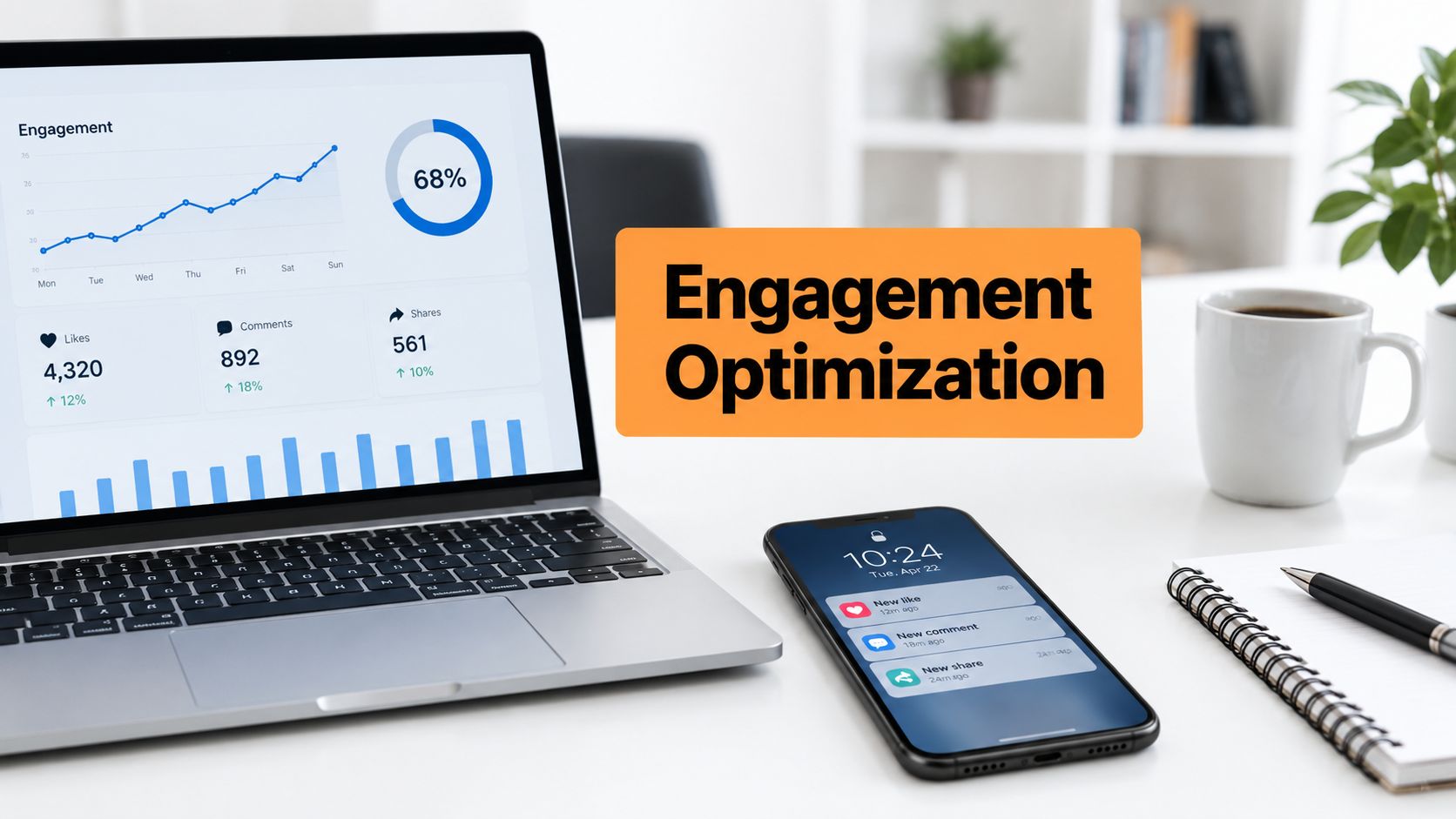
Many LinkedIn efforts stall out at this stage: people track impressions and likes, feel busy, and still can’t tell which content truly moved the needle. That’s frustrating because it hides the difference between content that gets seen and content that creates useful business outcomes.
Track metrics that can guide decisions
ContentIn’s framework for LinkedIn planning says high-impact calendar templates should include 12 core operational attributes, including performance metrics tracking such as engagement rate, impressions, clicks, and comment rates. The same source recommends setting specific KPIs, such as “boost comment rates by 25% in 30 days,” instead of vague goals.
That’s the right idea. Specific targets force better analysis.
A practical scorecard might include:
- Comment rate to judge conversation quality
- Clicks if the post includes a link or offer
- Profile views to see whether content increases curiosity
- Direct messages or replies if relationship-building matters more than reach
Use the data to change the calendar
The point of measurement isn’t reporting. It’s adjustment.
If storytelling posts consistently start better discussions than tactical lists, put more story-driven ideas into next month’s plan. If carousel breakdowns hold attention better than plain text, shift more of your educational content into that format. If one pillar gets polite engagement but never leads to profile interest or meaningful conversations, cut it back.
You don’t need a complicated attribution model to improve. You need a simple review habit. Look at the posts, compare by pillar and format, and make one or two changes at a time.
The best content systems aren’t rigid. They evolve.
If you want a faster way to turn ideas into a usable LinkedIn system, RedactAI helps with drafting, scheduling, and reviewing post performance in one workflow. It’s a practical option for professionals who want more consistency without spending their week inside a spreadsheet.