Want to use LinkedIn to actually build your network? It all starts with turning your profile from a static, digital resume into something that pulls people in and makes them want to connect with you. This isn't just about listing your job history; it's about crafting a powerful first impression, finding the right people, and starting real conversations.
Your Profile Is Your First Impression

Before you even think about sending a connection request, you have to get your own house in order. Your profile is your digital handshake, and honestly, most people get it wrong. They treat it like a dusty CV they updated once in 2021. That’s a huge missed opportunity.
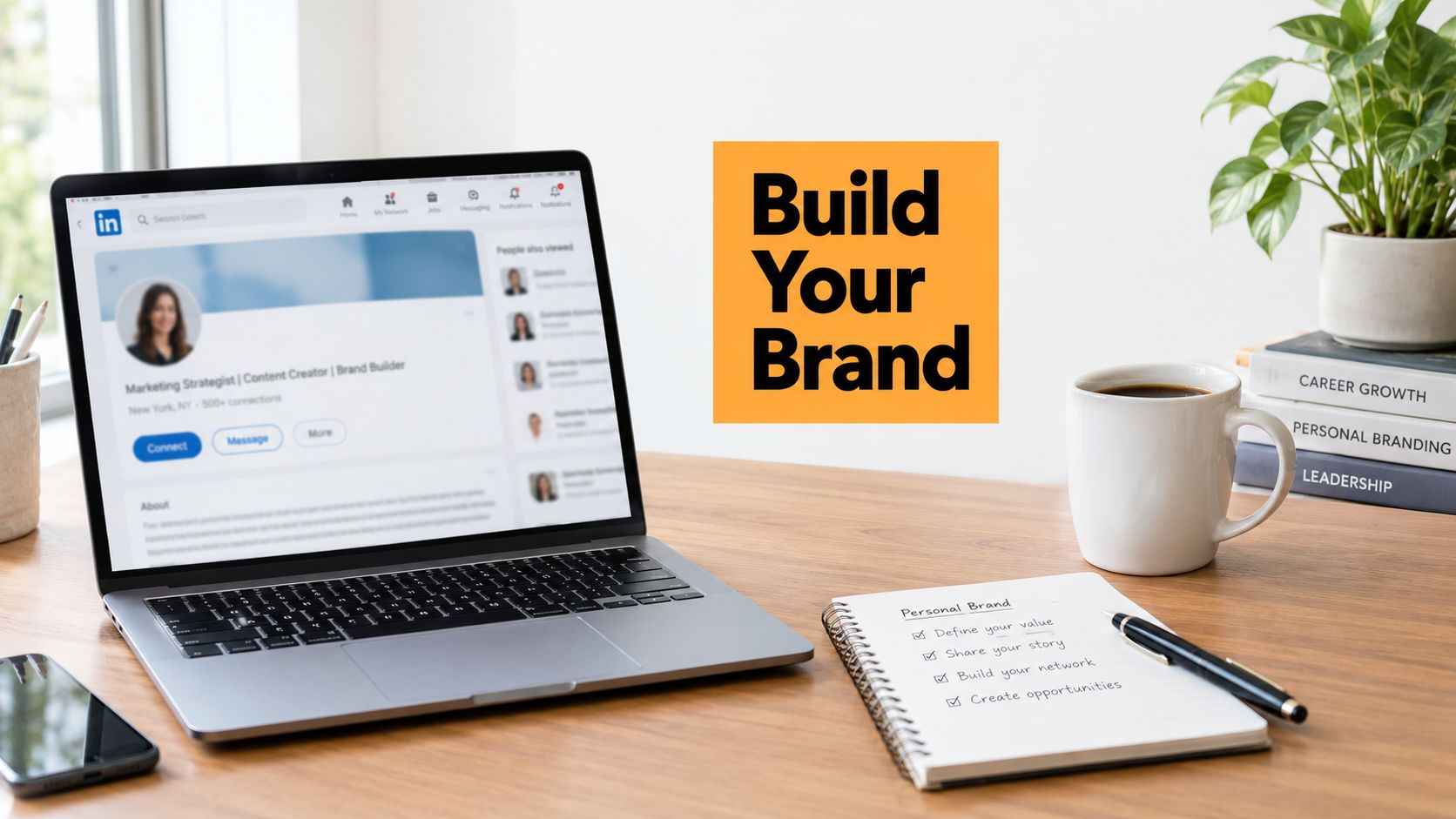
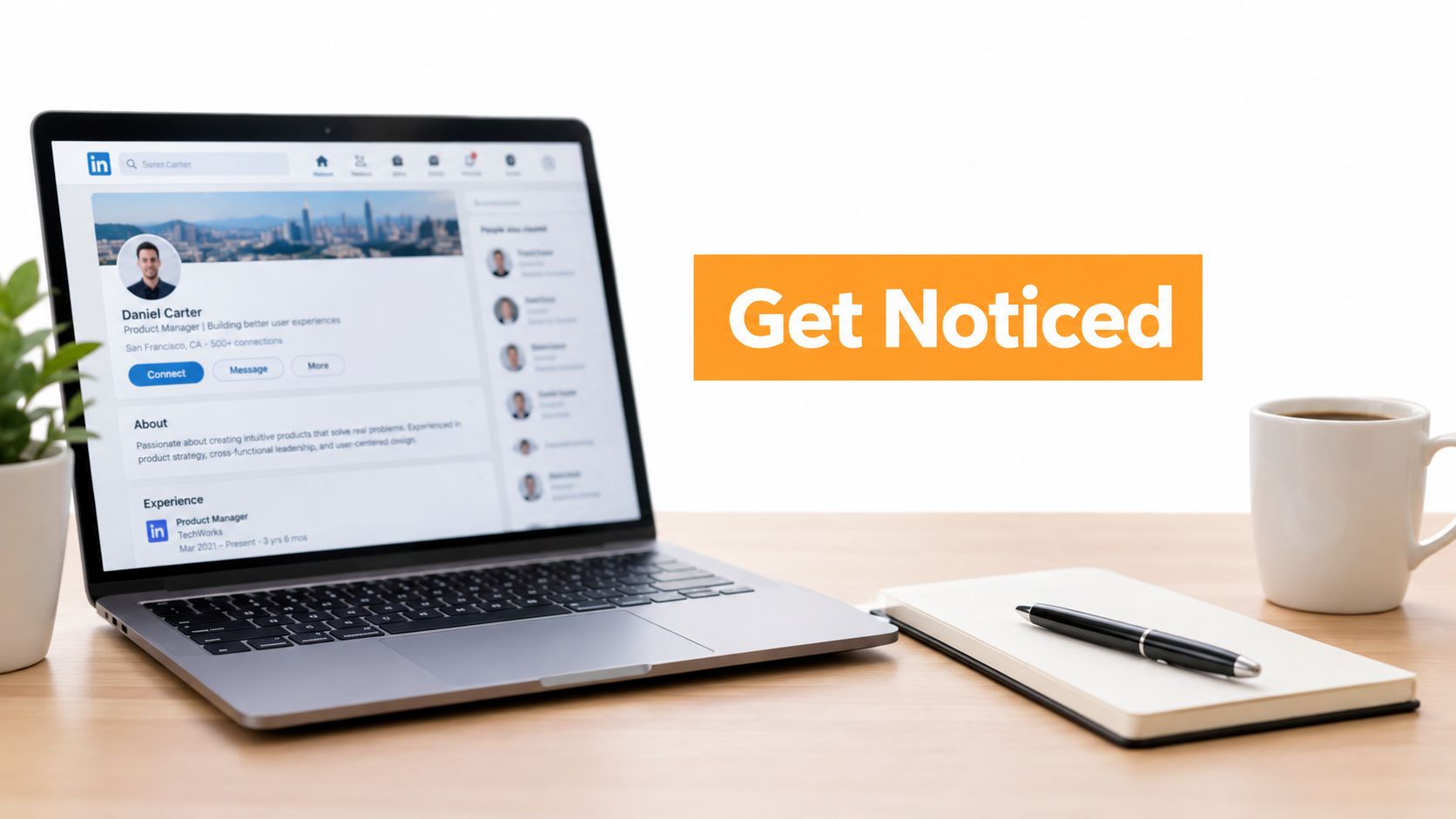
Think about it: when someone lands on your page, you have just a few seconds to show them who you are, what you’re about, and why you’re worth knowing. Your profile is your personal branding headquarters. It starts with the basics—a professional (but still approachable!) profile picture and a background banner that hints at your industry or what you do.
We’ve got a full deep-dive on this, so for all the nitty-gritty details, check out our complete guide on how to optimize your LinkedIn profile for the best results.
Craft a Headline That Tells a Story
Your headline is prime real estate. It's one of the first things anyone sees, right under your name. Please, don't just put your job title and call it a day. Use this space to tell a mini-story about the value you provide. Who do you help? What problems do you solve?
- Instead of: "Marketing Manager at XYZ Company"
- Try: "Marketing Manager Driving B2B SaaS Growth | SEO & Content Strategy | Helping Tech Startups Increase Lead Generation"
See the difference? The second one is packed with keywords that help you show up in searches, and it immediately tells a prospect or peer what you can do for them. It’s compelling.
Write a Compelling About Section
This is where you get to show a little personality. Ditch the stuffy, third-person bio that sounds like a robot wrote it. Write in the first person ("I," "my") and tell a quick story. What's your professional mission? What gets you excited to go to work in the morning?
Don't be afraid to break up the text. Short paragraphs and bullet points are your friends here—they make it so much easier for people to scan.
Your LinkedIn profile isn't just a record of your past; it's a signal of your future. It should clearly show where you're going and invite the right people to join you on that journey.
And don't forget to wrap it up with a clear call to action. What do you want people to do next? Invite them to connect, drop your work email, or link to your portfolio. Make it easy for them.
To get your profile in top shape, run through this quick checklist. It covers the essentials for making sure you're ready to start connecting.
LinkedIn Profile Optimization Checklist
| Profile Element | Optimization Goal | Actionable Tip |
|---|---|---|
| Profile Picture | Look professional and approachable. | Use a high-quality headshot where you're smiling and making eye contact. No party pics! |
| Banner Image | Visually represent your brand or industry. | Create a custom banner with a tagline, your company logo, or an industry-relevant image. |
| Headline | Grab attention and communicate value. | Go beyond your job title. Include keywords about what you do and who you help. |
| About Section | Tell your professional story. | Write in the first person, keep it conversational, and end with a clear call to action. |
| Featured Section | Showcase your best work. | Pin your top 2-3 pieces of content, like a blog post, case study, or portfolio link. |
| Experience | Detail your accomplishments, not just duties. | Use bullet points with quantifiable results (e.g., "Increased sales by 25% in 6 months"). |
| Skills | Get endorsed for your core competencies. | Add at least 5 key skills and ask colleagues for endorsements to add social proof. |
Once these elements are dialed in, your profile will do the heavy lifting for you.
Finally, put that 'Featured' section to work! This is your personal highlight reel. Pin your proudest articles, a link to your portfolio, or your company's website. It’s a super effective, visual way to prove your expertise and give new connections a reason to hit 'accept' and start a conversation.
Finding the Right People to Connect With

Let's be real: effective networking on LinkedIn isn't about racking up the most connections. It's about building a community that actually matters. Firing off hundreds of generic requests is a fast track to getting ignored or, even worse, flagged as spam. The real power is in carefully finding the right people.
You have to shift your entire mindset from quantity to quality. Think of it this way: 5 meaningful connections who know and respect you are infinitely more valuable than 50 who have no idea who you are. The aim is to build a "Real Network"—people you have a genuine professional reason to know—not just a bloated contact list.
Master LinkedIn Search Filters
The LinkedIn search bar is your best friend for this, but most people only use about 10% of its power. Don't just type a job title and call it a day. Click on "All filters" next to the search bar to open up the advanced search panel. This is where the magic really happens.
You can get incredibly specific. Try zeroing in on people based on:
- Past Companies: A fantastic way to find folks who worked at a company you admire or are targeting.
- Schools: Your university’s alumni network is a goldmine. Don't sleep on it.
- Keywords: Search for specific skills, software (like "HubSpot" or "Figma"), or industry jargon that appears on their profiles.
- Connections of: See who your key contacts know. It's a great way to get a warm introduction.
This level of detail lets you find people who truly align with your goals, not just those with a certain title. If you want to get even more granular with this, our guide on how to identify your target audience can help you dial this in.
Identify Your Dream 100
A brilliant way to focus your energy is to create what I call a "Dream 100" list. This is your hand-picked list of 100 high-value people you genuinely want in your professional circle. These aren’t random names; they are the decision-makers, mentors, peers, or potential clients who could make a real difference in your career.
Once you’ve found someone for your list, do not immediately hit that "Connect" button. This is where you need to do a little homework. Spend five minutes on their profile.
What did they post about recently? Did they write an article or leave a thoughtful comment? Look for common ground—a shared connection, a mutual interest, or even a recent company win they mentioned. This tiny bit of research is what turns a cold request into a warm introduction.
This simple act shows you’ve done more than just scan a list of names; it proves you've taken a genuine interest in who they are. Trust me, it dramatically increases your chances of getting that request accepted and, more importantly, starting a real conversation.
How to Write a LinkedIn Connection Request That Actually Works
So, you’ve polished your profile and tracked down the perfect people to connect with. This is the moment of truth. Don't blow it by using that default, "I'd like to add you to my professional network on LinkedIn" message.
Seriously, that button is where good intentions and potential opportunities go to die. It's lazy, it’s impersonal, and it gives the other person zero reason to care.
Your goal here isn't just to rack up another connection. It's to start a real conversation. A personalized note is your first, best chance to show you're a human who's actually paying attention. The golden rule is simple: make it about them, not you.
The Secret to Getting a "Yes"
A great request is short, genuine, and gives a clear reason for reaching out. You have to do all of this within LinkedIn's character limit, so think of it as a friendly, respectful tap on the shoulder.
You need to immediately answer the question that’s in their head: "Why me?" Answering that one question is what separates a thoughtful request from spam.
It boils down to this:
- Start with your shared context or the "why."
- Add a quick, genuine compliment if it feels right.
- End with a simple ask to connect.
This approach shows you see them as a person, not just another number to add to your network count.
Real Examples That Get Results
Let's make this real. The most powerful tool you have is context. Generic compliments are forgettable, but a specific reference builds an instant bridge.
When you saw them speak at an event:
"Hi Alex, I loved your talk on building remote team culture at the Future of Work summit yesterday. Your point about asynchronous communication really resonated. I’d love to connect and follow your work."
When you love their content:
"Hi Maria, I've been following your posts on product marketing for a few months and always get so much value from them. Your recent carousel on go-to-market strategy was brilliant. Would be great to connect."
When you have a mutual connection:
"Hi David, I see we're both connected to Sarah Chen. I work with her at RedactAI and she's spoken highly of your expertise in UX design. I'm also in the UX space and would appreciate the chance to connect."
My two cents: Your connection request is their first impression of you. Be polite, be respectful, and be clear. That’s it.
Think of it this way: sending a good connection request is a basic skill, much like understanding proper email etiquette at work. For even more ideas, check out our guide on writing the perfect LinkedIn message for connecting with literally anyone.
And please, for the love of all that is good, know what not to do. Never, ever go in with a hard sales pitch or an immediate ask for a job. That's the professional equivalent of asking someone to marry you on the first date. The whole point of this first message is to open the door, not to slam it shut by being too aggressive.
Using Content to Nurture Your Network

Getting that "connection accepted" notification isn't the finish line. Honestly, it's just the starting gun. The real work—and the real magic—of LinkedIn networking happens right in the feed long after that initial outreach. This is your chance to stop chasing connections and start attracting them.
Think of it as playing the long game. Instead of only showing up when you need something, you're building a reputation as a go-to, insightful voice in your industry. Your content becomes your best employee, working 24/7 to show people what you’re all about and keeping you top-of-mind.
This doesn't mean you need to become a full-time content creator. It’s just about sharing what you know in a way that feels authentic to you. The goal is simple: become a familiar, trusted name, so when an opportunity comes up, you're the first person they think of.
Find Your Content Rhythm
Consistency is everything, but don't confuse it with frequency. You don’t need to post every day. Aiming for 2-3 high-quality posts per week is a fantastic and, more importantly, sustainable goal. It keeps you visible without burning you out.
So, what on earth do you post? It's simpler than you might think. Just share what's on your mind.
- Did you learn something cool from a recent project? Share it.
- Have a strong opinion on a new industry trend? Post your take.
- Found a little trick that made your work easier? Write a quick tutorial.
- Stumped by a problem? Ask your network for help.
The golden rule is to give more than you take. When you consistently put value out there, people can't help but pay attention.
Your LinkedIn content is your living, breathing portfolio. It's real-time proof of your expertise and a direct reflection of your professional generosity. Every post is another breadcrumb that shows your network who you are and what you care about.
If you ever feel stuck, tools like RedactAI can be a lifesaver. You can plug in a few keywords, and it helps you brainstorm post ideas that sound like you. It’s a great way to beat writer’s block and turn a fleeting thought into a solid post.
Mix Up Your Formats
Don't fall into the trap of only posting long blocks of text. LinkedIn’s algorithm—and its users—love variety. Different formats grab different people's attention and help your message land more effectively.
Experiment with these to see what your network enjoys most:
- Text-Only Posts: Absolutely perfect for telling a story, sharing a personal opinion, or asking a big question. They feel intimate and are super quick to read on the go.
- Carousels (PDFs): These are my favorite for breaking down a complex idea into simple, swipeable slides. Think of them as mini-presentations for the feed.
- Polls: An incredibly easy and effective way to get people talking and gather instant feedback from your professional circle.
- Images & Short Videos: Nothing adds a human touch like a photo from an event, a behind-the-scenes shot of your workspace, or a quick video update.
With over 1.15 billion members on the platform, and 80% of professionals agreeing that networking is vital to their careers, playing the content game is a no-brainer. To really understand the scale of this opportunity, you can explore the full breakdown of LinkedIn statistics and how they translate to real-world career growth. By sharing great content, you’re not just posting—you’re building a powerful magnet for opportunity.
Building Relationships Beyond the Connection Request

Here's a hard truth: getting someone to accept your connection request is not the finish line. It’s the starting gun. The biggest mistake I see people make on LinkedIn is letting that new connection go completely cold. You’ve done the work to get in the door; now it’s time to actually build a relationship.
This is where you stop being just another name in their list of 500+ connections and become a familiar, valued contact. It all comes down to a simple mindset shift. Stop thinking, "What can I get from this person?" and start asking, "How can I give something of value?"
That small change is where the magic happens—it’s what leads to the referrals, insights, and opportunities you were hoping for in the first place.
Stay Top of Mind Without Being Annoying
You don't need to do anything over-the-top to be memorable. It’s all about small, consistent gestures that keep you on their radar in a positive way.
Here are a few simple habits I’ve found make a huge difference:
- Engage with intention. Don’t just be a drive-by "liker." Drop a real comment on their post that adds to the conversation. Ask a smart question, share a quick personal insight, or tag someone else who might find it useful. It shows you’re actually reading, not just scrolling.
- Celebrate their wins. LinkedIn practically hands you these opportunities on a silver platter with notifications for new jobs and work anniversaries. A quick, genuine, "Huge congrats on the new role, Jane! They’re lucky to have you," is an easy and appreciated touchpoint.
- Be a resource. Come across an article, a podcast, or a cool tool you think they’d genuinely appreciate? Send it their way with a short note. A simple, "Hey, saw this piece on project management tools and immediately thought of you," shows you're thinking about their world.
Systemize Your Follow-Up
Look, you can't rely on your brain to remember the important details about hundreds of people. It's impossible. So, create a simple system. I'm talking a basic spreadsheet, a Trello board, or your CRM—whatever works for you.
For your top 20-30 most important contacts, jot down a few key things:
- Their current company and role
- What they're interested in or the challenges they talk about
- A quick note on how you met or what you last discussed
- The date of your last chat
Remember, a digital connection is just the beginning of a real connection; it should not be the end of it. The follow-up is where the true relationship is forged.
This isn't about being a stalker; it's about being organized and thoughtful. After connecting, don't let the momentum die. A great way to stay on track is to use a post-networking follow-up checklist to keep the conversation going. Even a simple calendar reminder to reach out to a key contact once a quarter can be a game-changer.
Taking the Conversation Offline (or to a Call)
While LinkedIn is a fantastic tool, the real goal is often to build a connection that can exist outside the platform. Once you’ve built a bit of rapport through comments and messages, look for a natural opening to take the next step.
For instance, if you’ve had a good back-and-forth in the comments of their latest post, you could slide into their DMs with something like this:
Example Follow-Up Message
"Hey Mark, really enjoying our chat about AI in marketing. I've got a few more ideas on this I'd be happy to share. Would you be open to a quick 15-minute virtual coffee next week to trade notes?"
This approach works because it's low-pressure, specific, and respects their time. You're suggesting a fair trade of ideas, not asking for a one-sided favor. By showing genuine interest and consistently taking these small actions, you’ll turn a list of digital contacts into a powerful, real-world network.
Common Questions About LinkedIn Networking
Alright, let's tackle a few of the questions I get asked all the time about LinkedIn networking. These are the little hesitations that can stop you in your tracks, but once you have a game plan, they're easy to overcome.
We all get a little bit in our heads, especially when it comes to putting ourselves out there. You worry about spamming people, or worse, posting to an audience of zero. Let's clear the air.
How Often Should I Post to Stay Visible?
Look, consistency will always beat frequency. It's not about throwing something up every single day just to say you did.
A fantastic goal for most people is 2-3 high-quality posts per week. The whole point is to share a unique perspective or start a real conversation, not just to check a box.
If that sounds like a lot, don't sweat it. This is where a little bit of planning makes all the difference.
The most impactful LinkedIn networking comes from providing consistent value, not from random bursts of activity. It’s about building a reputation one thoughtful post and interaction at a time.
Honestly, this is where tools can be a lifesaver. Something like RedactAI can give you post ideas and even drafts that sound like you, which helps you keep a steady presence without it becoming a second job. The key is finding a rhythm that you can actually stick with.
Is It Strange to Connect with Strangers?
Not at all. In fact, that’s literally what LinkedIn was designed for—to help you build a professional circle beyond the people you already know.
The catch? You have to be thoughtful about it. A blank connection request just screams "lazy" and is the fastest way to get ignored.
A quick, personalized message is all it takes to change the game. It shows you took 30 seconds to see who they are and that you respect their time. Give one of these a try:
- Shared Field: "Hi [Name], I'm also in the digital marketing space and was impressed by your recent article on SEO trends."
- Career Path: "Hi [Name], I really admire your career journey from sales into product management. As someone looking to make a similar shift, I'd love to connect."
- Mutual Connection: "Hi [Name], I see we're both connected to Sarah Smith. She's spoken highly of your work in the past."
See? It’s not a random request anymore. It’s a professional introduction with a purpose.
How Do I Transition to a Call or Meeting?
This is all about timing and not being pushy. Once you’ve built a little bit of rapport—maybe you've been chatting in the DMs or you've been commenting on their posts—you need to look for a natural opening.
Don't force it. Wait for your moment. If they post about a specific business challenge or mention one in a message, that's your signal.
You could slide in with something like, "That's a problem I've worked on before. Would you be open to a quick 15-minute chat next week? I might have a few ideas to share."
The magic here is proposing a clear purpose and a short, specific time. It makes saying "yes" a no-brainer because you're offering a low-commitment, high-value exchange.
Tired of the "what do I even post?" headache? If you're ready to build a real presence on LinkedIn without the stress, RedactAI can help. Our AI-powered tool generates high-impact post drafts that sound just like you, so you can stay consistent and grow your network on autopilot. Start creating with RedactAI today.