Ever scroll through your LinkedIn feed and wonder how certain people just seem to command attention? It's not magic, and it's definitely not luck. They aren't just shouting into the void; they have a game plan.
Those top voices you see have figured out how to turn their profile from a static online resume into a dynamic hub for their ideas and expertise. This guide is your roadmap to doing the exact same thing.
Your Path to LinkedIn Influence
Let's get one thing straight: becoming an "influencer" on LinkedIn isn't about racking up followers for the sake of it. It's about earning the trust of a specific audience by being genuinely helpful, day in and day out.
The game has changed. LinkedIn's algorithm in 2026 is smart. It doesn't just reward you for posting a lot; it rewards you for being a credible, consistent voice on a specific topic. The platform wants to know what you’re an expert in and if people actually trust what you have to say about it.
The Core Pillars of Influence
Building real influence boils down to focusing on a few key areas that all work together. When you nail these, you create a powerful cycle that pulls in the right followers, sparks real conversations, and opens doors you never even knew were there. This isn't about chasing vanity metrics—it's about building a real asset for your career.
To give you a clear framework, I've broken down the strategy into its essential parts. Think of this table as your quick-glance guide to what really matters.
| Pillar | Actionable Goal | Why It Matters |
|---|---|---|
| Niche & Perspective | Own a specific topic and develop a unique point of view on it. | Trying to be everything to everyone makes you nothing to anyone. Specificity builds authority. |
| Magnetic Personal Brand | Turn your profile into a compelling "landing page" for your expertise. | Your profile is often the first impression. It needs to clearly answer: "Who are you and why should I listen?" |
| Consistent Content Engine | Create and share valuable content that solves problems on a predictable schedule. | Your content is how you deliver value at scale. Consistency builds trust and keeps you top-of-mind. |
| Active Community Building | Engage in meaningful conversations in your comments and across the platform. | Influence is a dialogue, not a monologue. Building relationships is how you create a loyal community. |
This framework is the foundation. Every successful LinkedIn creator, whether they realize it or not, is operating within these pillars.
The creators who will matter most on LinkedIn won't be the ones who posted the most, but the ones whose thinking people relied on. True influence is built through trust, not volume.
Ultimately, this is about making the shift from being a passive consumer of content to being a recognized authority who creates it. This guide will walk you through exactly how to do that, step-by-step.
Ready to get started? Let's dive in.
Build a Brand That Attracts Your Ideal Audience

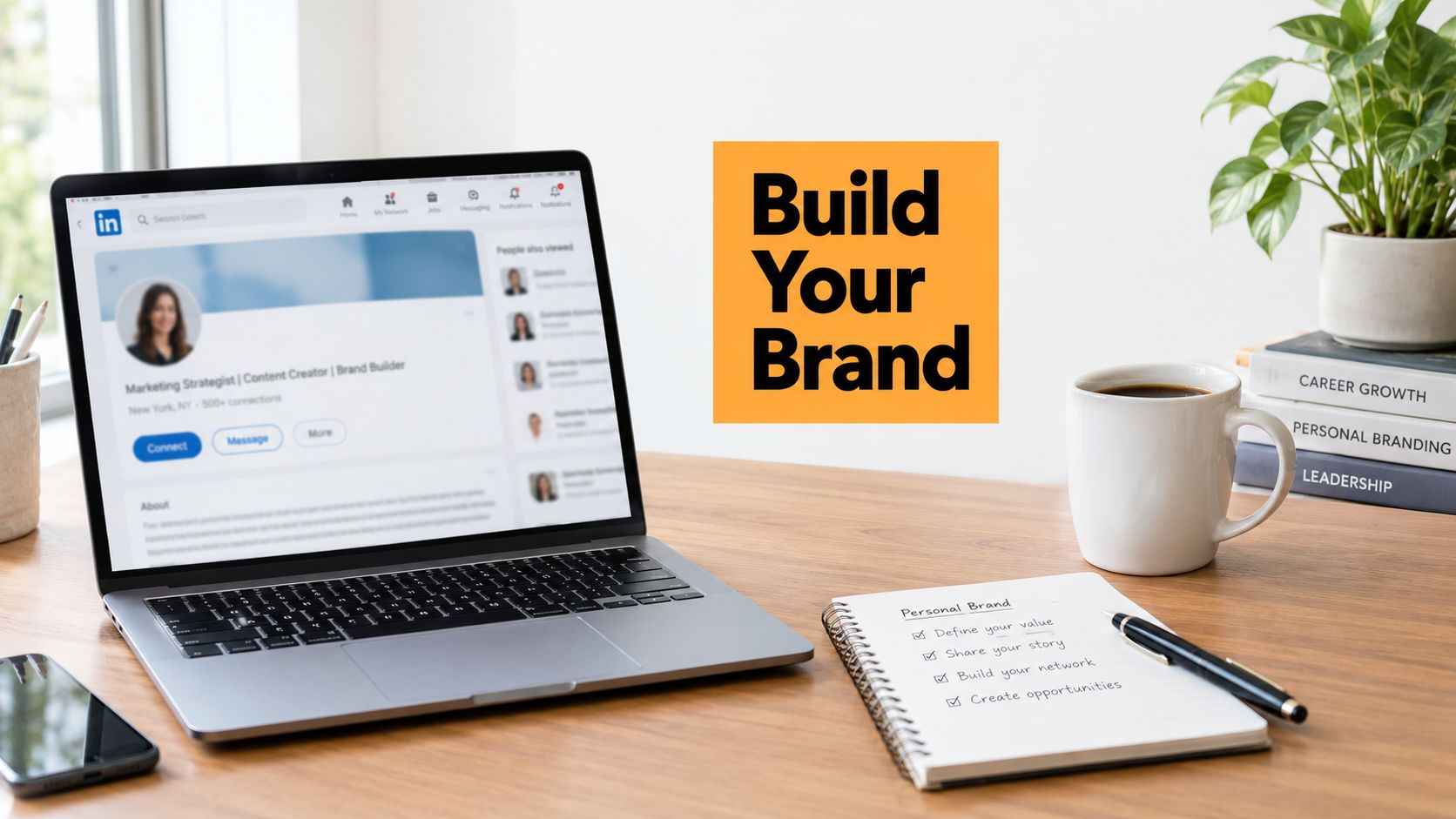
Let's get one thing straight: your LinkedIn profile is not a resume. It’s your personal landing page, your digital storefront. And when someone new lands there, they’re asking themselves one simple question: "Why should I listen to you?"
Your profile needs to answer that question, and fast.
Most people fill out their profile once and let it collect digital dust. Influencers, on the other hand, are constantly tweaking and refining theirs to tell a powerful story. It's about moving beyond a stale job title and a bulleted list of tasks.
Define Your Unique Value Proposition
Before you even think about writing posts, you have to get brutally honest about what you want to be known for. If you try to be an expert in everything, you end up being known for nothing. The goal is to find that sweet spot—the intersection of what you're genuinely great at and what a specific audience is desperate for.
For instance, calling yourself a "sales expert" is a surefire way to blend into the background. There are thousands of them. You need to get specific and focus on the results you create.
- Generic: "I help sales teams close more deals."
- Specific: "I help RevOps leaders at mid-market SaaS companies reduce new-hire ramp time by 40% using automated playbooks."
See the difference? That kind of clarity is a magnet for the right people and a filter for the wrong ones. To truly build brand awareness online, you have to get this specific with your niche.
Your personal brand is what people say about you when you're not in the room. On LinkedIn, your profile does the talking for you, 24/7. Make sure it's saying the right things.
Once you’ve nailed your value proposition, you can start weaving it through your entire profile. Every section should reinforce your expertise and build instant trust. If you want to dive deeper, our guide on how to develop a personal brand gives you the complete playbook.
Optimize Your Profile for First Impressions
You've got about three seconds. That's it. In the time it takes someone to blink, they’ve already made a snap judgment about you. Luckily, you have a few key areas to grab their attention and make them want to stick around.
1. The Profile Picture and Banner This is non-negotiable. Get a high-quality headshot where you look professional but also like a real human being—friendly and approachable. No blurry vacation photos, please. And that banner image? That's your personal billboard. Use it to show what you do, add your tagline, or communicate your core value visually.
2. The Headline Your headline is the most valuable real estate on your entire profile. It follows you everywhere—into comments, connection requests, and search results. Don't waste it on just your job title. Use a simple formula: Who you help + What you help them do.
3. The "About" Section Your "About" section isn't a biography; it's the start of a conversation. Hook people immediately with a relatable problem or a bold statement. Then, share a bit of your story—your "why"—and explain how you get results for the people you serve. Always wrap up with a clear call to action, inviting them to follow you or connect for more insights.
Transforming these elements from static info into a compelling narrative is the first real step to building a following. It’s the foundation you need before you can even think about becoming a LinkedIn influencer.
Create Content That Stops the Scroll

Alright, your profile is polished and your brand is dialed in. Now for the fun part—the engine of your entire LinkedIn presence: your content. This is where you move from just having a nice profile to actually building influence.
Forget generic company news or chasing trends. Real influence comes from making people pause their endless scrolling and actually think. Every single post is a new opportunity to build trust, share what you know, and spark a real conversation.
So, what do you talk about? It's the question that paralyzes most people. The secret isn't some complex content matrix; it's you. Your best content is already there, hiding in your experiences, your biggest blunders, and the lessons you learned the hard way.
Weave Your Expertise into Stories
The most magnetic posts I see all have one thing in common. They follow a simple, powerful structure: Story + Lesson. People lean in for the story, but they remember the lesson.
This is how you share what you know without sounding like a walking textbook. Instead of just dropping a fact on your audience, you anchor it in a moment they can relate to.
Let me show you what I mean:
- The Story: "I once blew a seven-figure deal because I was too scared to ask one uncomfortable question on the final call."
- The Lesson: "That failure taught me that growth only happens on the other side of discomfort. Now, here’s the exact question I ask in every negotiation to uncover what's really holding them back."
See the difference? This isn’t just advice; it's a vulnerable look behind the curtain. Your audience sees you’ve been in the trenches, messed up, and came out smarter. That's how you build real authority.
The content that truly resonates isn't recycled advice. It’s born from your lived experience. Your unique journey, your specific failures, and your personal wins are your most valuable content assets.
Don't just tell people what to do. Show them why it matters by wrapping your advice in a narrative they can’t help but see themselves in. This is how you become a LinkedIn voice that people genuinely trust.
Master Different Formats to Keep Things Fresh
While a great text-only story is a powerful tool, you can't rely on it every day. Mixing up your content formats keeps your feed from getting stale and helps you connect with people in different ways.
Here are a few formats that absolutely crush it on LinkedIn right now:
- Myth-Busting Threads: Take a common piece of industry "wisdom" and tear it apart. Start with a hook that grabs them, like, "Everyone says you should do X. Here's why that's terrible advice." Then, use a simple numbered list to lay out your case.
- Behind-the-Scenes Carousels: Use a PDF carousel to walk people through a process, a framework, or even a "day in your life." It’s perfect for taking a complex idea and making it easy to digest, one slide at a time.
- Provocative Polls: Ask a genuinely interesting question about your niche. The key is to add your own context in the post and promise to share your take on the results, which drives conversation in the comments.
The trick is to let the message pick the format. A complex framework begs for a visual carousel, while a spicy opinion is perfect for a text-based thread. If you're looking for more advanced techniques, our guide on how to create viral content is packed with ideas.
Build a System for Consistency
A one-off viral post is great for the ego, but it won't build a following. True influence is built brick by brick, post by post. You need to show up consistently to stay on your audience's radar and signal to the LinkedIn algorithm that you're a creator to watch.
How often is "consistent"? An analysis of top LinkedIn influencers found the sweet spot. They publish an average of 21.2 posts over four weeks—that’s about 4-5 posts per week.
Posting that frequently sounds exhausting, but it’s not if you have a system. Don't try to come up with a brilliant idea and write it from scratch every single day. Instead, work smarter:
- Batch your ideas. Spend one focused hour a week just dumping all your ideas, observations, and stories into a doc.
- Batch your writing. Block out a couple of hours to turn those raw ideas into polished drafts for the week ahead.
- Schedule everything. Use a scheduling tool to load up your posts so they go live at the best times, even when you're busy.
This approach eliminates the daily panic of "what do I post today?" and lets you focus your energy on creating quality stuff. This is where a tool like RedactAI becomes a game-changer. It can help you draft posts tailored to your expertise and profile, making it so much easier to hit that crucial 4-5 post-per-week cadence without burning out.
Grow Your Network and Engage Your Community

Look, creating great content is only half the battle. If you’re just posting and logging off, you’re missing the entire point of a social network. That's a fast track to burnout with very little to show for it.
Real influence isn’t about shouting into the void; it's about starting conversations. You have to move from being a broadcaster to being a community builder. It’s all about creating real relationships, one comment and one connection request at a time. This is how you turn followers into a genuine tribe that actually cares what you have to say.
The Power of Proactive Engagement
One of the most effective—and most overlooked—growth tactics on LinkedIn has nothing to do with your own posts. It’s commenting.
Think about it. When you post, you’re reaching people who already follow you. But when you drop a thoughtful comment on someone else’s post, you’re instantly getting in front of their audience. It's like a mini guest appearance. You get to showcase your expertise, add value, and give people a reason to click back to your profile. This is how you build a name for yourself before you even have a big following.
So, how do you write comments that people actually notice? Ditch the "great post!" and "thanks for sharing!" fluff. That's just noise. Instead, try one of these moves:
- Tell a mini-story. Connect the post to a quick personal experience. "This is so true. It reminds me of a project where we hit a similar snag, and the one thing that pulled us through was..." This makes you relatable and memorable.
- Offer a different angle. Respectfully challenge the idea or add a fresh perspective. "Interesting take. I’ve actually seen the opposite happen when you factor in..." This positions you as a critical thinker, not just an echo.
- Drop a practical tip. Add a piece of actionable advice that builds on their point. "Love this framework. To take it a step further, I'd suggest trying..." This proves your expertise by giving value away for free.
By showing up consistently in the comments of other thought leaders in your space, you put yourself on their level. It’s a powerful shortcut to getting on the right people's radar.
The fastest way to build your own audience is to borrow someone else's. Strategic commenting puts your name and expertise in front of hundreds or thousands of relevant professionals who have never heard of you.
This kind of active participation signals to both the algorithm and to other people that you’re a key player in your field. If you really want to dig into building your audience, we break down even more strategies in our guide on how to get more LinkedIn followers.
Foster a Thriving Community on Your Posts
Once people start dropping comments on your content, your work isn’t done—it’s just getting started. Your comment section is your personal forum, and the way you manage it has a huge impact on your reach.
Don't just "like" a comment and walk away. Every comment is an opportunity to go deeper. When you reply with a thoughtful question or another piece of insight, you encourage more people to chime in. The LinkedIn algorithm absolutely loves to see this back-and-forth, and it will show your post to more people.
Quality always trumps quantity here. Top influencers aren't posting five times a day; they average 4-5 posts weekly and see much higher engagement, often in the 2-5% range. A format that works incredibly well for this is the 'story + lesson' post. Recounting a career misstep and the insight it gave you is a natural way to get others to open up and share their own stories in the comments.
Your goal is simple: make people feel heard. When you do that, they'll keep coming back. They'll start looking for your content and become your biggest advocates. That’s how you turn a passive audience into an active community.
Alright, let's talk about the endgame. You're putting in the work, posting consistently, and connecting with people. But how do you actually know if it's moving the needle?
If you're serious about this, you can't just post and pray. You have to look at the data to see what’s truly connecting with people and what’s falling flat. This isn't about stroking your ego with vanity metrics; it's about getting smart with your strategy.
Focus on Metrics That Actually Matter
It's easy to get lost in a sea of numbers on your LinkedIn dashboard. Forget most of them. A few key metrics will tell you almost everything you need to know about whether you're on the right track.
These are the signals that show you're building real authority, not just making noise.
- Engagement Rate: This is your pulse check. It's the percentage of people who saw your post and actually did something—reacted, commented, or shared it. If you're hitting an engagement rate of 2-5%, you're doing something right. That’s a strong signal your content is resonating.
- Comments per Post: Reactions are nice, but comments are gold. This is where you see if you're sparking real conversations and making people think. The LinkedIn algorithm loves this, and frankly, so should you. It’s a sign you’re building a community, not just an audience.
- Profile Views: Think of this as the "curiosity click." Did your post or comment make someone interested enough to check you out? A steady climb in profile views means your content is doing its job as a hook, pulling the right people into your world.
- Follower Demographics: Take a peek at the job titles, companies, and industries of your new followers. Are you attracting your ideal clients? Your peers? The people you actually want to talk to? This is the ultimate test of your niche targeting.
By keeping an eye on these numbers, you’ll start seeing patterns. You'll quickly figure out which topics, formats, and opening lines are your winners, so you can stop guessing and start doubling down on what works.
A post can get thousands of views and still be a total dud. True influence is measured by the quality of the conversation it starts, not just the quantity of eyeballs.
This feedback loop—create, measure, learn, repeat—is what separates the pros from the amateurs.
From Influence to Income
After you’ve built that recognizable brand and a community that trusts you, you've created something incredibly valuable: authority. People now look to you for guidance, and that’s the moment you can start monetizing your influence.
This isn’t about being a sellout. It’s the natural next step, offering more focused value to the people who are already listening. Think of your content as the front of your store, attracting people and showing them what you're about. Now, you can invite them inside.
Here are a few common ways people turn their LinkedIn presence into a real revenue stream:
- Consulting and Coaching: Inevitably, people will start sliding into your DMs asking for your specific expertise. This is your cue to offer one-on-one coaching, team workshops, or consulting projects that directly solve the problems you talk about in your posts.
- Paid Speaking Gigs: Once you're seen as an authority, companies and event organizers will take notice. They'll pay you to share your insights, whether it’s a keynote speech, a panel discussion, or a private corporate training.
- High-Quality Lead Generation: For most service-based professionals, this is the holy grail. Your LinkedIn activity becomes your best salesperson, consistently filling your pipeline with inbound leads who are already sold on your value before you even have the first call.
- Digital Products: Want to scale your expertise? Package it. Create an online course, an ebook, a paid community, or a premium newsletter. This lets you serve a much wider audience beyond the hours you have for one-on-one work.
The key is to make any offer a natural extension of the value you've been providing all along. You’ve earned the right to sell because you’ve spent months or even years giving away your best ideas for free. This is the ultimate payoff for all your hard work.
Your 90-Day LinkedIn Influencer Action Plan
Alright, let's get real. All the theory is great, but how do you actually do this? Building influence on LinkedIn doesn't just happen. It takes a focused effort, and I've found a 90-day sprint is the perfect way to build serious momentum.
Think of this as your game plan, not a rigid rulebook. Each phase builds on the one before it, turning your profile from a dusty resume into a go-to spot for your expertise. Let's walk through it, month by month.
Month 1: The Foundation
Your first 30 days are all about setting up shop and getting into a rhythm. The goal here is simple: establish your brand, figure out what you're going to talk about, and start posting consistently. This is the groundwork for everything else.
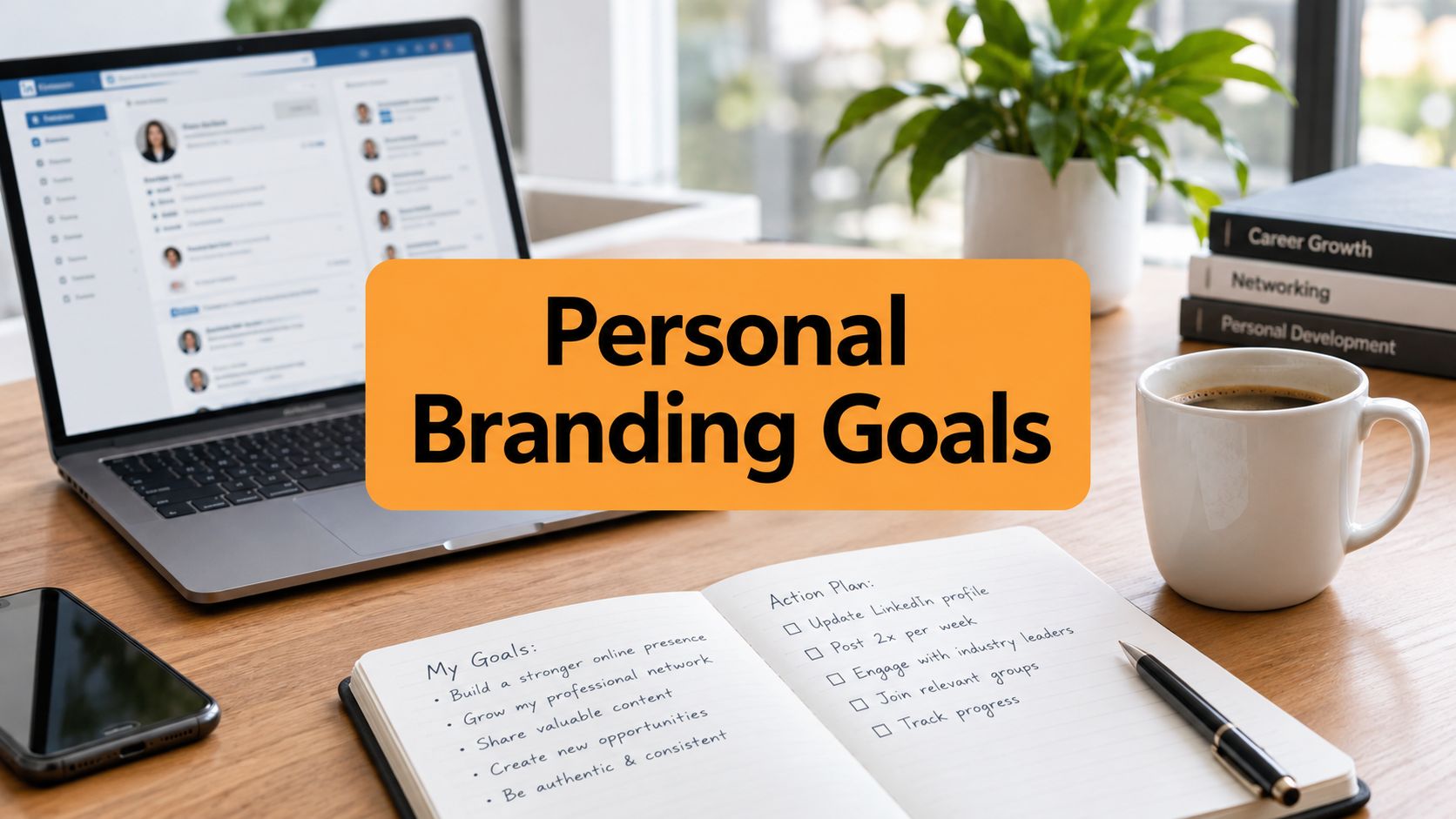
- Week 1: Profile & Brand Polish. Time for a full profile audit. Rewrite that headline so it's crystal clear who you help and what you help them achieve. Your "About" section needs to tell a compelling story, not just list your jobs. End it with a clear call to action. And please, get a professional headshot and a custom banner that screams your value.
- Week 2: Lock In Your Content Pillars. What are the 3-5 core topics you want to be known for? These are your content pillars. For each one, open up a doc and just start brain-dumping ideas, client stories, common mistakes you see, and your own unique takes. This document will become your best friend.
- Week 3: Start Shipping Content. The time for planning is over. It's time to post. Get 3 high-quality posts out the door this week. Try a mix of formats to see what feels right—maybe a text-only personal story, a thread busting a common myth in your industry, and a post with a simple graphic. Your only job is to provide value and spark a conversation.
- Week 4: Engage & Analyze. Block out 20 minutes every single day to leave thoughtful comments on posts from other interesting people in your space. At the end of the week, look at your own posts. Which one got the most comments? Which one sent people to your profile?
Don't sweat it if the numbers are tiny. Seriously. At this stage, your only goal is to be consistent and learn what your first few followers actually care about. The growth will come.
Month 2: Acceleration and Community
Okay, you've got a foundation. Now it's time to pour some gas on the fire. Month two is all about scaling what's working and turning those followers into a real community. You'll post more, engage harder, and really start to find your signature style.
- Weeks 5-6: Up the Cadence, Refine Your Style. Let's move up to 4 posts per week. Look back at last month's data—what format got the best reaction? Double down on that. If carousels are hitting, make another one. If personal stories are getting people talking, share another one.
- Weeks 7-8: Build Your Wolfpack. Your focus now shifts heavily to engagement. Reply to every single comment on your posts, and try to ask a follow-up question to keep the conversation going. On top of that, start proactively connecting with 5-10 new people in your target audience each day. Always, always include a personalized note.
Month 3: Authority and Monetization
By this point, you've got a system, a consistent flow of content, and a growing community that's actually listening. This final month is where you cement your authority and start looking at how to turn this influence into income.
This isn't some far-off dream; it's the natural next step once you start consistently measuring your impact and analyzing what resonates with your audience.

As you can see, monetization is the direct result of a systematic process. You measure, you analyze, and then you monetize.
- Weeks 9-10: Drop an Anchor Post. It's time to create a piece of "anchor" content. This is your big-ticket item—a super-detailed carousel, a comprehensive guide, or a valuable framework you've developed. It’s a high-effort post designed to get bookmarked and shared widely.
- Weeks 11-12: Open for Business. As you build authority, the inbound DMs will start coming. Be ready. Figure out your first offer. It could be as simple as a 60-minute consulting call, a small coaching package, or a paid workshop. Your influence is now creating real business value.
I know, juggling all this—from coming up with ideas to scheduling posts and digging through analytics—is a lot. This is where a tool like RedactAI can act as your co-pilot through this 90-day plan. It can help you brainstorm on-brand post ideas, draft content that still sounds like you, and get everything scheduled so you never miss a beat. It’s about taking the guesswork out of the process so you can focus on building influence faster.