Posting cadence is the regular rhythm or frequency of publishing content, usually measured in posts per day or week. On LinkedIn, moving from 1 post per week to 2–5 posts per week can lift impressions by an estimated +1,182 per post and engagement rate by +0.23 percentage points.
That sounds like a simple argument for posting more. It isn't.
The popular advice, “just be consistent,” leaves out the decision that matters most: consistent for whom, at what stage, and for which goal? A founder building recognition, a sales professional nurturing prospects, and a company page promoting products shouldn't automatically use the same publishing rhythm.
Cadence works when it matches your capacity and your audience's expectations. It fails when you treat a weekly number as a quota, publish in bursts, or create more content than you can sustain. The practical question isn't only how often you should post. It's how to build a repeatable system that supports reach, trust, or leads without flattening your voice.
Redefining Posting Cadence Beyond Frequency
Most creators define cadence as a tally. They choose three posts per week, five posts per week, or daily publishing, then judge the strategy by whether they hit the number. That definition is technically correct, but strategically incomplete.
Posting cadence means the regularity and frequency of publishing content over time. In practice, it includes the number of posts, the spacing between them, the formats you rotate, and the expectations you create for followers. A useful cadence gives your audience a reason to keep checking in, while giving you a manageable operating rhythm.
LinkedIn-focused analysis found that moving from 1 post weekly to 2–5 posts weekly was associated with +1,182 impressions per post and a +0.23 percentage-point engagement-rate lift compared with posting once a week, according to LinkedIn posting frequency analysis from Buffer. The result doesn't mean every account should immediately publish five times weekly. It shows that frequency can become a growth variable when the additional publishing is useful and repeatable.

The difference between activity and rhythm
An account that disappears for weeks, publishes several posts in a short burst, then disappears again has activity. It doesn't have a dependable cadence. Followers can't form a habit around it, and the creator can't compare performance cleanly because each publishing period has a different context.
A steady rhythm creates better operating conditions. You can see which topics earn thoughtful comments, which formats attract profile visits, and which posts support conversations with potential buyers. That feedback makes cadence more than a visibility habit. It turns publishing into a learning loop.
Practical rule: Increase frequency only when you can preserve a recognizable point of view and enough time to respond to the conversations your posts create.
This is why content production matters. If every post starts with a blank document, a higher cadence quickly becomes exhausting. A workflow for content batching on LinkedIn can help separate idea generation, drafting, editing, and scheduling so daily pressure doesn't dictate your strategy.
Some teams also use a dedicated Social Media Content Production process when they need a reliable supply of visual assets across formats. That can support cadence, but production volume alone won't fix weak positioning or repetitive ideas.
Cadence is therefore best understood as a strategic rhythm, not a posting quota. The number matters, but only as one part of a system that connects timing, quality, audience expectation, and long-term capacity.
The Two Components That Drive Cadence
Two creators can publish the same number of LinkedIn posts and create very different audience experiences. One spaces three posts across Monday, Wednesday, and Friday. The other publishes all three in one afternoon, then disappears. Their weekly volume matches, but their cadence does not.
Cadence has two working parts: volume and interval. Volume counts the posts published during a defined period. Interval measures the space between them. Volume is easy to track, so it receives most of the attention. Interval requires more judgment, yet it shapes whether your publishing feels deliberate, gives followers a reason to return, and produces usable performance comparisons.
Research on posting behavior separates posting volume from posting interval, linking steadier intervals with consistency, audience anticipation, and more reliable performance tracking. The practical discussion is summarized in research on posting cadence and social publishing behavior.
Volume answers “how much”
Volume should match the supply of useful material you can produce without weakening your point of view. A founder with a steady flow of customer observations may support several weekly posts. A specialist publishing research-heavy analysis may need more time between posts because each idea takes longer to develop.
Higher volume creates more opportunities for discovery and gives you more chances to test topics, formats, and angles. It also increases the workload: idea generation, editing, comment management, scheduling, and review all require capacity. Raising volume before improving that operating process usually puts quality under pressure first.
Interval answers “when”
A flexible cadence can still feel deliberate. The key is spacing that lets followers anticipate your next post without guessing. A Monday and Thursday rhythm may be easier to maintain than a daily target that changes from week to week.
Spacing also makes analytics easier to interpret. With reasonable room between posts, you can assess early response and decide whether a topic or format merits another attempt. Several posts released close together compete for attention, making it harder to connect results to a specific idea.
Start by choosing an interval that fits the role, lifecycle stage, and publishing goal. A founder seeking reach may need more frequent testing, while a consultant building trust or a sales professional supporting active conversations may prioritize room for replies. Then set the volume that your workflow can sustain.
A sustainable cadence is predictable enough for your audience and flexible enough for your real workload.
Recycling strong ideas, scheduling posts in batches, and reviewing analytics can help you adjust volume, formats, or timing over time. Keep the underlying spacing understandable, so each change remains possible to evaluate.
LinkedIn Cadence Benchmarks by Role and Page Type
There is no universal ideal LinkedIn cadence. The right rhythm changes with the account type, the professional role, the audience's tolerance, and the outcome you want from publishing.
Recent benchmark summaries indicate that personal profiles tend to peak around 3–4 posts per week, while company pages tend to peak closer to 1–2 posts per week. The same summary notes that publishing 15 or more times per week can cause company-page engagement to collapse, as reported in LinkedIn content strategy benchmark analysis. These figures are reference points, not rules. Your own analytics should decide whether your account behaves similarly.
| Role / Page Type | Recommended Posts per Week | Best-Performing Interval Pattern | Primary Growth Driver |
|---|---|---|---|
| Founder personal profile | 3–4 | Consistent spacing across the working week | Point of view, lessons, and founder visibility |
| Sales professional | 2–3 | Even intervals that support ongoing conversations | Practical insights, proof, and relationship building |
| Consultant | 3–4 | Fixed publishing days with format rotation | Expertise, education, and trust |
| Agency leader | 3–5 | Regular rhythm supported by batch production | Opinion, client lessons, and strategic commentary |
| Company page | 1–2 | Spaced posts with clear format separation | Brand proof, product context, and employer visibility |
Personal profiles versus company pages
Personal profiles usually have more room for conversational content. A founder can discuss a decision, a failed assumption, or a customer pattern in a way that feels native to a professional feed. The account's identity is attached to a person, so frequent publishing can feel like an ongoing relationship rather than a stream of announcements.
Company pages need more restraint. Product updates, culture content, hiring messages, and industry commentary can compete with one another when posted too closely together. A lower volume with stronger differentiation often gives each message more room to work.
Role changes the useful rhythm
Founders may increase activity during a launch or a major positioning shift, then settle into a calmer rhythm once the audience understands the story. Sales professionals need enough presence to remain familiar, but overly frequent promotional posts can weaken trust. Consultants and agency owners can often sustain more variety by alternating teaching, opinion, process, and client-informed observations.
For a practical way to translate these choices into an account-specific plan, review SleekPost's LinkedIn action plan. The useful principle is to connect cadence to the job the content must perform, not to copy another account's schedule.
How to Find Your Optimal LinkedIn Posting Cadence
Guessing your cadence from a popular recommendation is less useful than testing your own account. The process doesn't need to be elaborate, but it does need a consistent comparison window and a clear definition of success.

Start with a baseline
Review your recent LinkedIn posts and record impressions, engagement rate, follower movement, format, topic, and publishing day. Don't judge cadence from one unusually strong post. Look for patterns across comparable posts.
Separate text posts from carousels, documents, and video. A format that needs more production time may justify a slower schedule, while a short commentary format may support more frequent publishing.
Change one variable
Add one publishing day to your existing schedule, then keep the main variables stable while you observe the result. Keep your content pillars, quality standard, and format mix as similar as possible. If you change cadence, topic, format, and writing style simultaneously, you won't know what caused the result.
Use LinkedIn Analytics to compare both total distribution and per-post performance. More posts can increase total visibility while reducing the attention each individual post receives. That trade-off matters if your goal is authority or lead quality rather than simple reach.
Find the inflection point
Your optimal cadence is where additional publishing still produces useful outcomes without creating clear signs of fatigue. Watch for falling engagement quality, weaker comments, lower profile visits, or a growing backlog of rushed drafts.
A useful test asks four questions:
- Reach: Are more people discovering the account?
- Response: Are the right people commenting, saving, or starting conversations?
- Conversion: Are posts contributing to relevant profile visits, inquiries, or sales discussions?
- Capacity: Can the team maintain this rhythm without lowering standards?
This LinkedIn post scheduling guide can help you operationalize the schedule once you've selected test intervals. You can also use the LinkedIn post time wizard to support timing decisions, but timing shouldn't distract from the bigger cadence question.
The video below adds a visual walkthrough of the testing mindset.
After the test, choose the highest sustainable rhythm, not the highest short-term output. A cadence that performs slightly better but consumes all your creative capacity isn't an operating advantage.
Real-World Cadence Patterns for Professionals and Teams
A solo consultant doesn't need the same editorial structure as a sales representative or a company-page team. The following blueprints are practical starting points, not prescriptions.
A solo founder or consultant can publish three times weekly with clear role separation. Monday carries a developed point of view, Wednesday delivers a tactical framework or carousel, and Friday shares a personal lesson connected to the work. The formats change, but the underlying themes remain stable, such as expertise, customer insight, and personal credibility.
A sales professional may use a lighter production model across four or five publishing days. Short industry observations, responses to market developments, useful questions, and anonymized lessons from customer conversations can keep the account visible without requiring a long-form essay every day. The content should create reasons for prospects to talk, not turn the feed into a sequence of pitches.
A marketing team running a company page can publish two or three times weekly. One post can explain a product or customer outcome, another can show employees or culture, and another can interpret an industry issue. Staggering these posts helps prevent the page from competing with every personal-profile post published by team members.
| Role / Archetype | Posts per Week | Format Mix | Content Pillars | Batching Strategy |
|---|---|---|---|---|
| Solo founder or consultant | 3 | Text, carousel, personal story | Expertise, lessons, trust | Draft the three posts in one focused session |
| B2B sales professional | 4–5 | Short text, commentary, curated insight | Market context, proof, conversation | Collect observations throughout the week, edit in batches |
| Company-page marketing team | 2–3 | Product, employee, industry insight | Brand, culture, education | Plan topics together, then schedule after review |
The sustainable pattern is usually simple: create ideas in one session, draft in another, and schedule once the posts have passed a quality check. Recycling also belongs in the system. A strong post can become a revised text post, a carousel outline, or a discussion prompt when the underlying insight remains relevant.
Time of day matters less than operational consistency. Choose publishing windows that let someone monitor replies and continue the conversation. A post published at a theoretically attractive moment is less useful if nobody can respond to the people it reaches.
Building an Operational System to Sustain Cadence
Cadence fails when it depends on daily motivation. It becomes durable when the account has enough planning, stored material, and review discipline to keep moving during travel, client deadlines, or creative fatigue.

Build a buffer before you need it
Keep a visible backlog of draft ideas and partially written posts in a spreadsheet, Notion board, or editorial tool. Tag each idea by content pillar, format, audience, and business goal. That turns a vague list of thoughts into usable inventory.
Your backlog should contain enough variety to support the cadence you chose. If every draft is a high-effort essay, the system will stall when your schedule gets busy. Include shorter observations, questions, examples, and posts that can be adapted from existing material.
Schedule the repeatable work
Use LinkedIn's native scheduler or a tool such as Buffer or Taplio to prepare posts ahead of time. Scheduling isn't a substitute for participation. You still need to check replies, answer questions, and notice conversations that deserve a thoughtful response.
A calendar also reveals imbalance. You may discover that three consecutive posts all promote the same offer or address the same audience problem. Seeing the sequence before publication makes correction easy.
Recycle with judgment
Recycling isn't copying a post without thought. Revisit an older idea, update its context, change the opening, add a new example, or translate it into another format. Keep the original insight when it remains useful, but remove references that no longer fit.
A short weekly analytics review can flag which topics deserve another treatment and which formats consistently drain effort without supporting your goal. Record decisions, not just numbers. “Reuse this insight for a sales audience” is more useful than saving a vague note that a post performed well.
Protect creative capacity
Plan lighter publishing periods before burnout forces an interruption. A slower week can use curated commentary, a concise lesson, or a reshared evergreen idea while you rebuild the backlog. The point isn't to imitate a fixed low-cadence formula. It's to make recovery part of the system rather than treating it as failure.
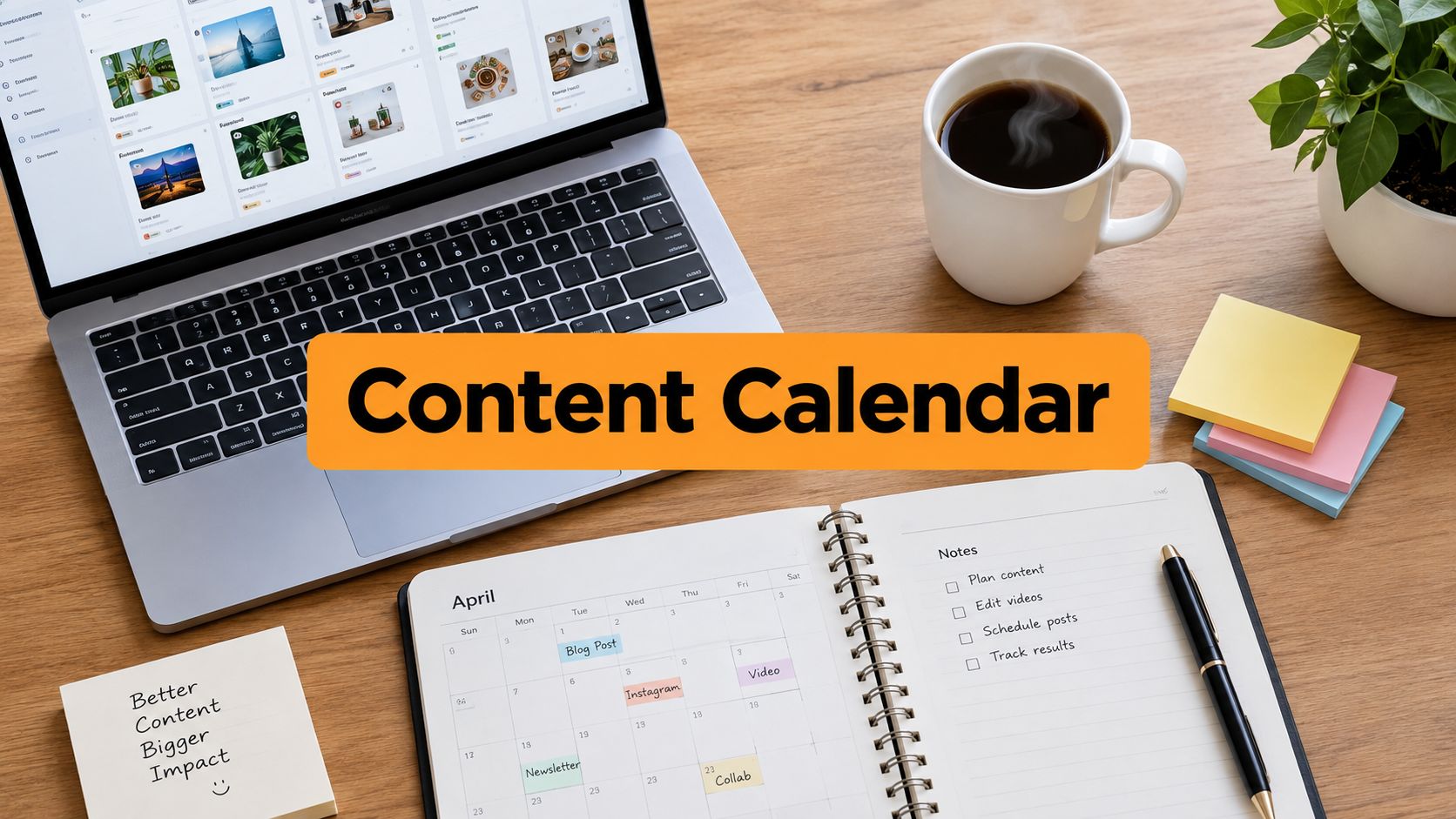
For a more structured planning workflow, use a LinkedIn content calendar to map themes, formats, owners, and publication dates. Tools such as RedactAI can generate multiple drafts from a theme, suggest content ideas, optimize copy, schedule updates, recycle high-performing posts, and connect publishing decisions to analytics. Use that kind of assistance to preserve your voice and reduce repetitive production work, not to publish generic material at higher speed.
Treating Cadence as a Long-Term Strategic Lever
Posting cadence should change as your role, audience, and objective change. A founder establishing authority may need a more visible presence than an established consultant with a mature referral network. A sales professional may adjust the mix toward conversation when pipeline quality matters more than broad reach.
Review cadence on a quarterly basis rather than reacting to every post. Look at impression direction, engagement quality, profile activity, and the relevance of conversations generated. Then decide whether to increase, maintain, or reduce volume based on the goal:
- Reach: Add capacity when the account needs more discovery and the content remains strong.
- Trust: Protect space for thoughtful stories, explanations, and replies.
- Leads: Favor content that attracts the right problems and invites useful conversations.
The best rhythm is the one you can maintain through ordinary work, not only during a burst of motivation. Choose a cadence you can sustain for the next 90 days, measure how it affects reach, trust, and lead quality, then adjust one variable at a time.
RedactAI helps professionals turn themes and experiences into LinkedIn drafts, organize posts in a calendar, schedule updates, recycle useful ideas, and review performance without losing their personal voice. Visit RedactAI to build a publishing workflow that fits your role and maintain a deliberate cadence over the next 90 days.