Most companies don't have a content shortage. They have a response-time problem. 54% of enterprises can't access and use real-time data, which means a brand may know what a customer did, but still fail to respond while that information is useful. Recent industry research also reports that 79% haven't integrated their data, systems, and teams, making customer engagement optimization less a copywriting challenge and more an operating-model challenge.
That changes where you should invest. Better posts, sharper offers, and more personalized messages can help, but only when your business can identify the customer, choose the next action, deliver it through the right channel, and learn from the result. Engagement grows when the system behind the interaction works as well as the interaction itself.
The Engagement Myth That's Costing You Customers
The most expensive engagement myth is that more content automatically creates more customer attention. Teams increase posting frequency, add emojis, launch another newsletter, and produce more campaign variations while the customer experience remains fragmented. A customer may receive a retention offer after renewing, see an irrelevant product recommendation, or ask support a question that marketing already answered elsewhere.
Those failures don't come from a lack of creativity. They come from weak coordination. Customer engagement optimization depends on personalization, timing, and operational readiness, not on filling more publishing slots.
Practical rule: Don't create another engagement tactic until you know which customer signal will trigger it, which system owns the response, and how you'll measure the outcome.
A loyalty member who is close to a reward needs a different message from a first-time buyer. A customer who has stopped using a product needs a different intervention from someone who just completed a purchase. Without behavioral data connected to decision rules, both people receive the same generic communication.

The real levers behind engagement
Personalization means using known behavior, preferences, and lifecycle context to make an interaction more relevant. It isn't inserting a first name into an email. It might mean suppressing a promotion after a purchase, recommending a complementary product based on previous behavior, or changing a message when a customer has contacted support.
Timing determines whether the message arrives while the customer is receptive. A useful offer delivered after the decision has passed is still a poor experience. Timing applies to email, in-app prompts, support responses, loyalty notifications, and social publishing.
Readiness decides whether your team can act on the signal. If purchase data sits in one system, support history in another, and campaign execution in a third, personalization becomes an aspiration rather than a dependable process.
The operational problem is widespread. The same industry research says 60% of enterprises suffer from dark data, meaning information is collected but not used effectively, while only 30% share customer engagement data inside a CX or CRM platform. The findings explain why adding channels often creates more noise instead of better relationships.
Start by mapping the journey from signal to response. For every important customer behavior, identify the data source, owner, decision rule, channel, and feedback metric. That simple map usually reveals the bottleneck faster than another content audit.
What Customer Engagement Optimization Actually Means
Customer engagement optimization is the disciplined process of improving the interactions that move a customer toward repeat use, purchase, loyalty, or advocacy. It isn't a vanity exercise focused on likes, opens, or clicks in isolation. Those actions matter only when they indicate that customers are receiving more relevant value and moving through a healthier relationship with the brand.
Three mechanisms consistently make engagement measurable: personalized experiences, visible progress, and exclusive value.
Personalization that reflects behavior
A generic loyalty email treats every member alike. A useful experience responds to what the member has done, what they appear to need, and where they are in the lifecycle. That might involve changing the offer after a purchase, adapting the message to a product category, or recognizing a customer who is returning after a long pause.
A 2026 industry summary reports that 70% of consumers spend more and engage more frequently with brands whose loyalty program they belong to, while less than 25% of programs offer personalized member experiences based on previous interactions and purchase history. The loyalty data points to a clear gap between what customers respond to and what many programs currently deliver.
The practical lesson isn't to personalize every message immediately. Start with a few high-value behaviors and make sure the resulting experience is accurate. A smaller number of trustworthy segments beats a polished program built on stale or incomplete data.
Progress that customers can see
Customers need feedback that tells them their actions are leading somewhere. A loyalty balance, milestone tracker, status indicator, or clear next step can turn an abstract benefit into a reason to return.
The same summary reports that 81% of consumers say seeing progress toward rewards is motivating. That makes progress visibility a product and experience decision, not merely a design detail. If members can't understand what they've earned or what action comes next, the program asks them to do mental work before they can see the value.
Exclusive value with a clear reason to return
Members-only benefits can create a meaningful reason to engage, especially when the benefit feels relevant rather than arbitrary. The reported data says 65% of U.S. online consumers who belong to loyalty programs consider members-only offers important. The offer still needs sensible eligibility rules, clear timing, and a connection to the customer's interests.
Measure the mechanism, not just the surface activity:
- Behavioral response: Track repeat visits, feature use, purchases, or meaningful conversations after an interaction.
- Lifecycle movement: Monitor whether customers progress from activation to repeat use, renewal, or advocacy.
- Message quality: Review relevance, suppression accuracy, complaints, and unsubscribe behavior alongside clicks.
- Feedback speed: Record how quickly teams can turn a customer signal into a useful response.
For a broader set of practical audience tactics, this guide to engaging brand audiences is useful as a planning reference. The key is to connect each tactic to a customer behavior and a business outcome.
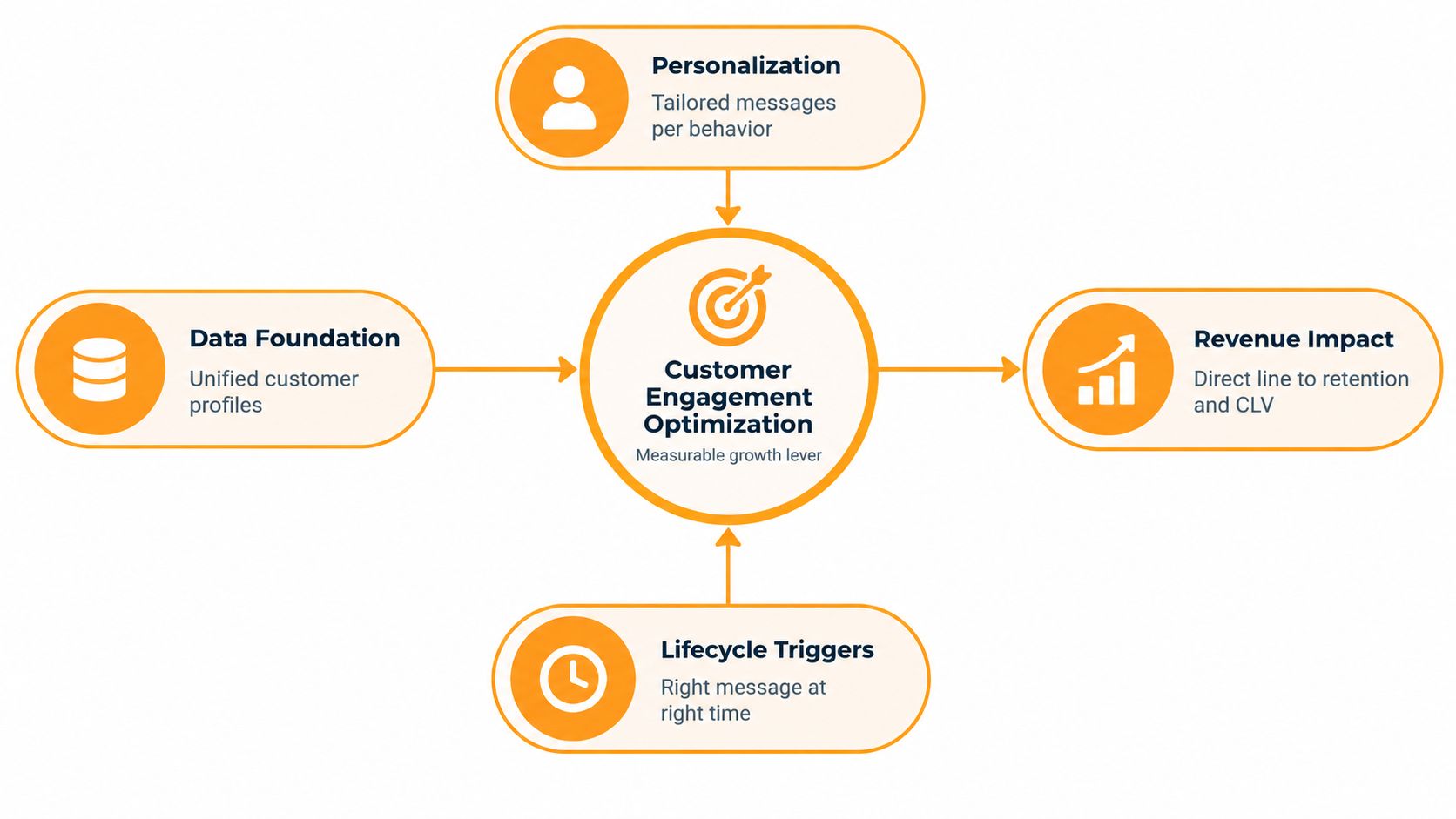
The model is straightforward: collect usable data, interpret behavior, trigger a relevant interaction, and measure what changed. If one link breaks, more content won't repair the chain.
LinkedIn Timing Windows That Drive Real Engagement
LinkedIn distribution has a short memory. A strong post published when your audience is absent may struggle to gather the early interaction that helps it travel, while a useful post published during an active browsing window can build momentum quickly.
Large-scale analyses show that weekday posting outperforms weekends, with the strongest windows clustering around Tuesday through Thursday, roughly from 9 a.m. to 1 p.m. in the audience's local time. The LinkedIn timing analysis connects those periods with commute, pre-meeting, and lunch-break browsing.
Use the pattern as a starting point, not a universal law. Your audience may include several time zones, senior decision-makers with different routines, or a niche community that behaves differently from the broader professional audience.
| Day | Time Window | Expected Outcome | Audience State |
|---|---|---|---|
| Tuesday | 9 a.m. to 1 p.m. local time | Strong opportunity for early interaction | Morning and midday professional browsing |
| Wednesday | 9 a.m. to 1 p.m. local time | Strong opportunity for discussion and sharing | Between meetings and during lunch breaks |
| Thursday | 9 a.m. to 1 p.m. local time | Useful window for practical and opinion-led posts | Reviewing industry content and planning work |
| Weekend | Outside the main weekday windows | Less predictable initial distribution | Reduced professional browsing for many audiences |
Build the first-hour workflow
LinkedIn appears to test early response before extending distribution. Posts that earn quick likes, comments, and dwell are more likely to reach additional connections, while weak initial activity can limit later reach even when the content is sound. The early-engagement mechanism makes the publishing workflow as important as the post itself.
Before publishing, prepare the first response yourself. Write a question that adds substance, identify the people most likely to contribute a relevant perspective, and make sure someone can reply to comments promptly. Don't ask colleagues to leave empty praise. Early comments should deepen the idea, challenge an assumption, or add a useful example.
Schedule for the recipient's timezone, not the creator's. If a post targets several regions, publish separate versions or choose the region with the highest commercial importance rather than assuming one timestamp serves everyone.
Improve the hook before increasing volume
A useful opening gives readers a reason to continue. Lead with a specific observation, a practical tension, or a clear point of view. Avoid spending the first lines on background that readers can infer from the headline.
Review performance by topic, hook, audience, timing, and quality of discussion, not only by impressions. A post that attracts fewer views but generates relevant conversations may be more valuable than one that produces broad, passive reach. Tools such as this LinkedIn posting-time guide can support scheduling decisions, but your own audience data should eventually take priority over general benchmarks.
AI in Customer Engagement, Hype vs Reality
AI is already useful in customer engagement, but its strongest applications are narrower than the marketing headlines suggest. Many organizations can analyze data with AI. Far fewer can safely turn that analysis into a timely decision and execute the decision across connected systems.
Recent data reports that 39% of brands use AI-powered solutions to analyze customer data more thoroughly and 38% use AI to understand sentiment and preferences, but only 18% apply AI to real decisioning. Braze's customer engagement review shows the gap between insight generation and action.
Where AI earns its place
AI can help teams summarize feedback, classify intent, identify recurring complaints, detect likely churn signals, and suggest message variations. These uses reduce manual analysis and help people focus on decisions that require context.
AI can also support content production. A tool such as ShortGenius AI ad generator can help teams create video or advertising concepts, but generated assets still need brand review, audience validation, and a clear role in the customer journey. Speeding up production doesn't automatically improve relevance.
The most promising decisioning use cases have clear inputs, bounded actions, and an easy rollback. For example, a system might recommend a retention intervention when engagement falls and usage patterns change. A human can review the recommendation before the message goes live, especially when the action affects price, eligibility, privacy, or customer status.
Where human judgment remains essential
Automating a decision doesn't remove responsibility for its consequences. Human review remains important when the system uses sensitive data, makes a high-value offer, interprets ambiguous sentiment, or communicates during a complaint.
The current limitations are material. 64% of marketers say personalization lacks impact, approximately 60% need two to four weeks to act on campaign learnings, and 66% of organizations report they can't use AI to optimize campaign performance in practice, according to the same Braze review. A model can't compensate for slow approvals, disconnected data, or unclear ownership.
Governance before scale: Automate recommendations first, then automate low-risk actions only after the team can explain the input, decision, audience, and fallback.
A practical AI decision framework asks four questions:
- Signal: Is the underlying customer data current, relevant, and permissioned?
- Decision: Can the system choose from a limited set of understandable actions?
- Risk: What happens if the recommendation is wrong or the customer objects?
- Learning: Can the team connect the action to an outcome and improve the rule?
Teams often get more value from governed experimentation than from fully autonomous campaigns. For a plain-language explanation of how AI-generated material fits into a broader workflow, see this guide to AI content creation.
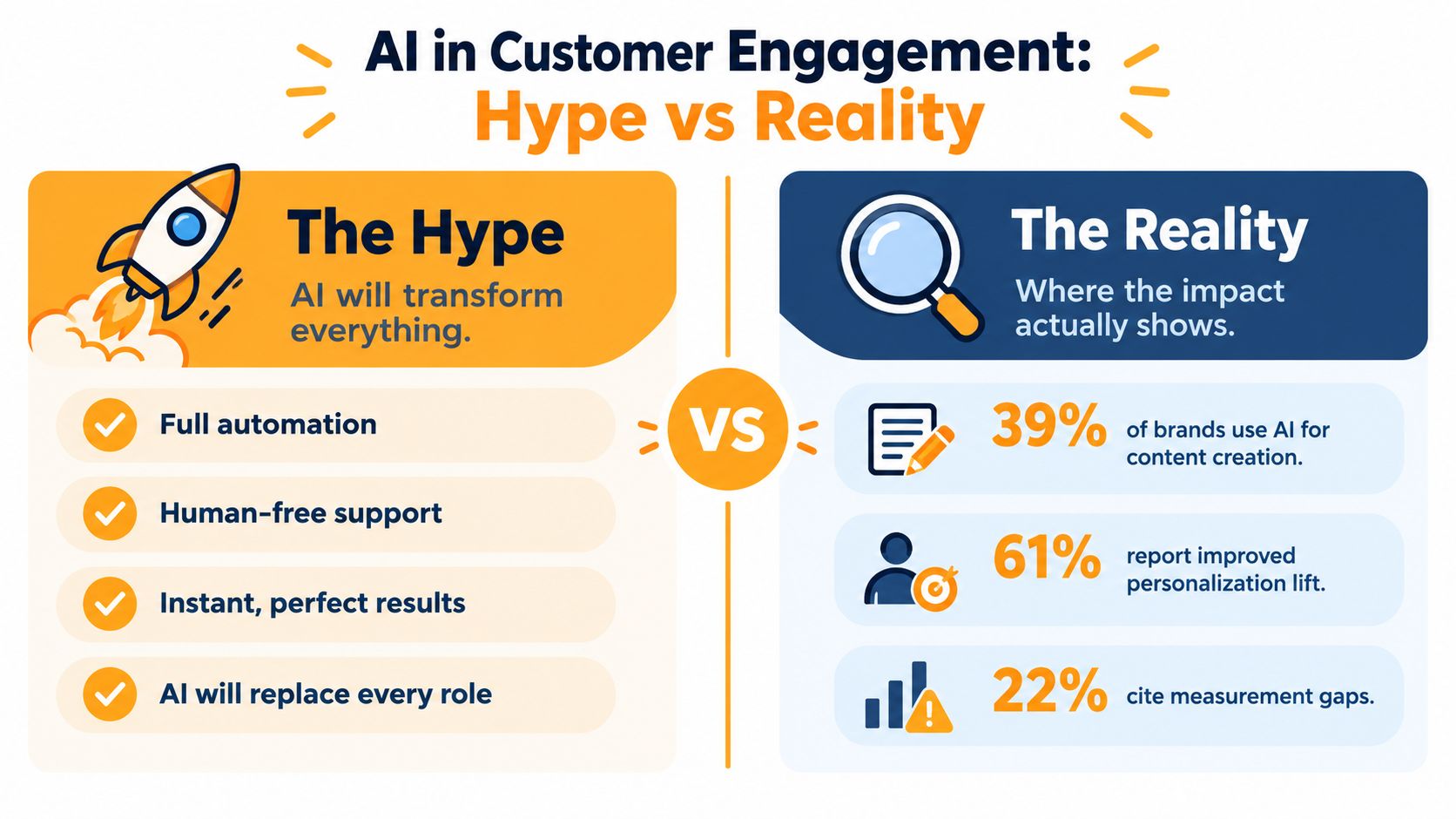
The winning question isn't “How can we automate everything?” It's “Which decision can a machine improve without weakening trust, control, or accountability?”
The Operational Gap Most Companies Miss
A customer doesn't experience your CRM, data warehouse, support platform, and advertising account as separate systems. They experience one brand. If those systems disagree, the customer sees the contradiction immediately.
The research is stark. 54% of enterprises can't access and use real-time data, 60% suffer from dark data, and 79% haven't integrated data, systems, and teams across the business. Only 30% share customer engagement data within a CX or CRM platform, according to independent industry research reported by SAP.

Diagnose the system before adding channels
Start with the moments where inconsistency is most expensive. List the customer signals that should change an interaction, then trace each signal through the organization.
- Identity: Can marketing, sales, product, and support recognize the same customer consistently?
- Freshness: How quickly does a purchase, cancellation, complaint, or usage change become available?
- Ownership: Who decides what should happen after the signal appears?
- Delivery: Which system sends the message, and can it suppress conflicting campaigns?
- Measurement: Where does the response return, and who reviews it?
Don't begin with a grand transformation program. Pick one lifecycle moment, such as onboarding, renewal, or post-purchase support, and make that journey coherent. A narrow improvement exposes data gaps and approval delays without creating a large implementation burden.
Fix coordination, not just storage
A centralized database won't solve a process that lacks decision rights. Teams need shared definitions for active customer, churn risk, qualified lead, and successful engagement. They also need rules for when a message should stop, change, or escalate to a person.
The customer impact is visible. The research reports that 75% of consumers notice when a brand can't coordinate across teams and react negatively. That reaction may appear as lower trust, more complaints, or disengagement rather than as a clean analytics event.
Operational test: Ask a team member to describe what happens after one important customer signal. If the answer changes depending on who you ask, the system isn't ready to scale.
Workflow documentation should show the handoff between people and platforms, not merely list the tools in use. A practical workflow optimization resource can help teams identify unnecessary approvals, duplicated work, and gaps between insight and action.
Your 90-Day Engagement Optimization Plan
A useful 90-day plan doesn't promise instant transformation. It creates a repeatable operating rhythm: inspect the system, establish a baseline, improve one part of the journey, and use evidence to decide what comes next.
Phase one, find the friction
Begin with a data and journey audit. Choose one customer outcome, such as repeat purchase, renewal, activation, or meaningful LinkedIn conversation. Then document the signals, systems, owners, messages, and failure points connected to that outcome.
Look for stale fields, duplicate audiences, conflicting campaigns, manual exports, and missing suppression rules. Interview the people who execute the work. They often know where the process breaks long before dashboards reveal it.
Phase two, establish a useful baseline
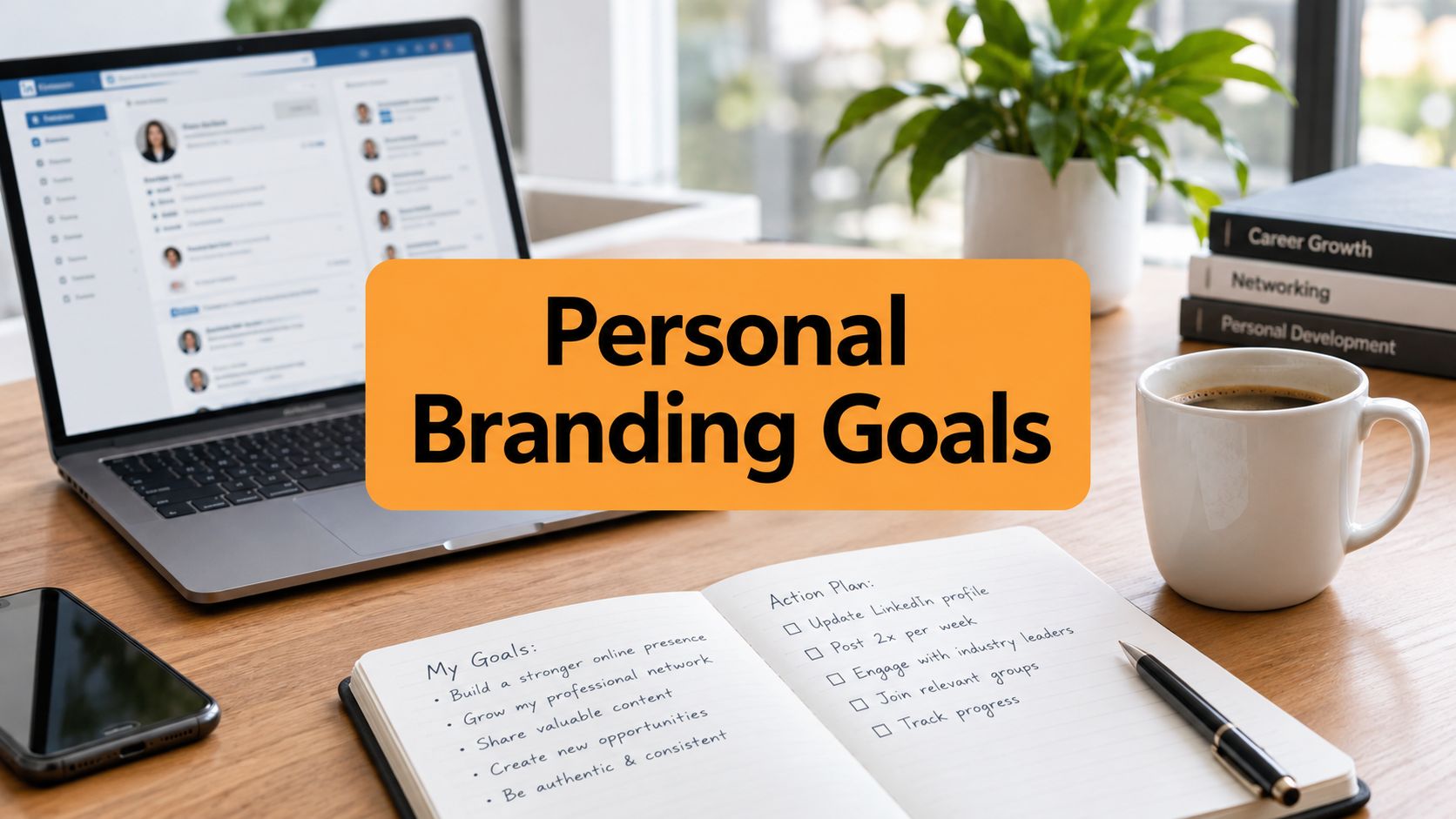
Define the primary outcome and the supporting behaviors. For a loyalty program, that might include repeat activity and reward progression. For LinkedIn, it could include relevant comments, profile visits, and qualified conversations rather than reach alone.
Record the current process before changing it. Otherwise, your team won't know whether an improvement came from better timing, stronger creative, cleaner targeting, or a seasonal shift.
Phase three, improve one journey
Choose a controlled intervention. You might make reward progress more visible, suppress irrelevant post-purchase messages, connect support context to marketing audiences, or publish LinkedIn content during the audience's strongest weekday browsing window.
Pair the change with an operating habit. Assign someone to monitor early responses, review exceptions, and document what the team learned. Customer engagement optimization fails when the tactic launches but nobody owns the feedback loop.
Phase four, review and expand
At the end of the cycle, compare the new process with the baseline. Review response quality, customer complaints, conversion behavior, time to action, and the work required to maintain the experience.
An illustrative professional might begin with inconsistent LinkedIn publishing, no agreed review process, and limited visibility into which topics create conversations. Over a 90-day period, they could audit past posts, define a small set of themes, schedule around audience time zones, respond quickly after publishing, and recycle only ideas that earned meaningful discussion. The responsible conclusion isn't a promised percentage lift. It's that a documented process gives the professional evidence to keep, revise, or stop each part of the approach.
Avoid three common traps:
- Chasing volume: More messages can increase fatigue when relevance and suppression are weak.
- Automating too early: AI can accelerate a broken decision process and spread mistakes faster.
- Measuring too narrowly: A click or impression doesn't prove that the relationship improved.
The strongest engagement programs make the next action clearer for both the customer and the team. Start with one journey, remove one operational bottleneck, and let the evidence determine where you scale.
RedactAI helps professionals turn their LinkedIn experience, posting history, and ideas into personalized post drafts, scheduling workflows, performance insights, and content recycling. Visit RedactAI to build a more consistent publishing process and connect your content decisions to measurable audience engagement.