You spend an hour polishing a LinkedIn post. The hook is strong. The insight is solid. You hit publish, refresh a few times, and get a handful of likes from people you already know.
That silence usually feels personal, but most of the time it isn't. It's a relevance problem.
A lot of smart professionals create content as if they're speaking to “everyone who might care.” On LinkedIn, that usually means the post is too broad for a buyer, too tactical for an executive, too strategic for a practitioner, and too formal for the people who respond better to a human voice. The content isn't bad. It's just not aimed.
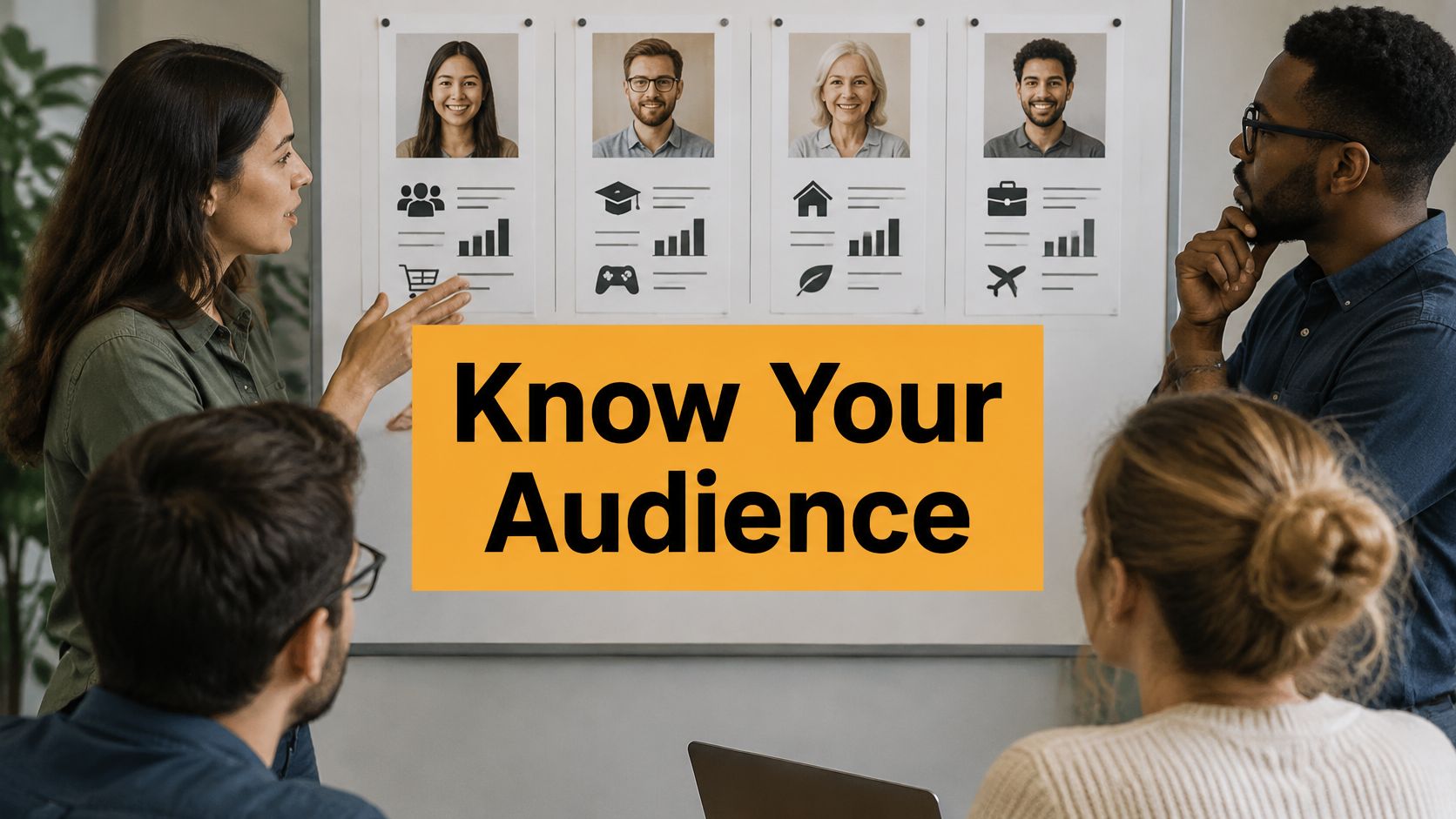
That's where audience segmentation changes everything. Instead of trying to write one post for a giant mixed crowd, you break your audience into smaller groups that share something important, then shape your message for that group. On LinkedIn, that can mean segmenting by industry, role, buying stage, or even the way professionals prefer ideas to be presented.
The Sound of Silence Your Content Knows Too Well
A consultant writes a post about “how to improve B2B content performance.” It's thoughtful and well written. But the people reading it aren't all looking for the same thing.
A founder wants speed and advantage. A content manager wants a repeatable workflow. A sales leader wants pipeline impact. A freelance ghostwriter wants better positioning. If all of them see the same message, each person gets only part of what they need.
That's why a post can feel polished and still land flat.
One message, four different readers
On LinkedIn, this happens constantly:
- A marketer reads for execution details.
- An executive reads for business relevance.
- A creator reads for style and differentiation.
- A buyer reads with a quiet question in mind: “Is this person relevant to my problem?”
When you write one generic post, you're asking all four people to do extra mental work. Most won't.
The fastest way to make content feel stronger is often not better writing. It's better aim.
Segmentation fixes that by narrowing the target. You stop posting to a vague crowd and start speaking to a defined slice of people. The change can be subtle. The topic might stay the same, but the framing, examples, tone, and call to action shift.
What this looks like in practice
Take the same topic: “using AI in LinkedIn content.”
For a founder, you might lead with time saved and consistency. For a ghostwriter, you might focus on preserving voice. For a demand gen leader, you might talk about aligning content with buyer stages. Same platform, same broad topic, different audience slice.
That's the key strategy. You're not shouting louder. You're speaking more directly.
And that's why what is audience segmentation matters so much for LinkedIn strategy. It gives you a practical way to turn decent content into relevant content, and relevant content is what people stop to read.
So What Is Audience Segmentation Really
The simplest definition is this: audience segmentation is the process of dividing a broad audience into smaller groups based on shared characteristics, needs, or behaviors.
If that sounds abstract, think about sorting mail. You don't throw every letter into one giant pile and hope the right person finds it. You sort it into the right mailbox so it reaches the person it was meant for.
That's what segmentation does for content.

Personal shopper beats department store clerk
A department store clerk gives broad answers. “We've got a lot of options.” That's useful, but it's generic.
A personal shopper asks sharper questions. What do you need this for? What style do you prefer? What's your budget? What do you already own? Then they make recommendations that fit.
That's a good way to understand what audience segmentation really is. It helps you stop acting like a general store and start communicating like someone who understands the person in front of them.
The key idea people miss
Segmentation is not just labeling people. It's not “these are founders” and “these are marketers,” then calling it done.
It's about finding the differences that change how you should communicate.
For a LinkedIn creator, those differences might include:
- Professional role such as founder, consultant, recruiter, or sales leader
- Level of awareness such as problem-aware versus solution-aware
- Content preference such as concise frameworks versus personal stories
- Communication style such as data-driven, provocative, educational, or conversational
That last one gets ignored in most beginner guides, but it matters a lot on LinkedIn. Two people can have the same job title and still respond to very different content styles. One wants screenshots, steps, and clear takeaways. Another wants a strong point of view and a story from real work.
Practical rule: If a segment wouldn't change your topic, angle, tone, or example choice, it probably isn't a useful segment yet.
A clean definition you can actually use
If someone asks you, “What is audience segmentation?” you can answer like this:
It's the practice of grouping people who share something meaningful, so you can create content and messaging that feels more relevant to them.
That's it.
Not complicated. Not academic. Just a way to replace generic messaging with better-fit communication.
And on LinkedIn, that relevance shows up fast. People comment when a post sounds like it was written for them. They ignore it when it sounds like it was written for “professionals in general.”
The Four Main Ways to Slice Your Audience Pie
Most segmentation starts with four core lenses. You can use one of them, but they get more useful when you combine them.
The four core types
| Segmentation Type | What It Is | Example Criteria |
|---|---|---|
| Demographic | Personal or professional traits about the individual | Job title, seniority, function, years of experience |
| Geographic | Where the person or company is located | Country, region, city, time zone |
| Psychographic | How they think, what they value, and what style they prefer | Priorities, beliefs, goals, risk tolerance, communication preference |
| Behavioral | What they actually do | Post engagement, website visits, content clicks, repeat interactions |
Demographic segmentation
In B2B and LinkedIn work, demographic segmentation often looks more professional than personal. You're less focused on age and more focused on role.
A VP of Sales and a Head of Content may both care about growth, but not in the same language. One may want revenue relevance. The other may want editorial process and team workflow.
Useful questions here include:
- Who are they at work
- How senior are they
- What function do they own
Geographic segmentation
Location changes context more than many people realize. Time zone affects when your audience is online. Region affects examples, market language, and even what business references feel familiar.
If you write for a global audience, this matters on LinkedIn. A post built around U.S. market assumptions may feel slightly off to readers elsewhere, even when the core idea is solid.
Psychographic segmentation
Delving deeper, psychographics look at attitudes, motivations, values, and preferences.
For LinkedIn creators, this includes professional communication style. Some people trust posts that feel analytical and structured. Others respond to candor, storytelling, and lived experience. Same platform. Different mental filters.
This is also why two posts on the same topic can perform differently with different audience slices. One matches how the segment likes to process information. The other doesn't.
Behavioral segmentation
Behavior is often the most revealing layer because it shows what people do, not just who they are.
On LinkedIn, that might include:
- Which posts they comment on
- What topics they save
- Whether they click through to your site
- Whether they engage with tactical how-to content or opinion posts
That's one reason email marketers lean on segmentation so heavily. Segmented email campaigns deliver 14.31% higher open rates and 101% more clicks than non-segmented blasts. The same principle applies to content strategy. Relevance lifts response.
If you want a deeper look at behavior-first grouping in SaaS, this guide to SaaS strategy for customer grouping is a useful companion. And if you need help turning those groups into sharper audience profiles, this walkthrough on creating buyer personas for content planning makes the next step easier.
Don't force yourself to choose one type forever. Good segmentation usually starts simple, then layers in behavior and motivation.
Why Segmentation Is Your Marketing Superpower
Segmentation isn't just a nice organizational habit. It changes outcomes.
According to Aerospike's analysis of real-time audience segmentation, audience segmentation drives 77% of total marketing ROI, and approximately 80% of companies that implement segmentation strategies report increased sales. That's a strong signal that relevance is not a side issue. It's a performance issue.

Why it works so well
When your content matches a segment, three things happen.
First, people pay attention. The post sounds relevant, so they keep reading.
Second, they trust your judgment more quickly. You sound like someone who understands their situation, not someone recycling broad advice.
Third, action gets easier. A relevant post leads to a relevant profile visit, a relevant conversation, and sometimes a relevant buying decision.
The chain reaction on LinkedIn
On LinkedIn, the effects are practical:
- Higher engagement quality because the right people see themselves in the post
- Stronger authority because your expertise appears specific, not generic
- Better conversion paths because buyers can tell who you help
- More loyalty over time because your audience learns what to expect from you
This is especially important for personal branding. Most professionals don't need more visibility in the abstract. They need visibility with the right subset of people.
Why broad content wastes effort
Generic content looks efficient because you only make one version. But broad messaging often creates hidden waste. You spend time writing, editing, publishing, and promoting content that doesn't clearly fit any one group well enough.
Segmented content is usually more efficient in the long run because it gives your audience fewer reasons to scroll past.
If your posts attract attention but not the right conversations, the problem usually isn't reach. It's audience fit.
That's why segmentation feels like a superpower. It helps you use the same amount of effort with better precision. And for professionals building authority on LinkedIn, precision is often what separates “I post consistently” from “my content moves people.”
A Practical Guide to Segmenting on LinkedIn
Most LinkedIn advice stops at “know your audience.” That's true, but it doesn't help much on a Tuesday morning when you're trying to decide what to post.
A better approach is to build your segments in layers.

Start with firmographics
If you're in B2B, begin with company and role-based filters. This gives you a solid first draft of who you're talking to.
Examples:
- Industry such as SaaS, recruiting, consulting, fintech
- Company size such as startup, mid-market, enterprise
- Job title such as founder, head of marketing, SDR leader, recruiter
- Seniority such as manager, director, VP, C-suite
This first layer helps you avoid writing posts that blur together very different business realities. A startup founder and an enterprise marketing director may both care about pipeline, but their constraints are different.
Then add behavioral clues
After that, look at what people respond to.
Which posts get comments from sales leaders? Which ones attract ghostwriters? Which topics drive profile views from decision-makers? Which posts generate direct messages, not just likes?
That behavior tells you where your audience naturally separates itself.
A practical way to do this is to review recent posts and tag them by topic and response pattern. You're looking for clusters, not perfection.
- Topic cluster such as thought leadership, hiring, lead generation, AI workflow
- Response type such as likes, thoughtful comments, profile visits, inbound messages
- Audience pattern such as founders engage with strategy posts while practitioners engage with tutorials
If you're building content around business development, this guide to using LinkedIn for lead generation is a helpful next read because it connects audience targeting to actual outreach outcomes.
Add communication style as a real segment
This is the layer most professionals skip, and it's one of the most useful on LinkedIn.
Not everyone wants the same tone.
Some segments prefer:
- Data-led writing with clear claims, proof, and direct takeaways
- Story-led writing with personal experience and a clear lesson
- Framework-led writing with steps, systems, and templates
- Opinion-led writing with a sharp point of view and strong positioning
Professional trust isn't built by topic alone. It's also built by delivery. The right audience has to like how you think, not just what you talk about.
A recruiter may prefer practical, people-centered examples. A RevOps leader may respond better to structured, concise analysis. A founder may want a faster, punchier style that gets to the point.
Write for the reader's preferred way of processing information, not just their job title.
Layer in purchase intent
Now you're moving from audience awareness to buyer awareness.
In B2B, not everyone in your audience is equally ready for a solution. Some are browsing. Some are frustrated. Some are actively comparing options.
According to Bombora's explanation of audience segmentation in B2B, intent-based segmentation uses real-time research activity across thousands of websites to identify accounts actively evaluating solutions, and targeting based on those intent signals can increase account engagement rates by 2–3x compared to firmographic-only approaches.
You may not have access to a full intent data stack as an individual creator, but you can still watch for intent signals on LinkedIn:
Repeated engagement on solution-specific posts
If the same people keep interacting with posts about a problem category, they may be moving from casual interest to active evaluation.Profile visits after tactical content
A profile visit after a broad story means curiosity. A profile visit after a detailed how-to post often signals stronger intent.DMs that ask process questions
“How do you do this?” is often more commercially meaningful than “Great post.”Comments that compare tools or approaches
Comparison language usually shows someone is further along in the buying process.
Here's a short explainer if you want another perspective before you apply this:
Turn segments into actual posts
Once you've got those layers, your content gets easier to shape.
A post for startup founders might be short, direct, and focused on maximizing impact. A post for marketing leaders might include team workflow and measurement. A post for buyers showing intent might move from inspiration to practical decision criteria.
You don't need a different LinkedIn account for each segment. You need a clearer idea of which segment each post is for.
That's the shift. Instead of asking, “What should I post today?” ask, “Who is this post for, and how do they prefer to think?”
Putting It All Together with Best Practices and Tools
Segmentation gets powerful fast, but it can also get messy if you overcomplicate it. The goal isn't to build a giant taxonomy that lives in a spreadsheet no one updates. The goal is to make your content more relevant and your decisions easier.
Best practices that keep it usable
Start with a small number of meaningful groups
Pick one or two segments you already recognize in your audience. For example, founders versus in-house marketers, or recruiters versus HR leaders.Use differences that change your messaging
Good segments lead to different hooks, examples, or offers. If your content wouldn't change, the segment probably isn't useful.Don't stop at industry
Industry is helpful, but it's often too shallow by itself. The more interesting layer is what people value and how they prefer to communicate.Review your segments regularly
Audiences shift. Your content themes shift. The segments that worked six months ago may need refinement.
Tools that make segmentation easier
Different tools help with different parts of the job:
| Tool category | What it helps you do |
|---|---|
| LinkedIn analytics and post review | Spot engagement patterns by topic and audience type |
| CRM systems | Track who's in your audience, what company they're from, and how conversations progress |
| Email platforms | Test segment-specific messaging outside the feed |
| Content analytics tools | Connect topics, formats, and outcomes over time |
| AI writing tools | Adapt messaging and tone for different professional audience slices |
That last category matters more than commonly understood. LinkedIn's audience segmentation techniques page notes a gap in mainstream content strategy advice: most guidance ignores how to segment professional tone and voice for LinkedIn creators, even though underserved segments defined by motivations and values can yield higher engagement and revenue.
That's especially useful if your audience shares the same market but not the same communication preference.
One practical workflow
A simple routine looks like this:
- Choose the segment before you draft
- Pick one topic that matters to that segment
- Write in the tone that segment responds to
- Track what kind of response the post creates
- Refine based on patterns, not hunches
If part of your strategy includes email follow-up or list hygiene, this resource on how to boost deliverability with API validation is worth bookmarking. And if you want a cleaner way to evaluate what your segmented content is doing, this guide on measuring content performance helps tie audience fit back to results.
The big takeaway is simple. Segmentation doesn't make your strategy more complicated. It makes it more honest. You stop pretending one message works for everyone, and you start creating content that fits the people you want to reach.
If you want help turning audience insights into posts that sound like you, RedactAI can help you create LinkedIn content in your own voice, tailor ideas to the right professional audience, and keep a steady publishing rhythm without sounding generic.