You open LinkedIn with a decent idea in your head. Maybe it came from a client call, a team meeting, or something you noticed in your market. Then the cursor starts blinking, the draft stays empty, and what should've taken ten minutes gradually turns into another task you push to tomorrow.
That cycle is familiar to almost everyone who uses LinkedIn seriously. The problem usually isn't a lack of expertise. It's that posting gets handled reactively. You write when you have time, publish when you remember, and review results only if a post clearly flops or takes off.
A good LinkedIn publishing tool changes that rhythm. It turns posting from a small recurring headache into a repeatable workflow. Instead of asking, “What should I say today?” every time you log in, you build a system for finding ideas, drafting faster, formatting correctly, publishing consistently, and learning from what happens next.
That Blank Page on LinkedIn Does Not Have to Be Scary
A lot of smart professionals still treat LinkedIn like a pop quiz. They log in between meetings, feel pressure to say something useful, then either overthink the post or settle for something flat and forgettable.
The pattern usually looks like this:
- An idea appears too late: You remember a strong point from this morning's call when you're already switching tasks.
- The draft starts from zero: No notes, no angle, no structure. Just a blank text box.
- Publishing feels risky: If the post underperforms, it feels personal, so you spend even longer tweaking it.
That makes LinkedIn feel heavier than it should. Writing one post can eat a surprising chunk of the day, especially when you're also trying to sound thoughtful, stay consistent, and avoid repeating yourself.
The real problem isn't writing
Most people don't need more opinions. They need a better publishing process.
A LinkedIn publishing tool helps at the exact points where the manual workflow breaks down. It gives you a place to capture rough ideas before they disappear. It helps shape those ideas into usable drafts. It also removes some of the friction around scheduling, formatting, and reviewing what resonated.
Practical rule: If posting feels hard every single time, your issue probably isn't creativity. It's workflow.
That matters because consistency on LinkedIn rarely comes from discipline alone. It comes from making the task small enough to repeat. If you've been stuck in the loop of “I know I should post more,” a better system does more than save time. It lowers the mental cost of showing up.
If blank-page anxiety is part of your routine, it's worth fixing the workflow before blaming yourself. A useful place to start is this breakdown of how to overcome writer's block, especially if your best ideas tend to vanish when it's time to write them down.
What Is a LinkedIn Publishing Tool Anyway
A LinkedIn publishing tool is often mistaken for a scheduler. That's too narrow.
A scheduler handles the last step. You paste in a post, choose a time, and let it publish. A publishing tool supports the whole content cycle, from rough idea to formatted post to performance review.

Think co-pilot, not calendar
The simplest way to think about it is this. A scheduler is a calendar. A publishing tool is a co-pilot.
It helps you decide what to publish, shapes how the post is written, catches presentation problems before they go live, and gives you feedback after the post is out in the world. That's a very different job from “publish this on Tuesday at 9.”
For practitioners, that difference matters because the hard part of LinkedIn usually isn't clicking Publish. It's everything before and after.
Where these tools earn their keep
One of the biggest friction points is formatting. LinkedIn's editor doesn't reliably preserve formatting from external editors. The platform's input parser fails to preserve external CSS or complex text hierarchies, often turning bolding, italics, and lists into plain text if they aren't manually adjusted. Articles that skip that reformatting step can see a 30 to 40% drop in readability scores based on the verified data provided.
That sounds technical, but the practical effect is simple. You write in Google Docs or Word, paste into LinkedIn, and the post suddenly looks sloppy. Lists collapse. Emphasis disappears. The structure gets harder to scan. Readers bounce sooner.
Publishing on LinkedIn isn't just a writing task. It's also a formatting task, whether you plan for it or not.
A real publishing tool reduces that cleanup work. It gives you a controlled environment to draft, preview, and adjust content for LinkedIn's quirks before the post reaches your audience.
The shift in mindset
When people start using a LinkedIn publishing tool well, they usually stop thinking in terms of isolated posts. They start thinking in terms of pipelines.
That means:
- Ideas get captured early
- Drafts get shaped faster
- Formatting becomes predictable
- Publishing becomes routine
- Analysis feeds the next round of content
That shift is what turns content creation from a reactive chore into something strategic.
Core Features That Save You Hours Every Week
The time savings don't come from one magic feature. They come from removing repeated friction at several points in the workflow.

Ideation that starts before the blank page
The manual version is messy. You scroll LinkedIn for inspiration, dig through notes, remember half a sentence from a client conversation, then try to force all of it into a post.
A better tool gives you a way to collect sparks while they're still fresh. Keywords, voice notes, themes, snippets from calls, a rough point you want to make next week. Once ideas live in one place, you stop relying on memory and mood.
That's the first major workflow upgrade. You don't begin by “trying to be creative.” You begin with raw material.
Drafting that sounds like a person
Generic AI writing creates another problem. It saves time up front but adds editing work later because the result sounds stiff, broad, or overpolished.
That's why personalization matters more than raw generation speed. Some tools focus on helping users create drafts that align with their natural tone instead of producing generic corporate filler. RedactAI, for example, is built around a personalized language model based on a user's LinkedIn profile, post history, and writing style, which makes it a more practical fit for people who want assistance without losing their voice.
If you're looking at workflow automation specifically, this guide on automating LinkedIn posts is useful because it shows where automation helps and where human editing still matters.
Scheduling that supports consistency
Scheduling sounds basic until you try to stay consistent for months. Then it becomes operational.
The pain isn't usually picking a date. It's keeping a pipeline full enough that you aren't scrambling every few days. Good publishing tools make that easier by helping you batch content, line up future posts, and keep momentum when your calendar gets crowded.
That changes LinkedIn from “something I should post on when I get a minute” into “something already planned.”
Analytics that tell you who you're actually reaching
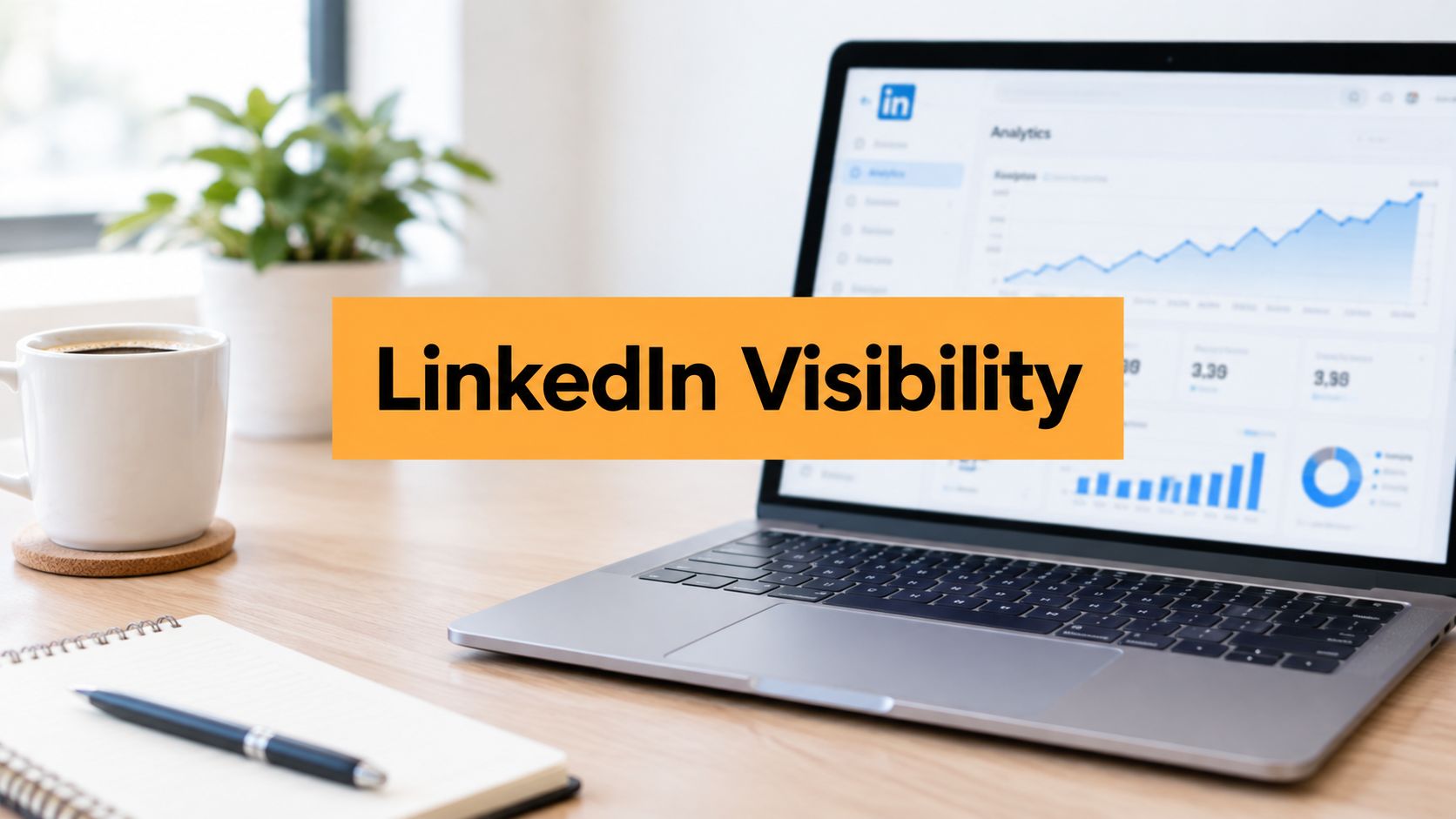
LinkedIn's own publishing environment already gives creators a meaningful baseline. Its dashboard breaks performance into “See How Your Post Is Doing,” “Demographics of Your Readers,” and “Who Is Responding to Your Posts” so users can track visibility and engagement over time, as detailed by Social Media Examiner's overview of LinkedIn Publisher statistics.
That native view is useful because it moves you beyond vanity reactions. You can check whether the right industries, roles, locations, and traffic sources are showing up. That's the beginning of strategy.
Working rule: If your analytics only tell you what happened, they're incomplete. The useful ones help you decide what to do next.
The biggest gain here is feedback quality. Instead of publishing from instinct alone, you start seeing patterns in topic choice, audience fit, and post structure. That's where the hours saved turn into better decisions, not just faster execution.
How to Choose the Right LinkedIn Publishing Tool
The wrong tool creates a second job. You spend time learning menus, fixing odd outputs, and wrestling with features you never needed in the first place.
The right one fades into the background. It shortens the path from idea to published post and gives you cleaner feedback after the fact.
Start with the bottleneck, not the feature list
A lot of tools look similar on a landing page. They all mention AI, scheduling, optimization, and analytics. That doesn't mean they solve the same problem.
If your main struggle is generating ideas, you need a stronger ideation layer. If your drafts already exist but formatting keeps breaking, your priority is editorial control and previewing. If you publish regularly but can't tell what to repeat, analytics depth matters more.
Ask what slows you down most often. Choose around that.
Use a simple selection checklist
| Criterion | Question to Ask |
|---|---|
| AI Quality | Does the draft sound like a person I would actually publish under my name? |
| Ease of Use | Can I move from idea to draft without clicking through a maze? |
| Formatting Control | Can I clean up structure before publishing, especially for LinkedIn-specific formatting? |
| Scheduling Fit | Does it support the way I plan content, or does it force a workflow I won't maintain? |
| Analytics Depth | Does it show patterns I can act on, not just surface-level engagement? |
| Personalization | Can it adapt to my voice, topics, and audience over time? |
| Collaboration | If I work with clients or a team, can others review and refine without friction? |
What to ignore
Some features sound impressive and rarely matter in day-to-day use.
You probably don't need the broadest possible dashboard if your real issue is that you're not publishing consistently. You probably don't need endless AI variations if they all require heavy rewriting. And you definitely don't need a tool that makes simple tasks feel technical.
A useful test is this. Open the product, imagine tomorrow's post, and ask yourself whether the tool makes that post easier to create, shape, and publish. If the answer is vague, keep looking.
Buy for the workflow you'll actually maintain, not the one that looks sophisticated in a demo.
The best tool is usually the one you'll keep using
People often overestimate how much complexity they'll tolerate once real work gets busy. Simple wins here.
A strong LinkedIn publishing tool should help you capture ideas quickly, draft with less resistance, keep formatting clean, and review outcomes without forcing you into a full analytics project every week. If it does those few things reliably, that's enough to improve your publishing strategy in a meaningful way.
A Real-World Workflow From Idea to Published Post
Take a busy consultant who just finished attending a virtual summit on AI in marketing. They have a few notes, two strong opinions, and about fifteen minutes before the next call. In a reactive workflow, that idea probably dies there.
In a structured workflow, it becomes tomorrow's post.
Step one is capture, not composition
The consultant doesn't start by writing polished copy. They drop a simple prompt into their content workflow: “AI in marketing summit.”
From there, the tool helps turn that rough input into possible angles. One version might focus on the most overhyped claim from the event. Another might frame the post around what practitioners are still getting wrong. A third could translate the summit's big themes into practical takeaways for in-house teams.
That matters because choosing an angle is often harder than writing the post itself.
Step two is drafting with a clear shape
Once the angle is picked, the draft gets built around a readable flow:
- Opening hook: one sharp observation from the summit
- Middle section: two or three grounded takeaways
- Close: a simple opinion or question that invites discussion

A dedicated workflow pays off here. Instead of writing everything from scratch, the consultant is editing a solid structure. The effort shifts from “create” to “refine.”
For anyone trying to make that repeatable, using a lightweight LinkedIn editorial calendar helps a lot because it prevents strong ideas from getting trapped in random notes.
Step three is where most guides miss the real risk
A hidden problem shows up when that post gets pasted into LinkedIn and viewed on mobile.
The Mobile-First Formatting Paradox is one of the least discussed issues in LinkedIn publishing. 68% of LinkedIn traffic comes from mobile, and the mobile editor strips 40% of complex HTML formatting from pasted content, contributing to 3.2x higher article abandonment rates, according to Social Media Examiner's guide to the LinkedIn publishing platform.
That's not a cosmetic issue. It's a workflow issue.
A post can look clean on desktop and feel broken on mobile because list spacing collapses, links behave oddly, and hierarchy disappears. If your audience reads on phones, that formatting gap changes how your content performs and how professional it feels.
Most LinkedIn formatting mistakes don't happen during writing. They happen during transfer.
A good publishing workflow accounts for that before the post goes live. It favors plain-text-safe formatting, clean paragraph breaks, simple emphasis, and structures that survive mobile rendering without falling apart. This is one of those operational details that doesn't sound glamorous but has a direct effect on readability.
Step four is scheduling without losing momentum
Once the post is clean, the consultant schedules it and moves on. The content no longer depends on remembering to return to it at the right time. The idea is captured, shaped, formatted for the platform, and queued.
This is the transformation. The workflow doesn't just produce a post. It protects useful thinking from getting lost in a busy day.
Best Practices for Maximum LinkedIn Engagement
Tools help, but strategy still decides whether a post gets traction. The most useful publishing habits on LinkedIn come from matching your workflow to the formats and structures that the platform rewards.

Prioritize formats that earn attention
Format matters more than many people think. LinkedIn data summarized in this 2025 performance guide shows that carousels and documents average a 24.42% engagement rate, which is 3.7 times higher than text posts, 278% more than videos, and 303% more than image posts.
That doesn't mean plain text is useless. It means you shouldn't assume every idea belongs in plain text.
If a post includes a framework, process, checklist, or before-and-after transformation, a document or carousel often communicates it more clearly. A publishing tool makes this easier because it helps you plan the concept in panels or pages instead of forcing everything into one long caption.
Treat visuals like structure, not decoration
If you're publishing articles through LinkedIn's native environment, cover visuals need more care than they typically receive. The verified data notes that article cover thumbnails should use 700px by 400px for proper rendering. It also states that articles with exactly eight images in a single post generate stronger sharing and engagement metrics than lighter visual use.
The practical takeaway is simple:
- Use the right cover size: This helps your article preview display cleanly.
- Break long-form content with visuals: Images can improve scan-ability and reduce fatigue.
- Place visuals intentionally: They should support the story, not distract from it.
If your profile itself needs cleanup before your content starts driving more profile visits, this guide for a human LinkedIn summary is worth reading. Strong posts do their job better when the profile behind them feels credible and human.
A quick walkthrough can help if you're building richer post formats into your routine:
Keep the content easy to consume
Even strong ideas underperform when they look dense.
A few practical habits help:
- Short paragraphs: Make the post feel lighter on mobile.
- Clear hierarchy: Use line breaks and simple sequencing so readers can follow the logic.
- One main point: Don't cram three separate ideas into one update.
- Format for scan-ability: If a reader only skims, the structure should still carry the argument.
The best LinkedIn publishing tool won't rescue a confused message. What it can do is make it much easier to package a good idea in the format most likely to earn attention.
Your Questions Answered
Do these tools work for personal profiles and company pages
Many do, but not all of them support both in the same way. Some are built around personal brand publishing. Others lean toward social media team workflows. Before choosing one, check whether your main use case is executive thought leadership, company page posting, or both.
Will AI make my posts sound generic
It can, if you use it as a one-click replacement for thinking. The better use is assisted drafting. AI should help you find angles, speed up rough drafts, and clean up structure. You still need to supply judgment, specificity, and lived experience.
Is LinkedIn's native publishing setup enough
For some people, yes. If you publish occasionally and only need basic post-level insight, the native tools can cover the essentials. If you're trying to build a repeatable system with ideation, scheduling, formatting control, and a tighter editorial workflow, a dedicated publishing tool is more practical.
What's the biggest mistake people make
They focus on speed and ignore presentation. A post that gets written quickly but breaks on mobile, reads like a template, or reaches the wrong audience still creates extra work later.
Do I need a paid tool right away
Not always. But once LinkedIn becomes part of your real professional strategy, the value of a good workflow usually outweighs the cost of doing everything manually. The right tool isn't just about posting more. It's about reducing friction so you can publish with more consistency and less drag.
If LinkedIn posting keeps slipping down your priority list because the workflow is too manual, RedactAI is worth a look. It helps professionals turn rough ideas into LinkedIn-ready drafts, organize a publishing rhythm, and keep content aligned with their own tone instead of defaulting to generic AI copy.