Your team spent months building the product. Launch day arrives, someone writes “We're excited to announce,” and the post gets a couple of likes from coworkers. That's frustrating, especially when the product solves a real problem.
The problem is often the format, not the product. A feature list says what you made, but it doesn't give someone a reason to stop scrolling. Effective launch examples with actionable tactics make the reader's problem, the product's value, and the next step clear.
Below are seven product launch LinkedIn post examples, each built around a different job: tell the founder's story, drive attention to a launch, show the product in action, or keep the conversation going afterward. Every format includes a named audience, a fitting tone, a CTA, and a practical template you can adapt. By the end, you'll know which approach suits your audience and what to put in the first two lines.
1. Founder-Led Launch Story Post
Best for: A founder launching something born from a problem they've personally experienced.
Tone: Candid and specific.
CTA: Ask readers whether they've faced the same problem.
Start with a moment, not an announcement. Maybe you were rebuilding the same report by hand, or a customer described a frustrating workaround you recognized from your own experience. Then name the problem in plain language and introduce the product as the response.
“I kept rebuilding the same report every Monday. So we made a tool that turns those updates into one shared dashboard.”
That opening works because the reader sees the situation before the pitch. Keep the product explanation simple, and mention one real result or early user reaction only if you can stand behind it. If you don't have a verified outcome yet, explain what changed in your own workflow instead.
A founder's voice can make the reason for the launch feel more credible than a polished company announcement. But personal doesn't mean vague: a long origin story that delays what the product does can lose readers just as quickly as a feature dump.
Adapt this format
I kept running into [specific problem] when [concrete moment].
So we built [product] to help [audience] do [clear task or outcome].
The first thing it changed for us was [truthful observation].
How are you handling [problem] today?
For help shaping the story around your own experience, see this guide to personal branding for founders. Draft in your natural voice, then edit out anything that sounds like a press release.
2. Product Hunt Launch Announcement Post
Best for: Founders whose product is launching on Product Hunt and who want genuine feedback from their network.
Tone: Direct, appreciative, and energetic.
CTA: Invite people to try the product or share useful feedback.
A Product Hunt launch has a clear event attached to it, so say what's happening and why the reader might care. Don't make the entire post a request for votes. Ask people to visit, test the product, or point out what's unclear. That brings in more useful responses than treating your network like a voting list.
Write the core assets before launch day: a short description, a product image or demo GIF, and a prepared first comment with the details people are likely to ask about. Once the post is live, stay available to answer questions. A launch announcement feels more human when the maker is there to explain the thinking behind the product.
Launch-day draft
We're live on Product Hunt with [product], built for [specific audience] who need to [solve a recognizable problem].
It helps you [plain-language benefit] without [painful workaround].
If you try it, I'd love to know where the experience feels clear and where it needs work.
[Product Hunt page or next step]
After launch day, share what you learned and thank the people who contributed. A follow-up turns the launch into a conversation rather than a one-off request. Avoid pressuring people to upvote; genuine testing and specific feedback are the point.
3. Demo Video Teaser Post
Best for: A product that's easier to understand when people can watch it work.
Tone: Useful and confident, without overselling.
CTA: Ask viewers to request access, try a feature, or name a workflow they want to see.
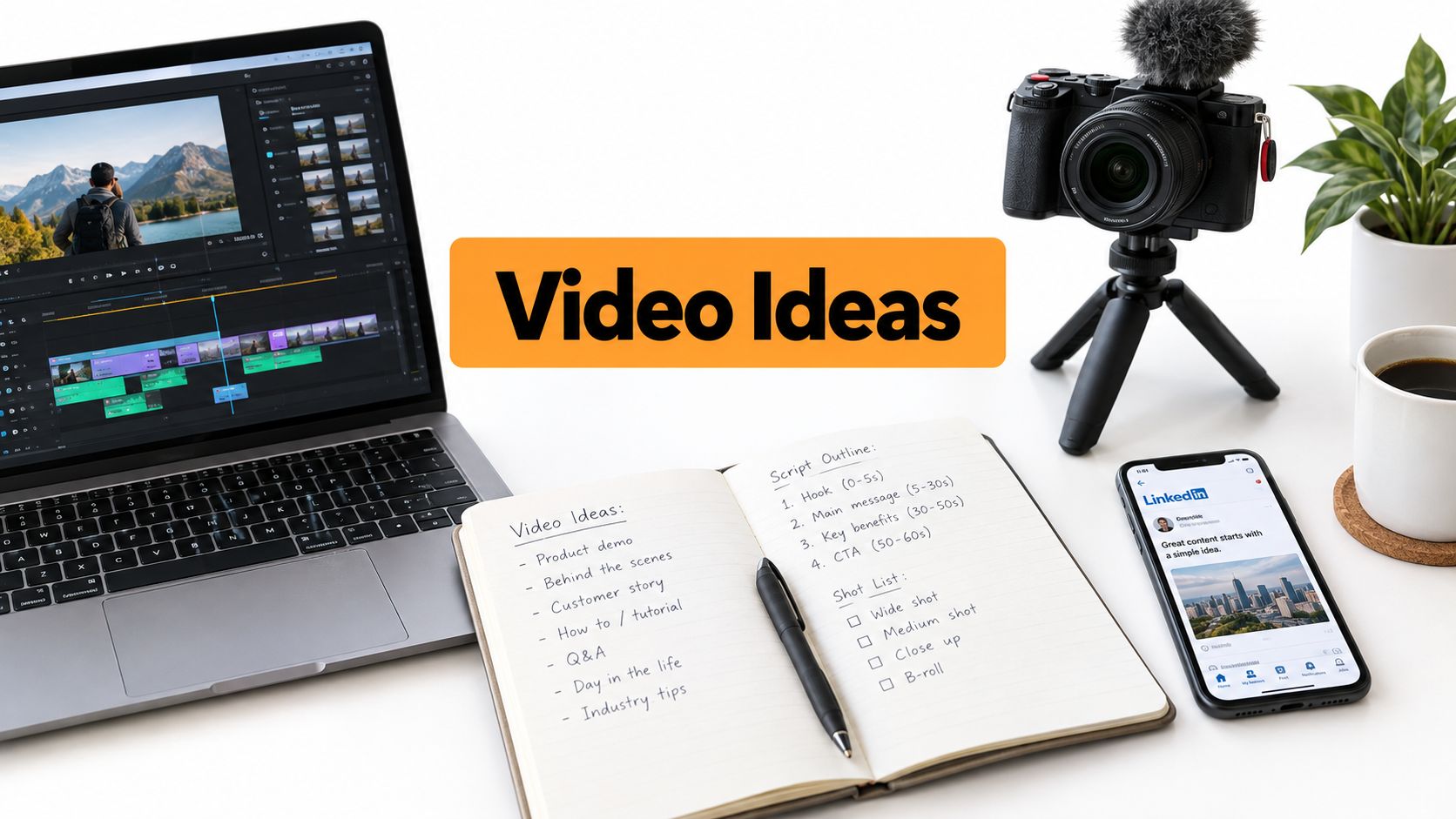
A quick demo can answer the reader's most important question: “What happens when I use this?” Show one workflow from start to finish. Open with the result, add on-screen text so the clip makes sense without sound, and keep the caption focused on the problem that workflow solves.
For example, a design product might show a messy draft becoming a finished layout. A workflow tool could show an update moving from a manual process into an automated one. The clip should demonstrate the actual product, not just flash through screens or promise a broad transformation.
Lead the caption with the audience's problem, then explain what the clip shows. Be precise about what's available now. If the demo shows a beta feature or an unfinished workflow, say so rather than letting the presentation imply otherwise.
Keep the demo honest: Show the real product experience, including any step the viewer needs to understand before trying it.
This short video guide offers practical advice on posting video on LinkedIn. After publishing, keep the clearest demo easy to find so prospects can refer back to it when they're deciding whether to try the product.
4. Problem-Solution Document Carousel Post
Best for: A product with a workflow, decision, or problem that needs a little explanation.
Tone: Clear and instructional.
CTA: Invite readers to try the product or ask for access.
A carousel gives the launch room to explain its reasoning. Start with a question or a recognizable frustration, then move through the current approach, why it falls short, and how the product changes the workflow. End with a single next step. If every slide tries to sell a separate feature, the story gets harder to follow.
A SaaS team launching a reporting feature, for instance, could make the first slide about the time spent stitching reports together. The next slides might show the old process, explain what the new feature changes, and finish with a simple invitation to see it in action. Keep text readable on a phone, and make each slide earn its place.
A simple slide sequence
- The problem: Name the task or frustration in the reader's terms.
- The old approach: Show the workaround without making it sound foolish.
- The change: Explain what the product does differently.
- The outcome: Share only an outcome you can substantiate.
- The next step: Give one clear action, such as requesting a demo.
Treat the carousel as a teaching asset, not a brochure. Readers should understand the product's purpose even if they don't act on the CTA immediately.
5. Customer Success Story Launch Post
Best for: A launch with a customer or early user willing to share a real experience.
Tone: Specific and evidence-led.
CTA: Ask readers with a similar workflow whether they want to learn more.
A customer story turns a product claim into a concrete example. Instead of saying a feature “saves time,” explain what a customer used to do, what they tried, and what changed. If you have a verified outcome, state it with enough context for readers to understand what it means. If you don't, describe the user's experience without dressing it up as a measurable result.
Get written permission before naming the customer, using their words, or sharing their results. Confirm the details with them, and make it easy for them to review the final post. A customer's title or company name doesn't make an unsupported claim reliable.
A proof-led draft
[Customer name or approved description] used to [specific problem or process].
They tried [product or feature] to [task it supports].
[Share an approved, verifiable outcome, or describe the observed change without inventing a metric.]
We built it to help [audience] handle [problem]. What would you want to know before trying it?
Explain how the product contributed to the result, but don't claim it caused more than the evidence supports. This guide to writing client success stories can help you keep the customer's experience central. If the customer is comfortable, invite them to comment or share the post in their own words.
6. Early Access and Waitlist Teaser Post
Best for: A product that isn't broadly available yet, or a team that wants feedback from likely users.
Tone: Inviting and transparent.
CTA: Ask qualified readers to request early access or join the waitlist.
A teaser can help you find the people who care about the problem before the full launch. But “something exciting is coming” gives readers little reason to respond. Say who the product is for, what it helps them do, and what early access means.
“We're opening early access to [product], a tool for [audience] who need to [solve a specific problem]. The early version helps you [current capability]. Want to test it and tell us what's missing?”
That wording makes the offer concrete and gives people a way to judge whether they're a fit. Be upfront about beta-stage limits, including what's incomplete or still being tested. People are more likely to give useful feedback when they know what they're signing up for.
A comment-to-join CTA can make it easy for interested readers to raise their hand. Follow up with a direct message that explains the next step, rather than collecting names and leaving people wondering what happens next. When access opens, post an update so your audience knows the invitation led somewhere.
7. Launch Day Recap and Learnings Post
Best for: Founders and teams with something useful to share after the initial announcement.
Tone: Honest, reflective, and constructive.
CTA: Ask readers which lesson or next improvement matters most to them.
The recap is a chance to show what happened after the launch, not just repeat that the product is live. Lead with a specific lesson: a question users kept asking, a confusing step you changed, or a use case you hadn't expected. Thank the people who tested the product, then explain what you'll do with their feedback.
Don't default to a vanity metric. Reach or reactions may tell you that people noticed the post, but they don't show whether the right audience tried the product or found it useful. Track outcomes that fit your goal, such as qualified replies, demo requests, activation, or retained use. Keep attribution clear, especially if the launch also involved paid promotion or employee sharing.
A useful recap reports what changed, not just what got attention.
Post-launch draft
The most useful feedback on [product] wasn't what we expected.
People told us [specific, truthful observation], so we changed [specific part of the experience].
We built this for [audience] who need to [problem or task].
What would you improve next?
A candid recap can invite better feedback than another polished sales pitch. Just make sure you don't disclose private customer information or turn a small number of comments into a sweeping claim. Share what you learned, explain what you're changing, and make the next step clear for people who want to try the product.
7 Product Launch LinkedIn Post Examples Compared
| Launch post type | 🔄 Implementation complexity & resources | 📊 Expected outcome | Ideal use case | ⭐ Key advantage | 💡 Main watch-out |
|---|---|---|---|---|---|
| Founder-Led Launch Story | Medium; requires founder input and a personal story | Trust, comments, and product interest | B2B launches with a credible founder narrative | Human, shareable voice | Keep the product value central |
| Product Hunt Launch Announcement | Low–medium; needs launch timing, link, and prepared assets | Short-term traffic, engagement, and feedback | Tech and SaaS launches on Product Hunt | Clear, measurable call to action | Invite genuine feedback, not just upvotes |
| Demo Video Teaser | Medium–high; requires recording, editing, and captions | Fast product understanding and in-feed attention | Products with a workflow that is easy to show | Demonstrates value visually | Focus on one benefit and keep it concise |
| Problem-Solution Document (Carousel) | High; requires slide writing, design, and mobile testing | Swipe engagement and clearer product education | Complex products or new categories | Explains the problem and solution step by step | Make the first slide compelling and readable |
| Customer Success Story | Medium–high; requires customer approval and verified results | Credibility, reach, and sales support | Launches with customer or beta evidence | Peer proof builds trust | Get permission and substantiate claims |
| Early Access and Waitlist Teaser | Low–medium; requires a signup path and follow-up process | Pre-launch leads, beta users, and messaging feedback | Products not yet generally available | Builds anticipation and gathers prospects | Be specific and avoid missed launch promises |
| Launch Day Recap and Learnings | Medium; requires launch metrics and feedback tracking | Extends attention and demonstrates transparency | Post-launch follow-up and build-in-public updates | Turns lessons into a second engagement opportunity | Share relevant metrics and lead with a useful lesson |
Pick One Format and Post It This Week
A strong launch rarely depends on one post doing everything. The founder story explains why the product exists. The demo shows how it works. The customer story gives a prospect something concrete to evaluate. The recap keeps the conversation open after the launch announcement has passed.
A simple sequence can connect those jobs: share a waitlist or early-access teaser before launch, publish a founder story or demo on launch day, then post a recap with a real lesson afterward. If a customer has approved a story, bring that proof into a later post. You don't need to publish every format. Choose the ones that fit your audience and the evidence you already have.
Keep the post reader-first. Explain who the product is for, what problem it addresses, and what someone can do next. Avoid unsupported performance promises, vague claims, and a feature list with no reason to care. If the product is still in beta, say what works and what isn't ready yet.
The first two lines matter because they're your chance to earn attention before the reader decides to move on. Start with a recognizable problem, a specific moment, or a surprising lesson. Then name the product and explain its value in plain language. A clear, relevant opening beats a generic announcement, even when the launch itself is exciting.
Choose one format today. Write the first two lines using a hook that fits your audience, add only details you can verify, and pick one CTA. Then set a reminder to publish a follow-up with what users said or did. That's how a launch becomes a useful conversation rather than a single post in the feed.
RedactAI helps professionals draft LinkedIn posts from ideas and profile context, then adapt the copy to their own writing style. Use it to develop a product launch post and shape follow-up content for the same audience. Visit RedactAI to explore the platform.