The most popular advice about LinkedIn Top Voices is also the least useful: post constantly, chase engagement, and hope someone notices. That confuses getting attention with becoming a trusted authority. A viral opinion can attract strangers without giving the right professionals a reason to remember you.
The designation isn't a reward for celebrity or an algorithmic lottery. LinkedIn's program guidance describes an invitation-only selection process that considers originality, expertise, professionalism, platform presence, and prominence within an industry or local market, without publishing guaranteed qualification thresholds. You can improve your work, but you can't turn recognition into a predictable application funnel.
That distinction changes what's worth copying. Don't borrow a famous creator's personality, opening lines, or posting volume. Borrow how they turn expertise into something another professional can use.
The useful target is repeatable authority, not a repeatable badge hack.
For an executive, that might mean explaining a difficult management decision. For a recruiter, it might mean making a confusing hiring process easier to understand. For a consultant, it means connecting useful content to qualified conversations, much as you'd track account-level marketing performance rather than celebrate disconnected activity.
The archetypes below are playbook categories, not official LinkedIn classifications. Each offers a transferable tactic you can adapt without needing a celebrity audience, a production team, or someone else's life story.
1. LinkedIn Top Voices Program and Regional Lists
The archetype to model is the local interpreter. This professional explains what a broad industry conversation means for a particular market, business community, or working environment.

LinkedIn's recognition process considers more than follower count. Its Top Voices selection guidance includes consistent creation and engagement, content quality and originality, subject-matter expertise, professional conduct, and prominence within a local economy, job market, or industry. That makes local relevance worth developing, not something to strip out in pursuit of a global audience.
Say you advise hospitality businesses in your city. Instead of posting generic leadership advice, explain how an employer can redesign shift handovers around the staffing problems local operators face. Include the operational constraint, the decision, and what another manager could try.
Steal the local translation habit
Study creators in your market for the questions they answer, not just their formatting. Look at the terminology their readers use, the objections that appear in comments, and the background knowledge those readers already share.
Then build a recognizable publishing territory:
- Audience: Name the professional you're helping, such as independent hotel operators.
- Constraint: Explain the local or industry-specific complication.
- Action: Give readers a decision, template, or process they can adapt.
The trade-off is narrower reach. Someone outside that market may scroll past, and that's fine if your intended buyers or peers recognize the problem immediately.
Use our niche-specific idea generation to explore relevant angles, then check performance rather than assuming local references automatically make a post useful. Your transferable tactic is to translate a broad issue into a specific local decision.
2. LinkedIn Influencers Program
A high-profile executive can publish a broad reflection and attract attention because readers already know their name. An unfamiliar professional usually needs to make the usefulness obvious much sooner.
Treat the LinkedIn Influencers model as an executive publishing archetype, not a shortcut into Top Voices. The transferable skill is turning a leadership perspective into an argument readers can evaluate, rather than relying on status to make it interesting.
Say a startup CEO wants to discuss delegation. A weak post announces that leaders need to trust their teams. A stronger post explains which decisions the CEO keeps, which decisions managers own, and what information must travel between them.
That's something another founder can use without agreeing with every part of the approach.
Build around a decision
Start with a genuine tension: delegating responsibility while continuing to approve every detail. Explain your position, show the boundary conditions, and finish with a practical adjustment.
A useful drafting sequence is:
- Position: State what you believe about the decision.
- Reasoning: Explain the constraint that shaped your view.
- Application: Show how another leader could test the idea.
Our guide to becoming a LinkedIn influencer provides a related starting point for developing a recognizable professional presence. Keep the distinction clear: building influence is work you can control; receiving an editorial designation isn't.
The trade-off is scrutiny. Once you publish a clear position, readers can challenge it, so acknowledge where your recommendation stops applying.
Your transferable tactic is the decision memo post. Write as though a capable colleague asked why you made a choice, not as though an audience asked you to sound inspirational. Use our drafting tools to explore different openings without changing the underlying argument.
3. Academic and Research-Based Top Voices
A research-led creator earns attention by making complicated evidence useful without making it sound more certain than it is. You don't need an academic title to adopt that discipline, but you do need to distinguish what a source establishes from what you recommend.

The tempting approach is to lead with a surprising finding and immediately turn it into universal advice. The stronger approach preserves the conditions: who was studied, what was measured, and which conclusions remain uncertain.
Say a manager finds a paper about interruptions at work. Rather than declare that meetings destroy productivity, they could explain the study's setting, describe the interruption problem it examined, and propose testing protected work periods within their own team.
Separate evidence from application
Give readers a clear path through the argument. Summarize the finding accurately, link the original publication, and explain the practical implication in plain language.
Then state the limitation that could change someone's decision. A finding about one working environment shouldn't silently become a rule for every profession.
A useful research post tells readers both what they might change and why they shouldn't overgeneralize.
A carousel can help when readers need to follow a sequence, compare explanations, or understand a framework. It doesn't improve a weak argument merely by spreading it across slides.
The trade-off is speed. Checking the original source takes longer than repeating an appealing claim, but it also gives you something substantive to discuss when a knowledgeable reader pushes back.
Your transferable tactic is the evidence-to-action bridge: explain the finding, preserve its limits, and suggest a reversible action. That's more useful than decorating an opinion with an academic reference.
4. Solopreneur and Creator-Economy Top Voices
Document the operating decision, not just the milestone. That's the most useful lesson to borrow from independent creators and consultants.
A revenue announcement may attract curiosity, but readers can't replicate a result without understanding the offer, audience, distribution, and effort behind it. When those details are missing, apparent transparency becomes a highlight reel.

Say a freelance designer changes a proposal from a broad menu of services to a tightly scoped package. The useful post explains why prospects struggled with the original proposal, what changed, and which questions still come up during sales conversations.
It doesn't need a dramatic financial reveal to teach something valuable.
Keep an experiment log
Choose a recurring format that lets you report actual decisions:
- What changed: Describe the offer, workflow, or publishing adjustment.
- What you observed: Separate recorded results from your interpretation.
- What comes next: Explain whether you'll keep, revise, or abandon the change.
Keep the structure stable while changing the substance. If you alter the topic, format, audience, and call to action together, you won't know which change deserves further testing.
Review comments and profile activity alongside the quality of inbound conversations. A post that attracts other creators may be enjoyable without helping a consultant reach prospective clients.
The trade-off is commercial privacy. Share enough detail to make the lesson useful, but don't expose client information or pretend an isolated success proves a universal system.
Your transferable tactic is the public experiment log. Revisit a successful topic with a new example or a corrected conclusion, rather than reposting the same victory story. Readers get an evolving process instead of an endless stream of announcements.
5. Recruiting and HR Top Voices
Start with the question candidates keep asking privately. That's often a better content brief than another broad opinion about the future of work.
Recruiting and HR content becomes useful when it clarifies a process that readers otherwise have to guess at. Explain what a hiring stage is for, how candidates can prepare, or how managers can make an interview more consistent.
Say candidates repeatedly misunderstand a work-sample assignment. A useful post describes the capability the assignment is intended to assess, what preparation is appropriate, and how candidates can request clarification.
That helps without pretending every employer uses the same process.
Turn recurring questions into public guidance
Build a question bank from approved, anonymized themes in your work. Our guide to LinkedIn for recruiters can help connect that publishing work with a more deliberate professional presence.
For each post, make the scope explicit:
- Candidate guidance: Distinguish advice from a requirement.
- Employer process: Explain your organization's practice without presenting it as an industry rule.
- Market commentary: Support factual claims and separate observation from prediction.
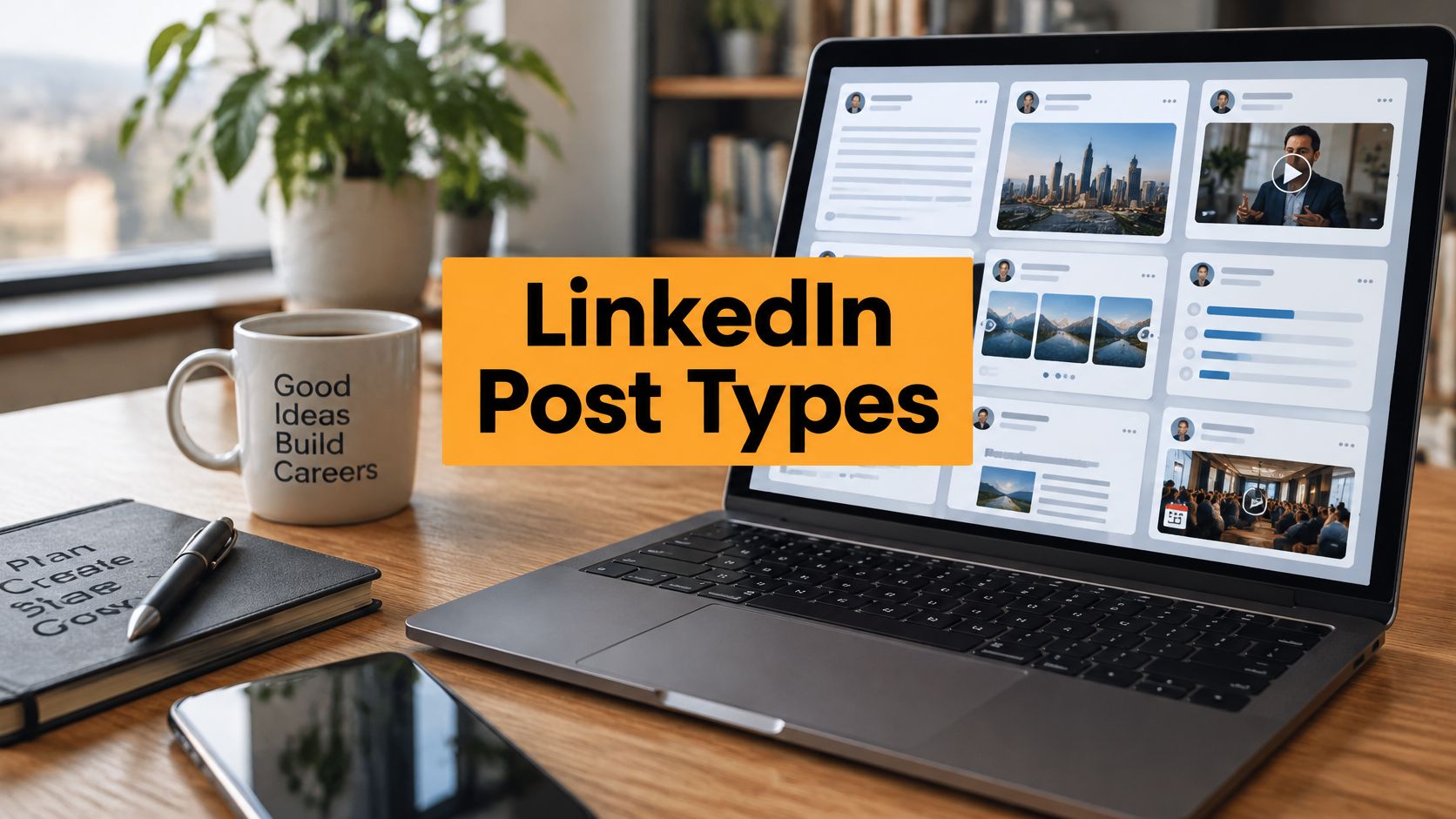
A short video can demonstrate how to answer an interview question. A document post can explain an interview sequence, while plain text may be enough to clarify an ambiguous instruction.
Privacy boundary: Teach the process without turning a recognizable candidate into content.
The trade-off is nuance. A punchy claim about hiring may spread more easily than a careful explanation, but the careful version gives candidates and managers something safer to act on.
Your transferable tactic is the recurring-question post. Answer a genuine question, explain the relevant boundary, and invite readers to identify what remains confusing. Their responses can reveal where your guidance needs clarification, not merely provide material for the next post.
6. Sales and Business Development Top Voices
The sales archetype worth copying is the deal mechanic: someone who explains how a commercial conversation works without turning every post into a pitch.
Useful sales content reveals a decision point. What did the buyer need to understand? Which assumption needed checking? Why was a proposed next step premature?
Say a prospect asks for a proposal before the seller understands the approval process. A practical post could explain how to clarify who will evaluate the proposal, what decision it should support, and which concerns need resolving beforehand.
The lesson isn't that proposals are bad. It's that a document can't substitute for missing information.
Publish a decision tool
Give readers something they can use in a real conversation. For example, suggest asking the buyer to describe what their team must resolve before choosing a supplier, then explain how different answers should change the next step.
Useful formats include:
- A discovery prompt: Explain when to ask it and what to listen for.
- An objection breakdown: Distinguish a budget constraint from uncertainty about value.
- A deal debrief: Describe the decision sequence without identifying the customer.
Keep educational content dominant and promotion occasional. There's no need to force a product mention into a post that already demonstrates how you think.
The trade-off is exposure. Detailed deal stories can reveal a customer through context even after you remove their name, so change nonessential details or use an explicitly hypothetical scenario.
Your transferable tactic is the annotated sales prompt. Don't just share a script; explain its purpose, its limits, and what to do with the answer. That demonstrates judgment more clearly than claiming you have a line that closes every deal.
7. Video and Newsletter Top Voices
Adding formats won't fix an unclear idea. It will give you more places to publish the same confusion.
The useful video-and-newsletter archetype starts with an argument worth developing, then adapts it to different reading and viewing situations. A newsletter supplies depth; a short video can demonstrate a behavior; a feed post can isolate a decision.
The Everywhere Agency and SocialHP engagement study reported that 84% of the Top Voice posts studied included multimedia. That describes the sample, not proof that attaching media causes stronger performance.
Give every format a separate job
Say your newsletter explains how to improve customer onboarding. Use a video to demonstrate a confusing handoff, a carousel to map the revised process, and a text post to challenge an assumption about ownership.
Don't paste the entire newsletter into every format. Preserve the central idea while changing the delivery to suit the reader's task.
This embedded video is available as a separate viewing resource.
Before producing video regularly, establish a workflow you can sustain: outline the point, record a clear explanation, add accurate captions, and review the finished version. If you later consider paid distribution, these LinkedIn thought leader video ad tips offer a related planning resource.
The trade-off is production overhead. More formats mean more editing, accessibility checks, and opportunities for outdated material to linger.
Your transferable tactic is purposeful repurposing. Assign each asset a distinct job, then expand only when the extra format helps your audience understand or apply the idea.
8. Personal Branding and Storytelling Top Voices
A personal story belongs on LinkedIn when it helps another professional understand something, not because it happened to you.
The storytelling archetype makes a decision memorable through context. The relevant details are the situation, the constraint, the choice, and what changed in the storyteller's thinking.

Say an executive describes a presentation that went badly. The useful lesson isn't that failure builds character; it's that they presented a recommendation before understanding what the audience needed to decide.
That story can lead to a practical change: ask about the decision before building the presentation. Readers get something more useful than an invitation to admire the executive's resilience.
Choose the boundary before the opening
Decide what you won't disclose before writing the hook. You can explain your own mistake without exposing a colleague's performance, a family member's private life, or a customer's confidential situation.
These personal branding examples can help you consider how a recognizable professional identity extends beyond an isolated post. Consistency comes from your perspective and judgment, not from repeating the same dramatic story structure.
Share enough context to make the lesson credible, not enough detail to make someone else uncomfortable.
Visual presentation should support recognition rather than substitute for substance. If you're updating your profile imagery, professional portraits from Secta Labs are an option to consider alongside a clear headline and relevant experience.
The trade-off is emotional exposure. A story can be honest without being raw, and you don't owe the feed an account of an experience you're still processing.
Your transferable tactic is the decision-centered story. Open with a concrete moment, explain the choice, and finish with an action readers can adapt.
8 Types of LinkedIn Top Voices at a Glance
A famous profile is a bad template. Pick the archetype closest to your work and copy one system from the last column. Status does not transfer. A format you can run every week does.
| Creator Archetype | Signature Content Style | Best For | Key Replicable Tactic |
|---|---|---|---|
| LinkedIn Top Voices Program and Regional Lists | Topic-focused insights tailored to local markets and professional communities | Building credibility and visibility in a specific niche or region | Post consistently around one or two themes, using locally relevant examples |
| LinkedIn Influencers Program | Long-form articles, opinion pieces, and video from established leaders | Executives sharing ideas with a broad professional audience | Structure posts around a strong hook, one central lesson, and a practical takeaway |
| Academic and Research-Based Top Voices | Evidence-based insights translated into practical advice | Experts building trust through research and education | Summarize the finding with its source and conditions, then explain its practical value and limits |
| Solopreneur and Creator-Economy Top Voices | Business lessons, transparent metrics, and repeatable post formats | Freelancers and solo business owners growing an audience | Test a repeatable format, share real results, and revisit top-performing topics |
| Recruiting and HR Top Voices | Hiring advice, labor-market insights, and workplace commentary | Recruiters, HR teams, job seekers, and hiring managers | Share one specific, verifiable hiring insight and invite discussion |
| Sales and Business Development Top Voices | Consultative sales tactics, scripts, and anonymized deal stories | Sellers building trust and generating inbound interest | Share useful frameworks and keep promotion secondary to education |
| Video and Newsletter Top Voices | Ideas repurposed across video, newsletters, carousels, and live sessions | Creators deepening audience relationships across formats | Turn each newsletter edition into several short posts or a carousel |
| Personal Branding and Storytelling Top Voices | Candid career stories that end with a professional lesson | Professionals seeking stronger audience connection and loyalty | Open with a specific moment, keep the story concise, and close with a practical takeaway |
I would steal only the tactic, then drop the rest of the row. Mixing all eight styles in one week produces noise, not a recognizable point of view.
Your Top Voice Playbook Starts Today
The strongest lesson from LinkedIn Top Voices isn't a formatting trick. It's that useful professional content starts with a recognizable area of expertise and gives readers a reason to return.
Choose the archetype closest to the work you do. A recruiter doesn't need to become a motivational storyteller, and a technical consultant doesn't need to document every aspect of running a business.
Then lock in a repeatable format. Use a local interpretation, decision memo, evidence-to-action explanation, experiment log, recurring-question answer, annotated sales prompt, repurposed argument, or decision-centered story.
Make the process easier to repeat
Keep education dominant and promotion occasional. Treat that as an editorial discipline, not an algorithm rule: a reader should be able to benefit from your content without becoming a customer.
Recycle what works, but improve it before publishing again. Add a fresh example, address an objection from the comments, correct an outdated assumption, or explain where your original advice doesn't apply.
A practical review should distinguish different kinds of response:
- Attention: Did the opening attract readers?
- Relevance: Did the people you want to reach engage meaningfully?
- Authority: Did the post demonstrate knowledge readers could evaluate?
- Business fit: Did it support appropriate conversations, opportunities, or relationships?
Don't merge those into a single verdict based on likes. A widely shared post and a narrowly useful post may serve different purposes.
RedactAI can reduce the work between having an idea and publishing a considered draft. We build a personalized AI from your LinkedIn profile and last 100 posts, using your experience and posting history to learn your authentic voice.
You can generate drafts from keywords, then use our tools to schedule posts and recycle top-performing content. Keep responsibility for the argument yourself: verify claims, add the detail only you know, and remove anything you wouldn't say directly to a professional peer.
We've generated 366,295+ posts for 44,160 professionals. We also offer a free AI LinkedIn Profile Review and an initial free 7-day trial, after which the subscription starts unless you give notice.
Those tools can support consistency, but no tool can guarantee Top Voice recognition. The valuable outcome is a clearer professional presence built around work you can stand behind.
This week, audit your last ten posts against a single Top Voice archetype. Identify which posts demonstrate relevant expertise, choose the format worth repeating, and draft your next post around a real decision your audience needs to make.
Turn that audit into a workable publishing routine with personalized drafts, scheduling, and content recycling. Visit RedactAI to build from your own expertise and voice, then prepare a post that applies the archetype you chose.